
Cats are enigmatic creatures. Their sudden stillness, intense focus, and seemingly inexplicable behaviors often leave owners wondering: Is my cat seeing something I can’t? When a cat fixates on an empty wall for minutes at a time, it’s easy to imagine supernatural explanations—ghosts, spirits, or invisible energies only animals can perceive. Others suspect medical causes, like hearing problems or neurological conditions. The truth lies somewhere between folklore and science. Understanding why your cat stares at the wall requires looking at their senses, instincts, and health—all of which shape how they interact with their environment.
The Feline Senses: Beyond Human Perception
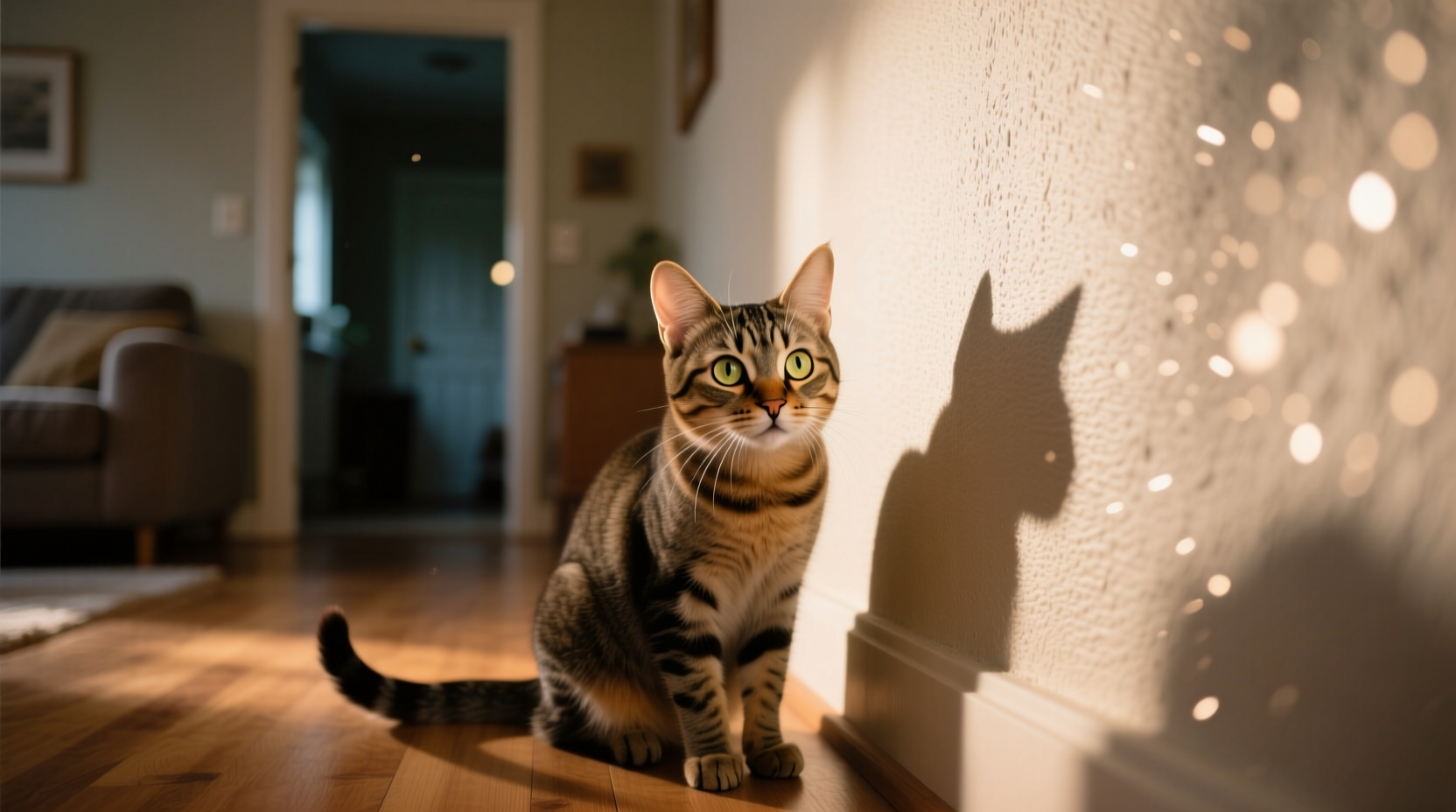
Cats operate on a sensory plane far beyond human capabilities. Their vision, hearing, and even whisker sensitivity allow them to detect subtle environmental changes we’re oblivious to. A cat may appear to be staring at nothing, but in reality, they could be responding to stimuli imperceptible to us.
For example, high-frequency sounds—such as those emitted by rodents behind walls, electrical wiring, or even HVAC systems—can capture a cat’s attention. These ultrasonic noises fall within the 45–60 kHz range, well above the upper limit of human hearing (around 20 kHz). What seems like silence to you might be a symphony of squeaks and buzzes to your cat.
Similarly, cats have superior low-light vision. In dim lighting, shadows, dust particles, or light reflections on a wall can create moving patterns that trigger their predatory instincts. Even air currents detected by their sensitive whiskers might suggest movement where none appears to exist.
Medical Causes Behind Wall Staring
While many instances of wall-staring are harmless, persistent or unusual fixation can signal underlying health issues. One of the most common concerns is cognitive dysfunction syndrome (CDS), especially in senior cats. Similar to dementia in humans, CDS affects memory, awareness, and behavior. Affected cats may stare into space, forget litter box training, or vocalize at odd hours.
Seizure disorders are another possibility. Feline partial (focal) seizures can manifest as motionless staring, lip-smacking, or unresponsiveness without convulsions. These episodes may last seconds to minutes and go unnoticed unless closely observed.
Hearing loss, though counterintuitive, can also contribute. As cats lose auditory input, they may compensate by focusing intensely on visual cues—even if there’s little to see. This hyper-vigilance can look like blank wall gazing. Additionally, ocular diseases such as retinal detachment or glaucoma may cause visual hallucinations or misinterpretations of light and shadow.
“Cats don’t typically stare without reason. Whether it’s sound, vision, or neurology, there’s almost always a physiological explanation.” — Dr. Lena Torres, DVM, Veterinary Neurologist
Behavioral and Environmental Triggers
Not all wall-staring stems from medical or supernatural sources. Often, it’s rooted in natural feline behavior. Cats are predators hardwired to monitor their surroundings for movement. A flickering shadow from a tree outside, a fly crawling near the ceiling, or even the texture of paint can captivate a curious cat.
Boredom and lack of stimulation are significant contributors. Indoor cats without adequate enrichment may develop repetitive behaviors, including prolonged staring, pacing, or fabric sucking. These actions can become compulsive, especially in high-stress environments or multi-cat households with social tension.
In some cases, cats fixate on walls due to conditioned associations. For instance, if insects frequently emerge from a crack in the wall, your cat may learn to patrol that area, anticipating prey. Over time, this vigilance persists even when no pests are present.
Common Non-Medical Reasons for Wall Staring
- Tracking high-pitched sounds (mice, pipes, electronics)
- Reacting to light/shadow play
- Boredom or under-stimulation
- Anticipating food or owner return (if near a door or feeding area)
- Responding to vibrations through floors or walls
When to Worry: Red Flags to Monitor
Occasional wall-gazing is normal. But certain patterns should prompt veterinary evaluation. The key is consistency, duration, and associated behaviors.
| Symptom | Potentially Normal | Potentially Concerning |
|---|---|---|
| Duration | Lasts a few seconds to a minute | Prolonged (>5 minutes), frequent episodes |
| Frequency | Occasional, situational | Daily or multiple times per day |
| Movement Afterward | Resumes normal activity | Appears confused, disoriented, or dazed |
| Vocalization | None or soft chirps | Excessive meowing, yowling, or distress calls |
| Physical Signs | Eyes tracking, ears alert | Twitching, drooling, falling, circling |
If your cat exhibits any of the concerning signs listed above, especially in combination, schedule a vet visit. Diagnostic tests may include blood work, thyroid screening, neurological exams, or even MRI scans to rule out brain lesions or epilepsy.
Case Study: Bella, the Night Watcher
Bella, a 10-year-old domestic shorthair, began staring at the hallway wall every night around 2 a.m. Her owner, Sarah, initially dismissed it as quirky behavior. But over weeks, the episodes lengthened, and Bella started vocalizing loudly, waking the household.
Sarah recorded a video and brought it to her vet. Upon review, the veterinarian noticed subtle facial twitching during the episode. Blood tests revealed normal organ function, but an EEG indicated abnormal electrical activity consistent with focal seizures. Bella was diagnosed with idiopathic epilepsy and prescribed a low-dose anticonvulsant.
Within two weeks, the staring stopped entirely. Sarah later discovered that a loose wire in the wall emitted a faint buzzing sound—likely a trigger for seizure activity in Bella’s sensitive nervous system. While the sound didn’t cause the condition, it may have acted as an environmental catalyst.
This case illustrates how seemingly mystical behavior can have a medical basis—and why early intervention matters.
Step-by-Step Guide: Responding to Wall Staring
Follow this structured approach to determine whether your cat’s behavior is benign or warrants concern:
- Observe silently. Watch your cat without interrupting. Note duration, body posture, eye movement, and responsiveness.
- Check the environment. Look for possible stimuli: insects, drafts, lights, sounds, or vibrations. Use a flashlight to inspect baseboards or outlets.
- Assess overall behavior. Has your cat changed eating habits, litter box use, grooming, or sociability?
- Record episodes. Use your phone to film one or more incidents, including context before and after.
- Consult your veterinarian. Share your observations and video. Request a full physical and neurological exam.
- Implement enrichment. If no medical cause is found, increase mental stimulation with puzzle feeders, window perches, and interactive toys.
- Monitor long-term. Track improvements or new symptoms. Re-evaluate if behavior escalates.
Debunking the Ghost Theory
The idea that cats see ghosts is deeply rooted in myth and pop culture. Ancient Egyptians revered cats as spiritual guardians. Japanese folklore features the “bakeneko,” a supernatural cat spirit. Modern anecdotes abound of pets reacting to unseen entities during paranormal investigations.
Yet, there is no scientific evidence supporting animal perception of ghosts. What people interpret as supernatural reactions are more plausibly explained by acute senses. A cat may react to a distant sound, a shift in air pressure, or a shadow cast by moonlight—all natural phenomena that, in the right setting, feel eerie to humans.
That said, dismissing a cat’s behavior as “just seeing ghosts” can delay necessary medical care. It’s more responsible to first rule out physical and psychological causes before attributing actions to the metaphysical.
FAQ: Common Questions About Cat Wall Staring
Can cats really hear things inside walls?
Yes. Mice, rats, insects, and even electrical currents can produce high-frequency sounds detectable by cats. Their ears are tuned to frequencies up to 64 kHz, making them excellent at locating hidden pests.
Is wall staring a sign of blindness?
Not necessarily. Some blind cats do stare or appear unfocused, but this is usually accompanied by other signs like bumping into furniture, reluctance to jump, or cloudy eyes. Staring alone isn’t diagnostic of vision loss.
Should I stop my cat from staring at the wall?
Interrupting brief episodes isn’t necessary. However, if the behavior is obsessive or disruptive, gently redirect your cat with a toy or treat. Avoid startling them, especially if they may be mid-seizure.
Final Thoughts: Balancing Wonder and Responsibility
There’s a delicate balance between appreciating the mystery of feline behavior and ensuring our pets’ well-being. While it’s tempting to romanticize a cat’s gaze as a window into another realm, the more practical path is grounded observation and proactive care.
Your cat’s senses are extraordinary—but so are their vulnerabilities. What looks like a ghostly encounter might be a treatable medical issue. Conversely, what seems like boredom could simply be a moment of feline contemplation.
By paying attention, responding thoughtfully, and seeking professional guidance when needed, you honor both your cat’s nature and their health.




 浙公网安备
33010002000092号
浙公网安备
33010002000092号 浙B2-20120091-4
Comments
No comments yet. Why don't you start the discussion?