
It’s a scene many cat owners have experienced: you’re relaxing at home when you notice your cat sitting perfectly still, eyes locked on an empty patch of wall. No movement. No sound. Just intense focus. Your skin prickles. Could it be a ghost? A supernatural presence only cats can see? Or is something more concerning happening inside your pet’s mind?
While pop culture loves the idea that cats sense spirits, the reality is usually far more grounded—though not always harmless. Feline staring episodes can stem from natural instincts, environmental stimuli, or, in some cases, serious medical conditions. Understanding the difference between quirky behavior and potential health red flags is essential for any responsible cat owner.
The Science Behind Cat Staring
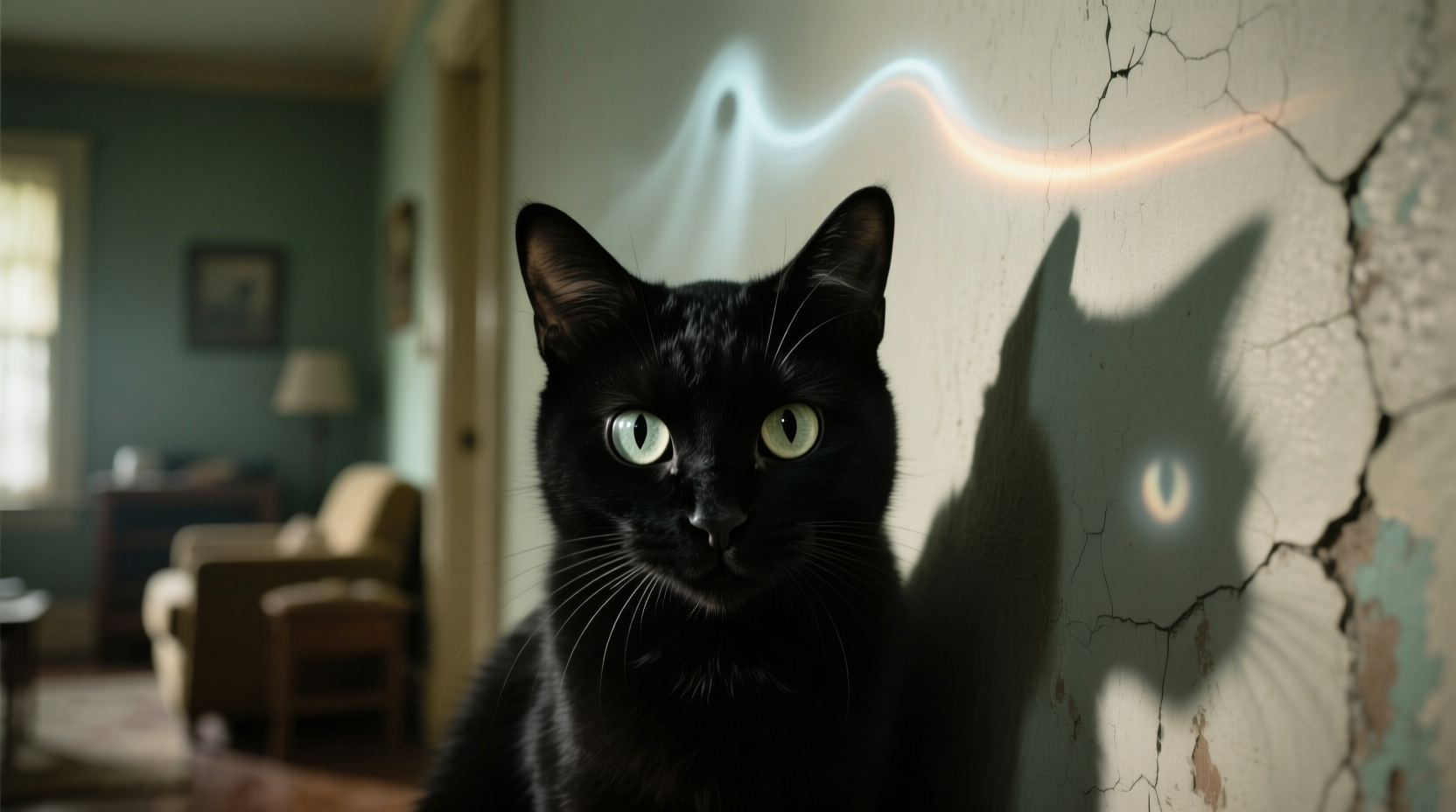
Cats are predators by nature. Their brains are wired to detect the slightest motion, changes in light, or subtle sounds. What appears to be an empty wall to us might be alive with visual noise—a flickering shadow from a curtain, dust motes dancing in sunlight, or even a spider crawling behind baseboards. These micro-movements are often invisible to human eyes but highly stimulating to a cat’s acute senses.
In multi-cat households, one cat may fixate on a spot simply because another cat once did. This social mimicry isn’t uncommon. If one cat reacts strongly to a stimulus, others may follow suit out of curiosity or territorial awareness.
“Cats live in a sensory world we barely perceive. What looks like nothing to us could be a dynamic environment full of motion and scent cues.” — Dr. Lena Torres, Veterinary Behaviorist
Additionally, cats often enter what experts call “trance states” during periods of deep focus. These moments resemble daydreaming in humans and are typically brief and harmless. The cat may appear unresponsive, pupils dilated, tail twitching slightly. After a few seconds or minutes, they snap back to normal activity as if nothing happened.
When Medical Issues Are Involved
Not all staring spells are innocent. Prolonged fixation on walls, especially when accompanied by other symptoms, can indicate underlying neurological or psychological problems. Two primary medical concerns associated with wall-staring in cats are seizures and feline cognitive dysfunction (FCD).
Feline Seizures and Partial Epilepsy
Seizures in cats don’t always look like the dramatic convulsions seen in dogs. In fact, many are subtle—known as partial or focal seizures. During these episodes, a cat may sit motionless, stare blankly at a wall, drool, twitch facial muscles, or make chewing motions. These behaviors can last from 30 seconds to several minutes.
Because the seizure originates in a specific part of the brain, the outward signs are localized. A cat might seem aware but unresponsive. Afterward, they may appear disoriented or tired. These episodes are often mistaken for zoning out or daydreaming, delaying diagnosis.
Feline Cognitive Dysfunction (FCD)
Similar to dementia in humans, Feline Cognitive Dysfunction affects older cats (typically over 10 years). Symptoms include confusion, altered sleep patterns, vocalization at night, and repetitive behaviors such as pacing or staring into space. Wall-gazing becomes more frequent and prolonged as the condition progresses.
A study published in the *Journal of Feline Medicine and Surgery* found that nearly 55% of cats aged 11–15 years show at least one sign of cognitive decline, rising to over 80% in cats 16 and older.
| Symptom | Possible Cause | Urgency Level |
|---|---|---|
| Stares for 1–2 minutes, then resumes normal activity | Environmental stimulus or instinctual behavior | Low |
| Staring + muscle twitching, drooling, chewing motions | Focal seizure | High – vet visit needed |
| Staring + confusion, nighttime vocalizing, soiling outside litter box | Feline Cognitive Dysfunction | Moderate – consult vet |
| Staring + loss of balance, circling, aggression | Neurological disorder or brain tumor | Emergency – seek immediate care |
Behavioral and Environmental Triggers
Beyond medical causes, several behavioral and environmental factors can explain why your cat stares at walls:
- Residual scent or pheromones: Cats have a powerful sense of smell. A previous pet, rodent, or even cleaning product residue could leave a lingering scent that draws attention.
- Wall vibrations or sounds: Pipes, HVAC systems, or electrical wiring can emit high-frequency noises imperceptible to humans but noticeable to cats.
- Reflections and light patterns: Sunlight reflecting off glass or metal objects can create moving spots on walls that fascinate cats.
- Anxiety or stress: Cats under stress may develop compulsive behaviors, including repetitive staring or pacing.
In some cases, boredom plays a role. Indoor cats without sufficient mental stimulation may fixate on static objects simply because there’s nothing else to engage with.
Real-Life Example: Bella the Siamese
Sarah, a cat owner from Portland, noticed her 12-year-old Siamese, Bella, began spending increasing time staring at the corner of the living room wall. At first, she dismissed it as odd but harmless. Over weeks, however, Bella started having episodes where she would freeze mid-step, eyes locked, and begin making small chewing motions. She also began howling at night.
Concerned, Sarah recorded a video of one episode and brought it to her veterinarian. After a neurological exam and blood work, Bella was diagnosed with partial seizures likely caused by age-related brain changes. Her vet prescribed a low-dose anticonvulsant, which significantly reduced the staring episodes. Sarah also adjusted Bella’s routine—adding soft nightlights and calming pheromone diffusers—to ease nighttime anxiety.
Bella’s case highlights how easy it is to misinterpret medical symptoms as quirks. Without intervention, her quality of life would have continued to decline.
Step-by-Step: What to Do If Your Cat Stares at Walls
If your cat exhibits unusual staring behavior, follow this timeline to determine the cause and appropriate response:
- Observe and document (Day 1–3): Note duration, frequency, and accompanying behaviors (twitching, drooling, vocalizing). Use your phone to record a video.
- Check the environment (Day 2): Look for drafts, reflections, insect activity, or recent changes in furniture or cleaning products.
- Assess overall health (Day 3–5): Monitor appetite, litter box use, interaction levels, and sleep patterns. Any deviation warrants concern.
- Schedule a vet visit (Within 1 week if symptoms persist): Bring your notes and video. Request a full physical and neurological screening.
- Follow treatment plan (Ongoing): If a medical condition is diagnosed, adhere to medication schedules and schedule follow-ups every 3–6 months.
Checklist: When to Worry About Cat Wall-Staring
Use this checklist to evaluate whether your cat’s behavior requires professional attention:
- ✅ Staring lasts longer than 2–3 minutes
- ✅ Episodes occur multiple times per day
- ✅ Accompanied by muscle tremors, drooling, or lip-smacking
- ✅ Cat seems unaware of surroundings during the episode
- ✅ Changes in personality, appetite, or litter habits
- ✅ Occurs mostly at night or during rest periods
- ✅ Cat appears disoriented afterward
If three or more apply, contact your veterinarian promptly.
Debunking the Ghost Theory
The belief that cats see ghosts is widespread but lacks scientific support. While cats do perceive the world differently—detecting infrared radiation (heat), hearing ultrasonic frequencies, and seeing better in low light—there is no evidence they interact with supernatural entities.
That said, their heightened senses can pick up on phenomena we miss. A draft causing a curtain to flutter, a mouse in the wall, or even electromagnetic fields from faulty wiring might trigger alertness that feels eerie to human observers.
Rather than assuming paranormal activity, consider the principle of Occam’s Razor: the simplest explanation is usually correct. In most cases, your cat is reacting to something real—even if you can’t perceive it.
FAQ
Can cats really see ghosts?
There is no scientific evidence that cats—or any animals—can see ghosts. Their advanced sensory abilities often explain behaviors mistaken for supernatural awareness.
How can I tell if my cat is having a seizure?
Focal seizures may include staring, facial twitching, drooling, or repetitive chewing motions. The cat remains upright but unresponsive. Generalized seizures involve falling, paddling limbs, and loss of consciousness. Always consult a vet if you suspect seizures.
Is wall-staring common in older cats?
Yes, especially if cognitive decline is present. Senior cats may stare into space, get stuck in corners, or forget routines. Early veterinary assessment can improve management and comfort.
Conclusion: Know Your Cat’s Normal
Cat behavior exists on a spectrum—from instinct-driven actions to signs of illness. Staring at a wall isn’t automatically alarming, but it shouldn’t be ignored either. The key is knowing your cat’s baseline. When does it happen? How long does it last? What happens before and after?
Trust your instincts as a caregiver. If something feels off, it probably is. Early detection of medical issues like seizures or cognitive decline can dramatically improve outcomes. At the same time, appreciate your cat’s unique perception of the world. That blank wall might be teeming with invisible life only they can experience.




 浙公网安备
33010002000092号
浙公网安备
33010002000092号 浙B2-20120091-4
Comments
No comments yet. Why don't you start the discussion?