
Cats are enigmatic creatures. Their behaviors often leave owners puzzled—especially when a cat suddenly stops in its tracks, fixes its gaze on an empty wall, and refuses to look away. While occasional staring might be harmless, persistent or intense fixation can signal anything from normal feline curiosity to serious neurological issues. Understanding why your cat stares at the wall is essential for distinguishing between quirky habits and potential medical emergencies.
This article explores the full spectrum of possibilities behind this behavior, from environmental triggers to underlying health conditions. You'll learn how to interpret your cat’s body language, recognize red flags, and know exactly when to consult a veterinarian.
Common Reasons Cats Stare at Walls
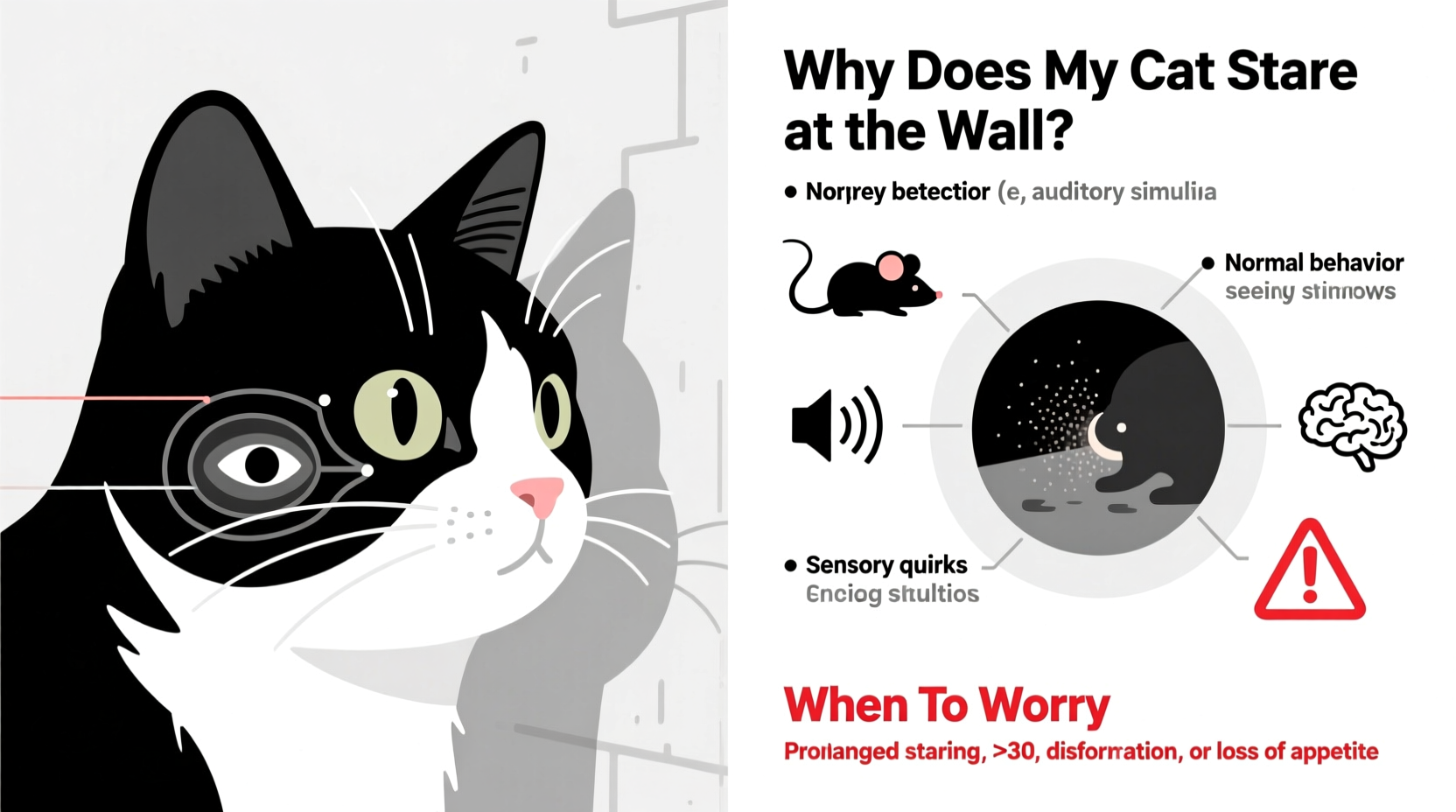
Cat staring isn't always cause for concern. In fact, many explanations are rooted in natural instincts and sensory perception. Cats have highly developed senses, particularly hearing and vision, which allow them to detect stimuli humans can’t perceive.
- Hearing faint sounds: Mice, insects, or electrical buzzing inside walls may attract your cat’s attention. Even subtle movements or vibrations can trigger alertness.
- Visual tracking: Shadows, light reflections, or dust particles floating in sunlight can captivate a cat’s focus. Their eyes are designed to detect motion, even at minimal levels.
- Play anticipation: If you’ve played with your cat near a particular wall using a laser pointer or feather toy, they may return to that spot expecting another game.
- Environmental novelty: A new object, rearranged furniture, or unfamiliar noise might prompt investigative staring as your cat assesses changes in territory.
When Staring Signals a Health Problem
Not all staring is benign. Repetitive, vacant gazing—particularly when accompanied by other symptoms—can indicate medical distress. Neurological disorders, cognitive dysfunction, seizures, and sensory decline are among the more concerning causes.
Feline Cognitive Dysfunction (FCD)
Similar to dementia in humans, FCD affects older cats (typically over 10 years). It disrupts memory, awareness, and sleep-wake cycles. Affected cats may stare blankly, appear disoriented, vocalize at night, or forget litter box training.
Seizures and Partial Epilepsy
Cats can experience focal (partial) seizures that don’t involve convulsions. During these episodes, a cat may sit motionless, fixate on one point, drool, twitch their face, or appear \"zoned out.\" These episodes last seconds to minutes and may go unnoticed without careful observation.
Vision or Hearing Loss
Aging or disease-related sensory impairment can cause confusion. A blind or partially blind cat might stare because they sense light but cannot interpret what they're seeing—or they’re compensating with heightened hearing.
Brain Tumors or Lesions
Though rare, brain abnormalities can lead to abnormal behaviors including prolonged staring, circling, head pressing, or imbalance. These require immediate veterinary evaluation.
“Cats are masters at hiding pain and illness. A change in behavior—like sudden staring—is often the first clue something is wrong.” — Dr. Lena Torres, DVM, Veterinary Neurologist
How to Tell the Difference: Normal vs. Abnormal Staring
Distinguishing between harmless curiosity and a medical issue comes down to pattern recognition. Use the following checklist to evaluate your cat’s behavior:
- ✅ Does the staring last only a few seconds and stop when distracted?
- ✅ Is your cat responsive to calls, treats, or touch during or after the episode?
- ✅ Are there no other behavioral changes (e.g., appetite, grooming, litter use)?
- ✅ Does it happen infrequently and under understandable circumstances (e.g., sunlight patterns)?
- ❌ Does the cat seem unresponsive or “trapped” in the stare?
- ❌ Is there drooling, eye twitching, or muscle jerking?
- ❌ Has the frequency increased over time?
- ❌ Are there nighttime vocalizations or disorientation?
If most answers align with the positive indicators (✅), the behavior is likely normal. However, two or more negative signs (❌) warrant a vet visit.
Timeline: What Happens During a Suspicious Episode?
Understanding the sequence of events helps veterinarians diagnose potential neurological issues. Keep a log if possible:
- Pre-Episode: Note your cat’s activity before staring—were they eating, sleeping, playing?
- Onset: How quickly did the staring begin? Was there a trigger?
- Duration: Time the episode. Less than 30 seconds may still be significant.
- Behavior During: Look for blinking, pupil dilation, drooling, facial tics, or limb stiffness.
- Recovery: Did your cat snap out of it immediately or seem confused afterward?
- Aftermath: Any lethargy, hiding, or unusual actions post-episode?
This timeline provides valuable data for diagnosis, especially if video recording isn’t feasible.
Mini Case Study: Bella, the 12-Year-Old Tabby
Bella, a 12-year-old domestic shorthair, began staring at the living room wall every evening around 7 PM. Her owner initially dismissed it as odd but harmless—until Bella started falling off her perch while fixated and began yowling at night.
Concerned, the owner recorded a 45-second episode showing Bella sitting rigidly, pupils dilated, with slight jaw tremors. She didn’t respond when called. The video was shown to a veterinarian, who suspected partial seizures. Blood work ruled out metabolic causes, and an MRI revealed a small lesion consistent with age-related degeneration.
With anti-seizure medication, Bella’s episodes decreased dramatically within three weeks. Her nighttime vocalizations ceased, and she regained normal interaction patterns. Early intervention prevented worsening symptoms and improved her quality of life.
Bella’s case illustrates how seemingly minor behaviors can mask serious conditions—and why documentation matters.
Do’s and Don’ts When Your Cat Stares at the Wall
| Do | Don’t |
|---|---|
| Observe quietly to avoid startling your cat | Yell at or physically shake your cat during an episode |
| Time the duration of the staring spell | Assume it’s “just being weird” without tracking frequency |
| Record the behavior on video if possible | Delay veterinary consultation if episodes increase |
| Note accompanying symptoms (drooling, twitching) | Change medications or diet without professional advice |
| Schedule a vet check-up for senior cats showing new behaviors | Ignore nighttime disorientation or accidents |
What to Expect at the Vet
If you decide to seek professional help, your veterinarian will conduct a thorough assessment. This typically includes:
- Medical history review: Age, diet, recent changes, onset of behavior.
- Physical and neurological exam: Testing reflexes, coordination, eye movement, and cranial nerves.
- Blood and urine tests: To rule out kidney disease, hyperthyroidism, liver issues, or infections.
- Imaging (if indicated): MRI or CT scans may be recommended for suspected brain abnormalities.
- Referral to a specialist: Veterinary neurologists can perform EEGs or advanced diagnostics.
In some cases, treatment may include anticonvulsants, cognitive support supplements (like SAM-e or antioxidants), or environmental enrichment to reduce anxiety.
Frequently Asked Questions
Can stress make my cat stare at the wall?
Yes. High-stress environments can lead to obsessive or repetitive behaviors. Cats may fixate on a spot as a displacement behavior—a way to cope with anxiety. Addressing stress through pheromone diffusers, safe spaces, or routine stability can help reduce such actions.
Is it normal for kittens to stare at walls?
Occasionally, yes. Kittens are still developing sensory processing skills. They may focus intently on moving shadows or sounds as part of learning. However, frequent unresponsiveness or physical tics should be evaluated regardless of age.
Should I try to distract my cat when they’re staring?
Only after assessing safety. If your cat appears aware and simply observing, a gentle call or treat may redirect attention. But during a suspected seizure, avoid touching them—stay nearby to prevent injury, speak softly, and let the episode pass naturally.
Conclusion: Trust Your Instincts and Act Early
Your cat’s wall-staring habit might be nothing—or it might be the earliest sign of a condition needing attention. The key lies not in panic, but in observation. Cats communicate through behavior long before they show overt signs of illness.
By tracking patterns, documenting episodes, and understanding the difference between instinctual vigilance and neurological disturbance, you become your cat’s best advocate. When in doubt, err on the side of caution. Early diagnosis transforms outcomes, especially for treatable conditions like seizures or cognitive decline.




 浙公网安备
33010002000092号
浙公网安备
33010002000092号 浙B2-20120091-4
Comments
No comments yet. Why don't you start the discussion?