
Cats are naturally curious, observant creatures. Their keen senses and instinctual alertness mean they often fixate on things humans don’t immediately notice. One of the more puzzling behaviors cat owners report is their pet staring intently at blank walls for minutes—or even longer—without apparent reason. While occasional wall-gazing can be harmless, persistent or intense fixation may signal underlying issues, from sensory perception to neurological conditions. Understanding why your cat stares at walls requires examining both behavioral patterns and potential health concerns.
The Science Behind Feline Observation
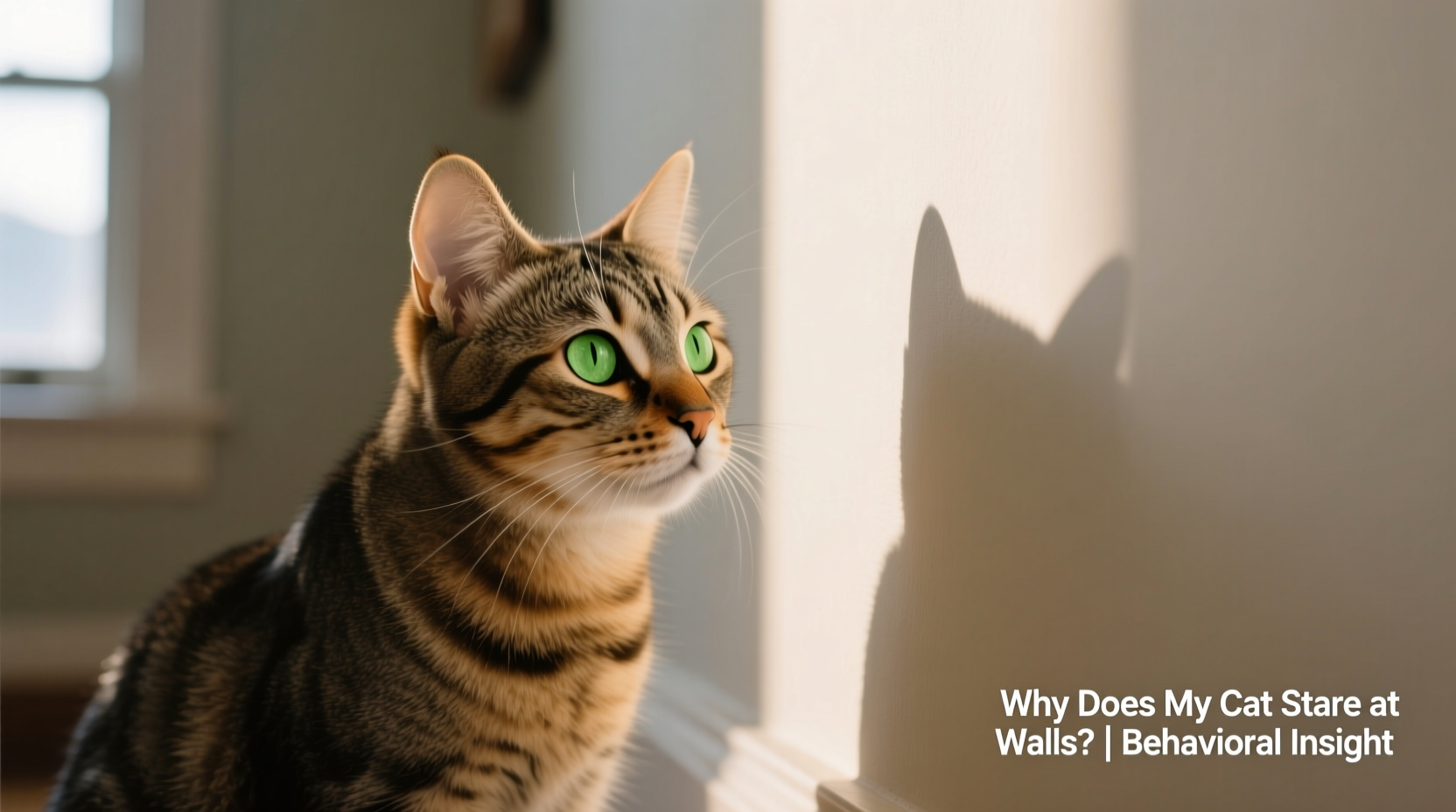
Cats possess highly developed senses, particularly vision and hearing. Their eyes are adapted for low-light hunting, with a reflective layer behind the retina (the tapetum lucidum) that enhances night vision. This also means they detect subtle movements and light changes invisible to humans. What appears as a blank wall to you might flicker with shadows, dust motes, or shifting light patterns that captivate your cat’s attention.
In addition, cats have an extraordinary sense of hearing, capable of detecting ultrasonic frequencies beyond human range. Tiny insects like silverfish or rodents moving inside walls may produce faint sounds that trigger your cat’s predatory instincts. Even air currents through vents or creaking building materials can attract their focus.
“Cats live in a sensory world we can’t fully perceive. A ‘blank’ wall may be teeming with auditory and visual stimuli from their perspective.” — Dr. Lena Peterson, Feline Behavior Specialist
Common Behavioral Reasons for Wall Staring
Not all wall-staring is cause for alarm. In many cases, it falls within the spectrum of normal feline behavior. Below are some common non-medical explanations:
- Hunting Instincts: Cats may detect movement behind baseboards or within walls—such as insects or mice—and remain vigilant, tracking unseen prey.
- Light and Shadow Play: Sunlight filtering through blinds, reflections from mirrors, or ceiling fans casting rhythmic shadows can mesmerize cats.
- Boredom or Understimulation: Indoor cats without sufficient mental stimulation may develop repetitive behaviors, including staring at static objects.
- Environmental Curiosity: A new home, rearranged furniture, or unfamiliar scents on the wall (e.g., cleaning products) can prompt investigative staring.
When Wall Staring Signals a Medical Concern
Prolonged or frequent wall-staring becomes concerning when accompanied by other abnormal behaviors. These may indicate neurological, cognitive, or sensory disorders. Key red flags include:
- Staring for extended periods (over 10–15 minutes) without response to stimuli
- Disorientation or walking into walls
- Sudden changes in sleep-wake cycles
- Vocalizing while staring (yowling, meowing)
- Twitching, seizures, or loss of balance
One serious condition associated with this behavior is feline cognitive dysfunction (FCD), similar to dementia in humans. It commonly affects cats over 10 years old and may present with confusion, litter box avoidance, and altered social interactions. Another possibility is epilepsy or partial seizures, where a cat may appear “zoned out” while fixating on a point.
Vision problems, such as retinal detachment or glaucoma, can also lead to disoriented staring. If your cat’s pupils are dilated and unresponsive to light, or if they bump into objects, an ophthalmological exam is essential.
Mini Case Study: Bella, the 12-Year-Old Tabby
Bella, a 12-year-old domestic shorthair, began spending hours each day sitting motionless in front of the living room wall. Her owner, Sarah, initially dismissed it as quirks of aging. But when Bella started yowling at night and forgetting her litter box location, she consulted a veterinarian. After blood work and a neurological assessment, Bella was diagnosed with mild cognitive dysfunction. With environmental enrichment, a senior-friendly diet, and low-dose supplements containing antioxidants, her symptoms improved significantly within six weeks. The wall-staring decreased, and her nighttime vocalizations ceased.
Distinguishing Normal vs. Problematic Behavior
To determine whether your cat’s wall-staring is benign or a sign of distress, consider frequency, duration, and context. The following table outlines key differences:
| Behavioral Trait | Normal Occurrence | Potential Red Flag |
|---|---|---|
| Duration of Stare | Less than 2–3 minutes | Over 10 minutes, unresponsive |
| Response to Name | Looks away when called | Ignores voice or touch |
| Associated Sounds | Ears twitch toward movement | Vocalizing without cause |
| Time of Day | During daylight or active hours | Frequent episodes at night |
| Physical Coordination | Normal gait and posture | Stumbling, head tilt, circling |
If your cat exhibits three or more red flags from the table, a veterinary evaluation is strongly recommended.
Step-by-Step Guide: Responding to Persistent Wall Staring
Follow this timeline to assess and address your cat’s behavior effectively:
- Observe and Document (Days 1–3): Note the time, duration, and circumstances of each episode. Record any additional behaviors such as vocalization, twitching, or disorientation.
- Inspect the Environment (Day 4): Check for drafts, insect activity, or light patterns on the wall. Use a flashlight to look for cracks or signs of pests. Temporarily block access to the area to see if behavior shifts.
- Enhance Environmental Enrichment (Days 5–7): Introduce interactive toys, window perches, and scheduled play sessions. Consider a second cat or bird feeder outside a window for added stimulation.
- Consult Your Veterinarian (By Day 10): Share your observations. Request a full physical, neurological screening, and possibly blood tests to rule out metabolic or cognitive issues.
- Implement Treatment Plan (Ongoing): If a medical condition is diagnosed, follow prescribed therapies. For behavioral causes, maintain consistency in routine and enrichment.
Checklist: Is Your Cat’s Wall Staring Cause for Concern?
Use this checklist to evaluate your cat’s behavior:
- ✅ Does the staring last less than 3 minutes?
- ✅ Does your cat respond when you call their name?
- ✅ Are there visible stimuli (shadows, bugs, light reflection)?
- ✅ Is your cat otherwise eating, grooming, and using the litter box normally?
- ✅ Have there been recent environmental changes (new pet, move, construction)?
- ✅ Is your cat under 10 years old with no prior health issues?
If you answered “yes” to most of these, the behavior is likely normal. If not, further investigation is warranted.
FAQ
Can cats see ghosts or spirits on walls?
There’s no scientific evidence that cats perceive supernatural entities. However, their heightened senses allow them to detect subtle environmental changes—like electromagnetic fields, infrasound, or minute air movements—that may seem mysterious to humans. What feels “paranormal” is usually explainable through biology.
Is wall staring a sign of stress in cats?
Yes, in some cases. Repetitive or obsessive behaviors, including prolonged staring, can stem from anxiety or chronic stress. Triggers include household changes, lack of safe spaces, or conflict with other pets. Addressing the root cause through environmental modification and calming aids (e.g., pheromone diffusers) can help.
Should I interrupt my cat when they’re staring at the wall?
If the episode is brief and your cat seems relaxed, there’s no need to intervene. However, if the behavior appears compulsive or your cat seems distressed, gently redirect them with a toy or soft verbal cue. Avoid startling them, as this can increase anxiety.
Expert Insight: When to Seek Professional Help
Dr. Alan Reyes, a board-certified veterinary neurologist, emphasizes early intervention:
“Cats are masters at hiding discomfort. A behavior like wall-staring might be the first observable clue of a deeper issue. I’ve seen cases where what seemed like odd behavior turned out to be early-stage seizures or hypertension affecting the brain. Don’t wait for dramatic symptoms—early diagnosis saves lives.” — Dr. Alan Reyes, DVM, Diplomate ACVIM (Neurology)
Conclusion: Balancing Observation with Action
Your cat staring at walls isn’t automatically a crisis, but it shouldn’t be ignored either. Feline behavior is deeply rooted in instinct, environment, and physiology. By understanding the range of possible causes—from natural curiosity to medical emergencies—you become better equipped to support your pet’s well-being. Pay attention not just to what your cat does, but how often, how long, and what else is happening around them. Trust your instincts as a caregiver: if something feels off, it’s worth exploring.




 浙公网安备
33010002000092号
浙公网安备
33010002000092号 浙B2-20120091-4
Comments
No comments yet. Why don't you start the discussion?