
Cats are enigmatic creatures. Their behaviors often leave owners puzzled—especially when they fixate on something as seemingly uninteresting as a blank wall. While occasional wall-staring may be harmless, persistent or intense staring can indicate underlying issues ranging from boredom to serious medical conditions. Understanding the reasons behind this behavior is essential for responsible pet ownership. This article explores the science, psychology, and health implications of wall-staring in cats, helping you distinguish between normal quirks and potential warning signs.
The Psychology Behind Feline Staring
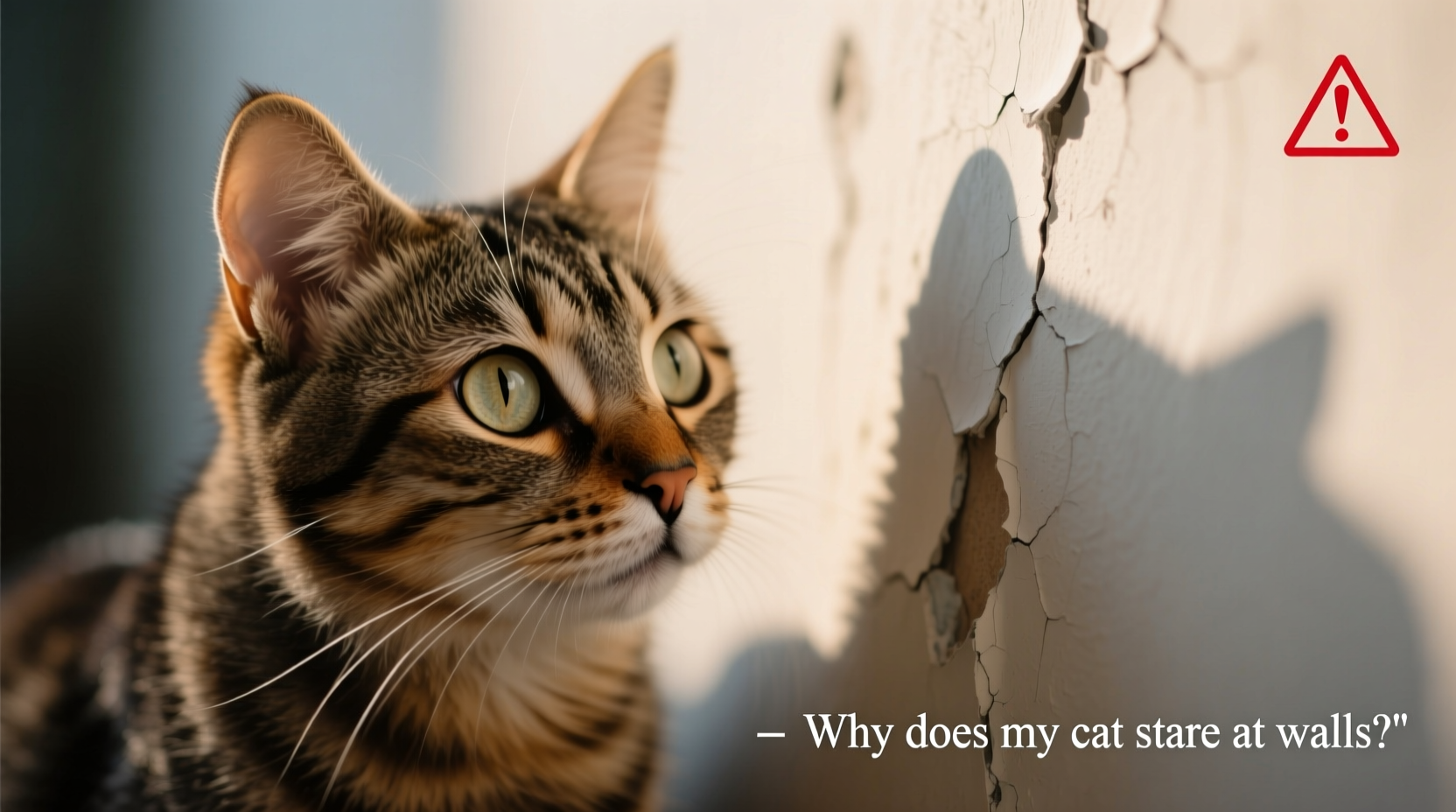
Cats rely heavily on their senses, particularly vision and hearing, to interpret their environment. Unlike humans, cats process motion, light, and shadows differently due to the structure of their eyes. The tapetum lucidum—a reflective layer behind the retina—enhances night vision but also makes them highly sensitive to subtle movements and flickers that we might not notice.
When a cat appears to stare at a wall, it may actually be reacting to:
- Shadows cast by moving objects (e.g., curtains, ceiling fans)
- Faint sounds within walls (insects, pipes, rodents)
- Dust particles or air currents visible in sunlight
- Reflections from windows or mirrors
In many cases, what looks like vacant wall-gazing is actually a form of environmental scanning. Cats are natural predators, and even indoor pets retain strong hunting instincts. A slight flutter in wallpaper texture or a shifting shadow can trigger focused attention.
Normal vs. Abnormal Staring: Key Differences
Not all wall-staring is cause for concern. In fact, brief episodes lasting seconds or minutes are typically part of normal feline behavior. However, certain patterns suggest deeper issues. The distinction lies in frequency, duration, context, and accompanying symptoms.
Consider these factors when evaluating whether the behavior is benign or problematic:
| Factor | Normal Behavior | Potential Red Flag |
|---|---|---|
| Duration | Less than 1–2 minutes | 5+ minutes without blinking or responding |
| Frequency | Occasional, situational | Daily or multiple times per day |
| Response to Stimuli | Looks away when called or touched | Ignores owner, treats, or loud noises |
| Body Language | Relaxed posture, ears forward | Rigid stance, dilated pupils, twitching tail |
| Afterward Behavior | Resumes normal activity | Appears disoriented, walks oddly, hides |
If your cat exhibits several red flags consistently, further investigation is warranted. Persistent unresponsiveness during staring episodes may point to neurological disturbances rather than curiosity.
Medical Causes That May Trigger Wall-Staring
While environmental triggers explain many instances of wall-gazing, medical conditions must be ruled out—especially if the behavior is new, worsening, or accompanied by other symptoms. Several health issues can manifest through altered perception or compulsive behaviors.
Epilepsy and Seizure Activity
Focal seizures (also known as partial seizures) affect only a specific area of the brain and may not involve convulsions. Instead, cats might exhibit:
- Vacant staring spells
- Facial twitching or lip-smacking
- Unusual vocalizations
- Sudden freezing in place
These episodes typically last 30 seconds to 2 minutes and may be followed by confusion or lethargy. Epilepsy in cats can be idiopathic (no known cause) or secondary to trauma, infection, or brain tumors.
Vision Problems and Cognitive Decline
Older cats are susceptible to age-related conditions such as feline cognitive dysfunction syndrome (CDS), which shares similarities with human dementia. Symptoms include:
- Disorientation in familiar spaces
- Reduced interaction with family members
- Nighttime vocalization
- Staring into corners or walls
Additionally, retinal degeneration or glaucoma can distort vision, causing cats to misinterpret shapes and shadows. They may appear to \"see\" things that aren’t there.
Pain or Neurological Disorders
Chronic pain—such as from arthritis or dental disease—can lead to unusual behaviors. A cat in discomfort may zone out or adopt a fixed gaze as a coping mechanism. Similarly, spinal cord injuries or nerve damage can disrupt sensory processing, resulting in abnormal focus.
“Cats are masters at hiding pain. A sudden change in behavior like prolonged staring should prompt a veterinary evaluation—even if no other symptoms are obvious.” — Dr. Lena Torres, DVM, Feline Neurology Specialist
Behavioral and Environmental Triggers
Even healthy cats may develop habits that seem odd to us. Boredom, stress, or lack of stimulation can lead to repetitive behaviors, including wall-watching. Indoor-only cats are especially prone to under-stimulation, which may result in:
- Compulsive pacing or licking
- Fixation on lights or reflections
- Apparent hallucinations (chasing invisible prey)
In multi-cat households, social tension can also contribute. A subordinate cat may retreat into passive vigilance, scanning walls as a displacement behavior while avoiding confrontation.
Mini Case Study: Bella the Overstimulated Tabby
Bella, a 4-year-old domestic shorthair, began staring at the living room wall every evening after her owners installed recessed LED lighting. Her guardian initially dismissed it as curiosity, but soon noticed Bella would remain frozen for up to 10 minutes, unresponsive to calls or treats.
After ruling out seizures via an MRI and bloodwork, the veterinarian suggested environmental assessment. It turned out the angled lights created a shimmering reflection on the textured wall—visible only at certain angles and intensities. Once the bulbs were replaced with warmer, diffused lighting, Bella’s staring ceased entirely.
This case highlights how subtle environmental changes can profoundly impact feline behavior—even mimicking neurological symptoms.
When to Seek Veterinary Help: A Step-by-Step Guide
If wall-staring concerns you, follow this timeline to determine next steps:
- Observe and Document (Days 1–3): Note the time, duration, frequency, and any triggers (e.g., lights, sounds). Record video if possible.
- Eliminate Environmental Factors (Day 4): Check for drafts, reflections, pests in walls, or high-frequency noises (e.g., electronics).
- Assess Overall Health (Day 5): Look for additional symptoms—changes in appetite, litter box use, grooming, or mobility.
- Consult Your Veterinarian (Day 6–7): Share your observations. Request a full physical, neurological exam, and possibly bloodwork or imaging.
- Follow Up (Ongoing): If diagnosed with a condition like epilepsy or CDS, adhere to treatment plans and monitor progress monthly.
Early intervention improves outcomes significantly, especially for progressive conditions.
Actionable Checklist: Responding to Wall-Staring
Use this checklist to assess and address your cat’s behavior systematically:
- ✅ Rule out visual or auditory stimuli (shadows, insects, reflections)
- ✅ Monitor for associated symptoms (tremors, drooling, imbalance)
- ✅ Evaluate recent changes in home environment or routine
- ✅ Reduce stress with enrichment (toys, climbing shelves, play sessions)
- ✅ Schedule a vet visit if episodes last longer than 2 minutes or increase in frequency
- ✅ Consider senior cat screening if your cat is over 10 years old
Frequently Asked Questions
Can cats see ghosts or spirits when they stare at walls?
There is no scientific evidence that cats perceive supernatural entities. However, their heightened senses allow them to detect subtle stimuli—like ultrasonic rodent noises or infrared heat patterns—that humans cannot. What seems paranormal is usually a response to real, albeit imperceptible, environmental cues.
Is wall-staring a sign of mental illness in cats?
Not necessarily. While chronic stress or lack of stimulation can lead to compulsive behaviors, isolated staring isn’t diagnostic of mental illness. True psychiatric conditions in cats are rare and require exclusion of medical causes first. Conditions like feline hyperesthesia or obsessive-compulsive disorder are possible but uncommon.
My older cat stares at walls more since losing vision. Is this normal?
Yes, it’s common for visually impaired cats to orient toward walls or remain still while listening. As vision declines, they rely more on spatial memory and sound. However, sudden onset or aggressive reactions during staring warrant veterinary review to rule out pain or cognitive dysfunction.
Conclusion: Awareness Leads to Better Care
Cat behavior rarely exists in isolation. A glance at the wall might be nothing—or it might be the first clue to a hidden health issue. By paying close attention to context, consistency, and accompanying signs, you empower yourself to make informed decisions about your cat’s well-being.
Never dismiss changes in behavior as “just being a cat.” Responsible ownership means asking questions, seeking answers, and acting early when something feels off. Whether the cause is simple boredom or a complex neurological condition, timely understanding leads to better outcomes.




 浙公网安备
33010002000092号
浙公网安备
33010002000092号 浙B2-20120091-4
Comments
No comments yet. Why don't you start the discussion?