
Cats are enigmatic creatures. Their behaviors often leave owners puzzled—pouncing on invisible prey, batting at dust motes, or suddenly freezing in place, eyes locked on an empty wall. One of the more unsettling habits some cats develop is staring intently at blank surfaces for minutes at a time. While this can be dismissed as quirky feline eccentricity, persistent or intense wall-staring may signal underlying physical or psychological issues. Understanding the reasons behind this behavior—and knowing when to act—is essential for responsible pet ownership.
This article explores the full spectrum of causes, from harmless curiosity to serious medical conditions. You’ll learn how to differentiate between normal and concerning behavior, recognize warning signs, and take practical steps to support your cat’s well-being.
Common Reasons Cats Stare at Walls
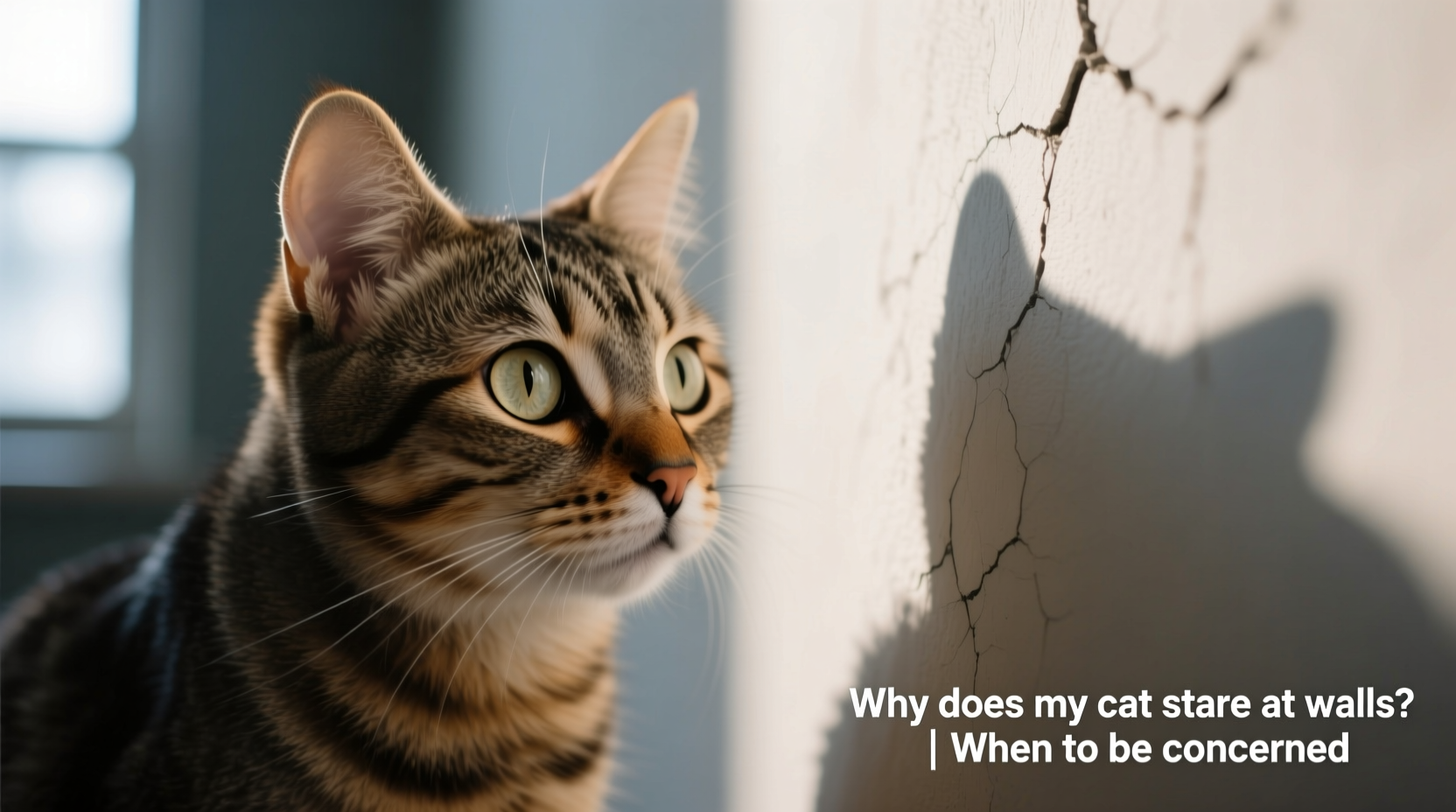
Cat behavior rarely fits into simple explanations. What looks like aimless fixation might actually stem from sensory perception, instinct, or environmental cues invisible to humans. Here are several non-threatening reasons your cat may appear to be staring at nothing:
- Sensory detection: Cats have superior hearing and vision compared to humans. They may detect high-frequency sounds (like rodents in walls), subtle air currents, or tiny movements caused by insects or dust particles reflecting light.
- Hunting instinct: Even indoor cats retain predatory instincts. A flickering shadow or the way light shifts across a wall can trigger a hunting response, causing them to fixate as if tracking prey.
- Boredom or overstimulation: In environments lacking enrichment, cats may focus on minor stimuli simply because there’s nothing else to engage with. Conversely, overly stimulating spaces can lead to sensory overload, resulting in zoning out or obsessive attention to static objects.
- Dreaming or zoning out: Like humans, cats experience drowsy states where their gaze appears unfocused. This can resemble wall-staring but is usually brief and occurs during relaxation.
When Wall-Staring Becomes a Red Flag
Occasional wall-gazing is normal. But when the behavior becomes frequent, prolonged, or accompanied by other symptoms, it may point to deeper problems. The key is recognizing patterns that deviate from your cat’s baseline behavior.
Veterinarians and animal behaviorists agree that concern should arise when wall-staring is:
- Daily or multiple times per day
- Lasting longer than a few minutes
- Accompanied by vocalization, twitching, drooling, or disorientation
- Interrupting normal activities like eating, grooming, or sleeping
- Followed by sudden bursts of running or hiding
“Cats don’t typically engage in repetitive behaviors without cause. Persistent staring at walls, especially if new or escalating, warrants veterinary evaluation.” — Dr. Lena Patel, DVM, Feline Behavior Specialist
Potential Medical Causes
Medical conditions that affect the brain, vision, or nervous system can manifest through unusual behaviors like wall-staring. These include:
| Condition | Description | Associated Symptoms |
|---|---|---|
| Epilepsy / Seizures | Abnormal electrical activity in the brain; partial seizures may not involve convulsions | Fixed gaze, lip-smacking, twitching, unresponsiveness, post-event confusion |
| Vision Loss or Degeneration | Progressive retinal atrophy or cataracts can cause misinterpretation of surroundings | Bumping into walls, dilated pupils, reluctance to jump, increased vocalization |
| Cognitive Dysfunction Syndrome (CDS) | Similar to dementia in older humans; affects senior cats (usually 10+ years) | Night pacing, litter box accidents, confusion, reduced interaction |
| Hypertension (High Blood Pressure) | Often secondary to kidney disease or hyperthyroidism; can cause neurological symptoms | Restlessness, blindness, vocalizing, disorientation |
| Infections or Brain Lesions | Rare but possible; includes tumors, inflammation, or abscesses | Lethargy, head tilt, circling, loss of balance |
Behavioral and Environmental Triggers
Not all wall-staring stems from illness. Psychological and environmental factors play a significant role, especially in indoor-only cats who lack natural outlets for their instincts.
Anxiety and Stress
Cats are sensitive to changes in routine, household dynamics, or environment. Relocations, new pets, loud noises, or even rearranged furniture can induce stress. Some cats respond by withdrawing or developing compulsive behaviors—including repetitive staring.
Environmental Deficiency
A lack of mental stimulation leads many cats to invent their own entertainment. Without climbing structures, puzzle feeders, or interactive toys, they may fixate on small visual or auditory stimuli simply because nothing else captures their interest.
Obsessive-Compulsive Behaviors
In rare cases, cats develop compulsive disorders similar to those in humans. These often begin as adaptive responses to stress but become ingrained over time. Examples include excessive licking, tail-chasing, or repetitive staring.
Mini Case Study: Bella the Siamese
Bella, a 12-year-old Siamese cat, began spending increasing amounts of time sitting motionless in front of the living room wall. Her owner, Maria, initially thought she was watching flies. But when Bella started vocalizing loudly at night and walking in circles after her staring episodes, Maria grew concerned.
A veterinary exam revealed that Bella had undiagnosed hypertension due to chronic kidney disease. Her blood pressure was dangerously high, affecting her vision and possibly triggering mini-seizures. After starting medication and a renal-support diet, Bella’s episodes decreased dramatically within three weeks. Her nighttime crying stopped, and she resumed normal social behavior.
This case illustrates how subtle behavioral changes can be early indicators of systemic illness—especially in senior cats.
Step-by-Step Guide: What to Do If Your Cat Stares at Walls
If you notice your cat engaging in frequent or unusual wall-staring, follow this structured approach to determine whether intervention is needed:
- Observe and Document: Note the duration, frequency, time of day, and any accompanying behaviors (twitching, meowing, drooling). Use a journal or notes app to track patterns over 3–7 days.
- Assess Environment: Look for potential triggers—noises inside walls, drafts, reflections, or shadows. Try changing lighting or closing blinds to see if the behavior changes.
- Monitor Other Habits: Check for changes in appetite, litter box use, grooming, mobility, or interaction. Any deviation could indicate discomfort or illness.
- Record a Video: Capture a clear video of the episode to show your veterinarian. This helps distinguish between a seizure, hallucination, and simple fixation.
- Schedule a Veterinary Visit: Bring your observations and video. Request a full physical exam, blood work, blood pressure check, and ophthalmic evaluation, especially if your cat is over 7 years old.
- Follow Up: If no medical cause is found, consider a consultation with a veterinary behaviorist to explore anxiety or environmental enrichment strategies.
Checklist: Signs That Warrant Immediate Veterinary Attention
Use this checklist to evaluate whether your cat’s wall-staring requires urgent care:
- ✅ Episodes last more than 2–3 minutes
- ✅ Accompanied by muscle tremors, twitching, or stiff limbs
- ✅ Drooling or foaming at the mouth
- ✅ Unresponsiveness during the episode
- ✅ Disorientation or confusion afterward
- ✅ Sudden onset in an older cat (8+ years)
- ✅ Nighttime vocalization or pacing
- ✅ Changes in vision (bumping into things, wide pupils)
If two or more of these apply, contact your vet promptly. Early diagnosis improves outcomes significantly, particularly for conditions like hypertension or cognitive decline.
FAQ
Is it normal for cats to stare at walls occasionally?
Yes, brief moments of fixation—especially in response to movement, sound, or light—are normal. Cats process sensory input differently than humans, and their attention spans can latch onto stimuli we don’t perceive.
Can cats hallucinate?
Yes, especially during partial seizures or due to neurological conditions. Cats may react to unseen stimuli, such as swatting at the air or appearing frightened by “nothing.” This is more common in older cats with cognitive dysfunction or underlying illness.
How can I prevent my cat from staring at walls?
You can’t always prevent it, but you can reduce risk by providing mental stimulation, maintaining regular vet checkups, minimizing stress, and ensuring a safe, enriched environment. For medically affected cats, treatment of the underlying condition is key.
Conclusion: Trust Your Instincts and Act Early
Cat behavior exists on a spectrum between instinctual quirks and warning signals. While occasional wall-staring is usually harmless, persistent or intense fixation demands attention. As a caregiver, your awareness and timely response can make a profound difference in your cat’s quality of life.
Don’t dismiss odd behaviors as “just being a cat.” Monitor closely, document changes, and consult a professional when in doubt. Most treatable conditions respond best when caught early. By staying informed and proactive, you ensure your feline companion remains healthy, happy, and mentally sharp for years to come.




 浙公网安备
33010002000092号
浙公网安备
33010002000092号 浙B2-20120091-4
Comments
No comments yet. Why don't you start the discussion?