
Cats are naturally curious creatures, often engaging in behaviors that seem mysterious or even odd to their human companions. One such behavior—staring intently at blank walls for extended periods—can be unsettling, especially when it happens frequently or lasts for hours. While occasional wall-gazing might simply reflect a cat’s fascination with shadows or dust motes, prolonged fixation can signal underlying issues ranging from environmental stress to serious neurological conditions.
Understanding why your cat exhibits this behavior requires careful observation and awareness of what constitutes normal versus concerning feline conduct. This article explores the possible reasons behind wall-staring in cats, highlights key behavioral red flags, and provides actionable guidance on when and how to intervene.
Common Reasons Cats Stare at Walls
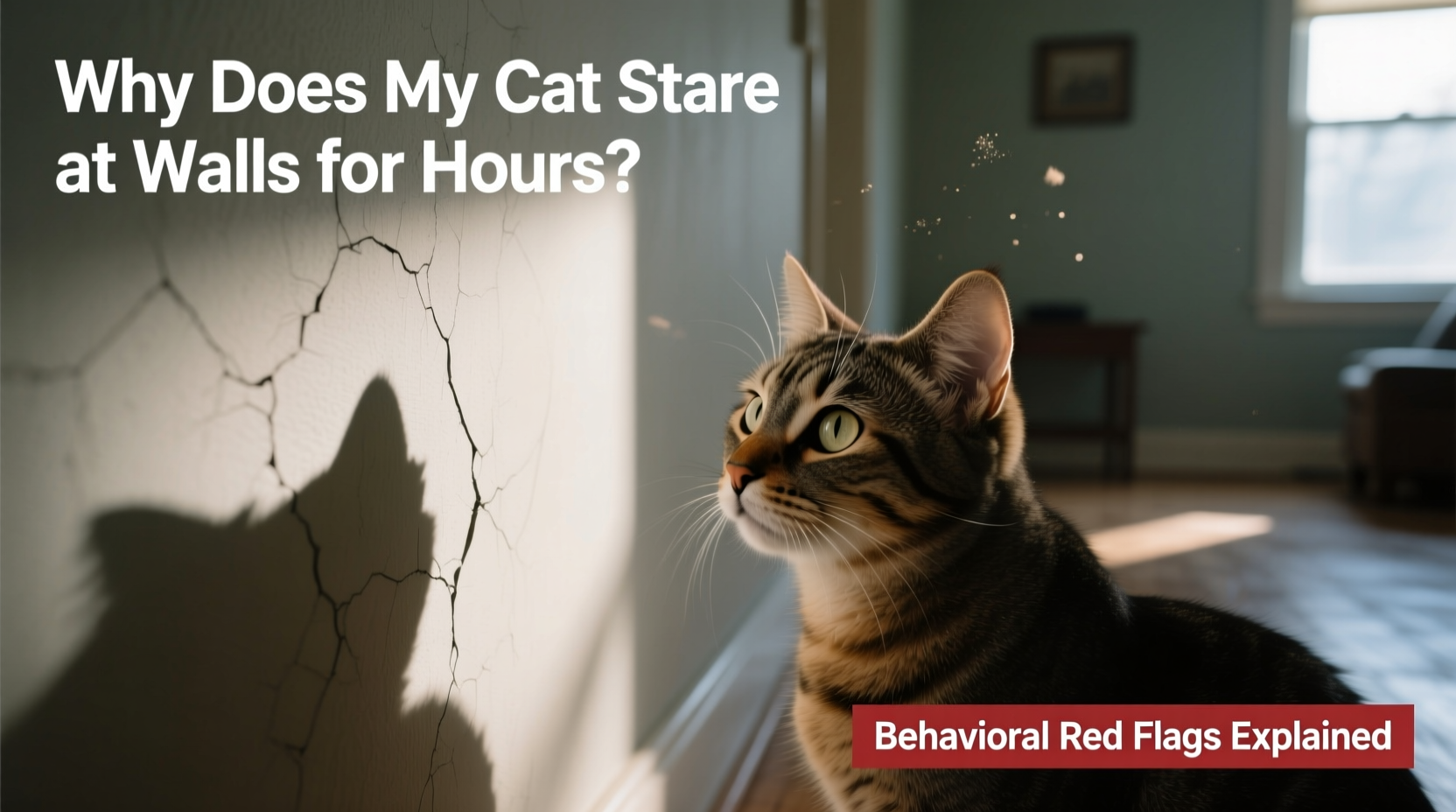
Not every instance of wall-staring is cause for alarm. In many cases, the behavior has simple explanations rooted in a cat’s natural instincts and sensory perception.
- Visual stimuli: Tiny movements like dust particles, light reflections, or insect activity along baseboards may capture a cat’s attention without being visible to humans.
- Auditory cues: Cats have exceptional hearing and may react to high-frequency sounds within walls—such as rodents, plumbing noises, or electrical buzzing—that go unnoticed by people.
- Playful focus: Some cats enter a “hunt mode” where they fixate on imaginary prey, mimicking stalking behaviors even in the absence of real targets.
- Environmental enrichment deficit: Boredom or lack of stimulation can lead to repetitive or obsessive-looking behaviors, including prolonged staring.
In these scenarios, the cat typically returns to normal activity after a few minutes, shows no signs of distress, and maintains regular eating, grooming, and social habits.
Behavioral Red Flags: When Wall-Staring Becomes a Concern
Prolonged wall-staring becomes worrisome when it's part of a broader pattern of abnormal behavior. These warning signs should prompt closer evaluation:
- Drooling or excessive blinking during episodes
- Disorientation or stumbling after staring spells
- Vocalizations (meowing, growling) directed at empty spaces
- Lack of response to familiar voices or commands
- Sudden aggression or fearfulness without apparent cause
- Changes in appetite, litter box use, or sleep patterns
Such symptoms suggest the behavior may not be purely psychological or environmental but could stem from neurological dysfunction or pain.
“Cats are masters at hiding discomfort. A change in routine—even something as subtle as staring at walls—can be one of the first indicators of an underlying health problem.” — Dr. Lena Torres, DVM, Feline Neurology Specialist
Medical Conditions Linked to Prolonged Wall-Staring
Several medical issues can manifest through unusual visual fixation. These require veterinary diagnosis and intervention.
Epilepsy and Seizure Activity
Focal seizures in cats often present as motionless staring, sometimes accompanied by subtle twitching, lip-smacking, or dilated pupils. Unlike generalized seizures, which involve convulsions, focal episodes may last seconds to minutes and leave the cat temporarily disoriented. If your cat stares at walls and then walks into furniture or seems confused afterward, seizure activity should be ruled out.
Vision Problems and Hallucinations
Cats with deteriorating eyesight—due to glaucoma, retinal detachment, or hypertension-related damage—may perceive phantom shapes or lights. Similarly, cognitive dysfunction syndrome (CDS), common in senior cats, can lead to hallucinatory behaviors, including staring at non-existent objects.
Hearing Loss and Sensory Compensation
Deaf or partially deaf cats may rely more heavily on vision, leading them to intensely monitor static areas where they once heard sounds. This compensatory behavior can appear obsessive but is often a coping mechanism.
Hyperesthesia Syndrome
Also known as \"rolling skin syndrome,\" this condition causes heightened sensitivity along the back. Affected cats may suddenly dart away, bite their tails, or fixate on walls while experiencing tingling sensations. The exact cause remains unclear, though it may involve spinal nerve irritation or compulsive disorders.
Brain Tumors or Lesions
Though rare, intracranial masses can disrupt normal brain function, resulting in persistent staring, circling, head pressing, or balance issues. Older cats are at higher risk, and progression is usually gradual.
Assessing the Risk: A Step-by-Step Evaluation Guide
If your cat regularly stares at walls for long periods, follow this timeline to determine whether professional care is needed.
- Day 1–3: Observe silently. Watch for triggers, duration, and recovery. Does the cat snap out of it? Is there a pattern (time of day, location)?
- Day 4: Audit the environment. Check for drafts, hidden pests, flickering lights, or ultrasonic devices (like pest repellers) that might affect your cat.
- Day 5–7: Monitor secondary symptoms. Track changes in appetite, grooming, litter use, and interaction levels.
- Week 2: Consult your vet. Share your notes. Request a full physical exam, blood panel, blood pressure check, and ophthalmic evaluation.
- If symptoms persist: Seek advanced diagnostics. Depending on findings, your vet may recommend MRI, EEG, or referral to a veterinary neurologist.
Early detection significantly improves outcomes, especially for conditions like hypertension or epilepsy, which are treatable when caught in time.
When Anxiety or OCD Is the Cause
Just like humans, cats can develop anxiety-driven or compulsive behaviors. Chronic stress—caused by household changes, conflict with other pets, or lack of safe space—can lead to displacement activities such as overgrooming, tail chasing, or wall fixation.
In some cases, the act of staring becomes self-reinforcing, releasing endorphins that soothe the cat. Over time, this can evolve into a true obsessive-compulsive disorder (OCD).
Signs of anxiety-related staring include:
- Repetition: Occurs multiple times daily, lasting 10+ minutes each
- Ritualistic nature: Always happens before feeding or after loud noises
- Resistance to distraction: The cat ignores treats, toys, or petting during episodes
Addressing the root cause involves both environmental modification and, in severe cases, medication.
| Factor | Supportive Action | Avoid |
|---|---|---|
| Stress Reduction | Provide vertical space, quiet zones, consistent routines | Sudden changes, yelling, punishment |
| Mental Stimulation | Interactive toys, puzzle feeders, scheduled play sessions | Leaving cat alone all day with no enrichment |
| Behavioral Support | Feliway diffusers, pheromone collars, calming supplements | Ignoring symptoms or assuming “it’s just quirky” |
| Medical Intervention | SSRIs (e.g., fluoxetine) under veterinary supervision | Human medications or unapproved supplements |
Mini Case Study: Bella, the Senior Cat with Midnight Episodes
Bella, a 14-year-old domestic shorthair, began spending hours each night staring at the same corner of her owner’s bedroom. Her guardian initially dismissed it as aging quirks until Bella started bumping into walls and crying inexplicably.
After a veterinary workup, Bella was diagnosed with hypertensive retinopathy—a complication of undetected high blood pressure. The \"visions\" she experienced were likely visual distortions caused by retinal damage. With medication to control her blood pressure and monthly monitoring, Bella’s episodes decreased dramatically within six weeks.
This case underscores the importance of not attributing odd behaviors solely to age. What looks like confusion or eccentricity may actually be a cry for medical help.
Prevention and Proactive Care Checklist
Use this checklist to safeguard your cat’s neurological and emotional well-being:
- ✅ Schedule biannual wellness exams for cats over 7 years old
- ✅ Monitor blood pressure during routine visits, especially if kidney disease or hyperthyroidism is present
- ✅ Provide daily interactive play (at least 15 minutes twice a day)
- ✅ Eliminate environmental stressors (e.g., noisy appliances, unstable routines)
- ✅ Install nightlights to reduce disorientation in low-light conditions
- ✅ Rotate toys weekly to maintain mental engagement
- ✅ Consider cognitive support diets or supplements for senior cats (e.g., those with antioxidants and omega-3s)
Frequently Asked Questions
Is it normal for cats to stare at walls occasionally?
Yes, brief moments of intense focus are normal, especially if triggered by unseen movement or sound. However, staring lasting more than 5–10 minutes, occurring frequently, or paired with other odd behaviors warrants investigation.
Can blindness cause a cat to stare at walls?
Yes. Visually impaired cats may appear to stare because they’re orienting themselves using residual light perception or auditory cues. They might also experience visual hallucinations due to cortical changes, particularly if vision loss is sudden or linked to systemic illness.
Should I interrupt my cat when it’s staring at the wall?
Gently calling your cat’s name is acceptable, but avoid startling them. If they don’t respond or seem unaware of you, do not touch them abruptly—this could trigger fear or defensive aggression. Instead, softly guide them away and note the episode for your vet.
Conclusion: Trust Your Instincts and Act Early
Your cat’s wall-staring habit may be harmless—or it could be the earliest clue to a serious condition. The difference lies in context: frequency, duration, accompanying symptoms, and overall behavior. As a responsible caregiver, your role isn’t to diagnose but to observe closely and advocate for timely veterinary evaluation.
Don’t dismiss changes because “cats are weird.” Their silence is not indifference—it’s instinct. By staying alert to shifts in behavior, you give your cat the best chance at a healthy, comfortable life. If something feels off, trust that feeling. Schedule a vet visit, bring your notes, and insist on answers. Your vigilance today could prevent suffering tomorrow.




 浙公网安备
33010002000092号
浙公网安备
33010002000092号 浙B2-20120091-4
Comments
No comments yet. Why don't you start the discussion?