
Cats are enigmatic creatures. One moment they’re curled up in your lap, purring contentedly; the next, they’re frozen in place, eyes locked on a blank wall as if deciphering ancient hieroglyphs. If you’ve ever caught your cat staring into nothingness for minutes—or even hours—at a time, you’re not alone. This behavior, while unsettling to human observers, is more common than many realize. But what’s really going on inside that small, furry head? Is it boredom, illness, instinct, or something more complex?
Understanding why cats exhibit such seemingly odd behaviors requires looking beyond surface-level assumptions. Cats don’t act without reason—even when their actions defy our understanding. Their heightened senses, evolutionary instincts, and unique cognitive wiring all play roles in shaping how they interact with their environment. A wall may appear inert to us, but to a cat, it could be a stage for shadows, sounds, or memories only they can perceive.
The Science Behind Feline Perception
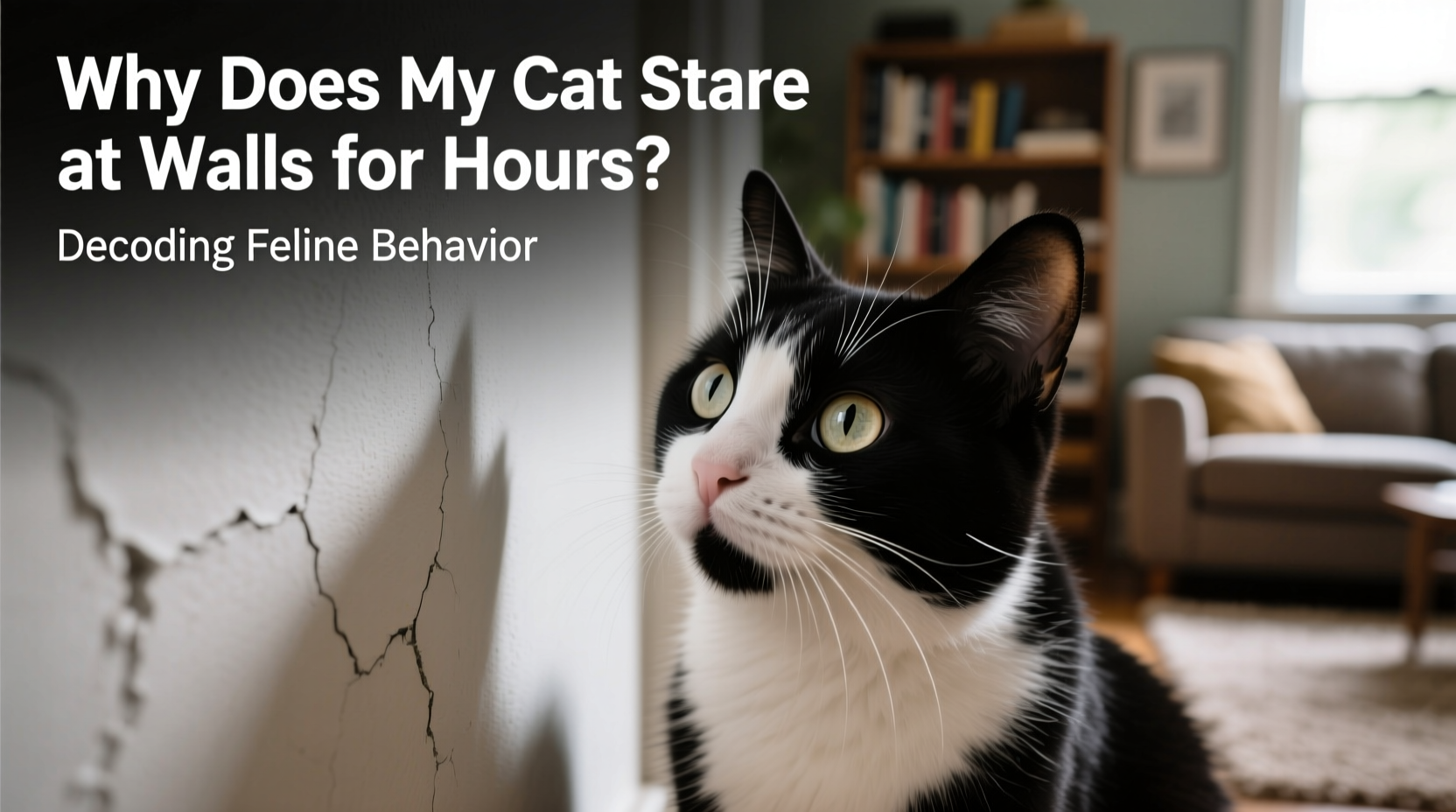
To comprehend wall-staring, we must first appreciate how cats experience the world differently from humans. Their sensory systems are finely tuned for hunting and survival, even in domesticated environments. Vision, hearing, and even whisker sensitivity allow cats to detect stimuli far beyond our perception.
Cat eyes are optimized for low-light conditions, making them exceptional nocturnal hunters. They possess a higher density of rod cells—responsible for detecting motion and light—than humans. While this gives them superior night vision, it also means they see movement more acutely, even subtle shifts in light patterns across a wall caused by passing clouds or reflections from a TV screen.
Additionally, cats hear frequencies up to 64 kHz, compared to the human limit of around 20 kHz. This means they can pick up high-pitched sounds like insect movements within walls, rodents scurrying through insulation, or even electrical buzzing from appliances—all invisible to us but highly stimulating to them.
Common Triggers That May Cause Wall Staring
- Shadow Play: Sunlight shifting through blinds or curtains creates moving patterns that mimic prey.
- Insect Noises: Termites, mice, or even spiders inside walls produce faint scratching sounds cats can detect.
- Electromagnetic Fields: Some speculate that cats react to energy emissions from wiring or electronics, though evidence remains anecdotal.
- Echoes and Resonance: Sound bouncing off walls may create auditory illusions that capture a cat’s attention.
- Visual Floaters: Like humans, cats may occasionally see floaters in their vision, especially as they age.
“Cats live in a multisensory world we barely perceive. What looks like vacant staring is often intense sensory processing.” — Dr. Lena Torres, Veterinary Ethologist
When Normal Behavior Crosses Into Concern
While occasional wall-gazing is typically harmless, prolonged or repetitive fixation can signal underlying issues. The key lies in context: frequency, duration, accompanying behaviors, and changes in routine.
A cat that briefly watches a flickering shadow before resuming normal activity is likely just being a cat. However, one that spends hours each day motionless, unresponsive to stimuli, or exhibiting other strange symptoms—such as vocalizing at walls, twitching, or disorientation—may require veterinary evaluation.
Medical Conditions Linked to Prolonged Staring
| Condition | Symptoms | Action Required |
|---|---|---|
| Epilepsy / Seizure Disorders | Staring spells, muscle rigidity, drooling, post-event confusion | Veterinary neurology consult, possible EEG or MRI |
| Cognitive Dysfunction Syndrome (Feline Dementia) | Disorientation, nighttime vocalization, litter box accidents | Bloodwork, behavioral assessment, environmental enrichment |
| Vision or Hearing Degeneration | Bumping into objects, delayed responses, increased vocalization | Ophthalmic exam, hearing test, sensory adaptation strategies |
| Hypertension or Stroke | Sudden onset of staring, head tilt, circling, loss of balance | Immediate vet visit; blood pressure monitoring |
Neurological conditions such as partial seizures (also known as focal seizures) can manifest as “absence episodes” where the cat appears awake but mentally absent. These may last seconds to minutes and are often mistaken for daydreaming. Unlike typical curiosity-driven staring, these episodes occur repeatedly, sometimes multiple times a day, and the cat may not respond when called.
Behavioral Explanations Beyond Biology
Not all wall-staring stems from medical causes. For many cats, the behavior is rooted in psychology and environment. Indoor cats, in particular, face challenges related to under-stimulation and lack of natural outlets for predatory instincts.
In the wild, cats spend up to 70% of their waking hours engaged in hunting-related activities—stalking, pouncing, exploring. In a modern home, those drives don’t vanish; they simply find alternative expressions. Watching dust motes dance in a sunbeam or tracking the slow creep of a shadow may be a form of mental engagement, a way to simulate the vigilance required during a real hunt.
Some cats develop obsessive routines around certain spots in the house. A patch of wall near a window might become a favored observation post due to consistent light patterns or outside movement. Over time, this spot becomes part of the cat’s daily ritual, reinforcing the behavior through repetition.
Mini Case Study: Bella the Window Watcher
Bella, a 5-year-old tabby living in a third-floor apartment, began spending increasing amounts of time staring at a plain white wall adjacent to her favorite windowsill. Her owner, Sarah, grew concerned after noticing Bella would remain still for over an hour, unblinking, even when food was offered.
Upon closer observation, Sarah realized that between 4:15 PM and 4:45 PM daily, sunlight reflected off a rotating ceiling fan blade onto the wall, creating a small, dancing dot of light. Bella wasn’t fixated on the wall itself—she was tracking the moving reflection, much like she would a laser pointer. Once Sarah introduced interactive play sessions during that time frame using a feather wand, Bella’s wall-staring decreased significantly.
This case illustrates how environmental cues, combined with unmet predatory needs, can lead to repetitive behaviors that appear abnormal but have logical explanations.
How to Respond: A Step-by-Step Guide
If your cat frequently stares at walls, follow this structured approach to determine whether intervention is needed:
- Observe and Document: Note the time of day, duration, location, and any environmental factors (e.g., lights on, appliances running).
- Check for Triggers: Look for sources of movement, sound, or light that may attract your cat’s attention.
- Test Responsiveness: Gently call your cat’s name or shake a treat bag. A normal cat will eventually respond; one experiencing a seizure may not.
- Monitor for Other Symptoms: Track changes in appetite, litter box habits, sleep patterns, or social interaction.
- Consult Your Veterinarian: If staring persists or is accompanied by unusual behavior, schedule a check-up including blood pressure and neurological screening.
Environmental Enrichment Checklist
For cats whose wall-staring stems from boredom or lack of stimulation, improving their environment can make a dramatic difference. Use this checklist to enhance your cat’s quality of life:
- ✅ Provide daily interactive play (10–15 minutes, twice a day)
- ✅ Install window perches with clear views of outdoor activity
- ✅ Rotate toys weekly to maintain novelty
- ✅ Introduce puzzle feeders or treat-dispensing toys
- ✅ Create vertical space with cat trees or shelves
- ✅ Use cat-safe plants (like cat grass or silver vine) for sensory variety
- ✅ Play species-appropriate audio (bird sounds, gentle music) during alone time
“Enrichment isn’t a luxury—it’s a necessity for feline mental health. A stimulated cat is less likely to develop compulsive behaviors.” — Dr. Marcus Reed, Feline Behavior Specialist
Frequently Asked Questions
Is it normal for cats to stare at walls?
Yes, short episodes of wall-staring are normal, especially if triggered by light, sound, or movement. However, frequent or prolonged staring—especially if the cat seems unresponsive—should be evaluated by a veterinarian.
Can cats see spirits or things we can’t?
There’s no scientific evidence that cats perceive supernatural entities. However, their superior senses allow them to detect subtle stimuli—such as ultrasonic sounds or infrared heat gradients—that humans miss, which may explain myths about cats seeing “ghosts.”
Should I stop my cat from staring at walls?
Not necessarily. If the behavior is brief and the cat responds normally afterward, it’s likely harmless. However, if it interferes with eating, sleeping, or social interaction, or occurs multiple times a day, seek professional advice.
Conclusion: Understanding, Not Judging
Cats don’t stare at walls to confuse us—they do it because their world is richer, louder, and more dynamic than we can imagine. What seems like vacant fixation is often deep concentration, instinctual response, or quiet entertainment. As guardians, our role isn’t to correct every quirk, but to discern when behavior crosses from normal to concerning.
By combining attentive observation with environmental enrichment and timely veterinary care, you can ensure your cat’s well-being while preserving the mystery that makes them so fascinating. Instead of wondering what your cat sees, ask yourself how you can better meet their needs—physically, mentally, and emotionally.




 浙公网安备
33010002000092号
浙公网安备
33010002000092号 浙B2-20120091-4
Comments
No comments yet. Why don't you start the discussion?