
If you’ve ever been lounging on the couch, only to have your cat casually stroll across your chest and begin purring like a tiny engine, you’re not alone. This behavior—seemingly random yet oddly comforting—is more than just quirky cat antics. It’s a complex blend of instinct, communication, and emotional connection. Understanding why your cat walks on you and purrs can deepen your bond and help you respond more thoughtfully to their needs.
Cats don’t use words, but they are master communicators through body language, touch, and sound. Walking across you while purring is one of the most intimate forms of feline expression. To decode it, we need to explore territorial instincts, social bonding, comfort-seeking behaviors, and even subtle stress signals that might be hiding in plain sight.
The Meaning Behind the Meander: Why Cats Walk on Their Humans
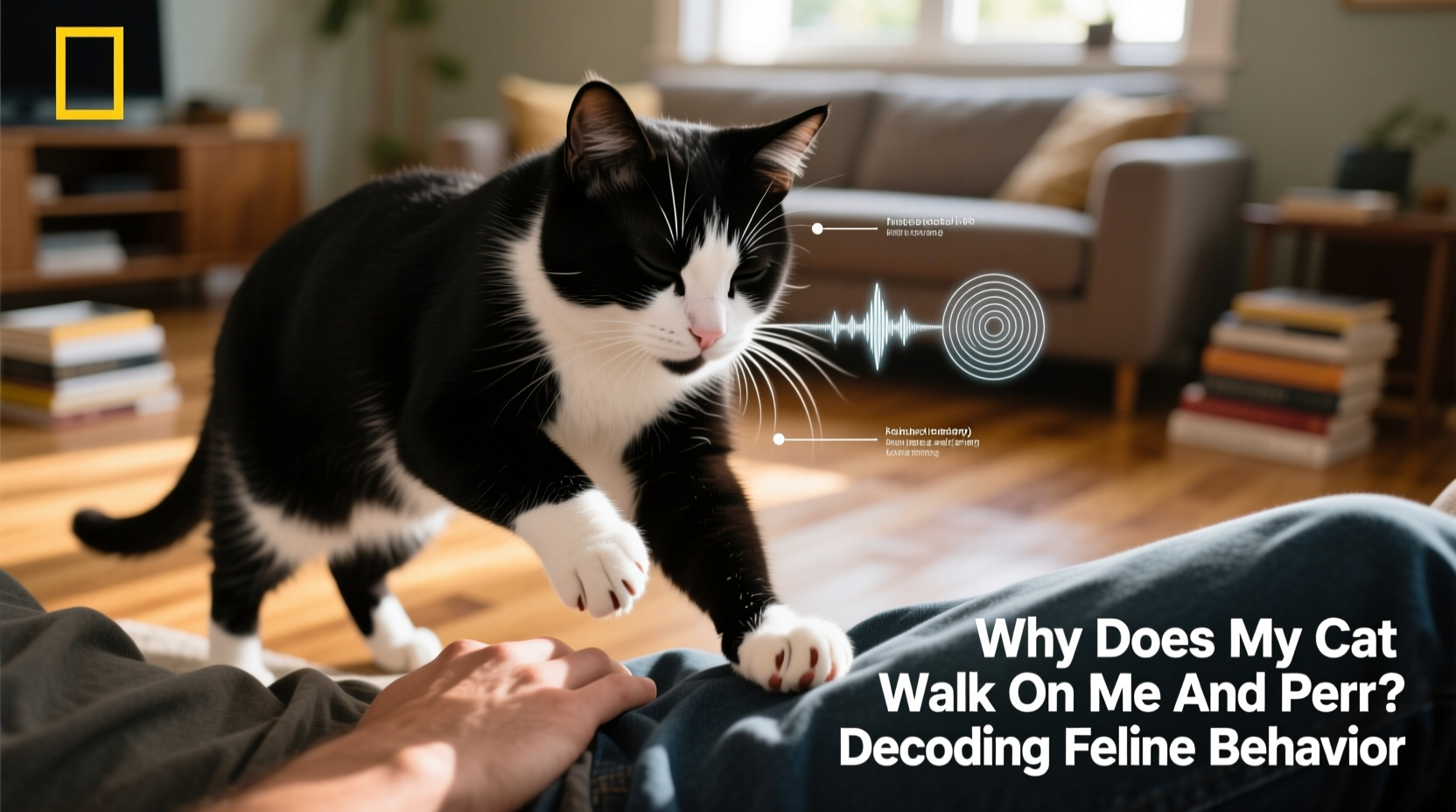
When a cat chooses to walk over your body—especially across your lap, chest, or head—it’s rarely accidental. Each step is deliberate, often layered with multiple intentions:
- Territorial Marking: Cats have scent glands on their paws, cheeks, and flanks. As they walk over you, they deposit their unique scent, effectively claiming you as part of their safe territory.
- Seeking Warmth: Humans are walking heat sources. A cat may climb over you simply because your body radiates warmth, especially in cooler environments.
- Testing Stability: Some cats use their human as a moving platform to test balance or practice agility. This is especially common in younger, playful cats.
- Attention Seeking: If you react—by petting, talking, or shifting position—the cat learns that walking on you yields results. Over time, this becomes a reinforced behavior.
Purring: More Than Just Contentment
Purring is often associated with happiness, but its function is far more nuanced. While cats do purr when relaxed, research shows they also purr in stressful, painful, or fearful situations.
“Purring isn’t just an emotional signal—it’s a self-soothing mechanism and a potential healing tool. The frequency of a cat’s purr (between 25 and 150 Hz) has been linked to improved bone density and tissue repair.” — Dr. Karen Overall, Veterinary Behaviorist
So when your cat walks over you and begins to purr, consider the context:
- If they’re curled up afterward, it’s likely a sign of trust and comfort.
- If they remain tense, avoid eye contact, or dart away quickly, the purring could be calming anxiety rather than expressing joy.
Common Scenarios That Trigger Walking + Purring
| Situation | Likely Reason | What It Means |
|---|---|---|
| After you sit down | Claiming space & attention | You're now part of their chosen resting zone |
| During TV time | Desire to engage or block screen focus | They want to be the center of your attention |
| At night in bed | Seeking warmth and security | A sign of deep attachment and routine bonding |
| After being ignored | Reasserting presence | They feel overlooked and are re-establishing connection |
Is This Behavior Learned or Instinctual?
Both. Kittens learn early that physical contact with their mother brings warmth, food, and safety. As adults, they transfer this association to trusted humans. The act of kneading, walking, and settling into a person mimics nursing behavior from kittenhood—a phenomenon known as “making biscuits.”
But beyond instinct, cats are observant learners. If walking on you consistently leads to pets, treats, or verbal praise, the behavior becomes reinforced through positive feedback.
Mini Case Study: Luna the Lap Invader
Maria adopted Luna, a shy rescue cat, six months ago. Initially, Luna avoided contact. But over time, she began walking across Maria’s legs every evening before curling up to purr. At first, Maria found it disruptive. Then she noticed it only happened when she was reading or on her laptop—times when she wasn’t giving Luna direct attention.
After placing a soft blanket nearby and gently inviting Luna onto her lap *before* she sat down, the intrusive walking decreased by 70%. Luna still occasionally steps over Maria, but now it’s followed by calm cuddling instead of restless pacing. The change came not from discouraging the behavior, but from anticipating it and offering a better alternative.
How to Respond: Practical Tips for Cat Owners
You don’t need to stop your cat from walking on you—unless it’s uncomfortable or unwanted. Instead, guide the behavior toward mutual comfort.
Step-by-Step Guide: Managing and Encouraging Healthy Interaction
- Observe Patterns: Track when and where your cat walks on you. Is it always post-meal? Before bedtime?
- Create Alternatives: Place a warm, soft bed or blanket nearby. Sprinkle it with catnip or a calming pheromone spray.
- Redirect Gently: When your cat approaches, guide them to the alternative spot with a treat or toy.
- Reinforce Positively: Reward calm behavior on the designated surface with pets or treats.
- Respect Boundaries: If you’re working or need space, train your cat to associate a specific mat or perch with “quiet time” using consistent cues.
Checklist: Signs Your Cat Feels Safe and Connected
- ✅ Purring while relaxed, not tense
- ✅ Slow blinking when looking at you
- ✅ Kneading with front paws
- ✅ Choosing to sleep near or on you regularly
- ✅ Rubbing against your face or hands
Frequently Asked Questions
Why does my cat walk on me but not purr?
This could mean they’re simply moving from point A to B—using you as a convenient path. Without purring, it’s less about bonding and more about efficiency. However, if they pause and sniff or look at you, they may still be checking in socially.
Is it bad if my cat walks on my chest while I’m sleeping?
It depends on how you feel and whether the cat seems distressed. If they’re calm and you don’t mind, it’s likely a sign of trust. If it disrupts your sleep, try placing a cozy heated bed nearby to encourage independent sleeping.
Can walking and purring indicate pain?
Rarely, but yes. Some cats purr when unwell as a self-soothing tactic. If your cat suddenly starts seeking constant contact, appears lethargic, eats less, or vocalizes abnormally, consult a veterinarian to rule out medical issues.
Understanding Builds Connection
Your cat walking on you and purring isn’t random—it’s a multifaceted gesture rooted in biology, emotion, and learned experience. Whether they’re marking you as theirs, seeking warmth, or silently asking for attention, each movement carries meaning. By observing closely and responding with empathy, you turn everyday moments into opportunities for deeper companionship.
Cats thrive on predictability and subtle communication. When you honor their behavior with understanding rather than frustration, you become not just a caregiver, but a true partner in their world.




 浙公网安备
33010002000092号
浙公网安备
33010002000092号 浙B2-20120091-4
Comments
No comments yet. Why don't you start the discussion?