
If you’ve ever been lounging on the couch, only to have your cat casually stroll across your chest or back like a tightrope walker on a mission, you’re not alone. This seemingly quirky behavior is more common than many realize—and far from random. Cats walking on their humans is a complex blend of instinct, communication, and social bonding. While it might feel inconvenient at times, understanding why your cat chooses you as a pathway can deepen your relationship and reveal insights into their emotional world.
Feline behavior often appears mysterious, but much of it stems from evolutionary roots and domestic social dynamics. Walking across you isn’t just about getting from point A to B—it’s layered with meaning. From scent marking to seeking warmth and asserting presence, your body becomes both a terrain and a message board in your cat’s daily routine.
The Instinct Behind the Walk
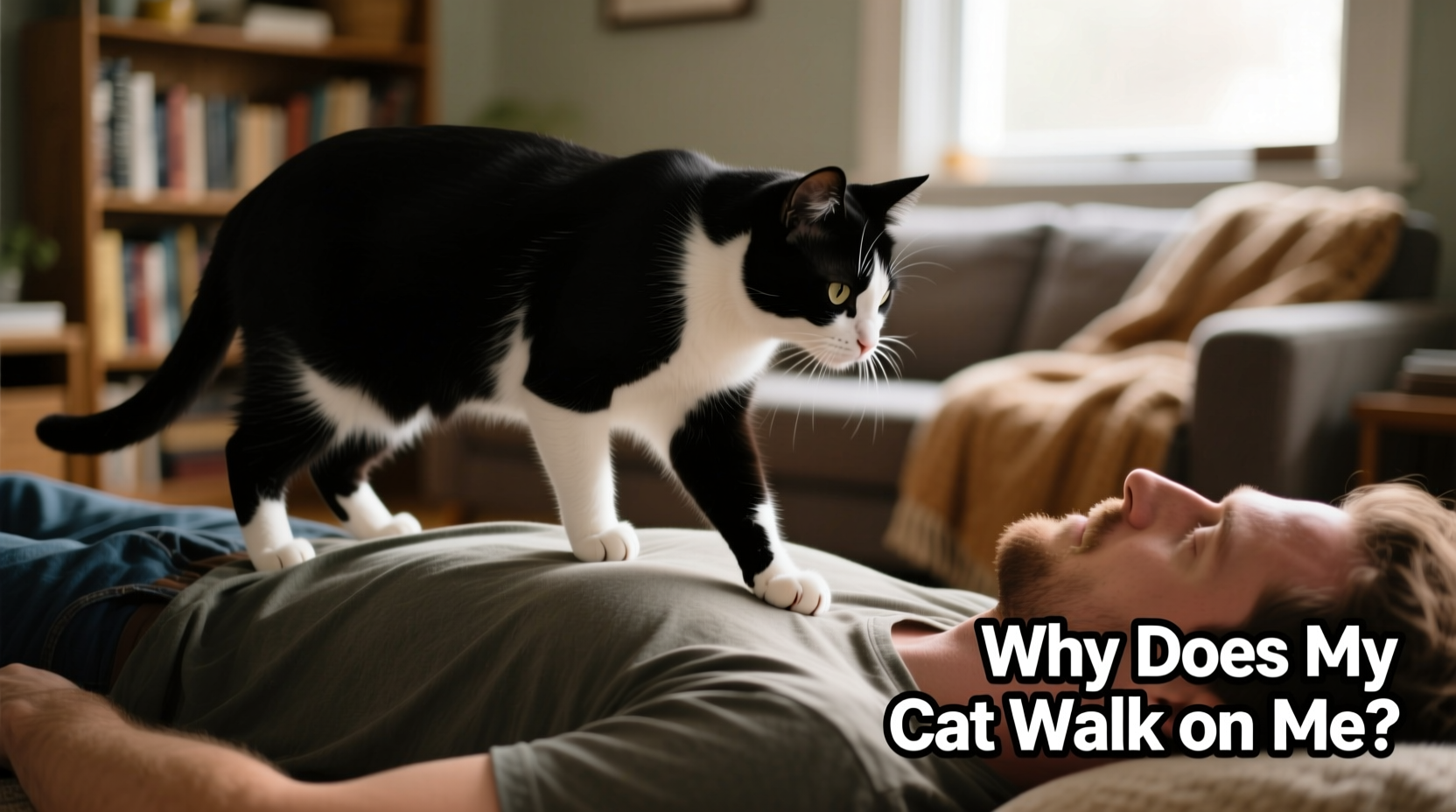
Cats are naturally curious and territorial animals. In the wild, felines navigate elevated surfaces to survey their environment and stay safe from predators. Your body—especially when reclined—offers a raised, stable platform that aligns perfectly with this instinct. By walking over you, your cat gains a vantage point while staying within the safety of their trusted space: you.
This behavior also ties into scent marking. Cats have scent glands concentrated on their paws, cheeks, forehead, and flanks. When they step on you, they deposit pheromones—chemical signals that mark you as part of their social group. It’s not just physical contact; it’s olfactory ownership. To your cat, you aren’t just a human—you’re a member of their colony, and walking on you reinforces that bond.
Communication Through Contact
Cats don’t rely on vocalizations alone to communicate. Their entire body is a tool for expression. Walking across you can be a subtle way of saying, “I acknowledge you,” “I trust you,” or even “I need something.” The context matters significantly:
- Slow, deliberate steps may indicate calm reassurance or a friendly check-in.
- Rushed or repeated passes could signal urgency—perhaps they want food, attention, or access to another room.
- Paw kneading mid-walk often reflects deep comfort, harking back to kittenhood when kneading stimulated milk flow from their mother.
In multi-pet households, cats may use humans as neutral bridges between spaces claimed by other animals. Walking over you avoids direct confrontation while still allowing movement through shared territory.
Social Bonding and Affection
Despite their reputation for independence, cats form strong emotional attachments to their caregivers. Research published in *Current Biology* shows that over 60% of cats exhibit secure attachment behaviors toward their owners—similar to those seen in dogs and infants. Walking on you is one such behavior rooted in closeness.
Your body heat, heartbeat, and familiar scent make you a comforting presence. When your cat chooses to traverse your torso or legs, they’re not merely using you as furniture—they’re engaging in tactile intimacy. Many cats follow up such walks with head-butting (bunting), purring, or settling down beside you, further confirming the social intent behind the action.
“Cats don’t waste energy on meaningless gestures. When a cat walks over you, especially if followed by grooming or resting, it’s a sign of inclusion in their inner circle.” — Dr. Sarah Ellis, Feline Behavior Scientist, University of Lincoln
When It’s More Than Just a Walk: Decoding Motives
Not all crossings are equal. Below is a breakdown of common scenarios and what they likely mean:
| Scenario | Likely Meaning | What to Do |
|---|---|---|
| Walks over sleeping owner at night | Seeking attention or play | Provide enrichment before bedtime; ignore demand-walking to avoid reinforcement |
| Gently steps over face or chest | Affectionate greeting or bunting prep | Respond calmly with slow blinks or soft speech |
| Paces repeatedly across lap while meowing | Request for food or door access | Address underlying need; train alternative cues if excessive |
| Walks stiffly, tail high | Confident patrol, possibly marking | No action needed; normal social behavior |
| Accompanied by scratching or biting | Overstimulation or play aggression | Redirect to toys; assess environment for stressors |
Mini Case Study: Luna the Boundary Walker
Maria, a pet owner in Portland, noticed her cat Luna would consistently walk over her each morning at 5:30 a.m., stepping directly on her chest and staring intently. Initially frustrating, Maria began tracking patterns and realized Luna only did this when her food bowl was empty. After adjusting feeding times and introducing an automatic feeder, the early walks decreased by 80%. Occasional walks remained—but now, they were slower, silent, and often ended with Luna curling up beside her. The behavior shifted from demand-based to affectionate, illustrating how context shapes interpretation.
How to Respond: A Step-by-Step Guide
Understanding is only half the solution. Knowing how to respond appropriately ensures your cat feels heard while maintaining household harmony. Follow this timeline:
- Observe the pattern: Note time of day, your cat’s body language, and what happens immediately before and after the walk.
- Assess needs: Is your cat hungry, seeking play, or simply moving through space?
- Provide alternatives: Place padded ramps, shelves, or cushions near common routes to give options.
- Reinforce desired behavior: Reward calm interactions with treats or gentle petting—never punish walking unless it involves aggression.
- Adjust environment: Use vertical spaces (cat trees, window perches) to satisfy climbing instincts and reduce reliance on human bodies as pathways.
FAQ
Is it normal for my cat to walk on me every day?
Yes, especially if you share a close bond. Daily walking is typically harmless and indicates your cat views you as a safe, familiar surface. As long as no aggression or discomfort is involved, it’s a sign of integration into their routine.
Why does my cat walk on me but not others?
Cats are selective about whom they physically interact with. Your scent, voice, and caregiving role make you uniquely trustworthy. Other people may lack the same association, so your cat avoids them as pathways—even if they’re lying in the same spot.
Could this behavior indicate anxiety?
Rarely on its own. However, if walking is paired with excessive meowing, restlessness, or avoidance of usual spots, it could reflect environmental stress. Evaluate recent changes—new pets, moves, or loud noises—that might disrupt their sense of security.
Checklist: Understanding and Managing the Behavior
- ✅ Observe timing and frequency of walks
- ✅ Check for unmet needs (food, litter, play)
- ✅ Provide alternative routes or elevated spaces
- ✅ Avoid punishment; use redirection instead
- ✅ Strengthen bonding through positive interactions
- ✅ Consult a vet if behavior changes suddenly
Conclusion
Your cat walking on you isn’t random—it’s a quiet conversation expressed through movement, scent, and trust. Whether they’re marking you as family, navigating their domain, or silently requesting breakfast, each step carries intention. By learning to read these signals, you move beyond confusion toward deeper companionship.




 浙公网安备
33010002000092号
浙公网安备
33010002000092号 浙B2-20120091-4
Comments
No comments yet. Why don't you start the discussion?