
A ceiling fan should operate smoothly and quietly, enhancing comfort without drawing attention to itself. When it starts to wobble, however, it becomes more than just a nuisance—it can signal safety risks, accelerated wear, and inefficient airflow. Wobbling isn’t normal, but it is common, especially in older or improperly installed units. The good news: most cases are fixable without replacing the entire fan. Understanding the root causes and knowing how to balance a ceiling fan properly can restore stability, extend its lifespan, and eliminate noise and vibration.
What Causes Ceiling Fan Wobble?
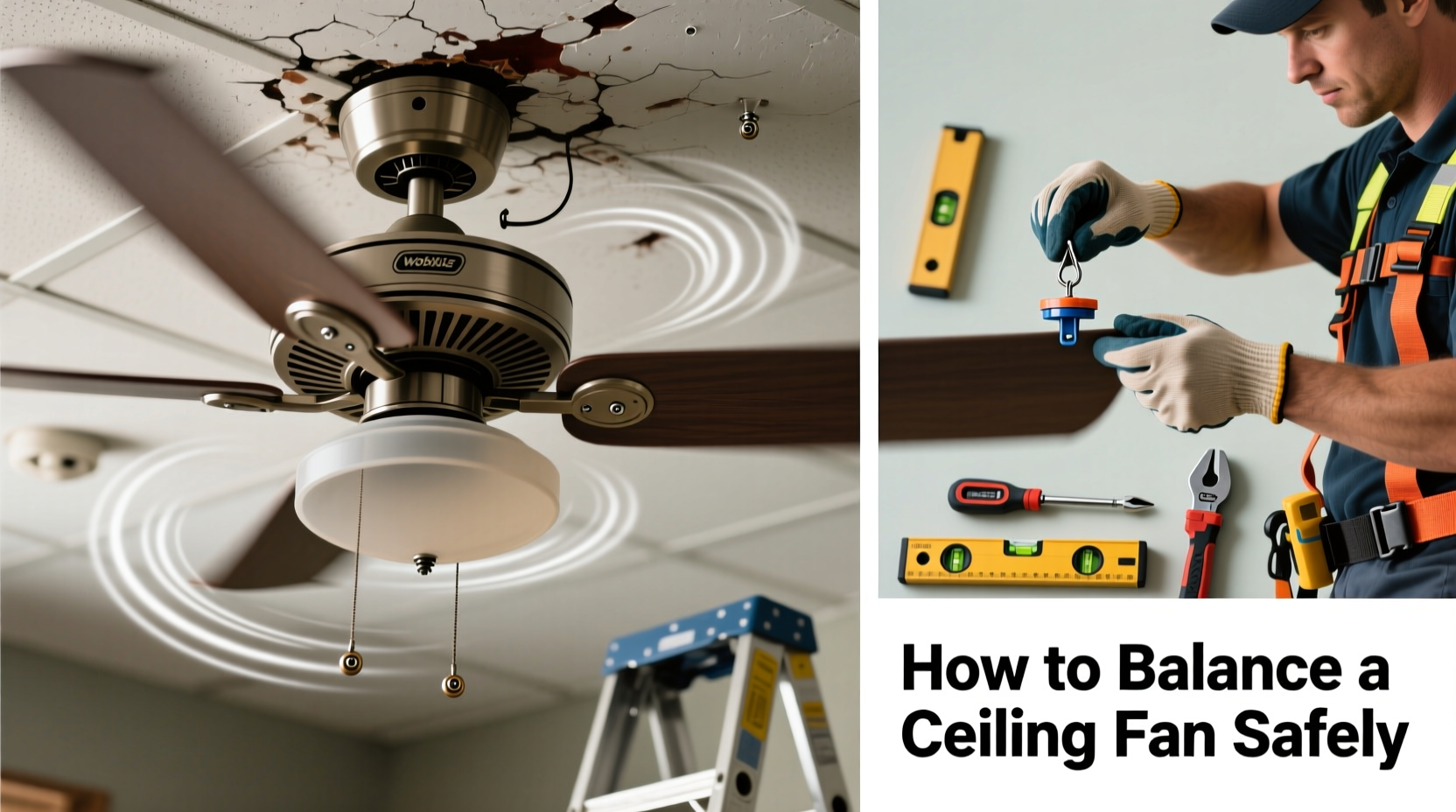
Ceiling fan wobble typically stems from imbalance, misalignment, or mechanical issues. While minor vibrations may go unnoticed, persistent or worsening wobble demands attention. Below are the most frequent culprits:
- Blade imbalance: Dust buildup, warping, or manufacturing inconsistencies can cause one blade to weigh slightly more than another, creating uneven rotation.
- Loose mounting hardware: Over time, screws connecting the fan to the ceiling bracket or motor housing can loosen due to constant motion.
- Improper installation: If the fan wasn’t securely attached to a proper electrical box or if the downrod wasn’t aligned correctly, wobble is likely.
- Bent or damaged blades: Physical impact or moisture exposure can warp wooden or plastic blades, disrupting smooth spinning.
- Damaged or worn bearings: In older fans, internal motor components may degrade, leading to shaky operation even after balancing.
- Uneven blade pitch: If blades aren't angled at the same degree, airflow resistance varies, causing instability.
Identifying the source begins with visual inspection and simple tests. A small amount of wobble (less than 1/8 inch) might be acceptable, but anything more requires correction.
How to Safely Balance Your Ceiling Fan: A Step-by-Step Guide
Rebalancing a ceiling fan doesn’t require advanced tools or expertise. With patience and attention to detail, you can correct most imbalances in under an hour. Follow this systematic approach:
- Turn off power: Switch off the fan at the circuit breaker to ensure safety during handling.
- Clean the blades: Use a damp cloth to remove dust and debris. Accumulated grime adds uneven weight and affects balance.
- Inspect for damage: Check each blade for cracks, warping, or looseness. Tighten all blade screws using a screwdriver or hex key.
- Check mounting stability: Gently shake the fan near the canopy. If there’s movement, tighten the mounting screws securing the fan to the ceiling bracket. Confirm the electrical box is rated for ceiling fan support—old light fixture boxes may not handle dynamic loads.
- Verify blade alignment: Place a ruler or yardstick horizontally across two opposing blades at the tip. Rotate the fan manually and repeat around all blades. Differences greater than 1/8 inch indicate misalignment. Adjust by gently bending the blade iron (metal arm) up or down as needed.
- Use a balancing kit: Most fans come with a clip-on balancing weight. If not, purchase an aftermarket kit. Attach the clip to the midpoint of one blade and run the fan on high. Observe whether wobble increases, decreases, or shifts. Move the clip to each blade in turn, noting where vibration is least pronounced.
- Attach permanent weights: Once you find the optimal position, use adhesive-backed weights included in the kit. Typically, you’ll stick one or more small metal tabs near the top center of the blade. Re-test the fan after each adjustment.
- Final test: Run the fan at all speeds. Ideally, wobble should be imperceptible, and noise reduced significantly.
This method addresses 90% of wobble issues caused by weight distribution. However, if problems persist, deeper mechanical faults may exist.
Do’s and Don’ts When Balancing a Ceiling Fan
| Do’s | Don’ts |
|---|---|
| Turn off power before inspection or adjustments | Work on the fan while it’s plugged in or switched on |
| Use a sturdy ladder and have someone spot you if possible | Overreach or stand on unstable surfaces |
| Tighten all blade and mounting screws regularly | Ignore visible wobble—early action prevents damage |
| Use manufacturer-provided or compatible balancing kits | Apply excessive force when bending blade irons |
| Clean blades every few months to prevent buildup | Assume all wobble is normal—even slight shaking can worsen |
Real Example: Fixing a Persistent Wobble in a Living Room Fan
Consider Sarah, a homeowner in Austin, Texas, who noticed her living room ceiling fan developed a rhythmic shake over several weeks. At first, she dismissed it as seasonal expansion, but the wobble grew worse, making the lights flicker and the fan emit a low grinding sound.
She followed basic cleaning and tightening steps, but the problem remained. Using the clip-on method described above, she discovered that attaching the test weight to the third blade significantly reduced vibration. After applying a permanent balancing tab, the fan ran smoothly again. However, upon closer inspection, she found one blade had slightly swollen due to humidity exposure. She replaced that single blade with an identical model, re-balanced, and restored full performance.
Sarah’s case illustrates two key points: first, balancing often solves the immediate issue; second, underlying physical damage may require part replacement for lasting results.
“Many homeowners think wobbling is inevitable with age, but most imbalance issues are correctable with simple tools and regular maintenance.” — Mark Delaney, Licensed Electrician and HVAC Technician with 18 years of experience
When Balancing Isn’t Enough: Advanced Troubleshooting
If your fan still wobbles after careful balancing, consider these less common but serious causes:
- Faulty downrod or bent hanger ball: These components connect the fan body to the ceiling mount. If bent or corroded, they create inherent instability. Inspect by removing the canopy cover and checking alignment.
- Motor shaft wear: In older models, the rotating shaft may develop play due to bearing failure. This causes side-to-side movement that no amount of blade weighting can fix.
- Out-of-round blade hub: Rare, but possible—especially in budget fans—where the central hub holding the blades is not perfectly circular.
- Structural ceiling issues: In homes with settling foundations or joist movement, the entire mounting point may shift subtly, affecting fan stability.
In such cases, professional assessment may be necessary. Replacing the fan entirely might be more cost-effective than repairing internal components, especially if the unit is over ten years old.
Essential Checklist: How to Balance and Maintain Your Ceiling Fan
Use this checklist to ensure thoroughness and safety when addressing wobble:
- ☑ Turn off power at the circuit breaker
- ☑ Inspect all blades for dirt, damage, or warping
- ☑ Clean each blade thoroughly with mild soap and water
- ☑ Tighten all blade screws and mounting hardware
- ☑ Confirm the ceiling electrical box is fan-rated and secure
- ☑ Check blade alignment using a ruler or alignment tool
- ☑ Test for wobble by running the fan on high speed
- ☑ Apply a balancing clip to each blade and observe effect
- ☑ Attach permanent balancing weights to the most effective blade
- ☑ Re-test at all speeds and monitor long-term performance
- ☑ Schedule biannual inspections for early detection
Completing this checklist ensures you address both symptoms and root causes, reducing future recurrence.
Frequently Asked Questions
Is a wobbling ceiling fan dangerous?
Minor wobble (under 1/8 inch) is usually not hazardous, but significant shaking can loosen mounting hardware over time, increasing the risk of detachment. Vibrations may also damage ceiling joints or wiring connections. Address noticeable wobble promptly to avoid safety hazards.
Can I balance a ceiling fan without a balancing kit?
Yes. You can improvise with a clothespin and small weights (like coins or washers). Clip it to the middle of a blade and run the fan to test. Once you find the best position, replace it with a proper adhesive weight or purchase a standard kit for a cleaner finish.
How often should I check my ceiling fan for balance?
Twice a year is ideal—once before summer and once before winter. Regular cleaning and inspection help catch small issues before they become major problems. Homes in dusty environments or high-humidity areas may benefit from quarterly checks.
Conclusion: Take Control of Comfort and Safety
A wobbling ceiling fan is more than an annoyance—it’s a sign that something needs attention. Whether caused by dust, loose parts, or subtle imbalances, the solution is often within reach. By understanding the mechanics behind fan stability and following proven balancing techniques, you can restore quiet, efficient operation and extend the life of your fixture.
Don’t ignore early signs of wobble. Small interventions today prevent costly repairs or replacements tomorrow. With the right knowledge and a little hands-on effort, you can ensure your ceiling fan remains a reliable source of comfort for years to come.




 浙公网安备
33010002000092号
浙公网安备
33010002000092号 浙B2-20120091-4
Comments
No comments yet. Why don't you start the discussion?