
Every year, as the holiday season approaches, families across the country pull out their festive lights, eager to transform homes into winter wonderlands. But for many, the joy is short-lived when a string of lights suddenly goes dark—again. The culprit? A blown fuse. While it’s tempting to simply swap in a new fuse and move on, recurring fuse failures signal an underlying issue that could pose safety risks or damage your decorations. Understanding why fuses blow—and how to prevent it—can save time, money, and potential hazards.
Modern incandescent Christmas light strands are designed with built-in fuses located in the plug. These small components protect the circuit from overcurrent by breaking the connection when too much electricity flows through. When a fuse blows repeatedly, it’s not just inconvenient—it’s a warning sign. This article breaks down the most common reasons behind persistent fuse issues and provides actionable solutions to ensure your lights stay lit throughout the season.
How Christmas Light Fuses Work
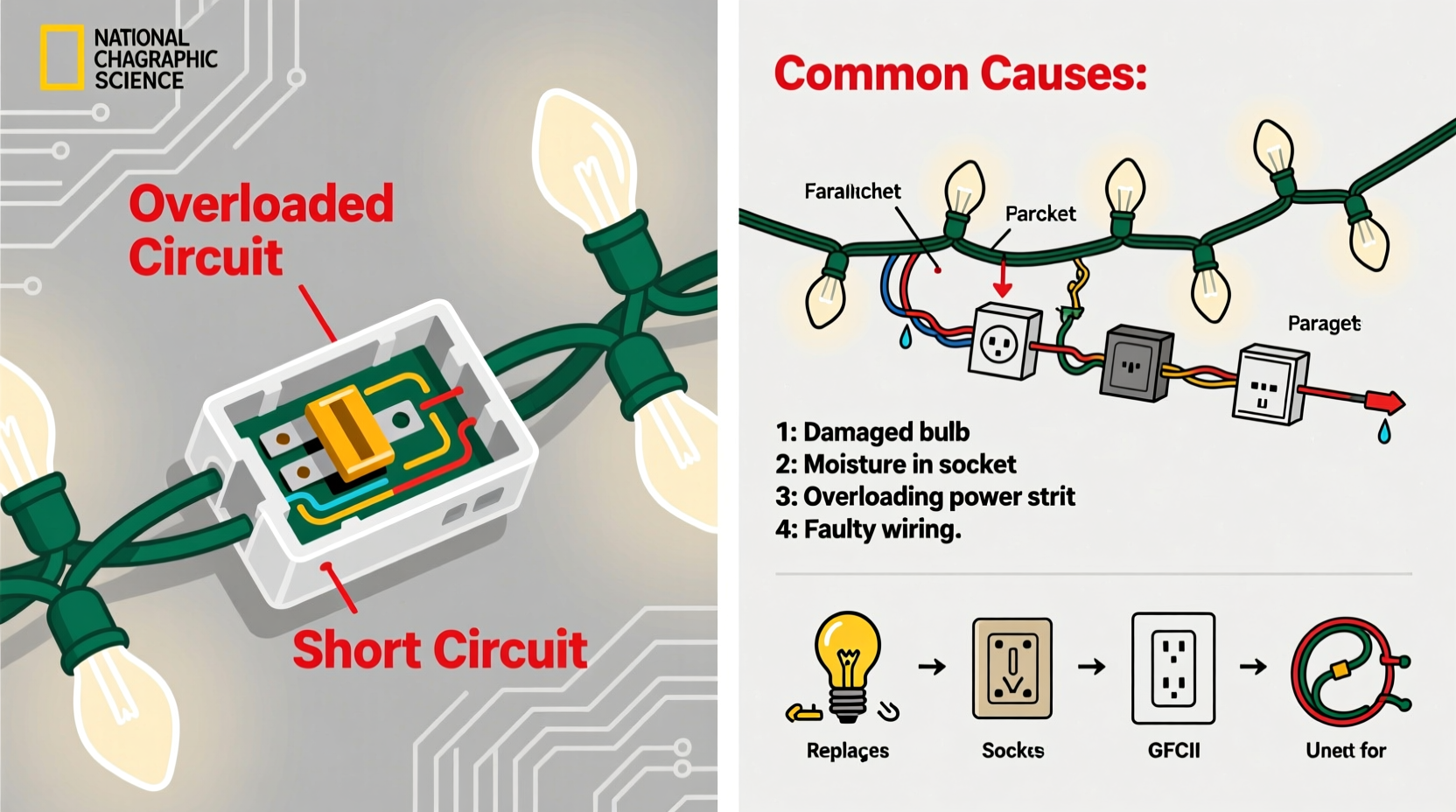
Fuses in Christmas light strings serve as the first line of defense against electrical overload. Most standard mini-light strands operate on a series circuit, meaning each bulb shares the same current path. If one bulb fails or a wire shorts, resistance drops and current increases, which can cause excessive heat. The fuse responds by melting its internal filament, cutting off power before wires overheat or insulation melts.
Typically, two small fuses are housed inside the male plug: one for each side of the AC cycle. They’re usually rated at 3 or 5 amps, depending on the length and wattage of the strand. Replacing them requires a screwdriver to open the plug cover and a spare fuse (often included in newer sets). However, replacing the fuse without diagnosing the root cause often leads to repeat failures.
“Repeated fuse blowing isn’t normal—it indicates either a defective strand, improper load management, or environmental damage.” — James Ralston, Electrical Safety Inspector, NFPA Certified
Common Causes of Blown Fuses in Christmas Light Strands
1. Overloading the Circuit
One of the most frequent causes of blown fuses is connecting too many light strands together. Manufacturers specify a “maximum connectable” number based on total wattage and amperage limits. Exceeding this limit forces more current through the circuit than the fuse can handle.
For example, a typical 50-bulb mini-light set draws about 40 watts. At 120 volts, that’s roughly 0.33 amps per strand. If the fuse is rated for 3 amps, you should theoretically be able to connect up to nine strands. However, voltage drop, aging wires, and manufacturing variances mean the safe limit is often lower—usually five to seven strands max.
2. Damaged or Frayed Wiring
Wear and tear from storage, animals, or outdoor exposure can compromise insulation. When wires rub together or touch conductive surfaces, they create a short circuit. This sudden surge in current triggers the fuse immediately. Look for kinks, chew marks (especially from rodents), discoloration, or exposed copper along the cord.
Outdoor installations are particularly vulnerable. UV rays degrade plastic insulation over time, making cords brittle. Moisture intrusion into damaged areas can also lead to corrosion and unintended grounding, increasing the risk of overcurrent.
3. Faulty Bulbs or Sockets
A single defective bulb can disrupt the entire circuit. If a bulb is cracked, improperly seated, or has a bent base, it may arc or draw excess current. In older strands, oxidation in the socket can increase resistance unevenly, creating hot spots that stress the system.
Some users attempt to fix “dead” sections by inserting shunts or makeshift conductors, but these modifications bypass safety features and can lead to overheating—even if the fuse doesn’t blow right away.
4. Using Non-Compatible Replacement Bulbs
Not all replacement bulbs are created equal. Installing higher-wattage bulbs than specified increases the total load on the strand. For instance, replacing a 0.4-watt bulb with a 0.8-watt version doubles the energy draw per bulb. On a 100-light strand, that’s an extra 40 watts—enough to push the circuit past its safe operating range.
Additionally, mixing LED and incandescent bulbs on the same strand creates mismatched resistance levels, leading to unstable current flow and potential fuse failure.
5. Power Surges and Voltage Spikes
Even if your setup is correctly configured, external factors like lightning strikes, grid fluctuations, or appliance cycling can send brief surges through household circuits. While major surges are handled by whole-home protectors, smaller spikes can still overwhelm delicate light-string fuses.
This is especially true during storms or when using extension cords that lack surge protection. Outdoor outlets without GFCI (Ground Fault Circuit Interrupter) protection are more susceptible to transient voltages caused by moisture or ground faults.
Troubleshooting Checklist: Step-by-Step Guide to Diagnose Fuse Issues
Before replacing another fuse, follow this systematic approach to identify and resolve the real problem.
- Unplug the entire strand. Never work on live circuits. Wait a few minutes after unplugging to allow any residual charge to dissipate.
- Inspect the plug for visible damage. Check for melted plastic, scorch marks, or loose prongs. If present, retire the strand.
- Remove and test both fuses. Use a multimeter on continuity mode. A good fuse will beep; a blown one will show no connection.
- Examine every bulb and socket. Remove each bulb and look for darkening, broken filaments, or warped bases. Replace only with manufacturer-specified bulbs.
- Scan the entire wire length. Run your fingers along the cord, feeling for lumps, cuts, or soft spots. Pay special attention to entry points near plugs and connectors.
- Check for moisture or corrosion. If used outdoors, ensure no water has entered the plug housing or connector boxes. Dry thoroughly before reuse.
- Verify total connected load. Add up the wattage of all linked strands and compare it to the circuit capacity. Use the formula: Total Watts ÷ 120 Volts = Total Amps. Keep under 80% of the fuse rating.
- Test with a known-good power source. Plug into a different outlet, preferably on a dedicated circuit, to rule out home wiring issues.
Do’s and Don’ts: Best Practices for Safe Christmas Lighting
| Do | Don’t |
|---|---|
| Use only UL-listed lights and accessories | Use indoor lights outdoors (or vice versa) |
| Replace fuses only with identical amperage ratings | Install higher-rated fuses to stop blowing |
| Store lights on reels or cardboard spools | Toss lights into bins where they tangle and crush |
| Use GFCI-protected outlets for outdoor displays | Daisy-chain more than three non-LED strands |
| Inspect strands annually before use | Leave lights unattended or on overnight |
Real Example: Why Sarah’s Roof Lights Kept Failing
Sarah had been using the same icicle lights on her roof eaves for six years. Each season, she’d replace the fuses two or three times before giving up. One December, after yet another mid-display outage, she decided to investigate.
Upon inspection, she noticed one section of the strand was stiff and discolored—likely from sun exposure. She removed the affected segment and found a tiny hole in the insulation where a squirrel had gnawed through. Even though the wire hadn't fully severed, intermittent contact was causing micro-arcing, drawing erratic current and blowing the fuse.
She replaced the damaged section with a new connector kit and switched to LED versions the following year. Since then, she hasn’t had a single fuse issue. Her experience highlights how small, hidden damage can have big consequences—and why proactive inspection matters.
When to Upgrade: Transitioning to LED and Smart Solutions
Many recurring fuse problems disappear when switching from traditional incandescent to LED light strands. LEDs consume up to 90% less energy, generate minimal heat, and operate at lower currents—reducing strain on fuses and household circuits.
Modern LED strings often eliminate inline fuses altogether because of their inherent efficiency and durability. They’re also less prone to damage from cold weather and vibration. While the upfront cost is slightly higher, the long-term savings in energy and replacement parts make them a smart investment.
Consider smart lighting systems that integrate with Wi-Fi or Bluetooth. These allow remote control, scheduling, and real-time diagnostics. Some models even alert you via app if a section fails—before a fuse blows.
“Upgrading to LED isn’t just about brightness—it’s about reliability, safety, and peace of mind during the holidays.” — Linda Tran, Home Automation Specialist
Frequently Asked Questions
Can I replace a blown fuse with a higher-amp fuse to prevent future blowouts?
No. Fuses are precisely rated to match the wire gauge and insulation capacity of the strand. Using a higher-amp fuse removes critical protection and increases fire risk. Always replace with the same rating—typically marked on the fuse itself (e.g., “3A” or “5A”).
My lights are partially working—does that mean the fuse is fine?
Not necessarily. Many strands have dual circuits or half-wave rectification. A partial outage could indicate a dead bulb, broken shunt, or localized short. Test the fuses regardless. Also, some LED strands show dimming or flickering instead of complete failure when overloaded.
Is it safe to repair a cut wire with electrical tape?
Temporary fixes with tape are risky, especially outdoors. Tape degrades quickly under UV exposure and moisture. A better solution is to use a waterproof splice connector or replace the damaged section entirely. If more than 10% of the strand is compromised, retire it.
Conclusion: Keep Your Lights Safe and Shining Bright
Blown fuses in Christmas light strands aren’t random—they’re signals that something needs attention. Whether it’s overloading, physical damage, incompatible components, or outdated technology, identifying and addressing the cause ensures a safer, more reliable holiday display. Regular inspection, proper usage, and thoughtful upgrades go a long way toward preventing frustration and hazards.
As you prepare your lights this season, take the time to examine each strand with care. Replace worn components, respect connection limits, and consider making the switch to modern LED options. A little effort now means fewer trips to the hardware store later—and a brighter, safer celebration for everyone.




 浙公网安备
33010002000092号
浙公网安备
33010002000092号 浙B2-20120091-4
Comments
No comments yet. Why don't you start the discussion?