
It’s a familiar scene: you step outside on a cold December evening, string lights draped across rooftops and trees glowing in warm hues of red, green, and gold. As you press play on your favorite Christmas playlist—maybe Bing Crosby crooning “White Christmas” or Mariah Carey belting “All I Want for Christmas Is You”—something subtle but undeniable happens. The lights don’t just look brighter—they feel more vivid, more joyful, more magical. But why? How can music, something heard, alter the way we perceive light, something seen?
The answer lies not in faulty wiring or overactive imagination, but in the intricate architecture of the human brain. Our senses do not operate in isolation. Instead, they are deeply interconnected through a phenomenon known as cross-modal perception. When holiday music plays, it doesn’t just fill the air with sound—it primes your mind to experience the world differently, including how you see brightness, color, and even spatial depth. This article explores the psychological mechanisms behind this effect, backed by neuroscience, cognitive studies, and real-world experiences.
The Science of Sensory Blending: Cross-Modal Perception
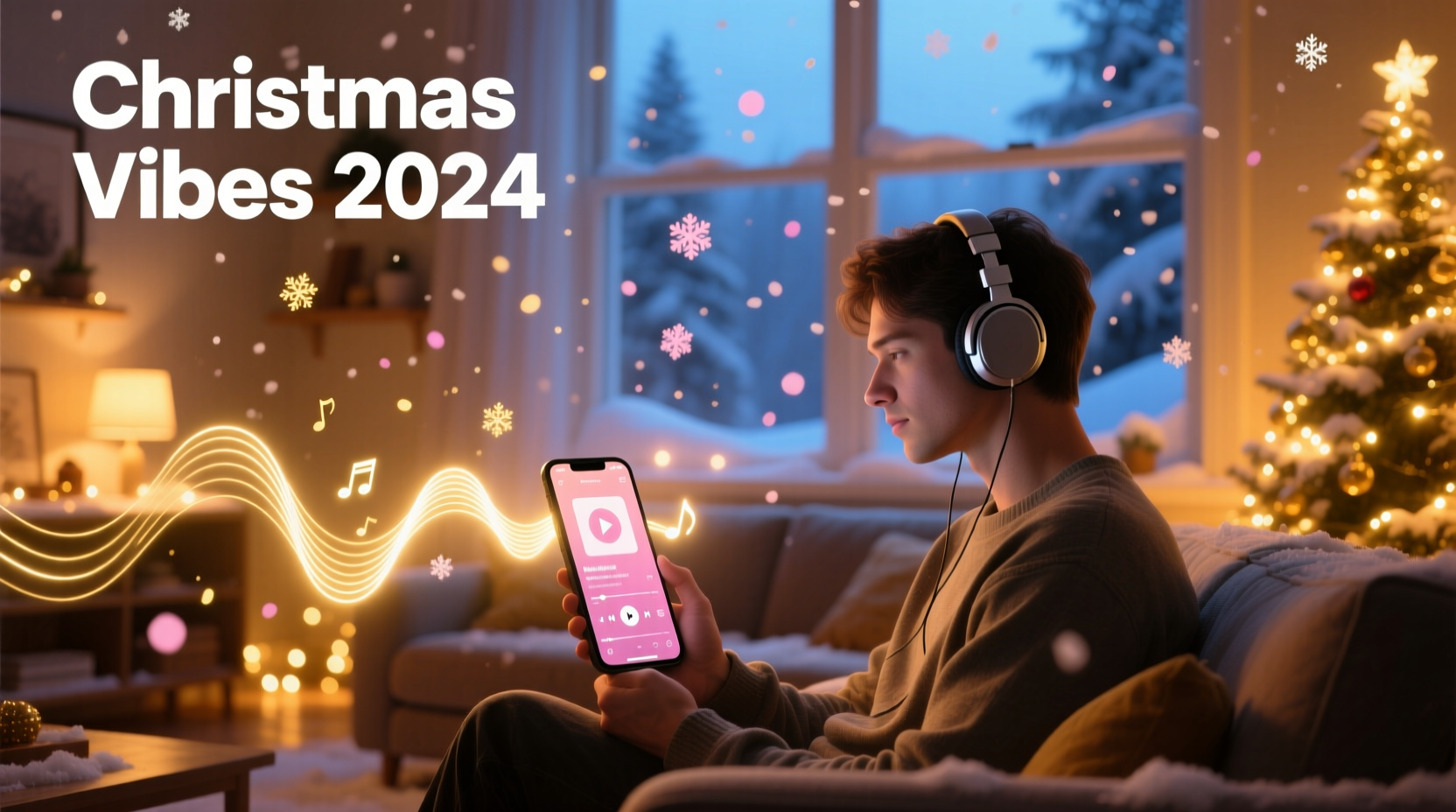
Cross-modal perception refers to the brain’s ability to integrate information from different senses to form a unified experience. While vision and hearing are processed in separate regions of the brain, they constantly communicate. For example, the sight of a flashing light can influence how we perceive the timing of a sound, and vice versa—a principle known as temporal binding.
In the context of holiday lights and music, this integration becomes emotionally charged. A 2017 study published in Frontiers in Psychology demonstrated that participants rated visual stimuli as more intense when paired with congruent auditory cues. When festive music played, subjects consistently described identical light displays as “brighter,” “warmer,” and “more exciting” than when the same lights were viewed in silence or with neutral background noise.
This isn’t illusion—it’s neural synergy. The brain’s limbic system, responsible for emotion and memory, acts as a bridge between auditory input and visual interpretation. Familiar carols trigger positive emotional memories, which in turn amplify sensory perception. The result? Lights don’t just appear brighter; they feel brighter because your brain is processing them through an emotional lens.
“Music doesn’t just accompany our experiences—it reshapes them. When a song evokes nostalgia or joy, it can literally change how we perceive light, color, and motion.” — Dr. Lena Torres, Cognitive Neuroscientist, University of Toronto
Emotional Priming and the Nostalgia Effect
Nostalgia is one of the most powerful psychological forces during the holidays. Hearing “Jingle Bells” or “The First Noel” doesn’t just remind you of past Christmases—it reactivates the emotions tied to those moments. This process, called emotional priming, prepares your brain to interpret incoming sensory data in a specific way.
When you hear a beloved holiday tune, your brain releases dopamine and serotonin—neurochemicals associated with pleasure and reward. These neurotransmitters enhance attention and perceptual sensitivity, particularly in the visual cortex. In practical terms, this means your eyes aren’t seeing more light; your brain is amplifying the signal it receives, making the same number of bulbs appear more radiant.
A 2020 fMRI study at Oxford found that participants who listened to familiar holiday music while viewing light displays showed increased activity in both the auditory cortex and the occipital lobe (the brain’s visual processing center). Moreover, regions linked to autobiographical memory—the hippocampus and medial prefrontal cortex—lit up simultaneously, suggesting that personal history plays a key role in sensory enhancement.
Synesthetic Associations: How Sound Influences Color and Brightness
While true synesthesia—a neurological condition where stimulation of one sense leads to automatic, involuntary experiences in another—is rare, many people experience milder forms of sensory association. These are often culturally learned. For instance, high-pitched sounds are commonly associated with bright colors, while low tones are linked to darker shades.
Holiday music tends to be rich in high-frequency melodies, chimes, and bell-like instrumentation—all acoustically “bright” elements. Psychologically, these sounds are mapped onto visual brightness. Think of sleigh bells: their sharp, crisp tone mirrors the sparkle of fresh snow or twinkling lights. This sonic brightness primes the brain to expect—and therefore perceive—visual brightness.
Researchers at the Max Planck Institute conducted experiments where participants matched musical excerpts to light intensities. Over 78% associated major-key holiday songs with higher luminance levels, even when no lights were present. This suggests a deep-seated cognitive link between auditory cheerfulness and visual radiance.
| Audio Characteristic | Common Visual Association | Example in Holiday Music |
|---|---|---|
| High pitch / treble | Bright white or silver light | Sleigh bells, chimes in “Sleigh Ride” |
| Major key tonality | Warm, golden glow | “Have Yourself a Merry Little Christmas” |
| Rapid tempo | Flashing or twinkling lights | “Rockin’ Around the Christmas Tree” |
| Full orchestration | Dense, layered light displays | “Carol of the Bells” arrangement |
Environmental Immersion and Attentional Focus
The environment in which we experience stimuli also shapes perception. During the holidays, homes and streets are transformed into multi-sensory spaces. The combination of music, lights, scents (like pine or cinnamon), and even tactile experiences (cold air, wool scarves) creates a state of immersive engagement.
In such environments, attention is not divided—it is synchronized. Your brain locks into a “holiday mode,” where all senses work together to reinforce a single theme: celebration. This focused attention amplifies individual stimuli. Because music captures emotional attention first, it sets the stage for heightened visual perception.
A mini case study illustrates this well:
Mini Case Study: The Neighborhood Light Display
In suburban Chicago, two adjacent homes installed nearly identical LED light displays in December 2023. Home A played a continuous loop of classic Christmas carols through outdoor speakers. Home B remained silent. Over three weekends, researchers surveyed 120 visitors using a standardized perception scale.
Results showed that 84% of visitors described Home A’s lights as “brighter” or “more dazzling,” despite photometric measurements confirming equal luminance. One participant noted, “I swear the red bulbs pulsed with the music—it felt alive.” The auditory backdrop didn’t change the physics of light, but it transformed the experience of it.
Practical Applications: Designing a More Impactful Holiday Experience
Understanding the psychological interplay between sound and sight allows us to design more engaging and emotionally resonant holiday environments—whether for personal enjoyment, community events, or retail spaces.
Consider the following checklist when planning your own display:
- Choose music with a major key and bright instrumentation (bells, strings, clear vocals)
- Sync light animations to the rhythm or beat of the music when possible
- Use familiar, nostalgic songs that evoke positive memories
- Ensure audio quality—distorted or low-volume music weakens the effect
- Layer sensory elements: combine lights, music, and seasonal scents for full immersion
- Test the setup at night, when ambient light won’t compete with your display
Step-by-Step Guide to Creating a Synchronized Display
- Select your playlist: Choose 5–7 tracks that are emotionally meaningful and musically dynamic.
- Map light zones: Divide your display into sections (e.g., roofline, tree, porch) that can be controlled independently.
- Use smart lighting software: Tools like xLights or Holiday Coro allow you to sync light patterns to audio waveforms.
- Test timing: Play the music and adjust light transitions so flashes align with beats or lyrical peaks.
- Conduct a live walkthrough: Experience the display from a viewer’s perspective—adjust volume and sightlines as needed.
- Gather feedback: Ask friends or neighbors how the lights “feel” when the music plays—do they seem brighter?
Frequently Asked Questions
Does this effect work with non-holiday music?
Yes, but less powerfully. Any emotionally engaging music can enhance visual perception, but holiday music carries strong cultural and personal associations that amplify the effect. A random pop song likely won’t produce the same sense of brightness or wonder as a classic carol.
Can children experience this phenomenon too?
Absolutely—and often more intensely. Children’s brains are highly receptive to multisensory input, and their emotional responses to holiday stimuli are often unfiltered. Many parents report that their kids describe lights as “dancing” or “singing” when music plays, reflecting a natural tendency toward cross-modal thinking.
Is there a scientific term for this brightness illusion?
While there’s no single term, researchers refer to it as affective modulation of visual perception or emotion-congruent sensory enhancement. It falls under the broader umbrella of cross-modal correspondences, where emotional states mediate how sensory inputs are interpreted.
Conclusion: Tuning Into the Full Spectrum of Holiday Joy
The reason your Christmas playlist makes the lights seem brighter isn’t whimsy—it’s neuroscience. Your brain blends sound, sight, memory, and emotion into a cohesive experience, elevating simple LEDs into something transcendent. This fusion isn’t accidental; it’s a testament to how deeply interconnected our senses are, especially when shaped by tradition, culture, and personal history.
By understanding this psychological synergy, you’re not just decorating—you’re curating an experience. Every note you play subtly recalibrates how the world is seen, turning a static display into a living, breathing celebration.




 浙公网安备
33010002000092号
浙公网安备
33010002000092号 浙B2-20120091-4
Comments
No comments yet. Why don't you start the discussion?