
Every December, something subtle but powerful happens: a familiar jingle drifts from a café speaker, a colleague hums “Carol of the Bells,” or your streaming service auto-generates a “Festive Focus” playlist—and your shoulders drop, your breath slows, or unexpectedly, your eyes well up. It’s not nostalgia alone at work. It’s neurochemistry, memory architecture, and decades of cultural conditioning converging in real time. Your Christmas playlist isn’t just background noise—it’s a functional emotional tool. Yet most people assemble theirs haphazardly: adding every “classic” they’ve ever heard, deferring to algorithmic suggestions, or defaulting to whatever played at last year’s office party. The result? A sonic rollercoaster—moments of warmth followed by abrupt spikes of fatigue, melancholy, or even irritation. This article explains *why* holiday music exerts such precise psychological leverage—and gives you a grounded, evidence-informed framework to build a playlist that serves your nervous system, not overwhelms it.
The Science Behind the Sleigh Bells: Why Christmas Music Moves Us
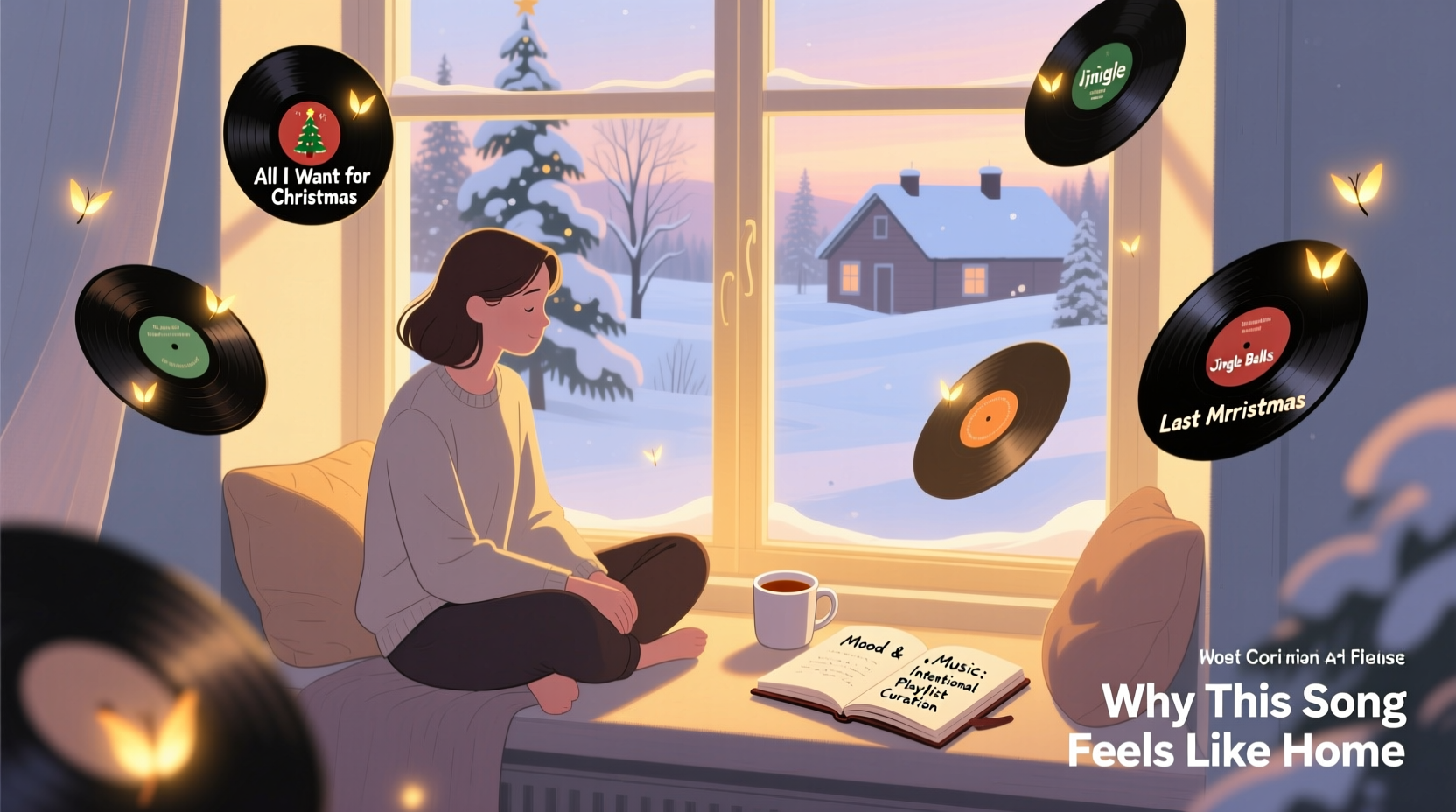
Christmas music triggers a cascade of physiological and cognitive responses far beyond simple enjoyment. Neuroimaging studies show that familiar holiday songs activate not only the auditory cortex but also the amygdala (emotional processing), hippocampus (memory formation), and nucleus accumbens (reward center). Crucially, these regions fire in synchrony—creating what researchers call “affective coherence.” When you hear “Silent Night,” for example, your brain doesn’t just recognize melody; it retrieves sensory fragments—the smell of pine needles, the weight of a wool sweater, the sound of your grandmother’s laugh—and binds them into an emotionally charged whole.
This effect is amplified by repetition. Unlike most music consumed episodically, Christmas songs are heard dozens—even hundreds—of times each season. That frequency strengthens neural pathways, making emotional responses faster and more automatic. A 2022 study published in Frontiers in Psychology found that participants exposed to repeated holiday music over three weeks showed measurably lower cortisol levels during subsequent stress tasks—*but only when the music matched their personal emotional associations*. In other words: generic cheer doesn’t calm everyone. What soothes one person may agitate another—especially if the song is tied to loss, family conflict, or childhood anxiety.
Tempo and timbre matter profoundly. Upbeat tracks like “Jingle Bell Rock” elevate heart rate and dopamine—but sustained exposure can induce cognitive overload, especially for neurodivergent listeners or those experiencing seasonal affective patterns. Conversely, slower, harmonically rich carols (“O Come, O Come Emmanuel,” “What Child Is This?”) activate the parasympathetic nervous system, lowering blood pressure and encouraging reflective stillness. The key insight: Christmas music doesn’t universally uplift. It *amplifies* your current state—like an emotional mirror with volume control.
Your Playlist Is a Mood Regulator—Not Just a Decoration
Treating your holiday playlist as ambient decoration misses its true function. Think of it instead as a low-dose, non-pharmacological intervention—one you deploy multiple times daily. Like lighting a candle or brewing tea, selecting and sequencing music is an act of self-regulation. A deliberately paced, tonally coherent playlist can buffer against seasonal stressors: financial pressure, social exhaustion, grief triggered by holidays past, or the quiet loneliness of solitude during a hyper-social season.
Consider this: In clinical music therapy, therapists use “iso-principle”—matching musical elements (tempo, rhythm, mode) to a client’s current physiological state, then gradually shifting them toward a desired state. You can apply this principle at home. If you’re feeling scattered and overwhelmed, launching into “Sleigh Ride” may spike adrenaline further. Starting with a gentle, modal piece like “The First Noel” (in Dorian mode, which evokes reverence without sentimentality) creates neurological scaffolding for calm—then allows gradual uplift.
“The most effective holiday playlists don’t chase ‘joy’ as a monolithic emotion. They honor the full spectrum—wonder, tenderness, solemnity, playfulness, even sorrow—and move through it with intention. That’s what makes them restorative, not exhausting.” — Dr. Lena Torres, Board-Certified Music Therapist and Director of the Center for Neuro-Affective Sound Research
How to Curate Your Playlist Intentionally: A 5-Step Framework
Forget “top 50 Christmas songs.” Building a mood-supportive playlist requires attention to structure, resonance, and personal history—not popularity. Follow this sequence:
- Define your core intention. Ask: What do I most need this season? Not “more happiness,” but specificity: “calm focus while wrapping gifts,” “gentle energy for morning coffee,” “space to feel grief without judgment,” or “lighthearted connection during dinner prep.” Write it down.
- Inventory your emotional anchors. List 3–5 holiday songs that reliably evoke a clear, positive somatic response (e.g., “I feel my jaw unclench,” “My breathing deepens,” “I smile without thinking”). These are your non-negotiable anchors—songs rooted in your biology, not cultural expectation.
- Map the arc. Structure your playlist like a short story: Opening (grounding), Rising Action (gentle uplift), Climax (warmth/energy), Resolution (tenderness or stillness), Closing (return to center). Avoid front-loading high-energy tracks unless your intention is energizing movement.
- Edit ruthlessly for friction. Remove any song that triggers impatience, guilt (“I should love this”), or dissonance—even if it’s beloved by millions. One jarring track can disrupt the entire neurochemical flow.
- Test and iterate. Play your draft playlist during a low-stakes activity (folding laundry, walking the dog). Note where your body tenses, your mind wanders, or your breath catches. Adjust tempo transitions, swap out one song for a lesser-known version (e.g., a piano-only “Hark! The Herald Angels Sing” instead of the full choir), or add 30 seconds of silence between contrasting moods.
What to Include (and Exclude): A Practical Decision Table
Selecting songs isn’t about taste—it’s about functional alignment. This table helps you evaluate tracks based on evidence-backed emotional effects:
| Song Trait | Supports Mood Goal | Risks Mood Disruption | Real-World Example |
|---|---|---|---|
| Tempo: 60–72 BPM | Calm focus, reflective stillness, grounding | May feel lethargic if energy is needed | “In the Bleak Midwinter” (Cradle Version) |
| Tempo: 100–120 BPM | Gentle uplift, light movement, shared joy | Can heighten anxiety if already stressed | “Winter Wonderland” (Norah Jones cover) |
| Minor Key / Modal Harmony | Depth, reverence, space for complex feelings | May deepen sadness if unresolved grief is present | “Coventry Carol” (early music ensemble) |
| Major Key + Simple Rhythm | Accessibility, comfort, nostalgic ease | Becomes cloying with repetition; lacks nuance | “Rudolph the Red-Nosed Reindeer” (original Gene Autry) |
| Vocal Texture: Unaccompanied or Sparse | Intimacy, reduced cognitive load | Feels thin or underwhelming in large spaces | “O Holy Night” (a cappella choir) |
A Real Moment: How Sarah Reclaimed Her Holidays
Sarah, a 42-year-old pediatric nurse and single mother, dreaded December. For years, her playlist was a chaotic mix of radio hits and nostalgic favorites—until she noticed a pattern: by 3 p.m. on most days, she’d feel drained, irritable, and strangely tearful. She tried skipping holiday music entirely, but that left her feeling disconnected and guilty. Working with a music therapist, Sarah identified her core intention: “to feel quietly held, not constantly cheered.” She kept two anchors: “Carol of the Bells” (which gave her a sense of rhythmic stability) and “Have Yourself a Merry Little Christmas” (in Judy Garland’s original, vulnerable 1944 recording). She removed all songs with aggressive percussion or forced cheer (“Santa Claus Is Comin’ to Town,” “Feliz Navidad”). She built an arc: opening with a 6-minute ambient arrangement of “Silent Night,” rising gently into Joni Mitchell’s jazz-inflected “River,” peaking with the warm, unhurried groove of Stevie Wonder’s “Someday at Christmas,” then resolving into a 90-second field recording of snow falling on pine boughs. Within two weeks, her afternoon energy crashes vanished. “It wasn’t that I felt ‘happy’ all the time,” she shared. “It was that I stopped fighting my own nervous system. The music finally made space for me—exactly as I was.”
Your Intentional Playlist Checklist
- ☑️ I’ve named *one specific emotional need* this season—not a vague desire for “joy.”
- ☑️ I’ve identified 3–5 songs that produce a measurable, positive physical response (slower breath, relaxed shoulders, softening gaze).
- ☑️ My playlist has a clear beginning (grounding), middle (development), and end (return)—not just a list of favorites.
- ☑️ I’ve removed at least one song that feels culturally obligatory but emotionally jarring.
- ☑️ I’ve tested the playlist during a routine task and noted where transitions feel smooth or strained.
- ☑️ I’ve added at least one “pause point”: 20–30 seconds of silence or natural sound between contrasting moods.
FAQ: Your Practical Questions, Answered
What if I don’t like traditional Christmas music at all?
That’s not a problem—it’s vital data. Your playlist doesn’t require sleigh bells or Nativity references. Instrumental winter-themed pieces (Max Richter’s “November,” Ólafur Arnalds’ “re:member”), secular seasonal albums (Sufjan Stevens’ Songs for Christmas), or even non-holiday music with wintry textures (Brian Eno’s Music for Films) can fulfill the same regulatory function. Focus on sonic qualities—tempo, harmonic warmth, absence of lyrical demand—not genre labels.
How many songs should my intentional playlist be?
Length matters less than coherence. A 12-song playlist with mismatched tempos and keys will fatigue you faster than a 25-song arc with thoughtful pacing. Start with 8–12 tracks that serve distinct roles in your emotional arc. You can always expand—but never sacrifice flow for quantity.
Can I use the same playlist for different activities?
Not effectively. A playlist optimized for mindful gift-wrapping (slow, tactile, spacious) will undermine energetic cookie-baking (rhythmic, warm, moderately upbeat). Build purpose-specific micro-playlists: “Morning Grounding,” “Evening Wind-Down,” “Kitchen Energy,” “Quiet Reflection.” Label them clearly—and honor the boundaries between them.
Conclusion: Your Playlist Is an Act of Self-Kindness
Your Christmas playlist is not trivial. It’s one of the few tools you hold—daily, freely, and immediately—that shapes your internal weather. When curated with attention to your nervous system’s needs—not algorithms, not tradition, not obligation—it becomes a quiet form of resistance against the season’s relentless demands for performance, consumption, and forced festivity. It says: *I see my complexity. I honor my limits. I choose resonance over repetition.* This year, don’t settle for background noise. Build a soundtrack that holds you, steadies you, and reminds you—through melody, rhythm, and silence—that your inner landscape is worthy of the same care you extend to others. Start small: pick one intention, find one anchor song, and listen—*really* listen—to how your body answers. Then build from there.




 浙公网安备
33010002000092号
浙公网安备
33010002000092号 浙B2-20120091-4
Comments
No comments yet. Why don't you start the discussion?