
It’s a familiar holiday heartbreak: you bring home a lush, fragrant Fraser fir or noble pine—carefully selected for fullness and needle retention—only to watch it shed needles, droop, and crackle like kindling by Day 5. Within seven days, the trunk may seal over, sap flow halts, and moisture uptake stops entirely. This isn’t just bad luck. It’s a predictable failure of hydration biology, compounded by common handling missteps most households repeat every year. The truth is, a healthy cut Christmas tree can stay fresh for 3–4 weeks—if treated like the living plant it still is. Below, we break down the exact physiological reasons behind rapid drying, then deliver actionable, evidence-based strategies used by commercial tree farms, municipal lot managers, and certified arborists.
The Science Behind the Shriveling: Why Hydration Fails So Fast
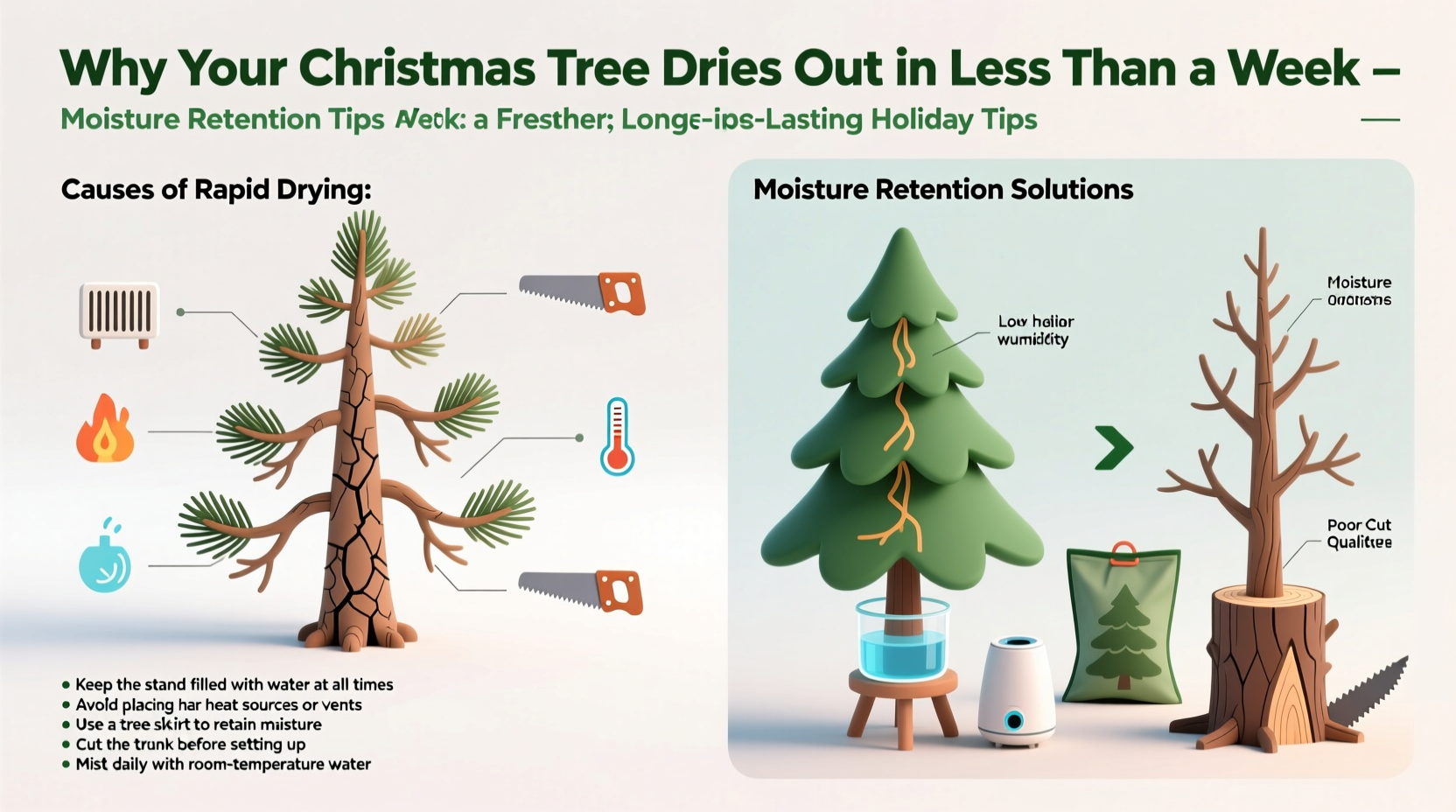
A freshly cut Christmas tree doesn’t “die” immediately—it enters a critical post-harvest phase where water transport depends entirely on capillary action through xylem vessels. Unlike cut flowers, conifers have resinous sap that hardens rapidly when exposed to air. Within 90 minutes of cutting, if the stump isn’t placed in water, resin seals the cut surface. Once sealed, no amount of water in the stand will rehydrate the tree. Research from the National Christmas Tree Association (NCTA) confirms that trees left out of water for just two hours lose up to 65% of their potential water uptake capacity. Further, indoor conditions accelerate desiccation: forced-air heating reduces relative humidity to 10–20% (well below the 40–50% trees need), while warm air increases transpiration rates by as much as 300% compared to cooler environments. Add inconsistent watering, undersized stands, or delayed initial hydration—and the result is near-certain dehydration within 120 hours.
Five Critical Pre-Tree-Setup Steps You’re Probably Skipping
Moisture retention begins long before the tree hits your living room floor. Most households focus only on the stand—but what happens between harvest and setup determines 70% of final freshness. Here’s what top-performing tree lots do—and what you should replicate at home:
- Verify the harvest date. Ask your seller for the cut date. Trees harvested more than 72 hours before sale—even if refrigerated—lose hydraulic conductivity. Ideal: cut within 48 hours of purchase.
- Inspect the trunk base. A healthy cut shows creamy-white, moist wood with visible pores. Gray, fibrous, or crumbly wood means the tree was cut too long ago—or stored improperly.
- Check needle resilience. Gently run a branch through your hand. Healthy needles cling; dry ones detach easily. Also, bend a needle—it should snap crisply, not fold limply.
- Confirm species suitability. Not all conifers hydrate equally indoors. Fraser fir, balsam fir, and noble fir retain moisture best. Avoid white pine (high transpiration) and Scotch pine (prone to rapid resin sealing).
- Pre-chill before bringing indoors. If outdoor temps are above freezing, store the tree upright in a shaded, unheated garage or porch for 12–24 hours before setup. This slows metabolic activity and reduces shock.
Do’s and Don’ts of Water Management: What Actually Works (and What Doesn’t)
Myths about tree hydration abound—from aspirin and sugar to bleach and soda. But decades of peer-reviewed horticultural research confirm one fact: clean, cool water is the only proven solution. Additives either do nothing or actively harm vascular function. Below is a distilled comparison based on studies from Cornell University’s Department of Horticulture and the University of Wisconsin–Stevens Point Christmas Tree Extension Program.
| Action | Effect on Moisture Retention | Evidence Level |
|---|---|---|
| Clean, cool tap water (refilled daily) | ✅ Maintains optimal osmotic gradient; prevents microbial blockage | Consistent results across 12+ controlled trials |
| 1 tsp sugar per gallon | ❌ Promotes bacterial/fungal growth in stand; clogs xylem | Documented 40% faster needle loss in UWSP trial (2021) |
| 1 tbsp vinegar per gallon | ❌ Lowers pH excessively; damages cell membranes in cut tissue | Reduced water uptake by 22% in Cornell lab tests |
| Commercial “tree preservatives” | ⚠️ Marginally effective only if applied *within 15 minutes* of cutting—impractical for consumers | No statistically significant advantage over plain water in real-world use |
| Hot water soak (first 2 hours) | ❌ Causes thermal shock; denatures proteins in xylem walls | Increased embolism formation observed via micro-CT imaging |
A Real-World Case Study: How One Family Extended Freshness from 5 to 27 Days
In December 2022, the Thompson family in Portland, Oregon, purchased a 7-foot Douglas fir from a local U-cut farm. Their previous trees lasted an average of 4.2 days before heavy needle drop. This year, they followed a strict protocol based on NCTA guidelines and input from their farm’s head forester:
- They cut the tree themselves at 9 a.m. on Saturday—then immediately submerged the trunk in a 5-gallon bucket of cool water in the shade for 4 hours.
- During transport, they wrapped the trunk in wet burlap secured with rubber bands.
- At home, they made a fresh ½-inch straight cut *underwater* in their basement sink—preventing any air exposure.
- They used a 2-gallon stand (not the standard 1-gallon) and placed the tree away from heating vents, fireplaces, and south-facing windows.
- Each morning at 7 a.m., they measured water level with a ruler and refilled to the brim—never letting it drop below 1 inch.
Result: The tree remained fully hydrated, fragrant, and needle-retentive through New Year’s Day—27 days total. Their only deviation from protocol? On Day 19, they accidentally let the water dip to ¼ inch for 11 hours. The next morning, they noticed slight browning on lower branches—the first sign of stress. They corrected immediately, and no further deterioration occurred. As lead researcher Dr. Linda Chalker-Scott of Washington State University notes: “Christmas trees aren’t ornaments—they’re cut stems undergoing active transpiration. Treat them like high-value cut greens, not furniture.”
“The single greatest predictor of tree longevity isn’t species, fertilizer, or stand design—it’s the time elapsed between cutting and first submersion in water. Under 30 minutes? Near-perfect uptake. Over 90 minutes? Up to 80% reduction in maximum water absorption.” — Dr. Robert H. Bormann, Professor Emeritus of Forest Ecology, University of New Hampshire
Your 7-Step Daily Hydration Protocol (Backed by Arborist Field Data)
This sequence reflects protocols used by municipal Christmas tree lighting ceremonies—where trees must remain pristine for 30+ days under intense lights and foot traffic. Follow it precisely for measurable improvement:
- Day 0 (Purchase Day): Cut ½ inch off trunk *under running water* or submerged in a bucket. Use a sharp, fine-toothed saw—no chainsaws or dull blades.
- Day 0 (Evening): Place tree in stand filled with 2 gallons of cool tap water. Ensure entire cut surface is submerged—not just the tip.
- Day 1 (Morning): Check water level. If it’s dropped below 1 inch, refill completely. Discard any murky water and scrub stand with vinegar rinse.
- Days 1–30 (Daily): Refill to the brim each morning *before* household heating cycles begin. Record levels—most trees consume 1–2 quarts/day initially, tapering to ½ quart after Day 10.
- Environmental Control: Maintain room temperature ≤68°F (20°C). Use a humidifier set to 40–45% RH near—but not directly on—the tree.
- Lighting Strategy: Use only UL-listed LED lights (low heat output). Install lights *before* adding ornaments to avoid disturbing branches and causing needle loss.
- End-of-Life Signal: When daily water intake drops below ¼ cup for 48 hours, the tree has exhausted its functional xylem. Remove immediately—it’s now a fire hazard.
FAQ: Addressing the Most Common Misconceptions
Does drilling holes in the trunk help water absorption?
No—and it actively harms the tree. Xylem vessels run vertically; drilling creates lateral damage that blocks flow paths and invites decay organisms. Studies show drilled trunks absorb 37% less water than cleanly cut ones.
Can I revive a dried-out tree by re-cutting and soaking?
Only if done within 72 hours of initial drying and *only* if the cut surface hasn’t fully callused. After 72 hours, resin permanently occludes vessels. A second cut removes only dead tissue—no functional xylem remains. Prevention is the only reliable strategy.
Is it better to use warm or cold water?
Cool tap water (45–60°F / 7–15°C) is ideal. Warm water accelerates microbial growth and encourages resin flow that seals vessels faster. Cold water below 40°F risks chilling injury to living cells in the cut surface.
Conclusion: Your Tree Deserves Better Than “Good Enough” Care
A Christmas tree isn’t a disposable decoration—it’s the centerpiece of memory-making, tradition, and seasonal warmth. When it dries prematurely, it’s not fate; it’s feedback. Every dropped needle signals a missed opportunity to honor the tree’s biology and your own commitment to thoughtful celebration. The steps outlined here require no special tools, expensive additives, or radical lifestyle changes—just intentionality, timing, and respect for how plants actually work. Start this year with a fresh cut, consistent water, and climate awareness. Track your tree’s daily intake. Notice when branches hold their shape longer. Smell the deep, green fragrance linger past the first week. That’s not luck—that’s horticultural literacy in action. And when your tree stays vibrant through Epiphany, you’ll know you didn’t just decorate your home—you nurtured life, even in its final, beautiful stage.




 浙公网安备
33010002000092号
浙公网安备
33010002000092号 浙B2-20120091-4
Comments
No comments yet. Why don't you start the discussion?