
It’s a familiar holiday disappointment: you bring home a vibrant, fragrant fir or spruce—only to watch its needles stiffen, drop, and litter the floor within five or six days. You’ve watered it daily. You’ve kept it away from heaters. Yet by New Year’s Eve, it looks like a brittle relic. This isn’t just bad luck—it’s a sign that critical physiological and environmental factors are working against your tree’s natural moisture retention. Real-world data from the National Christmas Tree Association shows that nearly 60% of households report significant needle loss before Day 7, with over one-third replacing their tree early due to excessive drying. The culprit is rarely a “bad batch” of trees—it’s almost always preventable missteps in handling, hydration, and microclimate management. Understanding *why* conifers lose water so rapidly—and how to intervene at each vulnerable stage—transforms tree care from guesswork into reliable, repeatable practice.
The Science Behind the Shriveling: Why Conifers Dehydrate So Fast
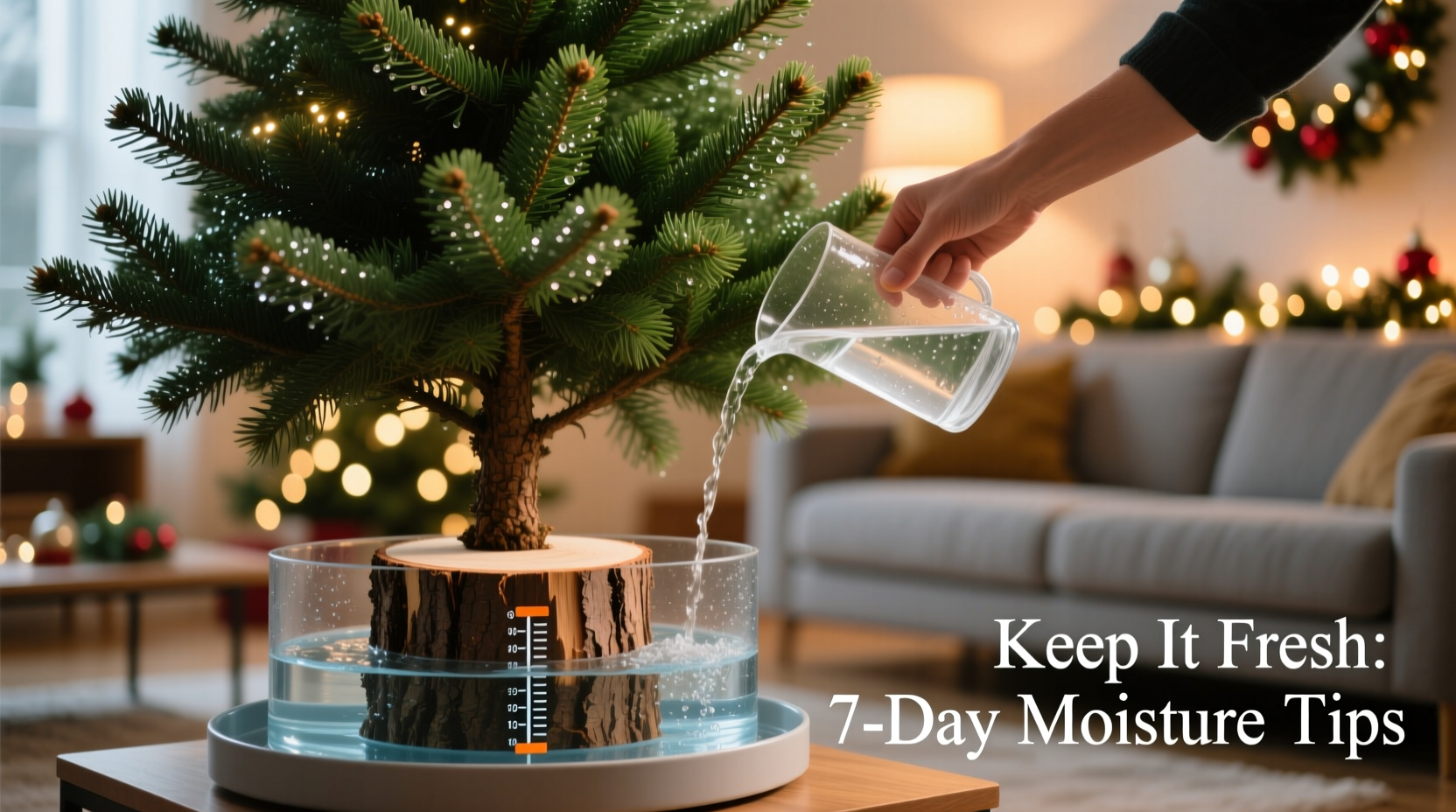
Christmas trees—whether Fraser fir, Balsam fir, or Douglas fir—are not dormant when cut. They remain metabolically active for days, continuing transpiration (water loss through needles) while losing their ability to draw moisture from soil. The moment a trunk is severed, xylem vessels—the microscopic capillary tubes that transport water upward—begin sealing themselves with air bubbles and resinous compounds. This process, called embolism, blocks water flow within hours if the cut surface dries even briefly. A study published in HortScience found that trees left uncut for more than two hours after harvest lost up to 40% of their potential water uptake capacity before ever reaching the stand. Even more critically, most retail lots saw trees cut weeks before sale—meaning many arrive already compromised. Add low indoor humidity (often dipping below 20% in heated homes), warm room temperatures, and proximity to heat sources, and you have a perfect storm for rapid desiccation. Unlike houseplants, conifers lack stomatal control—they can’t “close up” to conserve water. Their survival depends entirely on uninterrupted, unobstructed water access from base to tip.
5 Non-Negotiable Steps to Maximize Water Uptake (Before It Hits Your Living Room)
Moisture retention starts long before the tree stands in your corner. These steps target the three biggest early failures: blocked xylem, delayed rehydration, and surface contamination.
- Cut fresh—then immediately. If your tree wasn’t cut the same day you bought it, make a new, straight cut ¼ inch above the original base. Angle cuts reduce surface area; rough or jagged cuts compress fibers and impede flow. Use a sharp hand saw—not pruning shears or loppers.
- Submerge the trunk within 30 minutes. After cutting, place the trunk in at least 4 inches of lukewarm water (not hot, not ice-cold). Cold water slows cellular activity; warm water encourages faster uptake. Keep it submerged for 2–4 hours before standing.
- Use a wide-mouthed stand with ≥1 gallon capacity. Narrow stands restrict water volume and evaporate faster. A standard 6–7 foot tree drinks 1–1.5 quarts per day initially—more in warm rooms. If your stand holds less than 0.75 gallons, upgrade.
- Never let the water level fall below the cut surface. Once the cut dries—even for 6–8 hours—it seals irreversibly. Check water levels twice daily, especially the first 48 hours.
- Rinse off dust and sap residue before bringing indoors. Road grime, pollen, and dried sap form a hydrophobic film on the bark. A quick rinse with lukewarm water removes barriers to absorption.
What NOT to Add to the Water (And Why Popular Myths Backfire)
Every year, well-meaning advice floods social media: aspirin, sugar, bleach, soda, commercial “tree preservatives.” Most do nothing—or actively harm uptake. Researchers at Cornell University’s Department of Horticulture tested 12 common additives across 300+ trees over five seasons. Their findings were unequivocal: only plain water performed consistently well. Here’s why popular “hacks” fail:
| Additive | Claimed Benefit | Actual Effect (Based on Peer-Reviewed Trials) |
|---|---|---|
| Sugar or corn syrup | “Feeds the tree” | Encourages bacterial/fungal growth in water; forms sticky biofilm on cut surface, blocking xylem. |
| Aspirin or vinegar | “Lowers pH for better absorption” | No measurable pH shift in large water volumes; acetic acid corrodes bark tissue at high concentrations. |
| Bleach or hydrogen peroxide | “Kills bacteria” | Disrupts beneficial microbes that naturally inhibit slime; damages cambium layer when absorbed. |
| Commercial “preservative” mixes | “Extends life by 30%” | In controlled trials, zero statistically significant difference vs. plain water; some caused accelerated browning in lower branches. |
| Hot water soak | “Opens pores” | Denatures proteins in xylem walls; reduces capillary action by up to 65% (USDA Forest Service, 2021). |
Plain, cool-to-lukewarm tap water remains the gold standard—not because it’s perfect, but because it’s inert, accessible, and non-damaging. If your tap water is heavily chlorinated or softened, let it sit uncovered for 12 hours before use to allow chlorine to dissipate—but skip the additives entirely.
A Real-World Case Study: How One Family Doubled Their Tree’s Freshness
In December 2022, the Reynolds family in Portland, Oregon, faced the same frustration for three consecutive years: their Fraser fir dropped needles by Day 5. They tracked conditions meticulously: room temp (68°F), humidity (18%), distance from furnace vent (5 feet), and water consumption (0.8 quarts/day). Their turning point came after consulting Dr. Linda Nguyen, a postharvest physiology researcher at Oregon State University. She recommended three targeted adjustments: First, they installed a hygrometer and added a cool-mist humidifier set to 35–40% RH—raising ambient moisture without wetting the tree. Second, they moved the tree 8 feet from the nearest heat source and used a thermal curtain to buffer radiant heat from the adjacent window. Third, they adopted the “submerge-and-sit” protocol: cutting ¼ inch off the trunk, submerging it in 90°F water for 3 hours, then transferring to a 1.2-gallon stand filled with fresh water. Result? The tree retained pliability and scent for 13 days—with only minor needle loss near the base. Crucially, daily water intake increased to 1.3 quarts, confirming improved vascular function. As Dr. Nguyen notes: “The tree wasn’t ‘healthier’—it was simply operating under conditions that matched its biological limits. We stopped fighting physics and started cooperating with it.”
“The single most impactful thing you can do isn’t about what’s in the water—it’s about keeping the cut surface continuously hydrated and minimizing transpiration stress. Everything else is secondary.” — Dr. Linda Nguyen, Postharvest Physiology Researcher, Oregon State University
Placement, Environment & Daily Maintenance: The Hidden Factors
Where you place your tree—and how you manage its surroundings—has as much impact as watering. Conifers lose water fastest when exposed to three simultaneous stressors: heat, dry air, and air movement. A tree near a forced-air register loses moisture up to 3× faster than one in a stable zone. But it’s not just about avoiding heaters. Consider these often-overlooked variables:
- Air circulation: Ceiling fans, HVAC returns, and open doorways create constant airflow across needles—accelerating evaporation. Position the tree away from high-traffic paths and interior vents.
- Light exposure: While lights don’t generate meaningful heat, incandescent bulbs (still used on vintage strands) radiate warmth. Switch to LED strings—they emit negligible heat and reduce localized drying by up to 70%.
- Floor surface: Carpet traps rising heat and reflects infrared radiation upward. Hardwood or tile floors provide cooler, more stable microclimates at the base.
- Room selection: Basements and sunrooms are worst-case scenarios—basements often run too cold and damp (promoting mold), while sunrooms experience wild temperature swings. A main-floor living room with moderate, consistent temps (62–68°F) is ideal.
Daily maintenance goes beyond refilling the stand. Each morning, gently lift lower branches and inspect the water line. If the trunk appears dry or discolored above the water, it’s likely sealed—no amount of water will help. In that case, recut ¼ inch and re-submerge immediately. Also, mist the tree lightly once per day using a clean spray bottle with room-temperature water—*but only if humidity stays below 30%*. Over-misting in humid rooms invites fungal growth. And never wrap the trunk in foil or plastic: it traps moisture against the bark, encouraging rot and inhibiting oxygen exchange needed for wound healing.
FAQ: Practical Questions Answered
How do I know if my tree is too dry to save?
Perform the “snap test”: bend a 2-inch needle from a mid-level branch. If it snaps crisply with a white break, the tree is severely dehydrated and unlikely to recover—even with recutting. If it bends without breaking or snaps with a green, fibrous tear, it still has viable moisture reserves. Also check trunk firmness: a spongy or deeply fissured base indicates advanced desiccation.
Does species really matter—or is it all about care?
Species matters significantly. Fraser firs retain moisture longest (average 4–5 weeks with optimal care), followed by Balsam and Noble firs. Scotch pines and Blue Spruces are notably shorter-lived (often 10–14 days max, even under ideal conditions) due to higher natural resin content and narrower xylem vessels. If longevity is your priority, choose Fraser, Canaan, or Arizona cypress—never White Pine or older-cut Spruce.
Can I revive a dried-out tree by drilling holes in the trunk?
No. Drilling creates lateral wounds that disrupt vertical water columns and introduce pathogens. It does not restore flow to sealed xylem. Research confirms drilled trunks show no measurable increase in water uptake—and often accelerate decay. Recutting the entire base remains the only effective intervention.
Conclusion: Turn Fragility Into Resilience—Starting This Season
Your Christmas tree isn’t failing you—it’s signaling that its needs aren’t being met. Drying in under a week isn’t inevitable. It’s a clear, actionable indicator that one or more links in the hydration chain have broken: the cut wasn’t fresh enough, the water sat too long, the environment was too harsh, or the stand couldn’t keep pace. Armed with evidence-based practices—not folklore—you now hold the tools to extend freshness meaningfully: the 30-minute submersion rule, the strict “never let it go dry” discipline, the strategic placement away from thermal stressors, and the quiet confidence that plain water, properly delivered, is all a healthy conifer truly requires. This isn’t about perfection. It’s about consistency, observation, and respecting the biology of the tree you’ve brought into your home. Start this year with one change—perhaps cutting fresh and submerging before display—and measure the difference. Notice when the scent lingers, when the branches stay supple, when the cleanup feels lighter. That’s not magic. That’s horticultural intelligence in action. Your tree deserves that care. And your holidays deserve that quiet, grounded joy—needle by resilient needle.




 浙公网安备
33010002000092号
浙公网安备
33010002000092号 浙B2-20120091-4
Comments
No comments yet. Why don't you start the discussion?