
Every year, millions of households bring home a fresh-cut Christmas tree, only to watch it lose needles, wilt, and become a fire hazard within days. You might wonder: why does this happen so quickly? Despite festive anticipation, many trees show signs of drying by the weekend after setup—sometimes even sooner. The truth is, a Christmas tree isn’t just decor; it’s a living plant that continues to breathe and transpire long after being cut. Without proper care, moisture loss accelerates, leading to rapid deterioration.
The good news is that with science-backed strategies and consistent attention, you can extend your tree’s freshness for weeks. This guide explains the biological and environmental reasons behind fast-drying trees and provides a detailed 7-day action plan to maintain hydration, reduce needle drop, and ensure your tree remains vibrant through New Year’s.
Understanding Why Christmas Trees Dry Out So Quickly
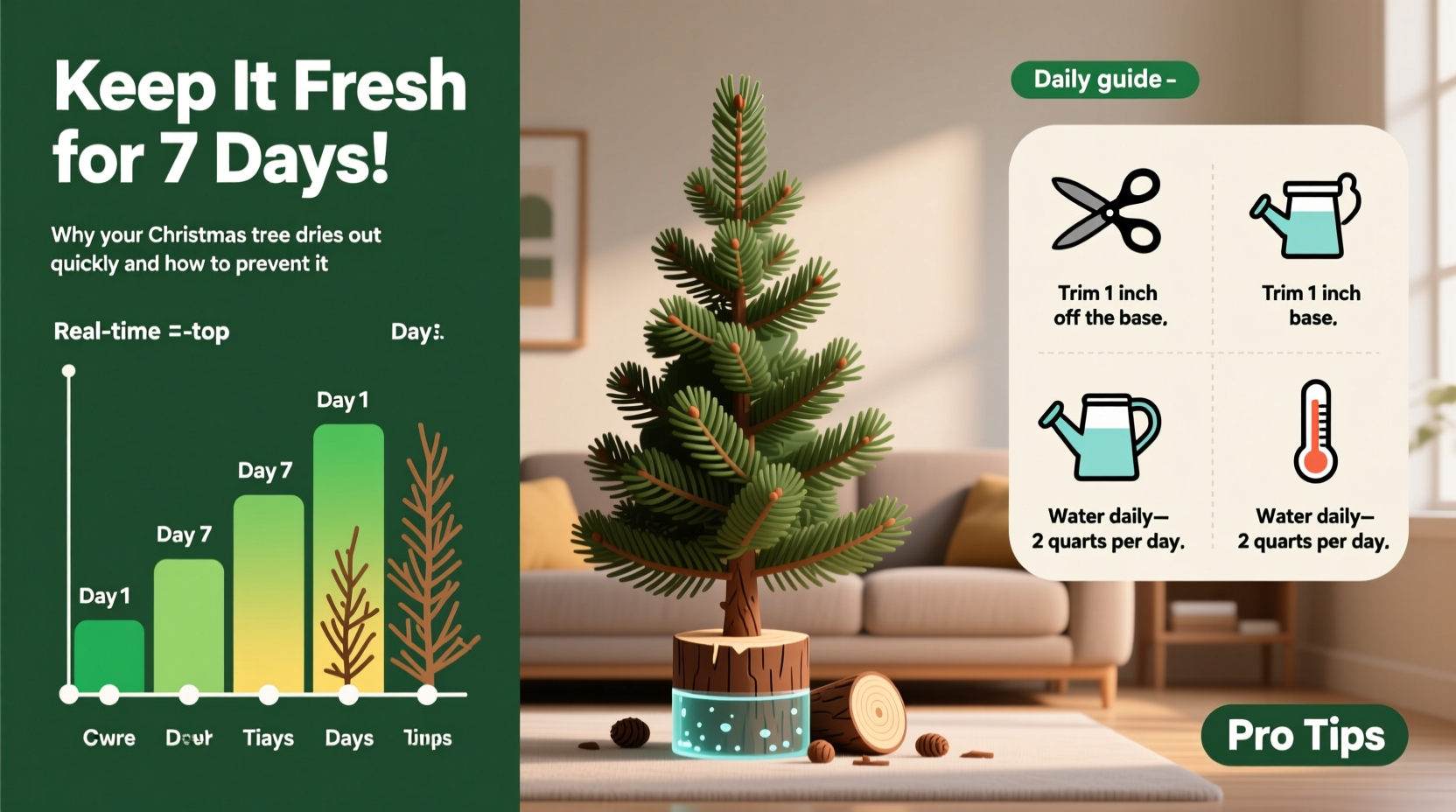
A freshly cut Christmas tree doesn’t die immediately—it still has active vascular systems capable of absorbing water. However, once the trunk is severed from its root system, the tree relies entirely on stored moisture and its ability to draw water from a stand. The moment it's cut, two processes begin: dehydration and embolism formation.
Dehydration occurs as the tree continues to lose water through its needles via transpiration, especially in warm indoor environments. If water intake doesn't match output, the tree depletes its reserves rapidly. Embolism happens when air enters the xylem—the water-conducting tissue—after the initial cut seals over. Once air blocks form, the tree can no longer absorb water effectively, even if placed in a full stand.
Indoor conditions significantly accelerate drying. Central heating reduces relative humidity, sometimes dropping it below 30%, while heat sources like radiators or vents increase air temperature around the tree. These factors combine to create a desert-like microclimate, pushing moisture loss beyond what the tree can sustain.
“An untreated tree can lose up to 50% of its moisture within the first 72 hours indoors.” — Dr. Linda Harper, Urban Forestry Researcher, University of Vermont
7-Day Prevention Plan: How to Keep Your Tree Fresh Through the Holidays
Timing is critical. The first week after bringing your tree home determines its lifespan. Follow this day-by-day protocol to maximize hydration, seal the vascular system, and stabilize internal moisture.
- Day 1: Make a Fresh Cut and Immediate Watering
As soon as you get the tree home, cut 1–2 inches off the base of the trunk. This removes the sealed sap layer and exposes open xylem vessels. Place the tree in a stand filled with room-temperature water within 30 minutes. A freshly cut trunk can absorb over a quart of water in the first 24 hours. - Day 2: Monitor Water Levels Twice Daily
Check the water level every 12 hours. Never let the stand run dry. If the base is exposed even briefly, a new seal forms, blocking absorption. Refill with plain tap water—no additives needed at this stage. - Day 3: Optimize Placement Away From Heat Sources
Move the tree away from radiators, fireplaces, heating vents, and direct sunlight. Each foot closer to a heat source increases drying rate by up to 15%. Ideal placement is in a cooler room with stable temperatures between 65–68°F (18–20°C). - Day 4: Use a Humidifier Nearby
Run a cool-mist humidifier within 6 feet of the tree. Increasing ambient humidity slows transpiration. Aim for 40–50% relative humidity. A digital hygrometer can help monitor levels. - Day 5: Apply a Commercial Anti-Desiccant Spray
Lightly mist the tree with an anti-transpirant spray designed for evergreens. These products form a breathable polymer coating on needles, reducing moisture loss by up to 40%. Avoid overspraying lights or ornaments. - Day 6: Add Nutrient Solution (Optional)
After five days, water uptake slows. Some experts recommend adding a commercial tree preservative containing sugars, acidifiers, and biocides. While studies are mixed, anecdotal evidence suggests modest benefits when used alongside other methods. - Day 7: Perform a Needle Flex Test and Adjust Care
Gently bend a mid-level branch. If needles snap crisply, the tree is losing moisture too fast. Recheck water levels, verify stand seal, and increase humidity. If needles remain flexible, your regimen is working.
Common Mistakes That Speed Up Drying
Even with good intentions, many people unknowingly sabotage their tree’s longevity. Awareness of these pitfalls can make a significant difference.
| Mistake | Why It’s Harmful | Better Alternative |
|---|---|---|
| Buying a tree too early and storing it uncut | Exposure to cold/dry air begins dehydration before display | Purchase no more than 14 days before Christmas; store vertically outdoors in water if delayed |
| Using hot water in the stand | Increases evaporation and promotes bacterial growth | Use room-temperature tap water |
| Adding aspirin, sugar, or bleach to water | No scientific proof of benefit; may encourage mold or clog xylem | Plain water only, unless using a tested commercial preservative |
| Placing the tree near a fireplace or TV | Heat radiation dramatically increases transpiration | Keep at least 6 feet from all heat-emitting devices |
| Delaying the fresh cut | Sealed trunks cannot absorb water, regardless of stand size | Cut and hydrate within 4 hours of transport |
Real Example: The Smith Family’s Turnaround
The Smiths in Portland, Oregon, had grown frustrated with their tradition. For three years, their Douglas fir began shedding needles by December 18th, forcing them to remove it before Christmas Eve. In 2023, they followed the 7-day prevention plan meticulously.
They bought their tree on December 5th and immediately cut 1.5 inches off the base. They placed it in a 2-gallon stand in their sunroom, which was cooled to 67°F thanks to a programmable thermostat. They checked water twice daily and ran a humidifier at night. On Day 5, they applied an anti-desiccant spray.
The result? The tree remained fully hydrated, with pliable needles and strong aroma, until January 3rd. Total needle drop was minimal—less than 5%—and no branches sagged. “We finally enjoyed a real tree without the mess,” said Sarah Smith. “It felt like we cracked the code.”
Expert-Recommended Checklist for Tree Longevity
Follow this checklist to ensure your tree stays fresh throughout the season:
- ☐ Buy the freshest tree possible (bend test: needles should be flexible)
- ☐ Cut 1–2 inches from the trunk base immediately upon arrival
- ☐ Place in a clean stand with at least 1 gallon capacity
- ☐ Fill with room-temperature water before decorating
- ☐ Position at least 6 feet from heat sources and direct sun
- ☐ Check water levels twice daily for the first week
- ☐ Use a humidifier to maintain 40–50% indoor humidity
- ☐ Apply anti-desiccant spray on Day 5
- ☐ Avoid DIY water additives unless using a proven preservative
- ☐ Remove tree before it becomes a fire risk (typically after 4 weeks)
“The key isn’t magic—it’s momentum. Hydration must start fast and continue consistently.” — Dr. Mark Tolbert, Holiday Horticulture Specialist, Cornell Cooperative Extension
Frequently Asked Questions
How can I tell if my tree is too dry?
Perform the needle flex test: gently shake a branch. If more than a dozen green needles fall, it’s dehydrating. Also, run your hand over a branch—if needles come off easily or the bark feels brittle, the tree is too dry. Discoloration (browning from tips inward) is another sign.
Is tap water safe for my tree?
Yes, plain tap water is ideal. Most municipal supplies contain chlorine or chloramine, which inhibit bacterial growth in the stand. Avoid softened water, as high sodium levels can harm the tree’s vascular function. Well water is acceptable if not excessively hard.
Can I revive a tree that’s already drying out?
If the trunk has resealed, revival is unlikely. However, if the tree has been out of water for less than 6 hours, recut ½ inch from the base and return it to water immediately. Increase humidity and stop using lights to reduce heat exposure. Recovery is possible within 24 hours if caught early.
Conclusion: A Fresh Tree Is Within Reach
A dry, dropping Christmas tree isn’t inevitable—it’s usually the result of missed hydration windows and poor environmental control. By understanding the biology of post-harvest stress and acting decisively in the first seven days, you can preserve your tree’s vitality well beyond the holiday rush.
Success hinges on speed, consistency, and smart placement. A fresh cut, constant water access, and humidity management form the foundation of long-term freshness. Avoid outdated myths about water additives and focus instead on proven methods: monitoring, moisture, and mitigation of heat exposure.




 浙公网安备
33010002000092号
浙公网安备
33010002000092号 浙B2-20120091-4
Comments
No comments yet. Why don't you start the discussion?