
Nothing signals the holiday season quite like the scent of pine and the sight of a lush, full Christmas tree—but nothing deflates the festive mood faster than watching those needles crisp, drop, and litter the floor by December 12th. If your tree loses moisture within days of setup—shedding needles, drooping branches, or snapping when bent—you’re not facing bad luck. You’re encountering a cascade of preventable physiological and logistical missteps rooted in botany, timing, and care habits. Real-world data from the National Christmas Tree Association shows that up to 65% of consumers report premature drying, yet over 80% of those cases stem from decisions made *before* the tree ever enters the home. This isn’t about “bad trees.” It’s about understanding water uptake mechanics, species-specific vulnerabilities, and the narrow window between harvest and hydration.
The Science Behind the Shrink: Why Water Uptake Fails
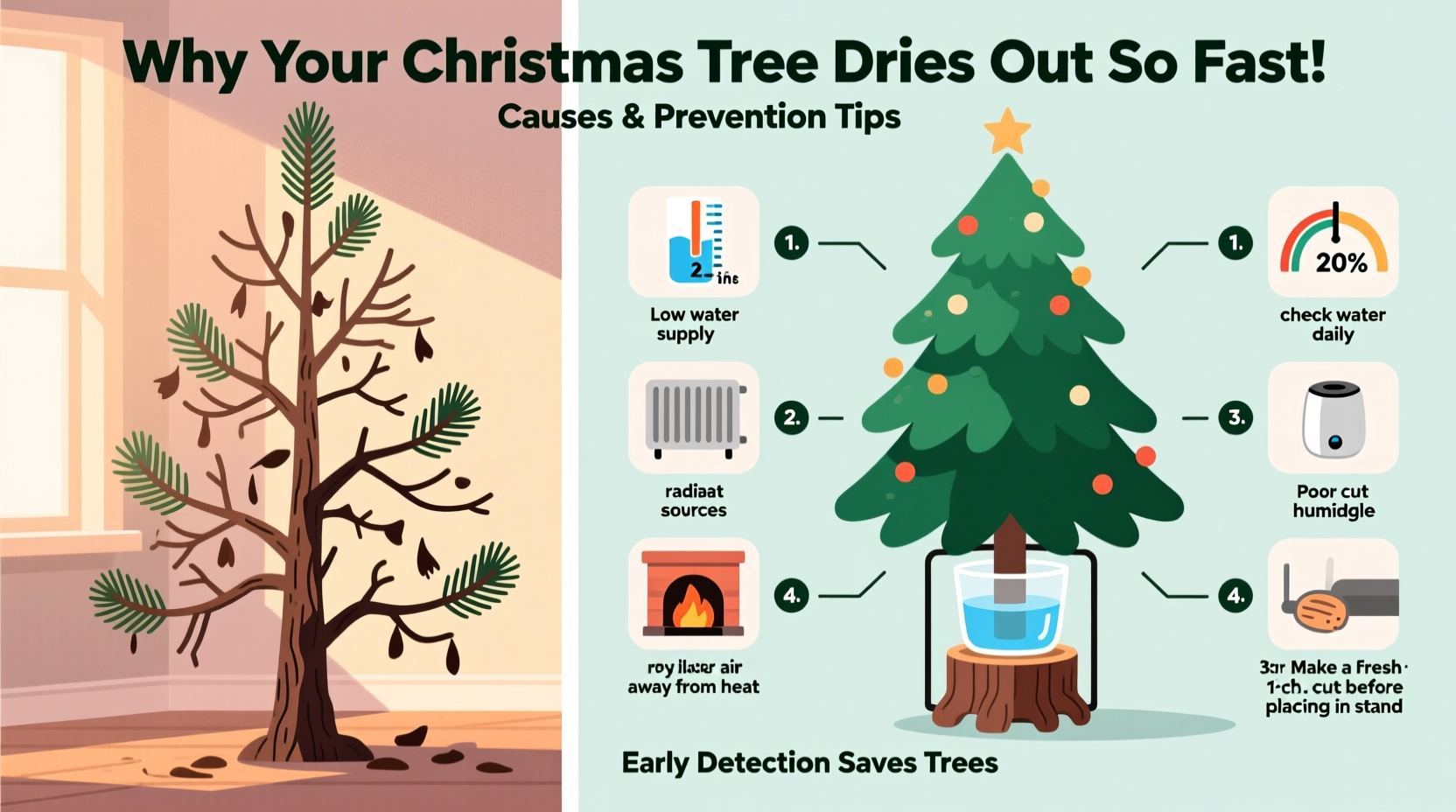
A cut Christmas tree is no longer a living organism—it’s a harvested vascular system relying entirely on capillary action and osmotic pressure to draw water upward through its xylem. Once severed from its root system, the tree must absorb water solely through the freshly cut base. But that base seals itself rapidly: within two hours, exposed wood cells oxidize and form a protective barrier—essentially a waterproof cork layer—that blocks water flow. That’s why timing matters more than most people realize. A tree cut on Monday and set up Friday may have already lost 40–60% of its absorption capacity before it ever touches water. Research from the University of Wisconsin-Madison confirms that trees placed in water within *90 minutes* of cutting retain 30% more moisture after 14 days than those delayed even four hours.
This sealing process accelerates under warm, dry indoor conditions—especially near heat sources like fireplaces, radiators, or forced-air vents. Indoor relative humidity during winter often falls below 20%, while healthy conifer foliage requires at least 40–50% RH to minimize transpiration stress. When air is dry and warm, the tree loses moisture through its needles faster than it can replace it—even with ample water in the stand. The result? Cellular dehydration, brittle needles, and irreversible browning starting at the tips and progressing inward.
7 Common Causes—and What They Really Mean
Most premature drying isn’t caused by one factor—it’s a compounding effect. Here are the most frequent culprits, ranked by impact severity:
- Delayed first watering: Waiting more than 2 hours post-cut to place the tree in water allows sap and resins to harden at the cut surface.
- Insufficient water volume: A typical 6–7 foot tree consumes 1–1.5 gallons per day—yet many stands hold only 0.5–0.75 gallons, running dry overnight.
- Unfresh cut: Re-cutting the base *after* bringing the tree indoors is non-negotiable—if the original cut was made more than 6–8 hours earlier, it’s already sealed.
- Poor species selection: Fraser fir and noble fir retain moisture longest (up to 5 weeks); Scotch pine lasts ~3 weeks; white pine and spruce often decline in under 14 days.
- Heat exposure: Placing the tree within 3 feet of a heat source increases needle moisture loss by 200–300% compared to cooler corners.
- Water additives myths: Sugar, aspirin, bleach, or commercial “preservatives” show no statistically significant improvement over plain water in peer-reviewed studies (NC State Extension, 2022).
- Low indoor humidity: Running humidifiers to maintain 40–45% RH reduces transpiration stress and extends freshness by 7–10 days.
Prevention Timeline: What to Do From Purchase to Placement
Timing determines success. Follow this evidence-based sequence—no shortcuts, no exceptions:
- Day −3 to −1 (Before purchase): Check local tree farms’ harvest dates. Ask: “When were these trees cut?” Prioritize lots harvested within the past 48 hours. Avoid pre-cut trees displayed outdoors for >3 days without misting.
- Day 0 (Purchase day): Transport tree horizontally in a covered vehicle (or upright with trunk wrapped in damp burlap). Never leave it in direct sun or wind during transit.
- Within 30 minutes of arrival: Make a fresh, straight, 1/4-inch cut. Remove any bark or debris from the bottom 2 inches of trunk.
- Immediately after cutting: Place trunk into a water-filled stand holding ≥1 gallon. Ensure water covers at least 2 inches of trunk.
- First 24 hours: Keep tree in a cool, shaded area (garage or porch) if indoor temps exceed 70°F. Let it acclimate and begin absorbing before moving inside.
- Ongoing (Daily): Check water level twice daily—morning and evening. Refill before it drops below 1 inch above the base.
Do’s and Don’ts: A Practical Care Table
| Action | Do | Don’t |
|---|---|---|
| Water Management | Use plain, cool tap water. Refill daily—never let the stand go dry, even once. | Add soda, fertilizer, or commercial preservatives—they offer no proven benefit and may promote bacterial growth. |
| Location | Place away from heat sources, direct sunlight, and HVAC vents. Ideal room temp: 62–68°F. | Set up near fireplaces, radiators, or above floor registers—even brief exposure dehydrates needles rapidly. |
| Humidity | Run a cool-mist humidifier nearby (40–45% RH ideal). Group other houseplants around the base to create micro-humidity. | Rely on boiling water, steam kettles, or “humidity hacks” like wet towels—they’re ineffective and unsafe. |
| Tree Stand | Choose a stand with ≥1-gallon capacity and wide base contact. Verify seal integrity—no leaks. | Use decorative stands with narrow reservoirs or outdated screw-type clamps that crush trunks. |
Real-World Case Study: The Fraser Fir That Lasted 38 Days
In December 2023, Sarah M., a high school biology teacher in Portland, Oregon, purchased a 7-foot Fraser fir from a certified farm on December 1st. She followed every step precisely: re-cut the trunk upon arrival, placed it in a 1.25-gallon stand filled with cool water, and kept it on a screened porch (42°F) for 36 hours before moving it into her living room—away from the gas fireplace and beneath a ceiling fan set to low reverse mode (to gently circulate air without drying). She checked water levels religiously and ran a humidifier maintaining 43% RH. By New Year’s Day, the tree remained supple, fragrant, and shed fewer than 12 needles per day—well within normal range. Her secret? “I treated it like a cut flower—not a decoration. I measured water loss daily. On day 22, it drank 1.3 gallons. On day 35, it was down to 0.7. I knew it was slowing, but never let it get thirsty.” Her approach mirrors recommendations from the University of Illinois Extension’s Christmas Tree Care Program, which tracks longevity across thousands of household trials.
“Once a tree is cut, its survival depends entirely on uninterrupted water access and minimized environmental stress. There is no ‘miracle solution’—only disciplined, daily attention to fundamentals.” — Dr. Gary D. Chastagner, Research Plant Pathologist, Washington State University
FAQ: Quick Answers to Persistent Questions
Can I revive a tree that’s already drying out?
Only if the base remains moist and pliable. Immediately re-cut 1/2 inch off the trunk, submerge it fully in lukewarm water for 2–4 hours (not hot), then return to a clean stand with fresh water. Avoid drastic measures like drilling holes or soaking overnight—the xylem won’t absorb beyond its natural capacity. Success is limited to trees showing early signs (slight needle brittleness, no major browning) and less than 10 days post-cut.
Does spraying the tree with water help?
Light misting of the foliage *can* temporarily reduce transpiration in very dry rooms—but only if done 2–3 times daily with cool water and *never* near lights or electrical cords. It’s supplementary, not a substitute for proper hydration at the base. Over-misting encourages mold growth on lower branches and carpet.
How do I know if my tree is too dry to save?
Perform the “snap test”: Gently bend a 6-inch outer branch. If it snaps crisply with a white break and no flexibility, cellular moisture is gone. If needles fall freely when you run your hand along a branch (more than 10–15 per 6 inches), the tree has passed the point of recovery. Discard safely—don’t burn dried trees indoors.
Conclusion: Your Tree Deserves Better Than Guesswork
Your Christmas tree isn’t failing you—it’s responding predictably to conditions you control. Drying isn’t fate; it’s feedback. Every dropped needle is data: a signal that water access was interrupted, temperature spiked, or humidity plummeted. Armed with botanical insight and consistent practice, you can reliably extend freshness by 2–3 weeks—keeping your tree vibrant, safe, and fragrant well past New Year’s Eve. Start this year by choosing a fresher-cut species, re-cutting before water contact, and committing to twice-daily water checks. Track your progress: note the date of first cut, daily water intake, and needle retention. You’ll quickly spot patterns—and gain confidence that next year’s tree will be your best yet.




 浙公网安备
33010002000092号
浙公网安备
33010002000092号 浙B2-20120091-4
Comments
No comments yet. Why don't you start the discussion?