
There’s nothing more disappointing than setting up a beautiful, fragrant Christmas tree—only to find it shedding needles and losing its luster within days. You may have followed every tip you’ve heard, yet still wonder: why does my Christmas tree dry out so fast? The answer lies in a combination of environmental factors, preparation oversights, and natural biology. Fortunately, most issues are preventable with the right knowledge and habits.
Christmas trees are cut from living evergreens and remain biologically active for weeks after harvest. Their ability to retain moisture depends on how they’re handled before and after arriving in your home. Understanding the science behind drying—and applying practical countermeasures—can extend your tree’s freshness by two or even three weeks.
The Science Behind Tree Drying
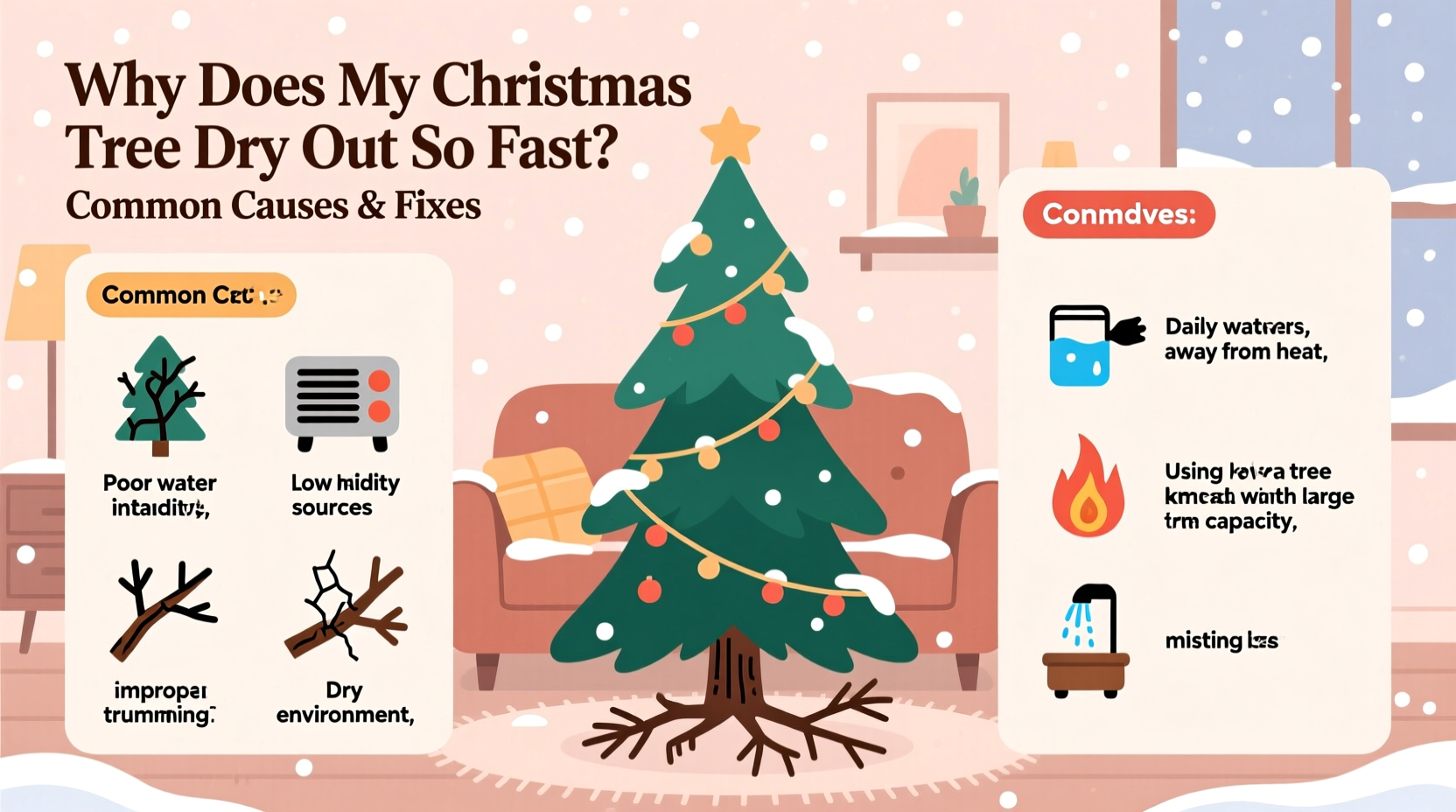
Once a Christmas tree is cut, it no longer receives water from roots. Instead, it relies on stored moisture and any water absorbed through its freshly cut base. Over time, capillary action allows the trunk to draw water upward into the branches, keeping needles hydrated. However, this system only works if the cut surface remains open and unobstructed.
When exposed to air, the sap in the cut end hardens quickly, forming a seal that blocks water absorption. This process can begin within hours. Once sealed, even placing the tree in water won’t help—it simply sits there dehydrating, much like a flower with a sealed stem.
Temperature and humidity also play critical roles. Indoor heating systems reduce relative humidity, accelerating evaporation from needles. Warm rooms increase transpiration—the process by which trees lose moisture through their foliage—further speeding up dehydration.
“Even the freshest tree will dry out rapidly if its water uptake is blocked or if it's placed near heat sources.” — Dr. Laura Bennett, Urban Forestry Specialist, University of Vermont Extension
Top 5 Causes of Rapid Drying (and How to Fix Them)
1. Delayed or Improper Trunk Cutting
One of the most overlooked mistakes happens before the tree even comes inside. If the trunk isn’t recut before placing it in a stand, the chances of proper hydration drop dramatically. A cut made days or even hours earlier may already be sealed with sap, especially in species like pines and spruces.
This exposes new wood and opens the xylem vessels responsible for water transport. Use a handsaw or pruning saw; avoid axes or hatchets, which can crush the fibers and impair absorption.
2. Inadequate Water Supply
Christmas trees consume surprising amounts of water—especially during the first few days. A large tree can drink over a quart per day for every inch of trunk diameter. A six-foot tree with a four-inch base might need up to a gallon daily at peak intake.
Yet many standard stands hold less than a gallon total. If the reservoir runs dry even once, the cut end reseals, and the tree stops drinking. From that point, decline is rapid and irreversible.
“A tree that goes without water for just 6–8 hours after cutting may lose its ability to absorb water later, no matter how much you refill.” — National Christmas Tree Association
Solution: Use a stand with a large water capacity (minimum 1 gallon). Check water levels twice daily, especially in the first week. Refill before the level drops below the base.
3. Exposure to Heat and Dry Air
Placing your tree near radiators, fireplaces, heating vents, or even bright electronics increases ambient temperature and reduces humidity. These conditions force the tree to lose moisture faster than it can replace it.
In homes with forced-air heating, indoor humidity often drops below 30%, far below the 40–50% ideal for tree longevity. Low humidity causes needles to desiccate, becoming brittle and prone to dropping.
Solution: Position the tree away from direct heat sources. Use a humidifier nearby to maintain moisture in the air. Consider using a hygrometer to monitor room humidity.
4. Poor-Quality or Pre-Cut Trees
Not all trees are created equal. Some lots sell trees that were harvested weeks ago and stored improperly. Even if they look green, these trees may have already lost significant internal moisture.
Fir species like Fraser and Balsam tend to retain water better than spruce or pine. Spruce trees, while attractive, are notorious for rapid needle drop once dry.
5. Lack of Ongoing Maintenance
Many people set up their tree, fill the stand once, and forget about it. But consistent monitoring is essential. Dust accumulation on needles can also block pores and reduce moisture retention.
Solution: Wipe branches lightly with a dry microfiber cloth weekly. Keep the water clean—refill with fresh water rather than topping off dirty reservoirs. Avoid additives like sugar, aspirin, or commercial preservatives; plain tap water is proven just as effective.
Step-by-Step Guide to Keeping Your Tree Fresh
- Select a fresh tree: Choose one with vibrant color, flexible needles, and minimal shedding when shaken.
- Transport carefully: Cover the tree during transport to prevent wind drying. Keep it in shade until setup.
- Recut the base: Within 4–6 hours of purchase, cut ½ to 1 inch off the bottom at a straight angle.
- Place in water immediately: Fill the stand with room-temperature water right after cutting. Never let the cut end dry out.
- Choose the right location: Keep away from heat sources, sunny windows, and high-traffic areas that cause vibration.
- Maintain water levels: Check twice daily for the first week. Refill before the water drops below the base.
- Monitor environment: Use a humidifier if indoor air is dry. Avoid placing fans or vents nearby.
- Inspect regularly: Look for signs of drying—bending branches, dull color, excessive needle drop—and act early.
Do’s and Don’ts: Christmas Tree Hydration Table
| Do | Don’t |
|---|---|
| Recut the trunk before placing in stand | Use an old cut or split the base instead of a clean cut |
| Use a stand with at least 1-gallon capacity | Rely on small decorative stands with tiny reservoirs |
| Check water levels twice daily | Assume the tree doesn’t need water if the reservoir looks full |
| Keep the tree away from heat sources | Place near radiators, fireplaces, or TV units |
| Use plain tap water | Add bleach, sugar, aspirin, or commercial solutions |
| Use a humidifier in dry rooms | Allow indoor humidity to drop below 30% |
Real Example: The Martin Family’s Turnaround
The Martins used to dread their annual Christmas tree tradition. Every year, their Fraser fir would start dropping needles by December 10th, despite being put up on the 1st. One year, they filmed a time-lapse showing dramatic browning by day five.
Determined to fix it, they consulted a local tree farm expert who observed their setup. He noticed two key issues: their stand held only half a gallon, and the tree was positioned directly above a heating vent. They also hadn’t recut the trunk, assuming the lot had done it properly.
The following year, they bought a larger stand, recut the base themselves, and moved the tree to a cooler corner. They checked water religiously and added a small humidifier. The result? The tree stayed fresh and lush until January 6th—with less than 5% needle drop. “It smelled amazing the whole time,” said Sarah Martin. “We finally got our winter magic back.”
Expert Tips Checklist
- ✅ Recut the trunk within 6 hours of purchase
- ✅ Use a stand holding at least 1 gallon of water
- ✅ Place the tree away from heat sources and direct sunlight
- ✅ Check water levels twice daily—morning and night
- ✅ Refill with fresh water before the reservoir runs low
- ✅ Wipe dust from branches weekly with a dry cloth
- ✅ Monitor room humidity; aim for 40% or higher
- ✅ Avoid chemical additives in the water
- ✅ Choose longer-lasting species like Fraser or Balsam fir
- ✅ Transport the tree covered to prevent wind drying
Frequently Asked Questions
How long should a Christmas tree stay fresh?
A well-maintained tree can last 4 to 5 weeks indoors. With proper care—including a fresh cut, consistent watering, and a cool location—many trees remain fresh from early December through early January. Species like Fraser fir often last longer than spruce or Scotch pine.
Can I revive a dry Christmas tree?
Once a tree has dried out significantly, revival is nearly impossible. If the cut end has sealed and the needles are brittle, no amount of water will restore hydration. Prevention is key. However, if the tree is only slightly dry but still has flexible needles, immediate recutting and submersion in water may help—but success is not guaranteed.
Do commercial tree preservatives work?
Most studies, including those by agricultural extensions, show that plain tap water performs as well as or better than commercial additives. Products containing sugar, fertilizer, or bleach can promote bacterial growth or damage the tree’s vascular system. Stick to clean water and focus on physical care instead.
Conclusion: Make This Year’s Tree the Freshest Yet
Your Christmas tree doesn’t have to be a short-lived decoration. Rapid drying is usually the result of correctable mistakes—not bad luck. By understanding the biological needs of cut evergreens and adjusting your setup accordingly, you can enjoy a lush, aromatic centerpiece throughout the holiday season.
The difference between a tree that lasts a week and one that thrives for a month comes down to preparation, placement, and persistence. A fresh cut, ample water, and a cool environment form the foundation of lasting freshness. Combine those with daily attention, and you’ll create a holiday atmosphere that feels alive—literally.




 浙公网安备
33010002000092号
浙公网安备
33010002000092号 浙B2-20120091-4
Comments
No comments yet. Why don't you start the discussion?