
Every year, millions of households bring home a fresh-cut Christmas tree, only to watch it lose its luster within days. Needles drop, branches sag, and the scent fades—often before the holidays even begin. If your tree seems to dry out faster than expected, you're not alone. But this rapid dehydration isn't inevitable. With the right knowledge and a few proactive steps, you can extend your tree’s life by weeks. This guide breaks down the science behind drying trees, reveals early warning signs, and delivers practical, immediate solutions to keep your evergreen looking vibrant through New Year’s.
The Science Behind Tree Dehydration
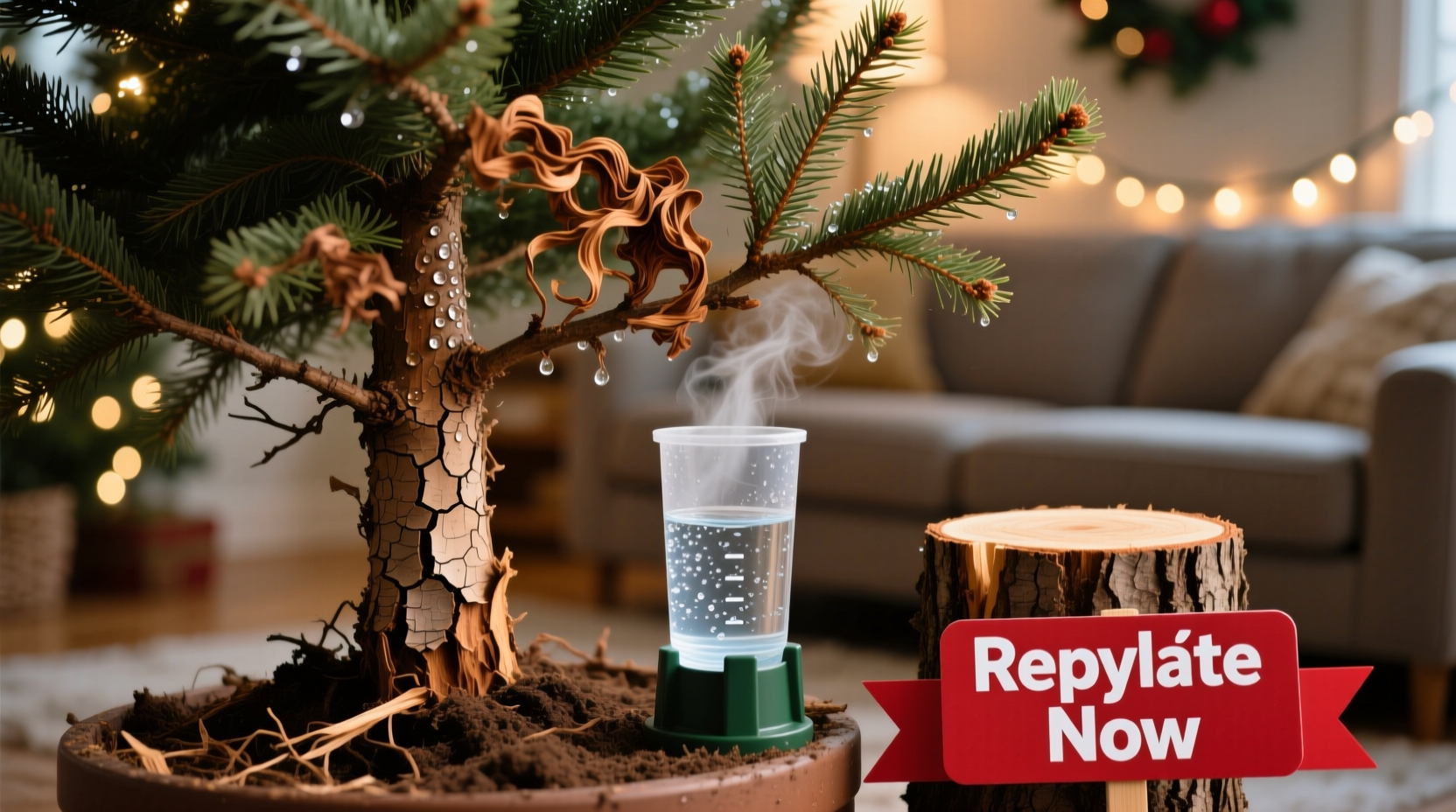
A freshly cut Christmas tree is still a living organism—at least for a while. Once severed from its root system, it can no longer draw water from the soil, but it continues to lose moisture through transpiration, especially in warm indoor environments. The key to longevity lies in how well the tree can absorb and retain water after being cut.
When a tree is harvested, the cut stump begins to seal itself almost immediately. This natural process, called embolism, blocks the xylem—the vascular tissue responsible for water transport—making rehydration difficult if not addressed quickly. Studies from the National Christmas Tree Association show that a tree left uncut at the base for more than four hours can lose up to 50% of its water uptake capacity.
Indoor conditions exacerbate the problem. Central heating, fireplaces, and proximity to vents create dry air with low humidity, accelerating moisture loss. A typical Fraser fir or Balsam fir can lose up to a quart of water per day in heated homes. Without consistent hydration, cellular structure breaks down, leading to needle drop and increased fire risk.
“Tree freshness starts the moment it’s cut. The first 24 hours are critical—if you don’t get it into water quickly, no amount of care later will fully compensate.” — Dr. Laura Bennett, Horticulturist and Christmas Tree Specialist, University of Vermont Extension
Early Signs Your Tree Is Drying Out Too Fast
Catching dehydration early is essential. By the time needles start falling in handfuls, significant damage has already occurred. Watch for these subtle but telling signs:
- Rapid needle drop when gently shaking a branch – A few stray needles are normal, but more than 10–15 per shake indicates stress.
- Brittle branches – Healthy boughs should bend slightly without snapping. Dry wood cracks easily.
- Dull, faded color – Vibrant green turns grayish or yellowish as chlorophyll breaks down.
- Lack of pine scent – Aromatic oils evaporate quickly when the tree is dehydrated.
- Stiff trunk surface – Run your hand along the base. A moist, slightly sticky feel means good sap flow; dry, rough bark means trouble.
- Water level drops drastically overnight – While trees drink heavily at first, a sudden spike in consumption followed by stagnation often means the cut has sealed and absorption has stopped.
Quick Hydration Fixes to Revive a Drying Tree
If you’ve noticed early signs of drying, don’t panic. Several fast-acting interventions can restore water uptake and prolong freshness. These methods work best when combined and applied promptly.
1. Re-Cut the Base (Most Important Step)
The single most effective fix is making a fresh cut at the base. Use a handsaw or pruning saw to remove at least half an inch from the bottom. This opens clogged xylem channels and allows water to flow again. Do this just before placing the tree in its stand—ideally within 30 minutes—to prevent re-sealing.
2. Use Lukewarm Water Initially
Cold water slows capillary action. Starting with lukewarm water (about 70–80°F) helps the tree absorb liquid faster during the first 24 hours. After that, maintain room-temperature water to avoid promoting bacterial growth.
3. Add a Hydration Boost Solution
While plain water works, a simple additive can enhance uptake. Avoid commercial “tree preservatives” filled with sugars and dyes—most are ineffective. Instead, use one of these proven mixtures:
- Lemon-lime soda + water (1:3 ratio) – The sugar provides energy, citric acid lowers pH, and carbonation may help clear blockages.
- One tablespoon white vinegar + one teaspoon sugar per gallon – Balances pH and inhibits mold without feeding bacteria.
- Aspirin solution (one 325mg tablet per gallon) – Salicylic acid mimics stress signals that stimulate water absorption.
Note: Change the water and refresh the solution every 2–3 days to prevent fermentation.
4. Elevate Humidity Around the Tree
Increase ambient moisture using a small humidifier nearby. Aim for 40–50% relative humidity. Alternatively, place shallow trays of water near the base (not under it, to avoid spills). As water evaporates, it reduces transpiration stress on the tree.
5. Relocate Away From Heat Sources
Move the tree away from radiators, vents, fireplaces, and direct sunlight. Even a few feet can make a difference. Every 10°F increase in temperature can double the rate of moisture loss.
Step-by-Step Emergency Revival Timeline
If your tree shows moderate dehydration signs, follow this 72-hour recovery plan:
- Hour 0: Prepare – Gather a saw, clean bucket, measuring cup, and chosen hydration solution ingredients.
- Hour 1: Re-cut and rehydrate – Remove tree from stand, make a fresh ½-inch cut, and immediately return it to a water-filled stand with lukewarm solution.
- Hours 2–24: Monitor closely – Check water level every 4–6 hours. Refill as needed. Do not let the reservoir run dry.
- Day 2: Assess response – Perform the bend test and check for improved flexibility. If needles still feel dry, replace the solution with aspirin mix.
- Day 3: Stabilize environment – Turn down the thermostat near the tree by 2–3°F, add a humidifier, and ensure no lights are touching foliage.
By the end of this timeline, most trees will show noticeable improvement in needle retention and branch resilience—if intervention was timely.
Do’s and Don’ts of Christmas Tree Care
| Do’s | Don’ts |
|---|---|
| ✔ Make a fresh cut before placing in stand | ✖ Wait more than 4 hours after cutting to water |
| ✔ Use a large-capacity stand (holds 1+ gallons) | ✖ Use a small stand that needs refilling twice daily |
| ✔ Check water level daily—twice in first week | ✖ Assume the tree doesn’t need water if the reservoir looks full (evaporation hides true loss) |
| ✔ Keep away from heat sources and direct sun | ✖ Place next to a radiator or fireplace |
| ✔ Use LED lights (they emit less heat) | ✖ String old incandescent lights that raise local temperature |
| ✔ Mist branches lightly once a day in dry climates | ✖ Over-mist, which encourages mold |
Real Example: How One Family Saved Their Pre-Lit Tree
The Thompson family in Columbus, Ohio, bought a pre-lit Noble fir in late November. Within five days, needles were dropping rapidly, and the room smelled musty. They assumed it was a bad batch—until they read about re-cutting.
They removed the tree from its stand, laid it in the bathtub, and made a fresh ¾-inch cut. After returning it to the stand with a vinegar-sugar solution, they placed a cool-mist humidifier three feet away and switched to a timer-controlled LED light set.
Within 48 hours, water uptake resumed—measured by a drop from 1 gallon to ¼ full in 12 hours. Needle drop decreased by 80% over the next week. The tree remained fresh through January 2nd, far exceeding their previous record of nine days.
Their mistake? Not re-cutting initially. The pre-cut at the lot had sealed during transport. The fix wasn’t complicated—just timely and informed.
Frequently Asked Questions
How much water should my tree drink each day?
A healthy tree typically drinks 1 quart per inch of stem diameter daily during the first week. For example, a 3-inch trunk needs about 3 quarts (¾ gallon) per day. Consumption usually peaks in the first 72 hours, then stabilizes. Never let the stand run dry—even for a few hours—as the cut can reseal.
Can I drill holes into the trunk to help it absorb water?
No. Drilling holes is ineffective and potentially harmful. Xylem tubes run vertically, so side holes do not connect to the water-conducting system. The USDA Forest Service advises against it, noting that only a proper basal cut ensures optimal uptake.
Should I add bleach or fertilizer to the water?
No. Bleach kills bacteria but also damages plant tissue. Fertilizers offer no benefit to cut trees—they can’t photosynthesize or grow new roots. Stick to pH-balancing additives like vinegar or aspirin, and change water regularly to keep it clean.
Final Checklist: Maximize Your Tree’s Freshness
- Choose a tree with flexible needles and sticky sap at the cut end.
- Make a fresh ½-inch cut before placing in the stand—even if it’s pre-cut.
- Use a stand that holds at least 1 gallon of water.
- Fill with lukewarm water and optional hydration booster (vinegar/sugar or aspirin).
- Place the tree away from heat sources, vents, and direct sunlight.
- Check water level twice daily for the first week, then once daily.
- Use LED lights to minimize heat exposure.
- Add a humidifier nearby if indoor air is dry.
- If drying occurs, re-cut the base immediately and restart hydration.
- Remove the tree when needle drop becomes excessive or water uptake stops completely.
Conclusion: Keep Your Holiday Evergreen, Not Ever-dry
A dry Christmas tree isn’t just disappointing—it’s a missed opportunity for warmth, tradition, and seasonal joy. With a little understanding of tree biology and a few smart habits, you can prevent premature drying and enjoy a lush, fragrant centerpiece all holiday season. The effort is minimal: a fresh cut, consistent watering, and mindful placement. But the payoff is significant—a tree that stays alive in spirit and form, just like the memories it frames.




 浙公网安备
33010002000092号
浙公网安备
33010002000092号 浙B2-20120091-4
Comments
No comments yet. Why don't you start the discussion?