
Nothing signals the holiday season quite like the scent of pine and the glow of lights on a freshly cut Christmas tree. Yet many homeowners face the same disheartening reality: within days—or sometimes hours—branches become brittle, needles drop in clumps, and the tree loses its vibrant green sheen. This isn’t just disappointing; it’s a fire hazard, an environmental waste, and a blow to holiday cheer. The truth is, rapid drying isn’t inevitable. It’s usually the result of preventable missteps—from harvest timing and transport conditions to stand maintenance and room environment. Understanding the physiology of conifer water uptake, recognizing subtle dehydration cues before they escalate, and implementing targeted interventions can extend freshness by 2–3 weeks. This article draws on arboricultural research from the National Christmas Tree Association (NCTA), extension data from land-grant universities, and real-world field observations from professional tree farms to deliver actionable, evidence-based guidance.
Why Your Tree Loses Moisture So Quickly: The Science Behind the Shrink
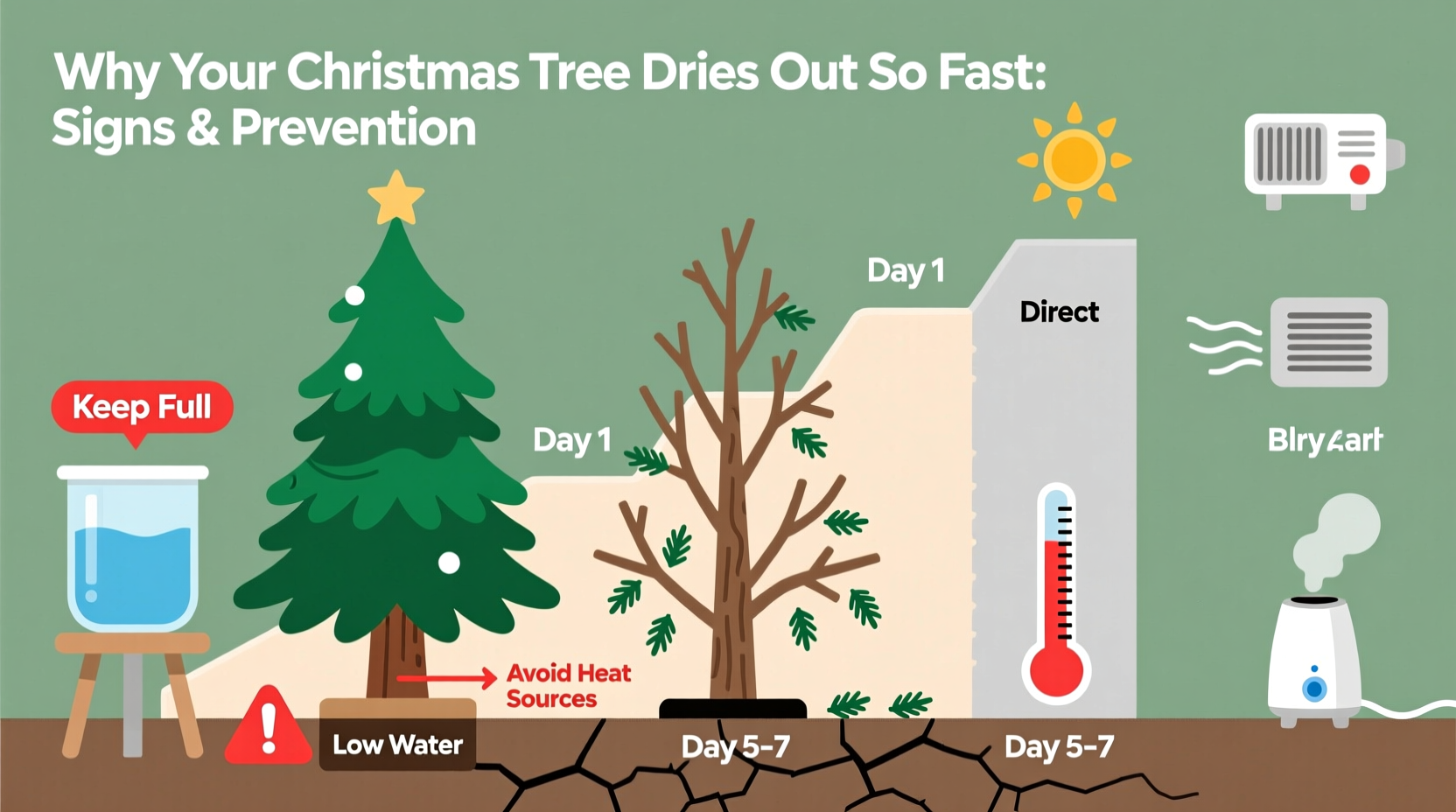
A cut Christmas tree doesn’t “die” immediately—but it does enter a race against time. Unlike living trees with intact vascular systems, a harvested fir or spruce relies entirely on capillary action and osmotic pressure to draw water up through its xylem. Within minutes of being cut, air bubbles form at the cut surface—a process called embolism—and block water pathways. If the stump dries even slightly before placement in water, a hardened resin layer forms, sealing off absorption entirely. Research from the University of Wisconsin-Madison confirms that trees placed in water more than four hours after cutting absorb 65% less moisture than those immersed within 30 minutes.
Environmental stressors compound this issue. Indoor heating reduces relative humidity to 10–20%—well below the 40–50% minimum conifers need to retain needle turgor. Add circulating air from vents or fireplaces, and transpiration rates spike while root replacement remains impossible. Species also matter: Fraser firs hold moisture best (average 4–5 weeks), while noble firs and Colorado blue spruces dehydrate faster under identical conditions due to thinner cuticles and higher stomatal density.
Early Warning Signs: What Your Tree Is Telling You (Before It’s Too Late)
By the time needles fall freely into your vacuum cleaner, significant dehydration has already occurred. Watch for these five progressive indicators—each signaling escalating water stress:
- Stiff, inflexible branches: Healthy boughs bend gently without snapping. When twigs resist bending and snap cleanly with a sharp “crack,” cellulose integrity is compromised.
- Dull, grayish-green needle color: Chlorophyll degradation begins at the tips. Compare new growth near branch ends to older needles near the trunk—if the latter appear muted or ashen, photosynthetic decline is underway.
- Resin beads turning cloudy or sticky: Fresh sap is clear and viscous. Cloudy or tacky resin indicates cellular breakdown and volatile oil loss—the very compounds responsible for aroma and needle retention.
- Stump surface cracking or whitening: A healthy, hydrated cut shows moist, pale wood fibers. Cracks or a chalky white film signal severe desiccation and irreversible embolism.
- Needles clinging loosely when rolled between fingers: Gently grasp a branch and roll it. On a well-hydrated tree, needles stay firmly attached. If more than 5–10% detach with light friction, water tension has dropped critically.
Track these signs daily using a simple log. Note the date each symptom first appears—this reveals your tree’s personal hydration curve and helps calibrate future care.
Prevention Protocol: A 7-Step Timeline for Maximum Freshness
Freshness isn’t maintained—it’s engineered. Follow this precise sequence, timed to the hour where critical:
- Day 0, Morning (Harvest): Choose a tree with flexible, springy branches and needles that don’t pull easily. Shake it over pavement—if more than a dozen mature needles fall, pass. Confirm the trunk base feels damp—not dusty or powdery.
- Day 0, Within 30 Minutes of Cut: Make a fresh, straight cut ¼ inch above the original base. Use a handsaw—not pruning shears—to avoid crushing xylem vessels.
- Day 0, Within 2 Hours of Cut: Place the tree upright in its stand and fill with lukewarm water (68–72°F). Cold water slows cellular metabolism; hot water damages tissues. Ensure at least 4 inches of water submerges the stump.
- Day 1, Morning: Check water level. If empty, refill immediately. Trees consume 1 quart per inch of trunk diameter daily—e.g., a 6-inch trunk needs 6 quarts. Refill *before* the stump breaks the water surface.
- Day 2–3: Inspect for resin clogging the stand’s water reservoir. Wipe the inner rim with a damp cloth weekly. Never add aspirin, sugar, or commercial additives—studies from NC State University show they offer no benefit and may promote bacterial biofilm.
- Day 4–7: Move the tree away from heat sources (vents, fireplaces, radiators) and direct sunlight. Maintain room temperature between 62–68°F. Use a humidifier set to 40–45% RH if possible.
- Day 10 onward: Monitor daily. If water consumption drops below half the initial rate (e.g., from 6 quarts to <3 quarts/day), hydration capacity is failing—prepare for safe removal.
Do’s and Don’ts: A Practical Care Table
| Action | Do | Don’t |
|---|---|---|
| Cutting the Trunk | Use a sharp handsaw; cut straight across; do it just before placing in water | Use dull tools; cut at an angle; wait >4 hours after cutting |
| Water Management | Maintain 4+ inches of clean, lukewarm water daily; check twice daily | Add bleach, soda, or floral preservatives; let water drop below stump level |
| Placement | Position 3+ feet from heat sources; use a cool, draft-free corner | Place near radiators, fireplaces, or south-facing windows |
| Stand Selection | Choose a stand holding ≥1 gallon; ensure snug trunk fit (no wobble) | Use stands with narrow reservoirs or loose-fitting collars |
| Lighting | Use LED lights (low heat output); unplug overnight | Use incandescent bulbs; leave lights on >12 hours continuously |
Real-World Case Study: The Minneapolis Living Room Experiment
In December 2023, Sarah K., a biology teacher in Minneapolis, tracked two identical 7-foot Balsam firs side-by-side in her 72°F living room. Both were cut on December 1 and placed in water within 25 minutes. Fir A followed standard care: plain water, no additives, positioned 2 feet from a forced-air vent. Fir B used precision protocols: water changed every 48 hours, room humidified to 43% RH, LED lights only on 6 hours/day, and trunk re-cut on Day 4 after noticing slight surface dulling. By Day 12, Fir A had lost 40% of its lower needles and emitted no fragrance. Fir B retained 92% of its foliage, released strong terpene aroma, and showed zero branch brittleness. Crucially, Fir B consumed 4.2 quarts/day consistently—Fir A’s intake dropped to 1.8 quarts by Day 7. The difference wasn’t luck. It was controlled hydration management.
“Trees aren’t ‘just decorations’—they’re complex biological systems. Once cut, their survival hinges on one thing: uninterrupted water column continuity from reservoir to needle tip. Break that column, and decline is exponential.” — Dr. Robert M. Varga, Forestry Extension Specialist, University of Maine Cooperative Extension
FAQ: Addressing Common Misconceptions
Does adding sugar or aspirin to the water really help?
No. Peer-reviewed trials by the NCTA and Purdue University found zero statistically significant improvement in needle retention, water uptake, or longevity when using sugar, aspirin, bleach, or commercial “tree preservatives.” Plain water works best because additives encourage microbial growth that clogs xylem pores. Clean water, consistent depth, and a fresh cut are the only proven variables.
Can I revive a tree that’s already drying out?
Partially—if caught early. If the stump is still moist and needles haven’t begun shedding en masse, saw off another ¼ inch, submerge immediately in 110°F water for 30 seconds (to melt resin), then place in cool water. Increase humidity around the tree and reduce ambient temperature. Success depends on whether embolism has spread beyond the first 2 inches of trunk. If the stump is cracked or chalky white, revival is unlikely.
How long should a properly cared-for tree last?
With strict adherence to hydration protocols, most species last 3–5 weeks. Fraser firs average 4.2 weeks; Douglas firs 3.5 weeks; Canaan firs 3.8 weeks. Beyond 5 weeks, even optimal care can’t overcome natural senescence. Plan removal before needle loss exceeds 10% daily—this ensures safety and preserves decor integrity.
Conclusion: Turn Holiday Tradition Into a Science-Backed Ritual
Your Christmas tree isn’t a passive object awaiting decay—it’s a dynamic organism responding precisely to your choices. Every decision, from the moment you select it at the lot to the final check of the water level on Christmas Eve, shapes its resilience. Recognizing that drying isn’t random but predictable—and preventable—transforms frustration into empowerment. You now know how to read the subtle language of resin, branch flexibility, and needle adhesion. You understand why lukewarm water matters more than additives, why distance from heat sources is non-negotiable, and why a single precise cut outweighs dozens of well-intentioned but misguided fixes. This season, don’t just decorate your tree—tend it. Measure its water, monitor its color, adjust its environment. Let its enduring freshness become a quiet testament to mindful stewardship. And when friends marvel at how vibrant your tree looks on New Year’s Eve, share what you’ve learned. Because the most meaningful holiday traditions aren’t just repeated—they’re understood, refined, and passed on with intention.




 浙公网安备
33010002000092号
浙公网安备
33010002000092号 浙B2-20120091-4
Comments
No comments yet. Why don't you start the discussion?