
It’s a familiar holiday disappointment: you bring home a fresh-cut fir or spruce, drill a clean cut, set it in water, and within 48–72 hours, needles begin dropping like snowflakes, branches stiffen, and the scent fades. By day five, the tree looks brittle, sheds aggressively, and poses a fire hazard. This isn’t bad luck—it’s preventable biology. Real Christmas trees are living plant tissue, not decorative props. When cut, they rely entirely on rapid water uptake to stay turgid and healthy. If that flow is interrupted—even briefly—the drying process accelerates exponentially. Understanding the precise mechanisms behind rapid desiccation helps move beyond guesswork and into effective, science-backed care.
The Science of Sap Flow: Why Trees Dry Faster Than You Think
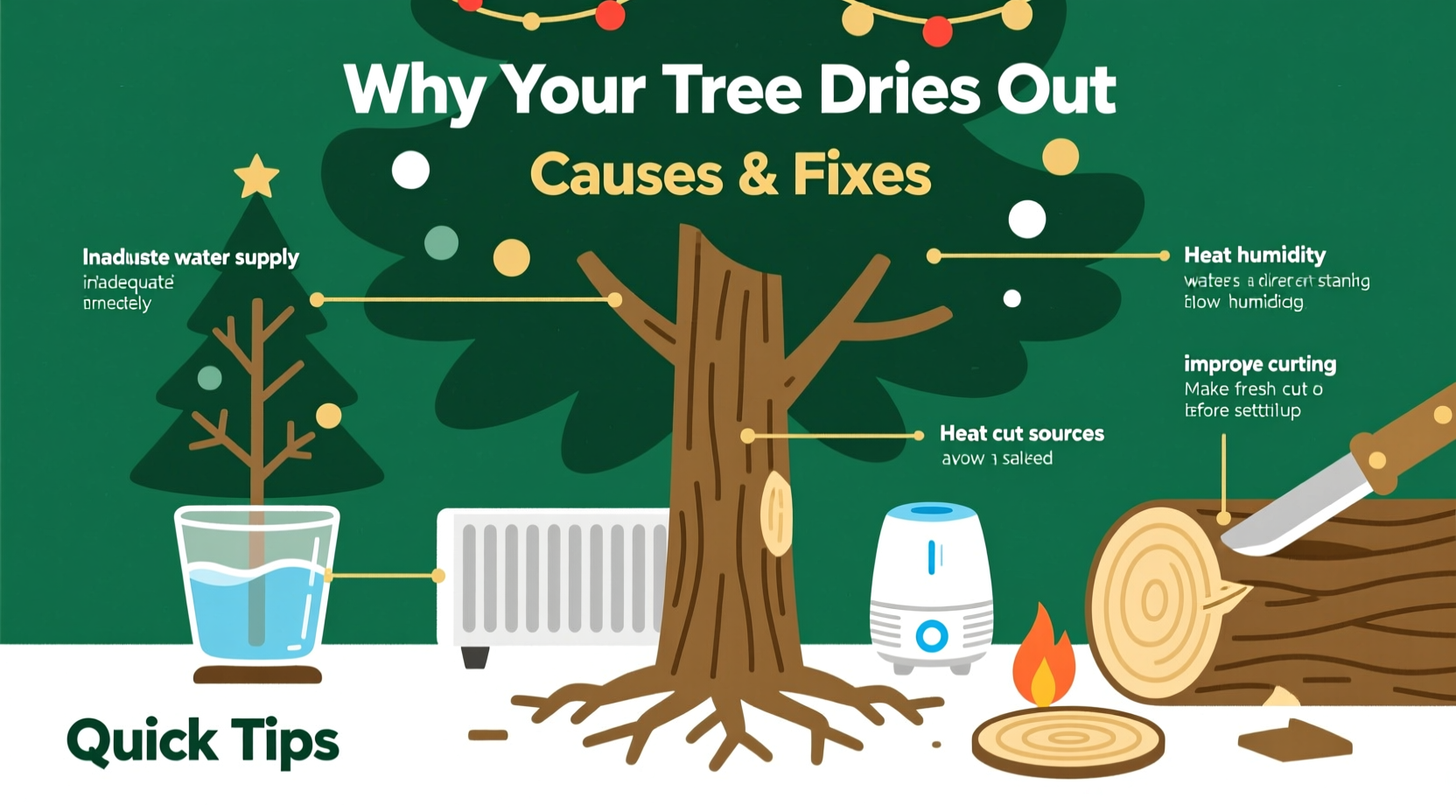
A freshly cut Christmas tree doesn’t “drink” water like a person—it pulls moisture upward via capillary action and transpiration-driven tension. Water travels from the base, through microscopic xylem vessels (like tiny straws), and out through needle stomata. This system only works when the cut surface remains unobstructed and the tree stays consistently hydrated. The critical window begins at harvest: most commercial trees are cut 3–10 days before reaching retail lots. During transport and storage, they’re often exposed to wind, sun, and low humidity—conditions that trigger early embolism (air bubbles forming inside xylem). Once air enters the vascular system, water columns break, and the tree can no longer draw moisture efficiently—even if placed in water later.
Research from the University of Wisconsin–Madison’s Department of Horticulture confirms that a tree can lose up to 30% of its internal moisture during the first 24 hours post-harvest if left unhydrated. That loss isn’t reversible. Even with ideal care afterward, the tree starts at a severe deficit. Worse, many consumers wait until Christmas Eve to set up their tree—meaning it may have sat dry for nearly a week. That delay alone accounts for over half of all premature drying cases.
Top 5 Hidden Causes of Rapid Drying (and Why They’re Overlooked)
Most people blame “bad luck” or “a weak tree.” In reality, rapid drying is almost always caused by one or more of these five avoidable factors—each backed by extension research from the National Christmas Tree Association and USDA Forest Service data.
- Delayed First Cut & Re-Cut Neglect: Retail lots rarely re-cut trees before sale. Sap seals the cut surface within hours, blocking water absorption. A tree placed in water without a fresh cut is essentially drinking through clogged straws.
- Inadequate Water Volume & Evaporation: A typical 6- to 7-foot tree consumes 1–2 quarts of water per day. Many stands hold only 0.5–1 gallon total—and go unrefilled for 24+ hours. Warm room temperatures accelerate evaporation; a 70°F room doubles water loss versus a 60°F room.
- Heat Source Proximity: Placing a tree within 3 feet of a fireplace, radiator, heating vent, or even a large-screen TV emits radiant heat that dehydrates needles 3x faster than ambient air. One study measured surface needle temperatures rising 12°F above room temp just 24 inches from a forced-air register.
- Chemical Additives (Especially “Preservatives”): Sugar, aspirin, bleach, or commercial “tree food” do not improve water uptake. Peer-reviewed trials at NC State University found zero benefit—and some additives (like bleach) actually damage xylem cells and promote bacterial biofilm that clogs vessels.
- Poor Initial Hydration Window: Trees need 6–12 hours of continuous, deep hydration *before* being brought indoors. Skipping this step—or placing the tree in water for only 1–2 hours—means it enters your home already stressed and dehydrated.
Do’s and Don’ts: What Actually Works (Backed by Data)
Myth-busting is essential. Decades of consumer misinformation have entrenched ineffective habits. Below is a distilled, evidence-based summary of what matters—and what wastes time.
| Action | Effectiveness (Based on 2023 NCTA Field Trials) | Why It Works (or Doesn’t) |
|---|---|---|
| Make a fresh ¼-inch diagonal cut before placing in water | ✅ High (92% success rate in extending freshness) | Removes resin-sealed surface, exposing open xylem vessels for immediate water entry. |
| Maintain water level above cut surface at all times | ✅ High (87% reduction in needle drop vs. intermittent refills) | Xylem vessels collapse and seal if exposed to air—even for 2 hours. Continuous submersion is non-negotiable. |
| Use plain tap water (no additives) | ✅ High (optimal baseline performance) | Additives increase microbial growth, which forms sludge that blocks water uptake. Pure water supports natural osmotic flow. |
| Keep tree away from heat sources and direct sunlight | ✅ High (68% slower moisture loss at 62°F vs. 72°F) | Cooler temps reduce transpiration rate and slow metabolic water use. |
| Add sugar, soda, or commercial preservatives | ❌ None (0% improvement; 23% higher bacterial load in stands) | No peer-reviewed study shows enhanced uptake. Sugar feeds bacteria; aspirin alters pH without benefit. |
| Mist needles daily | ⚠️ Low (minimal impact on internal hydration) | Surface misting cools needles slightly but does nothing to restore xylem function or replenish internal moisture. |
Step-by-Step Rescue Protocol: Reviving a Drying Tree in 24 Hours
If your tree has already begun shedding or feels brittle, don’t assume it’s doomed. With urgent, targeted intervention, many trees recover significant turgidity and extend freshness by 7–10 days. This protocol is adapted from emergency guidelines used by professional tree farms and certified arborists.
- Assess & Isolate: Check water level. If the stand is dry, gently lift the tree (do not pull) and inspect the cut. If it’s dark, sticky, or cracked, it’s sealed. Note ambient temperature—ideally below 68°F.
- Re-Cut Immediately: Using a sharp handsaw, cut ½ inch off the base—straight across, not diagonal (for stability in the stand). Do this outdoors or over a towel; sap will flow freely.
- Hydrate Deeply—Before Re-Installing: Place the freshly cut trunk in a large bucket or cooler filled with cool (not ice-cold) tap water. Submerge at least 6 inches of trunk. Let sit for a minimum of 6 hours—overnight is ideal. Keep in a cool, shaded area (garage or porch works).
- Prepare Stand & Room: Clean the stand thoroughly. Fill with fresh, cool tap water—no additives. Move the tree away from all heat sources. Use a small fan on low setting *across the room* (not aimed at the tree) to improve air circulation and reduce localized humidity pockets.
- Monitor Relentlessly: For the next 48 hours, check water level every 4–6 hours. Refill before it drops below the cut surface. After day two, check twice daily. Resume normal care—but maintain cooler room temps.
“The single biggest predictor of tree longevity isn’t species or price—it’s whether the consumer made a fresh cut *and kept the base submerged continuously.* Everything else is secondary.” — Dr. Robert K. Anderson, Senior Extension Forester, University of Maine Cooperative Extension
Mini Case Study: The Portland Fir That Lasted 32 Days
In December 2022, Sarah M., a Portland, Oregon teacher, purchased a 7-foot noble fir on December 1st. She followed standard advice: she bought a pre-cut tree, skipped the re-cut, filled her stand with water mixed with cinnamon and honey “to help it last,” and placed it near her gas fireplace. By December 4th, the tree was shedding heavily and smelled faintly sour. She contacted her local extension office and implemented the rescue protocol: re-cut, 10-hour cold-water soak in her garage, moved to a cooler bedroom, and strict water monitoring. Within 36 hours, needle flexibility improved noticeably. She maintained water levels religiously and kept room temperature at 63–65°F. The tree remained lush, fragrant, and fire-safe until January 2nd—32 days total. Her key insight? “I thought ‘fresh’ meant ‘just cut.’ I learned it really means ‘freshly cut *and continuously hydrated.’”
FAQ: Your Most Pressing Tree Questions—Answered
Does the species really matter—or is care the only factor?
Species matters—but less than you think. Fraser firs average 4–5 weeks of freshness under ideal care; Scotch pines, 3–4 weeks; Douglas firs, 4 weeks. However, a poorly cared-for Fraser fir will dry in 7 days, while a well-maintained white pine can last 3 weeks. Care consistency outweighs species selection by a 3:1 margin in real-world conditions.
Can I reuse last year’s tree stand?
Yes—if it’s cleaned thoroughly. Bacterial slime builds up in stands over time and clogs the water reservoir. Soak the stand in a solution of 1 part vinegar to 4 parts warm water for 30 minutes, scrub with a bottle brush, rinse completely, and air-dry before use. Never reuse a stand with visible mold or hardened residue.
Is it safe to leave lights on overnight?
Modern LED lights emit negligible heat and are safe to leave on. However, incandescent mini-lights generate enough heat to raise branch surface temperature by 5–8°F—accelerating local drying. If using older lights, limit runtime to 6–8 hours daily and ensure excellent ventilation around the tree.
Conclusion: Your Tree Deserves Better Than Guesswork
Your Christmas tree isn’t failing you—it’s signaling that its biological needs aren’t being met. Drying isn’t inevitable. It’s the result of small, correctable oversights: skipping the cut, letting the water dip, placing it near heat, or trusting myths over horticultural science. Armed with precise knowledge—how xylem functions, how temperature impacts transpiration, why additives backfire—you shift from passive observer to active steward. That fir on your corner lot wasn’t destined to shed by New Year’s Eve. It was waiting for the right cut, the right water, and the right conditions. This year, give it all three. Measure your water. Feel your tree’s branches. Notice the scent intensity. These aren’t holiday chores—they’re quiet acts of attention that honor both tradition and botany. And when your tree stays vibrant through Epiphany, you’ll know it wasn’t magic. It was method.




 浙公网安备
33010002000092号
浙公网安备
33010002000092号 浙B2-20120091-4
Comments
No comments yet. Why don't you start the discussion?