
Every year, millions of households bring home a fresh-cut Christmas tree, only to watch it dry out within days. Needles drop on the floor, branches become brittle, and the festive scent fades—often before December 25th even arrives. If your tree seems to wither faster than expected, you're not alone. But the good news is that most causes of premature drying are preventable with proper care.
The issue isn't always the tree itself—it's often how it’s handled from the moment it's cut to how it's displayed in your living room. A healthy, well-cared-for tree can stay fresh for four weeks or more. Understanding the science behind moisture loss and environmental stressors is key to extending its lifespan.
Understanding Why Fresh Trees Dry Out
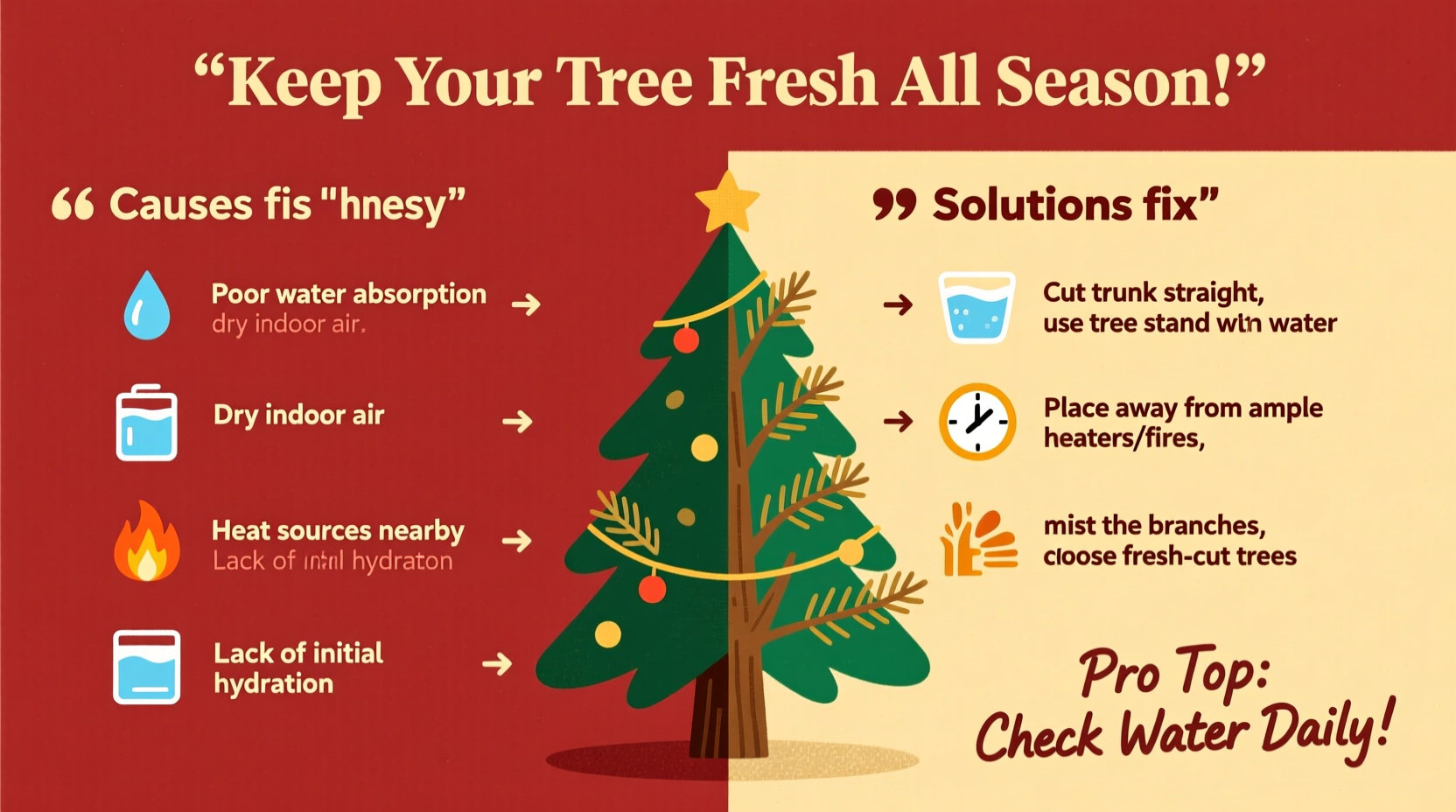
A freshly cut Christmas tree begins losing moisture the moment it’s separated from its root system. Unlike potted trees, which can still absorb water through roots, cut trees rely entirely on their ability to draw water up through the trunk. Once this process is disrupted—even briefly—the tree starts to deteriorate.
The primary culprit behind rapid drying is dehydration. When a tree cannot absorb enough water to replace what it loses through transpiration (the evaporation of water from needles), it dries out quickly. Several factors influence this balance, including temperature, humidity, light exposure, and the condition of the cut surface at the base of the trunk.
Additionally, certain species naturally retain moisture better than others. For example, Fraser firs and Balsam firs are known for excellent needle retention, while White pines and Colorado spruces may shed needles earlier if not properly maintained.
“Moisture loss begins within hours after cutting. The first 24 hours are critical—if the tree doesn’t get into water quickly, its vascular system seals over, blocking future absorption.” — Dr. Linda Chalker-Scott, Urban Horticulturist, Washington State University Extension
Common Mistakes That Accelerate Drying
Even with the best intentions, many people unknowingly shorten their tree’s life through simple oversights. Here are the most common mistakes:
- Delaying water access: Not placing the tree in water within a few hours of cutting or purchase.
- Making an angled cut: This reduces the surface area for water uptake and prevents flat seating in the stand.
- Using a small or unstable stand: Inadequate water capacity forces frequent refills, increasing the risk of running dry.
- Placing near heat sources: Radiators, fireplaces, heating vents, and even holiday lights generate warmth that speeds up drying.
- Ignoring daily water checks: Trees drink large amounts of water—especially in the first week—and can go from hydrated to critically dry in less than 24 hours without notice.
How to Keep Your Tree Fresh: A Step-by-Step Guide
Follow this timeline-based approach to maximize freshness from setup to takedown:
- Day 0 – Purchase & Transport
Choose a tree with vibrant green needles that don’t easily fall off when gently shaken. During transport, protect it from wind exposure by wrapping it or using a net. The longer it’s exposed to air movement, the faster it dehydrates. - Day 1 – Prep & Placement
As soon as you get home:- Make a fresh, straight cut across the base (¼ to ½ inch).
- Immediately place the tree in a stand filled with room-temperature water.
- Choose a location away from heat sources, direct sunlight, and drafts.
- Days 2–7 – Peak Water Demand
This is when your tree drinks the most. Check the water level twice daily. A typical six- to seven-foot tree can consume up to a gallon in the first 24 hours and several quarts per day afterward. Never let the water drop below the base of the trunk. - Weeks 2–4 – Maintenance Mode
Continue checking water levels daily. Consider adding commercial tree preservatives (or a homemade mix—see below) to inhibit bacterial growth in the water, which can clog water uptake pathways. - End of Season – Safe Disposal
Once needle drop increases significantly and branches feel brittle, remove the tree promptly. Most municipalities offer recycling programs in January.
Do’s and Don’ts: Tree Care Best Practices
| Do | Don’t |
|---|---|
| Make a fresh, straight cut before placing in stand | Cut at an angle or use a diagonal saw |
| Use a stand holding at least one gallon of water | Use a tiny stand meant for smaller trees |
| Place tree away from heat sources and vents | Put near radiators, fireplaces, or sunny windows |
| Check water levels twice daily, especially first week | Assume “it’s fine” without checking |
| Add tree preservative or DIY solution to water | Add sugar, aspirin, bleach, or floral additives indiscriminately |
Enhancing Water Uptake: What Actually Works
There’s widespread debate about whether additives help trees stay fresh longer. While plain water remains the gold standard, some studies suggest that certain solutions can improve hydration under specific conditions.
Researchers at North Carolina State University tested various additives and found that sterile water performed best. However, commercial tree preservatives—formulated with fungicides, wetting agents, and carbohydrates—can help in cases where water quality is poor or bacterial buildup is likely.
If you choose to use a homemade solution, avoid outdated myths like adding aspirin, soda, or sugar. These can promote microbial growth and actually block water absorption. Instead, consider this vetted recipe:
This combination helps maintain a clean water environment and slightly acidic pH, which mimics the tree’s natural sap conditions and supports capillary action.
Real Example: One Family’s Tree Transformation
The Reynolds family in Vermont had struggled for years with early needle drop. Their Douglas fir typically started shedding heavily by mid-December, despite being purchased the weekend after Thanksgiving. In one particularly frustrating year, they lost over half the needles before Christmas Eve.
Determined to fix the problem, they consulted their local cooperative extension office. They learned their tree stand held only two quarts of water—far too little for their eight-foot tree. They also kept the tree next to a wood stove, raising ambient temperatures above 75°F.
The following year, they upgraded to a five-gallon stand, made a fresh cut upon arrival, and placed the tree in a cooler corner of the living room. They checked water levels every morning and evening. The result? Their tree remained lush and fragrant until January 7th, with minimal needle loss. “It looked so good,” said Sarah Reynolds, “we almost didn’t want to take it down.”
Frequently Asked Questions
How can I tell if my tree is still hydrated?
Bend a few needles—they should be flexible, not brittle. Also, run your hand along a branch; if multiple needles fall off with light pressure, the tree is drying out. A strong pine scent is another sign of freshness.
Is tap water okay for my Christmas tree?
Yes, tap water is perfectly fine. Filtered or distilled water offers no proven benefit. The key is cleanliness—change the water if it becomes cloudy or slimy, and rinse the stand periodically.
Can I revive a dried-out tree?
Once a tree has severely dehydrated, revival is unlikely. If the trunk hasn’t sealed over and the tree has only been dry for a few hours, immediate rehydration might help. But if branches are brittle and needles continue falling, it’s time to remove the tree for safety reasons.
Final Checklist: Maximize Your Tree’s Lifespan
- Choose a fresh tree with healthy, pliable needles.
- Transport it wrapped to minimize wind exposure.
- Make a fresh ½-inch straight cut before placing in stand.
- Use a stand that holds at least one gallon of water.
- Fill the stand immediately and keep water topped up daily.
- Place the tree away from heat sources, vents, and direct sun.
- Avoid over-lighting—LED lights produce less heat than incandescent bulbs.
- Monitor for signs of drying and act quickly if noticed.
- Dispose of the tree responsibly once it dries out.
Conclusion: Enjoy a Longer-Lasting, Safer Holiday Tree
A dry Christmas tree isn’t just disappointing—it’s a fire hazard. According to the National Fire Protection Association, dry trees contribute to hundreds of home fires each year. By understanding why trees dry out and taking proactive steps, you protect both your home and your holiday spirit.
The secret isn’t magic—it’s consistency. A few minutes each day to check water levels can extend your tree’s beauty by weeks. Combine that with smart placement and proper preparation, and you’ll enjoy a fragrant, full, and festive centerpiece all season long.




 浙公网安备
33010002000092号
浙公网安备
33010002000092号 浙B2-20120091-4
Comments
No comments yet. Why don't you start the discussion?