
A leaning Christmas tree can turn holiday cheer into frustration. No matter how beautifully you've decorated it, a crooked centerpiece undermines the entire festive atmosphere. While it might seem like a minor aesthetic issue at first, a tree that tilts over time often signals deeper problems with balance, stand quality, or setup technique. The good news: most causes of an uneven tree are preventable—and fixable—with the right knowledge and tools.
The weight distribution of branches, the condition of the trunk, and the design of the stand all play crucial roles in stability. Understanding these factors allows you to diagnose and correct the lean before it becomes a hazard or ruins your holiday décor.
Common Causes of a Leaning Christmas Tree
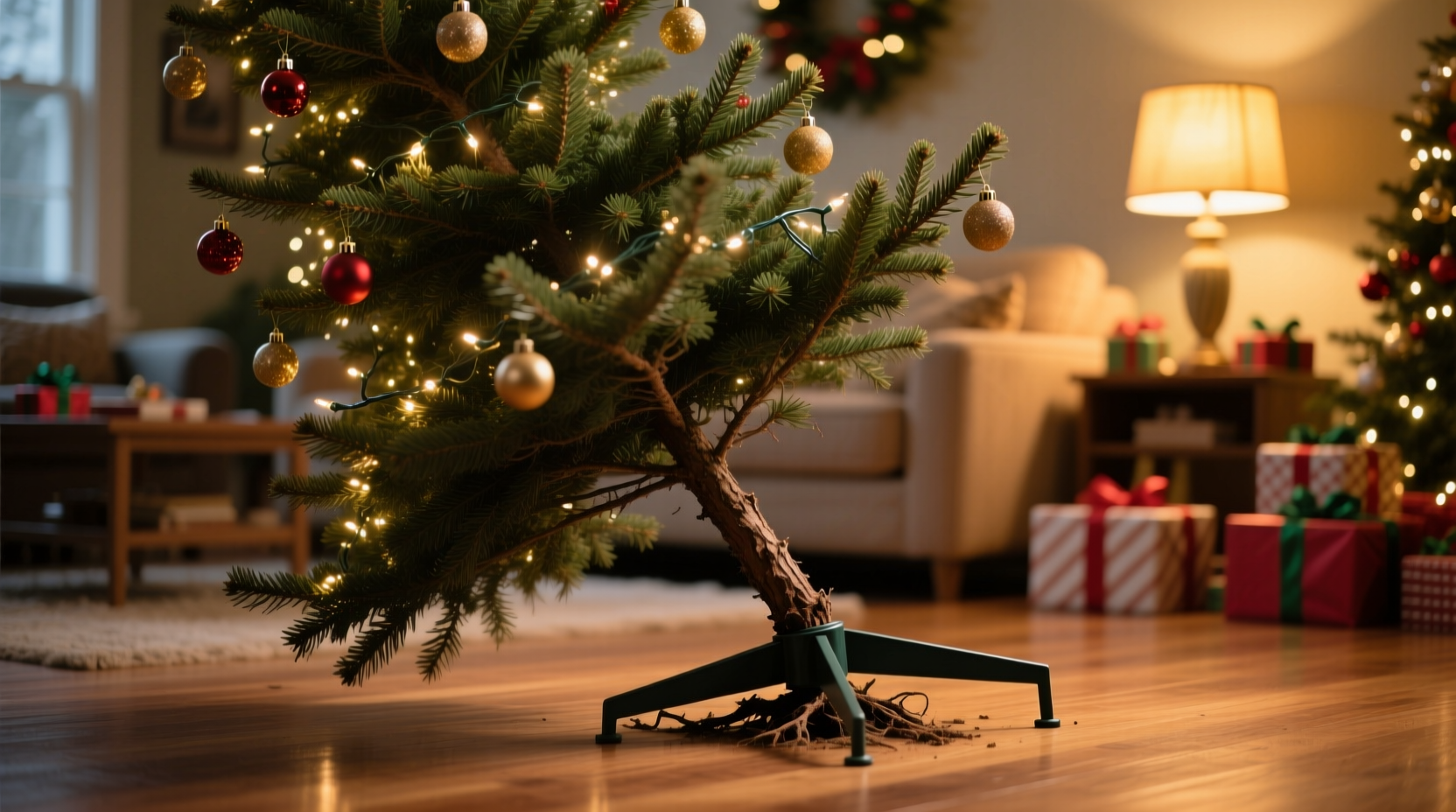
A Christmas tree doesn’t lean without reason. Identifying the root cause is the first step toward a lasting fix. Here are the most frequent culprits:
- Uneven branch growth: Trees grown in open fields often develop denser foliage on one side due to sun exposure, creating natural imbalance.
- Poorly trimmed trunk base: If the bottom of the trunk isn’t cut straight and flat, it won’t sit evenly in the stand’s saddle, leading to instability.
- Low-quality or undersized stand: Some stands lack sufficient grip, water capacity, or support legs to handle larger trees.
- Improper centering in the stand: Even a slight misalignment when placing the tree can result in gradual leaning as branches settle.
- Overloading one side with ornaments: Heavy decorations concentrated on one side can pull the tree off-center over time.
- Soft flooring or carpet: On plush surfaces, one leg of the stand may sink slightly more than others, especially under weight.
Environmental factors such as nearby heat sources or air vents can also dry out one side of the tree faster, causing asymmetrical needle drop and shifting weight distribution.
How to Fix an Unbalanced Christmas Tree Stand
Once you’ve identified why your tree is leaning, corrective action depends on whether the tree is already set up or still being assembled. In either case, safety comes first—unplug lights and remove heavy ornaments before attempting adjustments.
Step-by-Step Guide to Realigning a Leaning Tree
- Remove all decorations and lights to reduce weight and prevent damage during adjustment.
- Empty the water reservoir to lighten the stand and avoid spills.
- Carefully tilt the tree upright while supporting the trunk. Have someone assist if the tree is tall or full.
- Loosen the stand’s screws or bolts and gently reposition the trunk so it sits vertically in the center.
- Re-tighten the screws gradually and evenly, alternating between each bolt to maintain alignment.
- Check vertical alignment using a level placed against the trunk or a smartphone app with a leveling feature.
- Refill the water reservoir and monitor the tree for 24 hours to ensure it remains stable.
If the lean returns within a day, the problem may not be alignment—but structural.
When the Stand Itself Is the Problem
Many budget stands use thin metal and minimal contact points, making them prone to tipping. Upgrading to a sturdier model with wide tripod legs, rubber feet, and adjustable screw clamps significantly improves stability. Look for stands rated for trees heavier and taller than yours to allow for margin of error.
“Most tree leans stem from inadequate stands. A high-capacity stand with a broad footprint prevents movement caused by branch weight or accidental bumps.” — Daniel Reeves, Holiday Display Specialist and Home Safety Consultant
Choosing the Right Stand: Do’s and Don’ts
Selecting the proper stand is just as important as setting it up correctly. Use this comparison guide to evaluate your options and avoid common mistakes.
| Factor | Do | Don’t |
|---|---|---|
| Stand Capacity | Choose one rated for at least 10–20 lbs more than your tree’s weight | Use a stand meant for smaller trees to save space |
| Footprint & Stability | Pick models with wide legs and non-slip feet | Select narrow, flimsy stands that wobble on carpet |
| Trunk Grip Mechanism | Opt for stands with three-point screw clamps | Rely on basic two-screw models that shift easily |
| Water Reservoir | Ensure it holds at least one gallon for multi-day hydration | Use tiny reservoirs requiring daily refills |
| Assembly Ease | Test quick-release levers or tool-free tightening | Struggle with complex setups every holiday season |
A well-designed stand does more than hold the tree upright—it maintains moisture, reduces fire risk, and withstands household activity. Investing in a durable, reliable model pays off year after year.
Preventing Future Leans: A Proactive Checklist
Follow this checklist each year before setting up your tree to avoid imbalance from the start.
- ✅ Inspect the stand for rust, stripped screws, or bent legs
- ✅ Make a fresh, straight cut across the trunk base (¼ to ½ inch)
- ✅ Soak the tree in water for several hours before indoor setup
- ✅ Position the stand on a hard, level surface whenever possible
- ✅ Center the trunk precisely and tighten screws evenly
- ✅ Use a level to verify vertical alignment
- ✅ Distribute heavy ornaments and garlands symmetrically
- ✅ Check water levels daily and refill promptly
- ✅ Rotate lights and décor placement yearly to balance wear
- ✅ Store the stand disassembled and dry to prevent corrosion
This routine takes less than 30 minutes but ensures your tree stays upright and healthy throughout the season.
Real Example: From Lopsided to Picture-Perfect
Sarah M., a homeowner in Vermont, struggled for years with her Fraser fir leaning toward the living room couch. Each December, she’d prop it up with rolled towels and hope for the best. After the tree tipped during a family gathering—spilling water and breaking heirloom ornaments—she decided to investigate.
She discovered the stand’s front leg had sunk into the thick carpet, and the trunk was pinched unevenly by mismatched screw tension. She upgraded to a commercial-grade stand with rubberized feet and followed the realignment steps above. This time, she used a smartphone level and distributed heavier ornaments around the back and sides to counterbalance natural branch density.
The result? A perfectly centered tree that stayed upright for five weeks, even with active pets and children nearby. “It’s amazing what a difference the right stand makes,” she said. “Now I look forward to setup instead of dreading it.”
Frequently Asked Questions
Can I fix a leaning tree without moving it?
In mild cases, yes. Gently push the tree upright and retighten the stand screws incrementally. Insert wooden shims under low legs if on carpet. However, if the trunk is misaligned in the clamp, full removal and recentering are necessary for long-term stability.
Should I cut the trunk again if my tree is already in the stand?
If the tree has been out of water for more than six hours, a new cut will restore water uptake and improve balance if the original cut was uneven. Remove the tree carefully, make a fresh horizontal cut, and return it to the stand immediately with water.
Is it safe to use glue or tape to stabilize a wobbly stand?
No. Adhesives don’t address mechanical instability and may create slipping hazards. Instead, replace worn parts, add rubber pads, or upgrade to a sturdier stand. Safety should never be compromised for convenience.
Final Tips for a Stable, Beautiful Display
A Christmas tree should inspire joy—not constant correction. By understanding the mechanics behind imbalance and taking proactive steps, you can enjoy a secure, symmetrical centerpiece all season long.
Remember: the foundation matters most. A strong, properly sized stand combined with correct trunk preparation sets the stage for success. Regular maintenance—like checking water levels and adjusting décor weight—keeps everything in harmony.
And don’t overlook floor conditions. If you must place the tree on carpet, consider putting down a rigid board or tray underneath the stand to distribute weight and prevent sinking.
“The most beautiful trees aren’t the fullest—they’re the ones that stand confidently, rooted in care and attention to detail.” — Lena Peterson, Interior Stylist and Seasonal Décor Author
Conclusion: Stand Tall This Holiday Season
Your Christmas tree deserves more than temporary fixes and makeshift supports. With the right stand, proper setup, and a few preventive habits, a leaning tree becomes a thing of the past. Take control of your holiday display by applying these proven strategies—because a stable tree isn’t just safer, it’s more joyful.
This season, give yourself the gift of peace of mind. Invest in quality equipment, follow best practices, and share your success with others who’ve battled lopsided evergreens. A perfectly balanced tree reflects more than symmetry—it reflects care, intention, and the spirit of celebration done right.




 浙公网安备
33010002000092号
浙公网安备
33010002000092号 浙B2-20120091-4
Comments
No comments yet. Why don't you start the discussion?