
A leaning Christmas tree is more than just a cosmetic issue—it can be a safety hazard, an eyesore in your holiday decor, and a source of frustration after hours spent decorating. Whether you're using a real evergreen or a high-end artificial model, imbalance is common. The good news: most cases are fixable with simple, practical adjustments. Understanding the root causes—uneven weight distribution, poor trunk alignment, or unstable stands—is the first step toward a perfectly upright centerpiece.
This guide dives into the structural reasons behind tree tilting, offers tested solutions for both real and artificial trees, and provides actionable steps to ensure your tree stays centered throughout the season. No guesswork, no temporary hacks—just reliable methods grounded in physics, design, and years of holiday setup experience.
Common Causes of a Leaning Christmas Tree
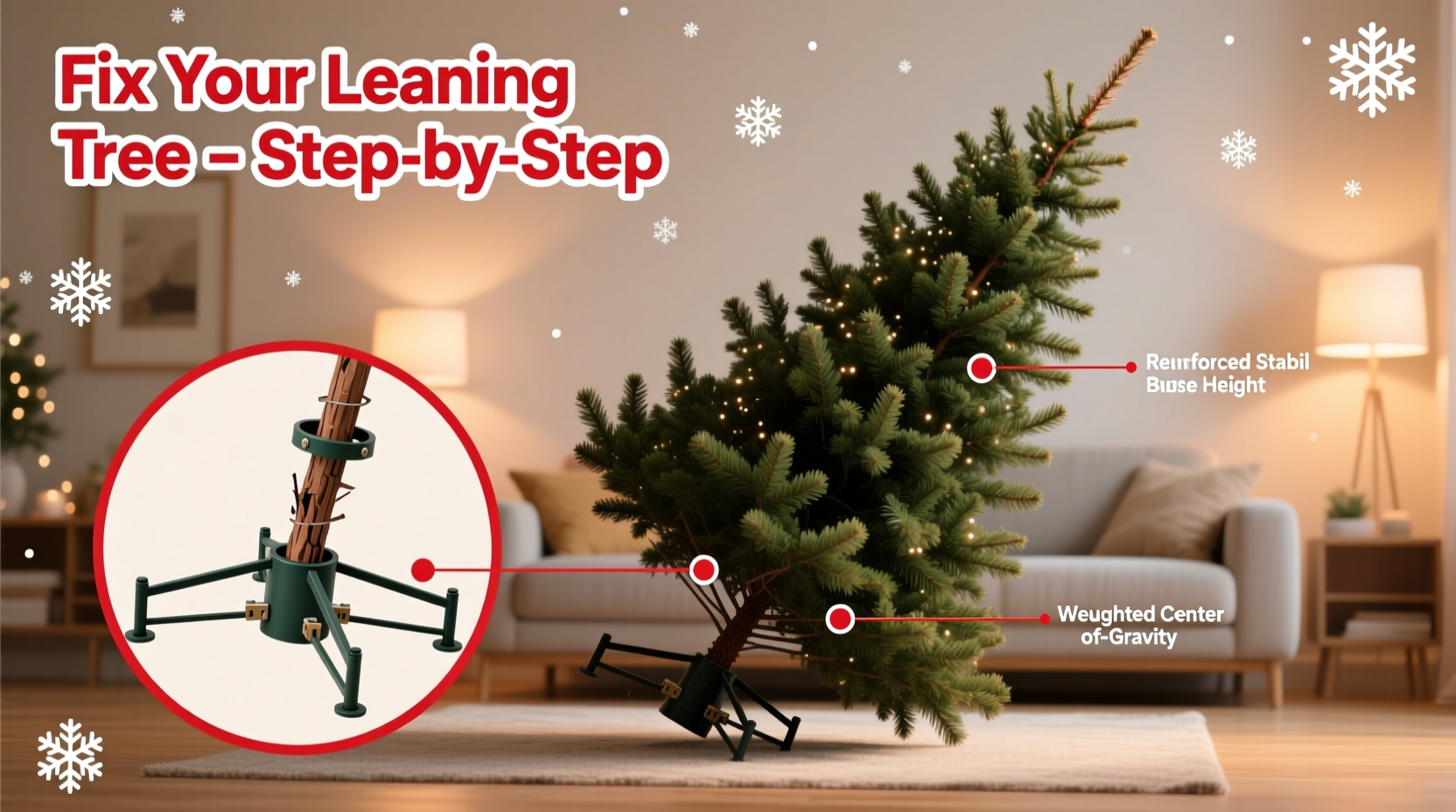
A tree doesn’t lean without reason. Identifying the cause determines the right fix. Most issues fall into one of five categories:
- Improper stand alignment: If the tree trunk isn’t centered in the stand’s clamp mechanism, pressure becomes uneven, causing gradual tilt.
- Asymmetrical branch growth: Real trees often have denser foliage on one side, creating imbalance once decorated.
- Overloading one side: Heavy ornaments, lights, or garlands concentrated on one area pull the tree off-center.
- Weak or worn stand: Plastic stands degrade over time; metal ones can warp or lose tension, reducing grip.
- Uneven floor surface: Subtle slopes in hardwood, tile, or carpet padding can shift a tree’s base over days.
While some causes are environmental, most stem from preventable setup errors. The key is addressing both immediate stability and long-term balance.
Structural Fixes for Immediate Stability
When a tree begins to lean, quick intervention prevents tipping and damage. These structural corrections stabilize the tree safely and effectively.
1. Re-center the Trunk in the Stand
The foundation of any upright tree is a properly seated trunk. Even a half-inch offset can lead to noticeable tilt under load.
- Remove all ornaments and lights for safety.
- Gently loosen the stand’s screws or levers.
- Reposition the trunk so it sits vertically in the center of the stand’s base.
- Tighten the clamps evenly—don’t over-tighten one side, which can warp softwood trunks.
Use a small level (or smartphone app) against the trunk to verify vertical alignment before proceeding.
2. Reinforce the Stand with External Bracing
If the stand lacks grip or the tree remains unstable, external support systems can hold it upright while maintaining aesthetics.
Common bracing methods include:
- Fishing line anchors: Attach strong fishing line from upper branches to wall hooks or heavy furniture at 120-degree intervals.
- Pipe or dowel supports: Place wooden or PVC poles around the tree perimeter and secure them to the trunk with soft ties.
- Weighted sandbags: Place discreet sandbags or bean bags against the base on the opposite side of the lean to counterbalance.
These are especially effective for tall trees (over 7 feet) or those in high-traffic areas.
3. Adjust the Floor Interface
Even a perfectly aligned tree can tilt on an uneven floor. Check for slope by placing a level on the floor near the base.
Solutions include:
- Placing thin cardboard shims under the lower side of the stand.
- Using adjustable leveling feet if your stand has them.
- Moving the tree to a flatter area—sometimes shifting just a few inches makes a difference.
Avoid placing trees near heat sources like radiators, which can dry out real trunks and reduce stand grip over time.
Long-Term Balance: Preventing Future Lean
Stability isn’t just about fixing the current lean—it’s about designing a setup that resists imbalance from the start.
Distribute Weight Evenly During Decoration
Ornament placement is the single biggest factor in post-setup tilt. Heavier items like glass balls, nutcrackers, or handmade decorations should be spaced around the tree, not clustered.
“Think of your tree like a mobile sculpture—each addition changes the center of gravity.” — Daniel Reeves, Holiday Display Designer
Follow this pattern:
- Start with lights: weave them evenly from top to bottom, inner to outer branches.
- Add larger ornaments first, spacing them across different quadrants.
- Fill in with smaller pieces, ensuring no single branch bears excessive weight.
- Save the heaviest items (e.g., snow globes, vintage tins) for lower, sturdier limbs.
Prune and Shape Real Trees
Natural asymmetry in cut trees is normal. Strategic pruning can correct minor imbalances before they become problems.
- Cut back overly long or dense branches on the heavier side to reduce drag and weight.
- Use gentle bending and zip ties to guide wayward limbs into better alignment—especially useful for spruce and fir varieties.
- Trim lower branches that press against walls or furniture, which can push the tree forward or sideways.
Make cuts at a 45-degree angle to avoid water pooling and promote clean healing in living trees kept post-holiday.
Do’s and Don’ts: Tree Support Best Practices
| Do | Don’t |
|---|---|
| Use a stand rated for your tree’s height and weight | Use a stand that’s too small or shows rust/cracks |
| Check tree alignment daily during the first week | Assume the tree is stable after initial setup |
| Add water daily to real trees to maintain trunk integrity | Let the water basin run dry—this weakens grip and fire resistance |
| Anchor tall trees to walls with clear lines | Use nails or sharp hooks that damage walls permanently |
| Rotate artificial tree sections for even wear | Force bent poles into misaligned connectors—they’ll weaken over time |
Case Study: Fixing a Persistent Lean in a 9-Foot Artificial Tree
Mark T., a homeowner in Minneapolis, struggled for three years with his pre-lit 9-foot artificial tree leaning toward the living room window. Each year, he repositioned it, added heavier ornaments to the opposite side, and tightened the stand—but by New Year’s, it had tilted 15 degrees.
In year four, he followed a systematic approach:
- He disassembled the tree and inspected each pole. One middle-section rod was slightly bent, causing misalignment.
- He replaced the pole with a spare from the original box and ensured all connectors clicked securely.
- He upgraded to a commercial-grade metal stand with adjustable legs and dual-point trunk clamps.
- During decoration, he used a rotating tree base and placed identical lantern-style ornaments at equal heights on opposing sides.
- Finally, he anchored the top third with two nearly invisible fishing lines to ceiling joist anchors.
The result: a perfectly upright tree that remained stable for six weeks, surviving pet collisions and enthusiastic grandkids. Mark now inspects his tree annually and rotates pole usage to prevent future warping.
Step-by-Step Guide: Correcting and Preventing Tree Lean
Follow this timeline to address a leaning tree and prevent recurrence:
- Day 1 – Assessment: Remove decorations, check stand condition, inspect trunk alignment, and test floor levelness.
- Day 2 – Repair: Replace damaged parts, re-center trunk, add shims or braces as needed.
- Day 3 – Test Load: Reattach lights and a few ornaments, then monitor for 24 hours.
- Day 4 – Decorate Strategically: Add decorations in rotation around the tree, stepping back frequently to assess balance.
- Ongoing – Monitor: Check alignment every few days, especially after heavy ornament additions or disturbances.
- Post-Holiday – Maintenance: Disassemble carefully, store poles separately, label sections, and inspect the stand for wear.
This methodical process ensures durability and reduces seasonal frustration.
FAQ: Common Questions About Leaning Christmas Trees
Can I use duct tape to stabilize a wobbly tree stand?
No. Duct tape may temporarily mask instability but doesn’t address structural weakness. It can also leave residue and fail under stress. Use proper bracing or replace the stand instead.
Why does my artificial tree lean more each year?
Repeated assembly can wear down connector joints and bend support poles. Over time, plastic fatigue reduces structural rigidity. Inspect poles annually and replace worn components before setup.
Is it safe to anchor a tree to the wall?
Yes—if done correctly. Use removable adhesive hooks rated for the expected tension or drill small pilot holes in inconspicuous locations. Always use breakaway knots or stretchable cord so the tree can fall safely if pulled hard, preventing wall damage or injury.
Conclusion: A Straight Tree Starts With Smart Structure
A leaning Christmas tree isn’t inevitable—it’s a signal that the structure needs attention. From proper stand selection to balanced ornamentation, every decision impacts stability. Real trees demand hydration and alignment; artificial ones require maintenance and thoughtful assembly. By applying these structural fixes, you’re not just correcting a tilt—you’re building a safer, more beautiful holiday display.
Take action before the decorations go up. Inspect your stand, level your floor, and plan your ornament layout with balance in mind. A little preparation ensures your tree stands proudly through the season, becoming a true centerpiece of joy—not a leaning liability.




 浙公网安备
33010002000092号
浙公网安备
33010002000092号 浙B2-20120091-4
Comments
No comments yet. Why don't you start the discussion?