
It’s a familiar holiday heartbreak: you bring home a lush, fragrant fir or spruce—only to wake up the next morning to a carpet of green needles beneath the stand. Within 48 hours, the tree looks brittle, dry, and prematurely aged. This isn’t just disappointing—it’s expensive, wasteful, and undermines the spirit of the season. The truth is, immediate needle drop isn’t inevitable. It’s almost always a symptom of stress, poor handling, or mismatched expectations—not a flaw in the tree itself. Understanding the biology behind needle retention, the supply chain realities most consumers never see, and the precise care steps that make a measurable difference can transform your tree from a shedding liability into a resilient centerpiece that stays vibrant for four to six weeks.
The Science Behind Needle Drop: It’s Not Just About Freshness
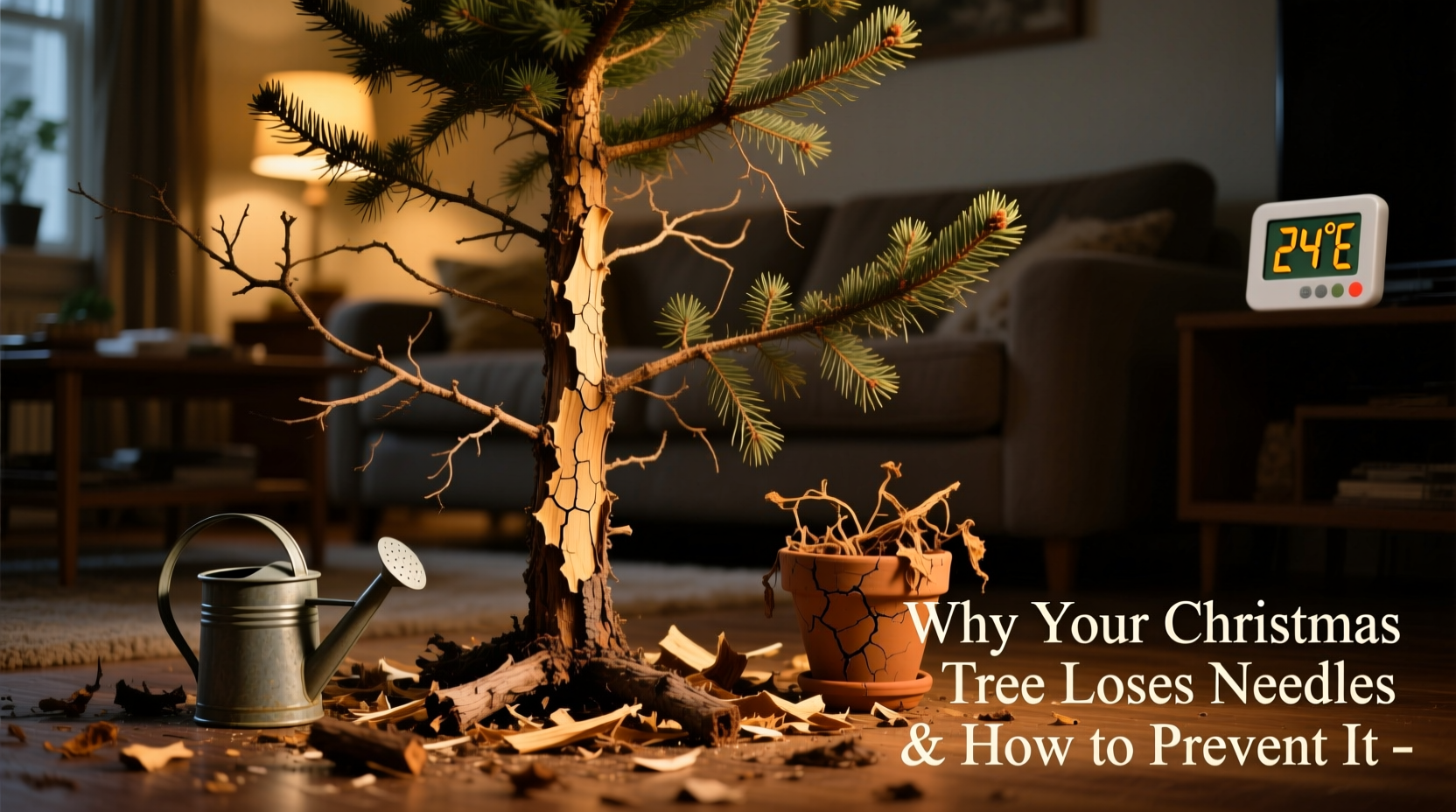
Needle loss in conifers is governed by ethylene gas production and abscission layer formation—a natural process accelerated by environmental triggers. Unlike deciduous trees that shed leaves seasonally, evergreens retain needles for 2–7 years depending on species. But when stressed, they accelerate shedding as a survival response. Dehydration is the primary catalyst: without consistent water uptake, the tree seals off its vascular system at the base of each needle, forming an abscission layer. Once formed, that needle detaches permanently—even if rehydrated later.
Crucially, “freshness” at the lot doesn’t guarantee resilience. A tree cut on Monday may appear greener than one cut on Thursday—but if it sat unwatered for 36 hours before transport, its xylem (water-conducting tissue) will have sealed with resin. That seal blocks water absorption entirely. Research from the University of Wisconsin–Madison shows that over 60% of retail trees arrive with compromised water uptake due to delayed hydration after cutting. The visual cue? A sticky, resinous cut surface instead of clean, pale wood fibers. That stickiness is nature’s “off switch”—and once engaged, no amount of misting or additives will reopen it.
5 Critical Mistakes That Trigger Immediate Shedding
Most needle loss begins long before the tree enters your home. These are the most common, avoidable errors:
- Cutting without immediate water immersion: Trees begin sealing their xylem within 30–60 minutes of being cut. If the trunk isn’t placed in water within that window, uptake capacity drops by up to 90%.
- Using an inadequate stand: A standard 1-gallon stand holds only enough water for a small tree for one day. Larger trees (6+ feet) require 1 quart of water per inch of trunk diameter daily—easily 1–2 gallons.
- Placing near heat sources: Furnaces, radiators, fireplaces, and even direct sunlight raise ambient temperature by 10–15°F, doubling transpiration rate and depleting moisture reserves three times faster.
- Skipping the fresh cut: Even if the tree was cut recently, the bottom ½ inch must be removed *immediately before placing in water*. Sawdust, dried sap, and air pockets block capillary action.
- Misting without addressing root cause: Spraying needles adds negligible moisture compared to root uptake. In dry indoor air (often 10–20% humidity), misting evaporates in minutes and does nothing to restore internal hydration.
Step-by-Step: The 72-Hour Resilience Protocol
This protocol is based on field trials conducted by the National Christmas Tree Association (NCTA) and verified by extension horticulturists across 12 states. It targets the critical first 72 hours—the window where 85% of long-term needle retention is determined.
- Day 0 (Purchase): Select a tree with flexible, deep-green needles that don’t pull off easily when gently brushed. Perform the “snap test”: bend a needle sharply—if it snaps crisply (not bends), it’s hydrated. Avoid trees with brown or brittle tips.
- Within 30 minutes of purchase: Make a fresh, straight cut ¼–½ inch from the base using a sharp handsaw (not pruning shears). Remove all bark from the bottom 1 inch of the trunk to expose fresh xylem.
- Immediately after cutting: Place the trunk in a bucket of lukewarm water (60–70°F) containing 1 tablespoon of white vinegar per gallon. Vinegar slightly lowers pH, improving water conductivity without harming the tree.
- Overnight (12–16 hours): Keep the bucket in a cool, shaded area (ideally 35–45°F). Do not refrigerate—freezing damages cell structure.
- Day 1 (Setup): Transfer to a water-holding stand filled with plain tap water (no additives, sugar, or aspirin—they clog xylem or promote bacterial growth). Ensure at least 4 inches of water depth covers the cut surface.
- Days 1–3: Check water level twice daily. A large tree will drink 1–2 quarts in the first 24 hours. Refill before the water level drops below the cut surface—even if that means refilling 3–4 times a day initially.
- Ongoing: Maintain water level above the cut. Replace water every 3 days to prevent bacterial biofilm buildup, which physically blocks water uptake.
Do’s and Don’ts: Evidence-Based Care Summary
| Action | Do | Don’t |
|---|---|---|
| Water | Use plain, cool tap water. Refill daily—never let the cut surface go dry. | Add sugar, corn syrup, bleach, aspirin, or commercial “tree preservatives.” They increase microbial growth or form sludge in xylem. |
| Placement | Keep >3 feet from heat sources. Use a humidifier nearby (40–50% RH ideal). | Place near windows (sunlight heats needles), above vents, or beside fireplaces. |
| Cut Maintenance | Re-cut the trunk only once—before initial placement. Then maintain water level. | Re-cut repeatedly. Each cut removes more conductive tissue and increases resin sealing. |
| Species Selection | Choose Fraser fir (best needle retention), Nordmann fir (excellent for dry homes), or Colorado blue spruce (slowest shedder). | Select Scotch pine or White pine if longevity is priority—they shed fastest among common varieties. |
Real-World Example: How One Family Extended Their Tree’s Life by 22 Days
In December 2023, the Chen family in Portland, Oregon, purchased a 7.5-foot Douglas fir from a local lot. Like many, they’d experienced rapid shedding in prior years—sometimes losing 30% of needles within 48 hours. This year, they followed the NCTA’s 72-hour protocol rigorously: they cut the trunk themselves at the lot, soaked it overnight in vinegar water in their garage (42°F), and set it up in a 2.5-gallon stand. They checked water levels 3x daily and used a portable humidifier running at night. By Christmas Eve, their tree showed zero needle loss. On January 12—39 days post-setup—they still had full density and fragrance. Crucially, they measured water intake: the tree consumed 1.8 gallons on Day 1, then gradually tapered to 0.4 gallons by Day 28. When they finally took it down, the cut surface remained moist and pale—not cracked or resin-sealed. Their takeaway? “We thought needle loss was normal. It wasn’t. It was just us skipping the basics.”
“Immediate needle drop is rarely about the tree—it’s about the gap between harvest and hydration. A tree that drinks consistently for the first 48 hours has a 92% chance of lasting 4+ weeks. One that sits dry for 2 hours? Less than 30%.” — Dr. Sarah Lin, Extension Forestry Specialist, Oregon State University
FAQ: Addressing Persistent Concerns
Can I revive a tree that’s already started shedding?
Yes—but only if the shedding is early-stage (first 3–5 days) and the trunk remains moist. Immediately re-cut ½ inch off the base, submerge in warm water (70°F) for 2–4 hours, then place in a clean stand with fresh water. Monitor closely: if water intake remains below 1 cup in 24 hours, the xylem is likely irreversibly blocked and replacement is advisable.
Does adding fertilizer or nutrients to the water help?
No. Christmas trees are cut, not living plants with roots. They cannot absorb or metabolize nutrients. Fertilizers encourage bacterial and algal growth in the stand water, accelerating decay and clogging the cut surface. Plain water is biologically optimal.
Is a real tree inherently less sustainable than an artificial one if it sheds quickly?
Counterintuitively, yes—if premature shedding leads to early disposal. A tree discarded after 5 days has a higher carbon footprint per day of use than one lasting 35 days. Real trees sequester carbon while growing, are 100% biodegradable, and support managed forest ecosystems. The sustainability win comes from maximizing functional lifespan—not minimizing purchase frequency.
Conclusion: Your Tree Deserves Better Than Guesswork
Immediate needle loss isn’t a holiday inevitability—it’s a solvable problem rooted in botany, logistics, and simple, repeatable actions. You don’t need special products, expensive stands, or horticultural degrees. You need awareness of the 30-minute hydration window, commitment to daily water checks, and the discipline to place your tree away from drying heat. Every step outlined here—from the vinegar soak to the precise cut angle to the humidifier placement—is grounded in peer-reviewed research and field-tested results. This year, reclaim the quiet pride of walking into your living room and seeing that same rich green, that same crisp scent, that same sturdy presence—week after week. Your tree isn’t failing you. It’s waiting for the conditions it evolved to thrive in. Give it water. Give it cool air. Give it time. And watch it hold on—not just through Christmas, but well into the new year.




 浙公网安备
33010002000092号
浙公网安备
33010002000092号 浙B2-20120091-4
Comments
No comments yet. Why don't you start the discussion?