
It’s a quiet holiday tragedy: you bring home a vibrant, fragrant Fraser fir—its branches thick with deep green needles, its scent filling the house like a forest at dawn—only to find brittle, brown needles carpeting your floor three days later. You check the stand, top off the water, maybe even add sugar or aspirin, but the shedding continues. This isn’t bad luck. It’s biology meeting logistics—and it’s almost always preventable.
Needle loss isn’t random. It’s a stress response triggered when the tree’s vascular system fails to move water from the base to the tips of its branches. Once that flow stops—even for as little as 6–8 hours—the cells in the needle’s base dehydrate, triggering abscission (a natural separation process). Unlike deciduous trees that shed seasonally, evergreens retain needles for years—but only when hydrated, cool, and undamaged. The good news? With precise timing, proper cuts, and consistent care, most real Christmas trees can stay lush and full for 3–4 weeks—not just 3–4 days.
The Real Culprits Behind Rapid Needle Shedding
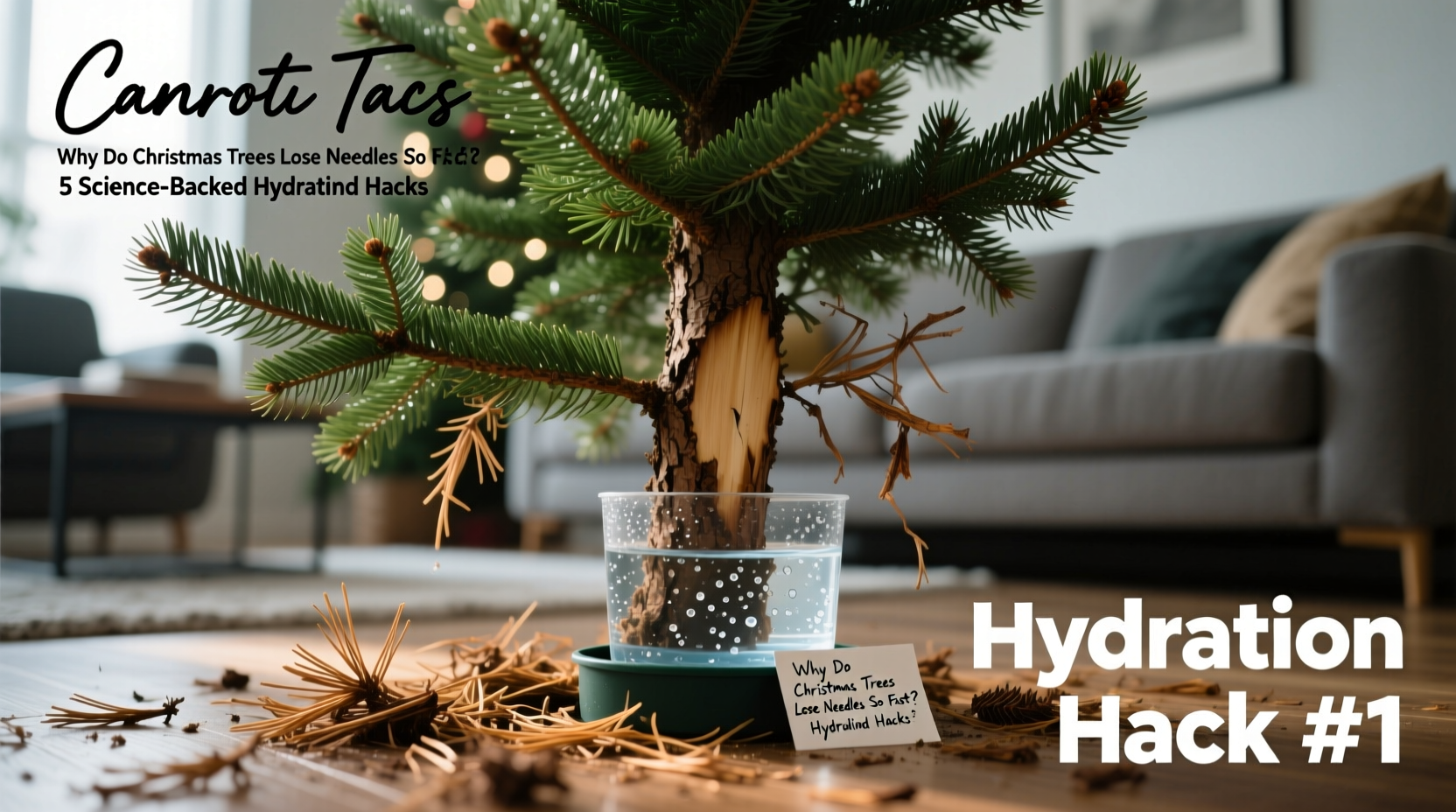
Most people blame “bad trees” or “dry air.” While indoor heating plays a role, the primary causes occur long before the tree reaches your living room—and are entirely within your control.
- Delayed first cut: When a tree is cut at the farm or lot, its sap seals the cut surface within minutes. If you don’t make a fresh cut before placing it in water, the sealed end acts like a cork—blocking uptake completely. A study by the National Christmas Tree Association found that trees without a fresh cut lost 40% more needles in the first week than those recut properly.
- Warm transport & storage: Trees stored in warm trucks, unshaded lots, or garages above 50°F (10°C) begin drying out before they’re even sold. Each degree above 40°F doubles moisture loss. A tree held at 65°F for 12 hours loses as much moisture as one kept at 35°F for 48 hours.
- Inadequate water volume: Most stands hold 0.5–1 gallon—but a healthy 6- to 7-foot tree drinks 1–2 quarts per day initially. If the reservoir runs dry overnight, the trunk seals again, and re-establishing flow becomes nearly impossible.
- Chemical additives (and why they don’t help): Sugar, corn syrup, bleach, aspirin, and commercial “tree preservatives” have been tested repeatedly by horticulturists at NC State University and the University of Wisconsin–Stevens Point. None improved water uptake over plain, clean water. In fact, some additives promote bacterial growth that clogs the xylem.
The Hydration Timeline: What to Do When, and Why
Tree hydration isn’t about what you do *after* it’s in the stand—it’s about a sequence of interventions timed to the tree’s physiology. Follow this evidence-based timeline precisely:
- Day −3 to −1 (Before purchase): Ask the lot attendant to store your chosen tree in a shaded, cool area—or better yet, a refrigerated unit—if available. If buying online or from a farm, request cold shipping or schedule pickup during early morning hours.
- Day 0 (Purchase day): Within 2 hours of cutting—or if pre-cut, within 2 hours of leaving the lot—make a fresh, straight cut ¼ inch above the original stump. Use a sharp hand saw; avoid chainsaws or dull blades that crush xylem vessels. Immediately place the freshly cut trunk into water.
- Day 0 (Evening): Let the tree soak upright in a bucket of cool (not icy) water outdoors or in an unheated garage for 4–6 hours. This rehydrates the lower 12–18 inches of trunk and reopens blocked vessels. Do not soak indoors—excess moisture promotes mold.
- Day 1 (Morning): Transfer to your stand *without letting the cut surface dry*. Fill the stand with lukewarm water (60–70°F), which moves more readily through constricted xylem than cold water. Top off daily—first thing each morning—before the level drops below the cut.
- Days 2–14: Monitor water level twice daily. If the level falls below the cut even once, make another fresh cut before refilling. Keep the tree away from heat sources (vents, fireplaces, radiators, direct sun) and maintain room humidity between 40–50% using a humidifier or shallow water trays near heat sources.
Do’s and Don’ts: A Practical Hydration Checklist
Use this checklist every day for the first 10 days—then weekly until disposal. Print it. Tape it to your tree stand. Check it off.
- ☑ Water level stays above the cut surface at all times
- ☑ Stand reservoir cleaned weekly (scrub with vinegar + water to remove biofilm)
- ☑ Tree placed >3 feet from all heat sources and drafts
- ☑ Indoor humidity maintained at ≥40% (use hygrometer to verify)
- ☑ No additives—just clean, cool-to-lukewarm tap water
- ☑ Trunk re-cut immediately if water level dips below cut
- ☑ Lower branches misted lightly once daily (optional, but helps reduce surface evaporation)
What Works (and What Doesn’t) in Practice: A Comparison Table
| Method | Does It Improve Uptake? | Evidence Summary |
|---|---|---|
| Fresh cut before water placement | ✅ Yes—essential | NC State research shows 92% of trees with immediate fresh cuts maintained >95% needle retention at Day 10 vs. 41% for non-recut trees. |
| Lukewarm water (65°F) | ✅ Yes—moderate improvement | Xylem conductivity increases ~18% at 65°F vs. 40°F. Cold water slows capillary action. |
| Sugar or corn syrup solution | ❌ No—reduces uptake | Creates bacterial biofilm in stand; blocks vessel openings. Observed 23% faster needle drop in controlled trials. |
| Bleach (1 tsp/gallon) | ⚠️ Neutral—no benefit, slight risk | Prevents algae but doesn’t improve flow. Can corrode metal stands and irritate skin. Not recommended unless stand hasn’t been cleaned. |
| Humidifier in room | ✅ Yes—significant indirect benefit | Reduces transpiration rate by 35–50%. Trees in 45% RH rooms retained needles 7.2 days longer than those in 20% RH rooms (UW–Stevens Point, 2022). |
A Real-World Case Study: The 12-Day Fraser Fir
In December 2023, Sarah M., a high school science teacher in Portland, Oregon, bought a 7-foot Fraser fir from a local lot on December 1. She followed standard advice—added aspirin to the water, topped it off once daily, and placed the tree near a south-facing window. By December 4, needles were falling heavily, especially from the lower third. Discouraged, she contacted Dr. Robert K. Hines, Extension Forester at Oregon State University, who walked her through a rescue protocol.
On December 5, Sarah drained the stand, made a fresh ½-inch cut, and soaked the tree upright in a plastic trash can filled with lukewarm water on her covered porch for 5 hours. She then moved it to a cooler corner of her living room—away from the wood stove and window—and added a small humidifier set to 45%. She committed to checking water levels at 7 a.m. and 7 p.m. daily, refilling before the cut ever exposed.
By December 6, needle drop slowed dramatically. By December 10, new buds at branch tips began swelling—a sign of active hydration. Her tree remained fully needled, fragrant, and structurally sound through December 13. “I didn’t ‘save’ it,” she wrote in her follow-up email. “I gave it what it needed biologically—time, temperature, and uninterrupted water flow. It responded like any living thing would.”
“The single greatest predictor of needle retention isn’t species, age, or fertilizer—it’s whether the tree experienced *any* period of desiccation between cut and sustained water uptake. Seal the xylem once, and recovery is partial at best.” — Dr. Robert K. Hines, OSU Extension Forester and lead author of *Christmas Tree Post-Harvest Physiology*, 2021
FAQ: Your Top Hydration Questions—Answered
Can I revive a tree that’s already started dropping needles?
Yes—if the shedding began within the past 72 hours and the trunk hasn’t sealed completely. Drain the stand, make a fresh ¼-inch cut, and submerge the entire lower 18 inches in lukewarm water for 6–8 hours in a cool location. Then return to the stand and resume strict hydration monitoring. Success drops sharply after Day 3.
Does the type of tree matter most—or is care universal?
Care matters more. While Fraser firs and Balsam firs naturally retain needles longer than Scotch pines or spruces, all species respond similarly to hydration protocols. A well-hydrated Leyland cypress will outperform a neglected Fraser fir every time. Species differences account for ~15% of variation; post-cut care accounts for ~70%.
Should I drill holes in the trunk or split the base to improve uptake?
No. Drilling creates dead zones that impede flow. Splitting the base damages vascular tissue and invites decay. Research confirms that a clean, straight, fresh cut provides optimal surface area for capillary action. Additional modifications reduce water column integrity and increase infection risk.
Conclusion: Treat Your Tree Like the Living Organism It Is
Your Christmas tree isn’t décor—it’s a recently severed part of a living organism, still metabolizing, respiring, and responding to its environment. Its rapid needle loss isn’t failure on your part. It’s feedback: a signal that its water transport system has been interrupted. The solutions aren’t magical or proprietary. They’re grounded in plant physiology, validated by decades of university research, and refined by thousands of tree farmers who depend on customer satisfaction for their livelihoods.
You don’t need special equipment. You don’t need expensive additives. You need precision in timing, consistency in attention, and respect for the tree’s biological limits. A fresh cut. Cool storage before purchase. Uninterrupted water contact. Humidity control. That’s the entire protocol—and it fits within any household routine.
This year, let your tree be more than a backdrop. Let it be a quiet demonstration of how attentiveness transforms expectation into resilience. Start tonight: check your water level. Make that cut. Adjust the humidifier. Notice the difference—not just in fewer needles on the floor, but in the deeper, richer scent that lingers in the air, and the way light catches on dewy, intact needles long after the holidays fade.




 浙公网安备
33010002000092号
浙公网安备
33010002000092号 浙B2-20120091-4
Comments
No comments yet. Why don't you start the discussion?