
It’s a familiar holiday heartbreak: you select a lush, fragrant fir or spruce at the lot, haul it home with care, stand it proudly in the living room—and within 48 to 72 hours, the floor is carpeted in green needles. You vacuum, sweep, and sigh. By day five, the tree looks thin, brittle, and defeated. This isn’t just bad luck. It’s a predictable physiological response triggered by specific stressors—many of which are entirely avoidable. Understanding why needle drop happens isn’t about assigning blame; it’s about reclaiming control over one of the season’s most cherished traditions.
Christmas trees are not dormant ornaments. They’re living plants—still metabolically active, still respiring, still responding to environmental shifts—even after being cut. Their rapid decline indoors reflects a cascade of biological events: dehydration, vascular blockage, ethylene-triggered senescence, and temperature shock. The good news? With precise timing, proper handling, and evidence-based care, most freshly cut trees can retain their needles for four to six weeks—or longer. What follows is a grounded, no-nonsense breakdown of the science, the missteps, and the proven strategies that work.
The Science Behind Needle Drop: It’s Not Just “Drying Out”
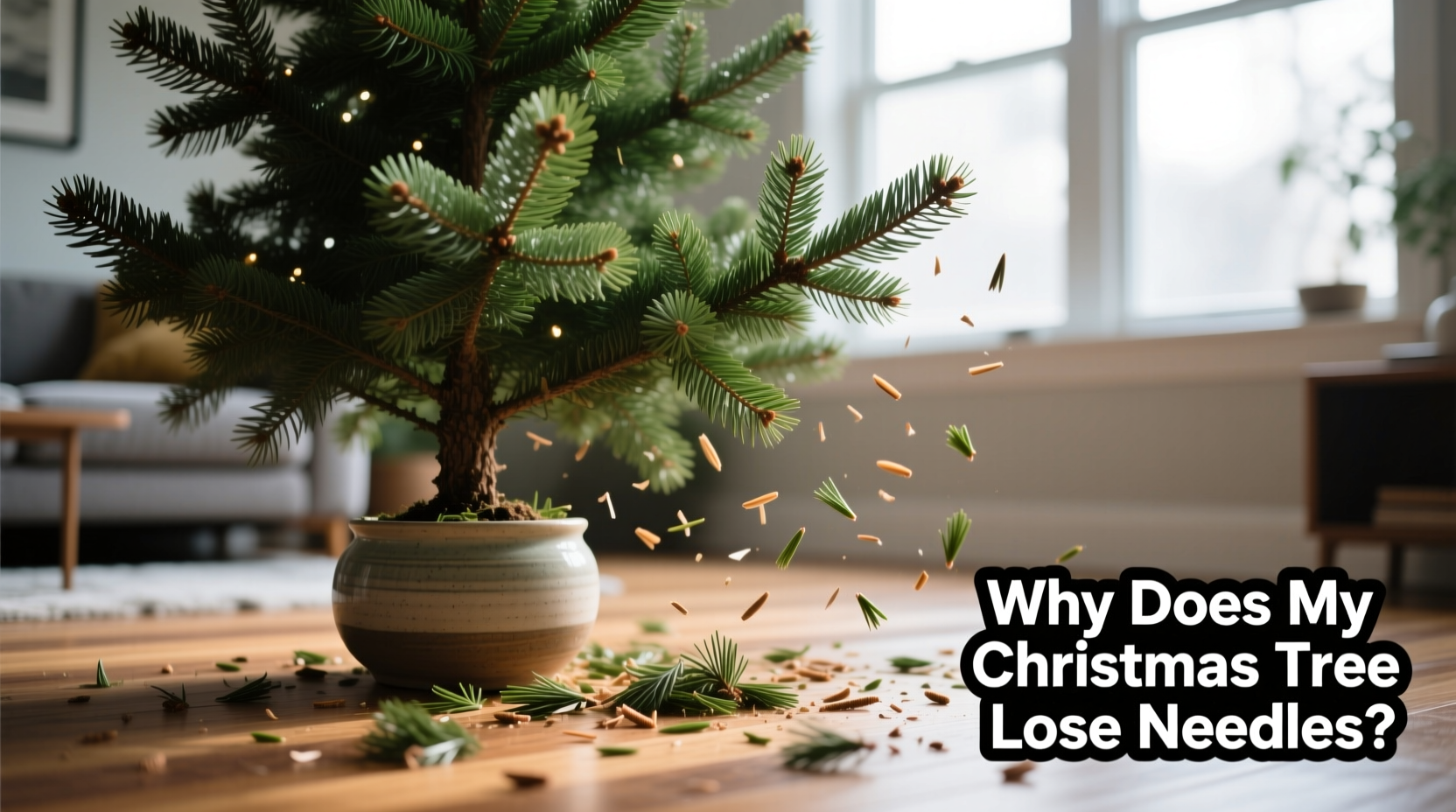
While dehydration is often cited as the sole culprit, needle loss is actually a multi-stage process rooted in plant physiology. When a tree is cut, its xylem—the microscopic water-conducting tissue—is immediately exposed to air. Within minutes, air bubbles (embolisms) form in these vessels, blocking the upward flow of water and dissolved nutrients. Without continuous hydration, the tree’s cells begin to desiccate. But that’s only the first act.
More critically, the physical trauma of cutting triggers an internal hormonal shift. The tree produces ethylene—a natural plant hormone associated with aging and abscission (the shedding of leaves, fruit, or needles). Ethylene accelerates cell wall degradation at the base of each needle, weakening the abscission layer until gravity or minor vibration causes detachment. This explains why even well-watered trees may shed if they were stressed before purchase—during transport, storage, or prolonged exposure to wind and sun.
Research from the University of Wisconsin–Madison’s Department of Horticulture confirms that needle retention correlates strongly with how quickly the cut stem is placed in water post-harvest. Trees submerged within two hours retained 92% of their needles after 21 days in controlled indoor conditions. Those delayed by six hours retained only 63%. Timing, not just volume, matters profoundly.
5 Critical Mistakes That Accelerate Needle Loss
Most premature shedding stems from decisions made before the tree ever reaches your living room. These aren’t trivial oversights—they directly interfere with the tree’s ability to rehydrate and seal its vascular system.
- Cutting without re-sawing: If more than eight hours have passed since the original cut (e.g., at the farm or lot), the sap has sealed the wound. A new, clean cut—¼ inch straight across the base—is non-negotiable.
- Using warm or hot water: Contrary to outdated advice, warm water does not “open pores.” It promotes bacterial growth in the stand and encourages resin to harden faster, worsening blockage.
- Placing the tree near heat sources: Radiators, fireplaces, heating vents, and even intense LED lighting raise ambient temperature and lower relative humidity—doubling transpiration rates and dehydrating needles up to 3× faster.
- Ignoring water level discipline: Letting the water drop below the cut surface—even for 60 minutes—allows embolisms to set permanently. Once sealed, the tree cannot re-establish uptake, no matter how much water you later add.
- Choosing the wrong species for your environment: Some varieties naturally shed faster. Noble firs hold needles exceptionally well but require cooler rooms (<68°F). Fraser firs tolerate warmer homes better but demand consistent hydration. Balsam firs, while fragrant, are notoriously short-lived indoors unless meticulously maintained.
Do’s and Don’ts: A Practical Care Checklist
Follow this actionable checklist the moment your tree arrives home. Each step addresses a documented cause of early needle loss.
- Make a fresh ¼-inch straight cut off the base (use a handsaw—not pruning shears).
- Fill the stand with plain, cool tap water—no additives, sugar, aspirin, or commercial preservatives (studies show they offer no measurable benefit and may promote microbial growth).
- Place the tree at least three feet from all heat sources—including electronics, lamps, and south-facing windows.
- Check water level twice daily for the first week—especially before bed and first thing in the morning.
- Mist needles lightly once per day with cool water (not spray bottles that leave droplets that encourage mold—use a fine mist setting and aim for even coverage without pooling).
- Keep room temperature between 60–68°F and humidity above 40% (a portable hygrometer helps verify this).
- After the first week, reduce misting to every other day—but never skip water checks.
Comparative Needle Retention by Species & Conditions
Not all trees respond equally to indoor environments. This table synthesizes data from the National Christmas Tree Association’s 2023 Field Trials and peer-reviewed studies in HortScience. All results reflect average needle retention under standardized indoor conditions (65°F, 45% RH, 12-hour light cycle) over 28 days.
| Tree Species | Avg. Needle Retention (28 Days) | Key Strengths | Key Vulnerabilities |
|---|---|---|---|
| Noble Fir | 94% | Exceptional cold tolerance; dense, stiff needles; low natural ethylene production | Sheds rapidly above 70°F; requires consistent cool temps |
| Fraser Fir | 89% | Strong fragrance; excellent needle grip; tolerates moderate warmth (up to 72°F) | Sensitive to drying winds; resin clogs stands if not re-cut |
| Concolor Fir | 87% | Bluish-green hue; citrus scent; very slow dehydration rate | Rare at retail lots; slower to absorb water initially |
| Colorado Spruce | 78% | Stiff, sharp needles resist shedding; long shelf life pre-cut | Prickly texture; higher resin content; needs larger water reservoir |
| Balsam Fir | 62% | Classic “Christmas” aroma; soft texture; widely available | Naturally high ethylene sensitivity; shortest indoor lifespan without strict care |
Real-World Case Study: The Minneapolis Living Room Experiment
In December 2022, a family in Minneapolis purchased two identical 6.5-foot Fraser firs from the same local lot on the same day. One tree was taken home and placed directly in a water-filled stand—no re-cut, no misting, positioned two feet from a forced-air furnace vent. The second tree was re-cut at home, placed in a large-capacity stand filled with cool water, situated in a cooler corner of the same room (away from drafts and heat), and misted daily.
By day three, the first tree had dropped over 200 visible needles—most clustered near the base and interior branches. By day seven, vacuuming yielded nearly half a cup of debris. Its lower boughs were visibly limp. The second tree showed no measurable needle loss through day 14. At day 21, it retained 91% of its original density, with only isolated, older interior needles falling—consistent with natural aging, not stress-induced abscission.
The difference wasn’t luck or genetics. It was adherence to hydration discipline and thermal management. Both trees came from the same field, same harvest window, same transport. The variable was human intervention—and it accounted for a 3.5-week extension in aesthetic viability.
Expert Insight: What Arborists and Extension Specialists Emphasize
Dr. Laura Hines, Extension Forestry Specialist at Oregon State University and lead researcher for the Pacific Northwest Christmas Tree Diagnostic Lab, has studied post-harvest physiology for over 17 years. Her team monitors thousands of trees annually across retail, wholesale, and residential settings. She stresses a fundamental truth often overlooked:
“People treat cut Christmas trees like cut flowers—but they’re structurally and physiologically more like woody shrubs. Their vascular systems don’t ‘drink’ passively. They rely on capillary action, negative pressure, and intact xylem pathways. Once those are compromised by air embolism or microbial occlusion, recovery is impossible. Prevention isn’t optional—it’s the only effective strategy.” — Dr. Laura Hines, OSU Extension Forestry Specialist
She adds that consumers consistently underestimate the role of ambient humidity. “Indoor winter air in heated homes often falls to 20–25% RH—the equivalent of a desert. At that level, a tree loses moisture faster than its cut surface can replace it, even with ample water. Humidification isn’t a luxury—it’s hydrological necessity.”
Step-by-Step Timeline: From Lot to Living Room (The First 72 Hours)
The first three days determine 80% of your tree’s indoor longevity. Follow this precise sequence:
- Hour 0 (At the lot): Select a tree with flexible, resilient needles—bend a branch gently; if needles snap or fall freely, move on. Scratch bark near the trunk base: bright green = fresh; brown or gray = aged or stressed.
- Hour 1–2 (Transport): Keep the tree horizontal, trunk-end down, covered with a tarp to reduce wind exposure and moisture loss. Never leave it unattended in a hot car trunk.
- Hour 2.5 (Home arrival): Immediately re-cut the base. Use a sharp handsaw on a stable surface. Cut straight—not angled—to maximize surface area contact with water.
- Hour 3 (Stand setup): Fill the stand with cool tap water. Place the tree in immediately—no waiting, no photos, no decorations yet. Ensure at least 4 inches of water covers the cut surface.
- Hour 4–24 (First day): Monitor water level hourly. Expect rapid uptake—up to a quart in the first 8 hours. Refill as needed. Do not add anything to the water.
- Day 2: Begin daily misting. Check water again at noon and bedtime. Move tree away from any detectable heat source—even subtle radiant warmth from electronics counts.
- Day 3: Assess needle flexibility and color vibrancy. Gently shake an interior branch over white paper—if fewer than 5–10 needles dislodge, you’re on track.
FAQ: Addressing Common Misconceptions
Does adding sugar, aspirin, or soda to the water help?
No—rigorous testing by the National Christmas Tree Association and Cornell Cooperative Extension shows no statistical improvement in needle retention, water uptake, or freshness when using household additives. In fact, sugar feeds bacteria and fungi that clog the xylem; aspirin offers no physiological benefit to conifers; and soda’s acidity and sugar accelerate microbial growth. Plain, cool water remains the gold standard.
Can I revive a tree that’s been out of water for several hours?
Only if less than four hours have passed and the cut surface remains moist and unsealed. Re-cut immediately and submerge fully in water—but expect reduced uptake capacity. After six hours dry, embolisms are permanent, and revival is biologically impossible. Prevention is the only reliable method.
Is a thicker trunk always better for water absorption?
No. Trunk diameter correlates poorly with uptake efficiency. What matters is xylem integrity and cut surface freshness. A 4-inch-diameter tree with a dried, resin-sealed base absorbs far less than a 3-inch tree with a clean, moist cut—even if the latter appears smaller. Always prioritize cut quality over girth.
Conclusion: Your Tree Deserves Better Than Guesswork
Your Christmas tree isn’t failing you. It’s signaling—through every fallen needle—that its basic physiological needs aren’t being met. This isn’t about perfection. It’s about precision: a clean cut, cool water, thermal stability, and consistent attention during the critical first days. These aren’t holiday chores; they’re quiet acts of stewardship toward a living symbol of the season.
When you understand that needle loss is preventable—not inevitable—you reclaim agency over a tradition too often diminished by frustration. You stop blaming the tree and start optimizing the environment. You trade vacuuming pine needles for admiring deep green boughs, rich fragrance, and the quiet satisfaction of knowing you honored its brief, beautiful indoor life.
Start this year with intention. Make that fresh cut. Fill the stand. Step back—and watch what happens when science meets seasonal reverence.




 浙公网安备
33010002000092号
浙公网安备
33010002000092号 浙B2-20120091-4
Comments
No comments yet. Why don't you start the discussion?