
Bringing home a fresh Christmas tree is one of the most cherished holiday traditions. The scent, the look, the ritual—it all contributes to the season’s magic. But nothing deflates that joy faster than returning home just days later to find pine needles scattered across the floor like confetti after a party no one remembers. If your tree seems to shed within 48 hours of setup, you're not imagining things—and it doesn’t have to be this way. The key lies in understanding why trees lose needles prematurely and learning how to select a truly fresh specimen that will last through New Year’s.
The Science Behind Needle Drop
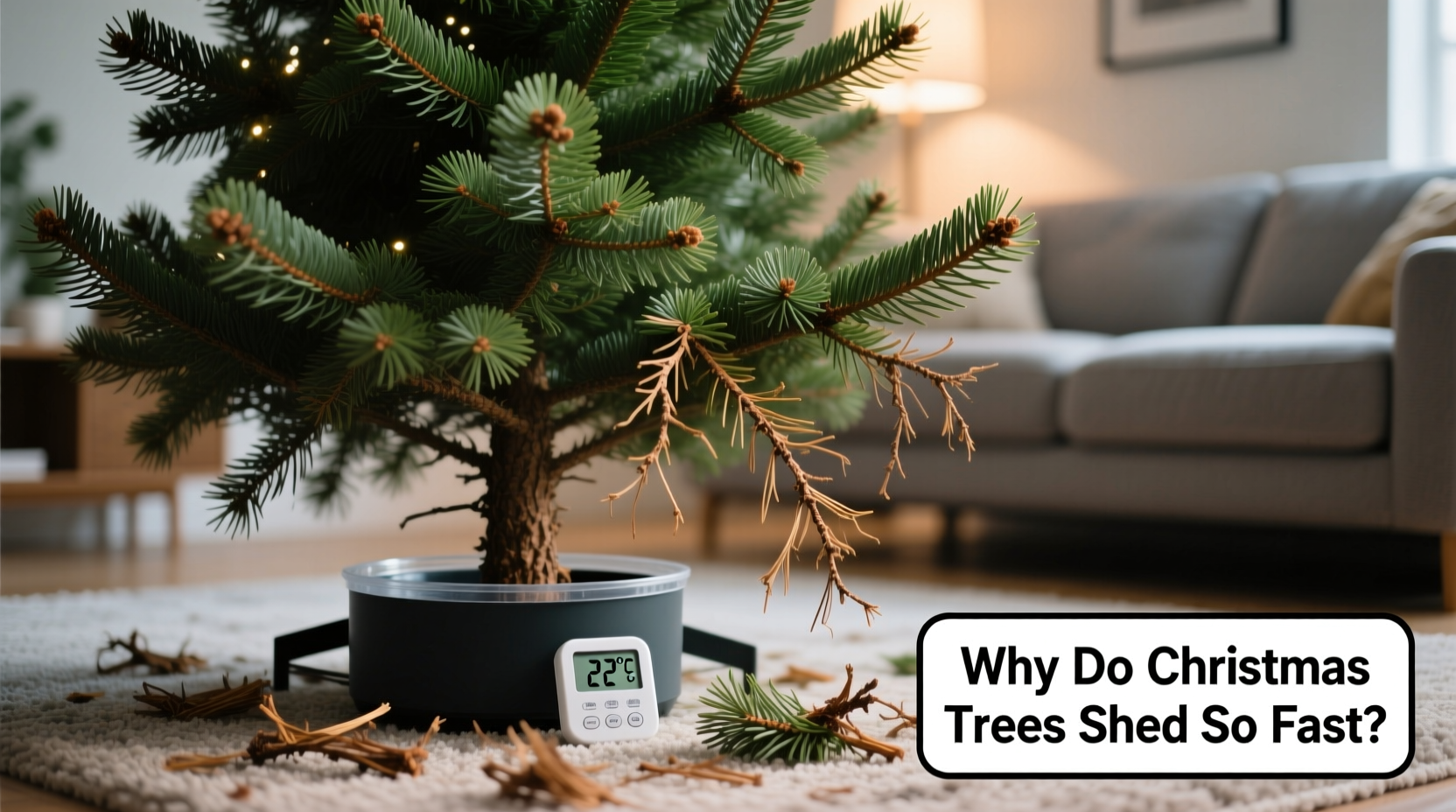
Christmas trees are typically evergreens—species like Fraser fir, Balsam fir, Douglas fir, and Scotch pine. While they’re called “evergreen,” they don’t live forever once cut. Once separated from their root system, trees begin a slow process of dehydration and stress response. Needles fall as a survival mechanism: the tree sheds less efficient foliage to conserve water. However, rapid needle loss signals more than natural aging—it points to poor handling, age at harvest, or environmental stress both before and after purchase.
According to Dr. Bert Cregg, a forest ecologist and professor at Michigan State University who specializes in Christmas tree physiology:
“Moisture retention is the single biggest factor in post-harvest needle retention. A tree that has been out of the ground for more than two weeks without proper hydration will begin internal deterioration long before it reaches your living room.” — Dr. Bert Cregg, MSU Department of Forestry
This means that by the time you bring the tree home, its fate may already be sealed—especially if it was harvested too early, stored improperly, or transported without care.
How to Identify a Fresh Tree: The Field Test
Not all Christmas trees are created equal, even if they look similar on the surface. Some lots sell trees that were cut weeks ago and left sitting in sun-exposed yards, while others source directly from farms and rotate stock frequently. Here's how to tell which is which before you buy.
1. The Shake Test
While gently shaking a tree might seem aggressive, it’s one of the best ways to assess freshness. Hold the trunk about midway and give it a firm shake. A few old or damaged needles falling off is normal. But if multiple clusters drop with each shake, especially from the interior branches, the tree is likely dehydrated and nearing the end of its viable life.
2. The Bend Test
Take a single branch and bend a few needles between your fingers. Fresh needles should feel pliable and slightly waxy, releasing a strong pine aroma when crushed. Brittle, dry needles that snap easily indicate moisture loss and advanced deterioration.
3. The Scratch Test
Use your fingernail or a pocketknife to lightly scratch the bark on a small branch. If green tissue appears underneath and feels moist, the tree is still actively retaining water. If the layer beneath is brown, dry, or flaky, the tree has been cut too long and is past peak freshness.
Fresher Alternatives: Where and When to Buy
Timing and sourcing matter as much as inspection. A tree cut three days ago and kept in shade with regular watering will outperform a \"fresh-cut\" tree left in direct sun for 48 hours. Consider these purchasing strategies for maximum freshness.
Choose a Choose-and-Cut Farm
The gold standard for freshness is cutting the tree yourself at a certified choose-and-cut farm. These operations typically only harvest trees upon customer selection, meaning your tree spends minimal time disconnected from its roots. You also control transport time and conditions.
Support Local Over Big-Box Lots
Large retail lots often source trees from distant regions (e.g., North Carolina, Oregon) where they were cut up to three weeks prior. Even with refrigerated transport, cumulative stress reduces needle retention. Locally grown trees, especially those from nearby farms selling directly, are usually cut within a week of display.
Ask About Harvest Date
Don’t hesitate to ask the vendor when the current batch was cut. Reputable sellers will know and often advertise “just arrived” or “fresh from the farm” signage. If they can’t answer—or worse, avoid the question—assume the worst.
Look for Watered Displays
Freshness isn’t just about harvest date—it’s about ongoing care. Trees displayed upright in water-filled racks retain moisture far longer than those lying horizontally on pavement. A well-maintained lot regularly waters stumps and covers trees at night to reduce transpiration.
“We track every load by harvest date. Our goal is to get trees from field to customer in under seven days. After that, quality declines fast.” — Sarah Linwood, Owner, Pine Haven Tree Farm
Step-by-Step Guide to Maximizing Tree Longevity
Even the freshest tree needs proper care once it arrives at home. Follow this timeline to extend its life and minimize shedding.
- Make a Fresh Cut (Day 0)
Before placing the tree in the stand, cut ½ to 1 inch off the base. This removes any clogged vascular tissue that formed during transit and allows immediate water uptake. Do this within four hours of bringing it indoors. - Fill the Stand Immediately (Within 1 Hour)
Use a stand with adequate water capacity—one quart per inch of stem diameter. Fill it to the top and check daily. Never let the water level drop below the cut end. - Keep Away from Heat Sources (Ongoing)
Place the tree away from radiators, fireplaces, heating vents, and direct sunlight. Warm environments accelerate drying and increase transpiration rates. - Maintain High Humidity (Ongoing)
Dry indoor air worsens needle loss. Use a humidifier nearby, especially in homes with forced-air heating. Alternatively, lightly mist the tree every few days (avoiding lights and electrical components). - Use Additives Wisely (Optional)
Plain tap water is sufficient. Avoid commercial additives, soda, bleach, or aspirin—studies show they offer no benefit and may promote bacterial growth that blocks water absorption. - Monitor Daily (Ongoing)
Check water levels twice daily for the first week. A healthy tree can drink over a gallon in 24 hours initially. Also perform a weekly bend test to monitor needle health.
Comparison: Best vs. Worst Tree Choices
| Factor | Best Practice | Worst Practice |
|---|---|---|
| Harvest Timing | Cut within 7 days of sale | Cut over 2 weeks ago |
| Storage Before Sale | Kept in water, shaded, cool | Left in sun on asphalt |
| At-Home Care | Fresh cut + constant water | No recut, infrequent watering |
| Indoor Placement | Away from heat, low traffic | Next to fireplace or vent |
| Expected Lifespan | 4–6 weeks with minimal shedding | Less than 10 days, heavy drop |
Real Example: From Premature Shedding to Season-Long Success
In 2022, the Thompson family in Columbus, Ohio, bought a large Fraser fir from a roadside lot on December 5th. By December 7th, they noticed significant needle loss—over half a pound collected daily. Frustrated, they replaced it with another tree from a local farm, asking specifically when it had been cut. The second tree was harvested on December 6th and brought home the next day.
They followed the fresh-cut protocol: ¾-inch base trim, placed in a 2-gallon stand, and kept in a cooler corner of the living room. They checked water twice daily and used a portable humidifier nearby. The result? The tree remained lush and fragrant through January 6th, losing fewer than a handful of needles per day after the first week.
The difference wasn’t size or species—it was harvest timing and post-cut care. Their experience mirrors findings from consumer tests conducted by the National Christmas Tree Association, where properly handled trees retained 90% of their needles over four weeks.
FAQ: Common Questions About Needle Loss
Why does my tree shed even though I water it daily?
Daily watering helps, but if you didn’t make a fresh cut before placing it in the stand, the sap may have sealed the stump, preventing absorption. Even with water present, the tree cannot drink without open xylem channels. Always recut the base before setup.
Are some tree species better at holding needles?
Yes. Fraser fir, Balsam fir, and Concolor fir are known for excellent needle retention. Scotch pine holds well too, thanks to its stiff needles. Avoid white pine if longevity is a priority—it tends to dry quickly indoors. Always match species to your climate and setup.
Can I revive a dry, shedding tree?
Once a tree is significantly dehydrated, revival is unlikely. If needles are brittle and the trunk bark is cracking, cellular damage is irreversible. Prevention—through timely purchase, recutting, and consistent watering—is the only reliable solution.
Essential Checklist for a Long-Lasting Tree
- ✅ Visit a choose-and-cut or local farm instead of distant retailers
- ✅ Ask the vendor for the harvest date of current stock
- ✅ Perform the shake, bend, and scratch tests before buying
- ✅ Recut ½–1 inch off the base before placing in stand
- ✅ Fill stand with water within one hour of cutting
- ✅ Choose a stand with at least 1 quart capacity per inch of trunk width
- ✅ Place tree away from heat sources and direct sunlight
- ✅ Check water levels twice daily for the first week
- ✅ Use a humidifier to counteract dry indoor air
- ✅ Remove tree before it becomes a fire hazard (typically after 30 days)
Conclusion: Make Your Tree Last Beyond the Presents
A Christmas tree shouldn’t be a short-lived decoration. With informed choices and simple science-backed practices, you can enjoy a vibrant, fragrant centerpiece that lasts from the first snowfall through New Year’s Day. The secret isn’t luck—it’s preparation. By selecting a truly fresh tree and committing to proper care, you transform what was once a frustrating tradition into a sustainable, joyful part of your holidays.




 浙公网安备
33010002000092号
浙公网安备
33010002000092号 浙B2-20120091-4
Comments
No comments yet. Why don't you start the discussion?