
Every December, millions of households bring home a fresh-cut fir, pine, or spruce to fill their homes with the unmistakable scent of the holidays. But if you’ve ever paused mid-decoration and thought, “This tree doesn’t smell like last year’s,” you’re not imagining things. The aroma of your Christmas tree can vary significantly from one season to the next — sometimes subtly, sometimes dramatically. The reason lies deep within the chemistry of the tree itself: terpenes.
Terpenes are organic compounds produced by many plants, including conifers, that are responsible for their distinctive scents and flavors. These volatile molecules don’t just create ambiance — they play key roles in plant defense, insect attraction, and environmental adaptation. And because terpene profiles fluctuate based on species, growing conditions, time of harvest, and even handling practices, no two trees will ever emit exactly the same fragrance.
Understanding this variation isn’t just botanical trivia; it helps explain seasonal nostalgia, guides better tree selection, and even connects us more deeply to the natural world during the holidays.
The Science Behind the Scent: What Are Terpenes?
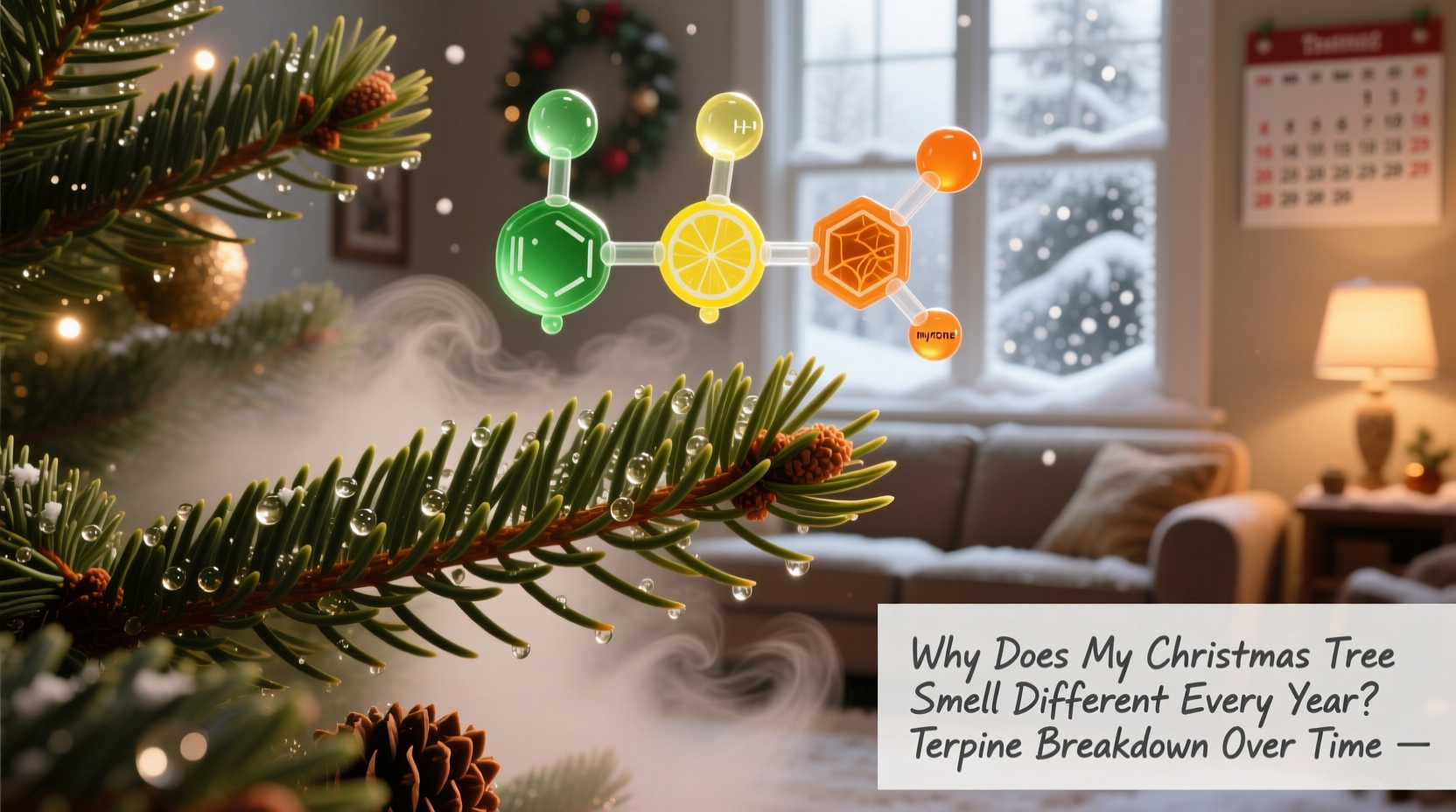
Terpenes are hydrocarbons synthesized in the resin glands of coniferous trees. Over 20,000 terpenoids (modified terpenes) exist in nature, but only a handful dominate the olfactory profile of Christmas trees. These compounds evaporate easily at room temperature, which is why you start smelling your tree as soon as it warms up indoors.
The primary terpenes found in popular Christmas tree species include:
- Alpha-pinene – Sharp, piney, reminiscent of turpentine or forest air
- Beta-pinene – Similar to alpha-pinene but slightly spicier
- Delta-3-carene – Sweet, citrusy, slightly musky; common in pines
- Limonene – Bright, orange-rind-like freshness
- Camphene – Medicinal, earthy, faintly minty
- Myrcene – Herbal, slightly clove-like; enhances other terpene aromas
- Terpinolene – Floral, woody, with hints of lilac
Each species has its own signature blend. For example, a Fraser fir tends to be rich in alpha-pinene and limonene, giving it that crisp, clean “mountain breeze” quality. A Scotch pine, meanwhile, produces more delta-3-carene and camphene, resulting in a heavier, more resinous smell.
“Terpenes are the language of trees — they communicate stress, attract pollinators, and repel pests. When you smell a Christmas tree, you're inhaling its chemical history.” — Dr. Lena Pruitt, Forest Biochemist, University of Vermont
Why Your Tree Smells Different Each Year: Key Factors
No two Christmas trees are chemically identical, even within the same species. Several variables influence terpene concentration and composition, leading to noticeable differences in scent from year to year.
1. Species Variation
Not all Christmas trees are created equal. While some families stick to one type, others rotate between firs, pines, and spruces. Each genus carries a distinct terpene fingerprint:
| Tree Species | Dominant Terpenes | Scent Profile |
|---|---|---|
| Fraser Fir | Alpha-pinene, Limonene | Crisp, citrus-pine, refreshing |
| Balsam Fir | Alpha-pinene, Myrcene | Rich, balsamic, slightly sweet |
| Scotch Pine | Delta-3-carene, Camphene | Pungent, resinous, medicinal |
| Noble Fir | Terpinolene, Alpha-pinene | Floral, woodsy, long-lasting |
| White Spruce | Camphene, Beta-pinene | Sharp, earthy, slightly musty |
2. Geographic Origin & Climate
A tree grown in North Carolina may smell different from one grown in Oregon, even if they’re the same species. Soil composition, altitude, rainfall, and average temperatures all affect terpene synthesis.
For instance, Fraser firs from higher elevations tend to have elevated levels of alpha-pinene due to increased UV exposure, which stimulates protective resin production. Warmer growing seasons can reduce overall terpene yield, while drought stress may increase certain defensive compounds like camphene.
3. Harvest Timing and Freshness
The time of year a tree is cut plays a major role in scent intensity. Trees harvested earlier in November may lose aromatic potency by December due to terpene degradation. Conversely, pre-cut trees stored improperly (e.g., in warm warehouses) can off-gas most of their volatile compounds before they reach your living room.
Freshness also impacts hydration. A well-hydrated tree releases more terpenes because resin flow remains active. Once needles dry out, the scent fades rapidly.
4. Post-Harvest Handling
How the tree is transported, stored, and displayed alters its chemistry. Exposure to heat, wind, and sunlight during transport accelerates terpene evaporation. Some farms use anti-desiccant sprays to preserve moisture, which can subtly alter the perceived aroma.
Indoor conditions matter too. Central heating dries the air, increasing transpiration and speeding up needle drop — along with scent loss.
5. Individual Tree Genetics
Just like humans, individual trees have genetic variations that influence their biochemistry. Two Fraser firs growing side by side might produce slightly different ratios of limonene to pinene. This natural variability means even a consistent choice can yield a different experience each year.
Case Study: The Johnson Family’s Shifting Scents
The Johnsons in Ann Arbor, Michigan, have bought a Christmas tree every year for 12 years. They noticed that five years ago, their tree had a strong citrus-pine aroma that filled the house instantly. Last year’s tree, however, smelled duller — almost musty — despite being the same labeled species: Balsam Fir.
Upon investigation, they learned their usual farm had switched suppliers after a storm damaged part of their crop. The replacement trees came from a lower-elevation region with heavier clay soil and less consistent irrigation. Laboratory analysis (conducted through a local university extension program) showed these trees had 30% less limonene and 18% more camphene than the original stock — explaining the flatter, more medicinal scent.
This real-world example illustrates how supply chain changes, even when invisible to consumers, directly impact sensory experience.
How to Choose a Tree with the Scent You Want
If consistency matters to you — whether for tradition, memory, or simply preference — you can take steps to influence your annual aroma.
Step-by-Step Guide to Selecting a Fragrant Tree
- Decide on a preferred scent profile – Do you like bright and citrusy? Earthy and deep? Crisp and clean? Match this to known species traits.
- Visit local farms or lots early in the season – Early arrivals are more likely to be freshly cut.
- Perform the “scratch and sniff” test – Rub a branch between your hands and inhale deeply. A strong, pleasant aroma indicates high terpene content.
- Ask about origin – Request information on where the trees were grown. Reputable sellers often know their sources.
- Check for freshness – Shake the trunk gently; minimal needle drop and flexible needles suggest good hydration.
- Transport carefully – Cover the tree during transit to minimize wind exposure and terpene loss.
- Hydrate immediately – Make a fresh cut at the base and place in water within 4–6 hours of purchase.
Preserving the Aroma: Practical Tips
You can’t stop terpene degradation entirely, but you can slow it down.
- Keep the tree stand filled with water at all times. Dehydration is the fastest path to scent loss.
- Avoid placing the tree near heat sources like radiators, fireplaces, or vents.
- Mist the branches lightly every few days to maintain humidity.
- Use LED lights, which produce less heat than incandescent bulbs.
- Consider using a humidifier in the room to counteract dry winter air.
Frequently Asked Questions
Can I freeze a branch to save the scent for next year?
Freezing slows degradation but doesn’t stop it completely. Terpenes continue to off-gas slowly even at low temperatures. While a frozen branch may retain some scent for months, it won’t replicate the full aromatic experience of a fresh tree. It’s more effective as a novelty or keepsake than a practical solution.
Do artificial trees emit terpenes?
No. Artificial trees are made from PVC or PE plastic and do not produce terpenes. Any scent associated with them comes from added fragrances sprayed on or released from packaging materials. These synthetic scents lack the complexity and variability of natural terpene blends.
Are certain terpenes stronger allergens than others?
Yes. Delta-3-carene and camphene can irritate sensitive individuals, especially in poorly ventilated spaces. If someone experiences headaches or respiratory discomfort around the tree, consider switching to a low-carene species like Noble Fir or Grand Fir. Ensuring good airflow in the room can also mitigate reactions.
Conclusion: Embracing the Ever-Changing Aroma of the Holidays
The shifting scent of your Christmas tree isn’t a flaw — it’s a feature. Each year’s fragrance is shaped by climate, care, and chemistry, making it a unique sensory snapshot of that season. Rather than chasing perfect consistency, consider embracing the variation as part of the holiday ritual. One year might bring a zesty burst of limonene; another, a grounding wave of pinene and myrcene. These subtle differences connect us to the rhythms of nature, reminding us that even traditions evolve.
By understanding terpenes, you gain more than scientific insight — you gain agency. You can seek out the scents you love, support sustainable farms, and extend the life of your tree’s aroma through informed care. And next time you catch that first whiff of pine in December, you’ll know exactly what you’re smelling — and why it’s never quite the same twice.




 浙公网安备
33010002000092号
浙公网安备
33010002000092号 浙B2-20120091-4
Comments
No comments yet. Why don't you start the discussion?