
Every year, as the holidays approach, families pull out their artificial Christmas trees with excitement—only to be greeted by an unexpected musty odor. That stale, damp smell can ruin the festive mood before the lights are even strung. But this common issue isn’t a mystery. It stems from predictable environmental factors during storage and can be resolved with practical cleaning and preventive steps.
The mustiness is not just unpleasant—it’s often a sign of trapped moisture, dust accumulation, or even early mold development. Left untreated, it can affect indoor air quality and trigger allergies. The good news? With proper care, you can eliminate the smell and protect your tree for years to come. This guide breaks down the science behind the odor, offers step-by-step deodorizing techniques, and provides long-term storage solutions to keep your tree smelling fresh.
Why Artificial Trees Develop a Musty Smell
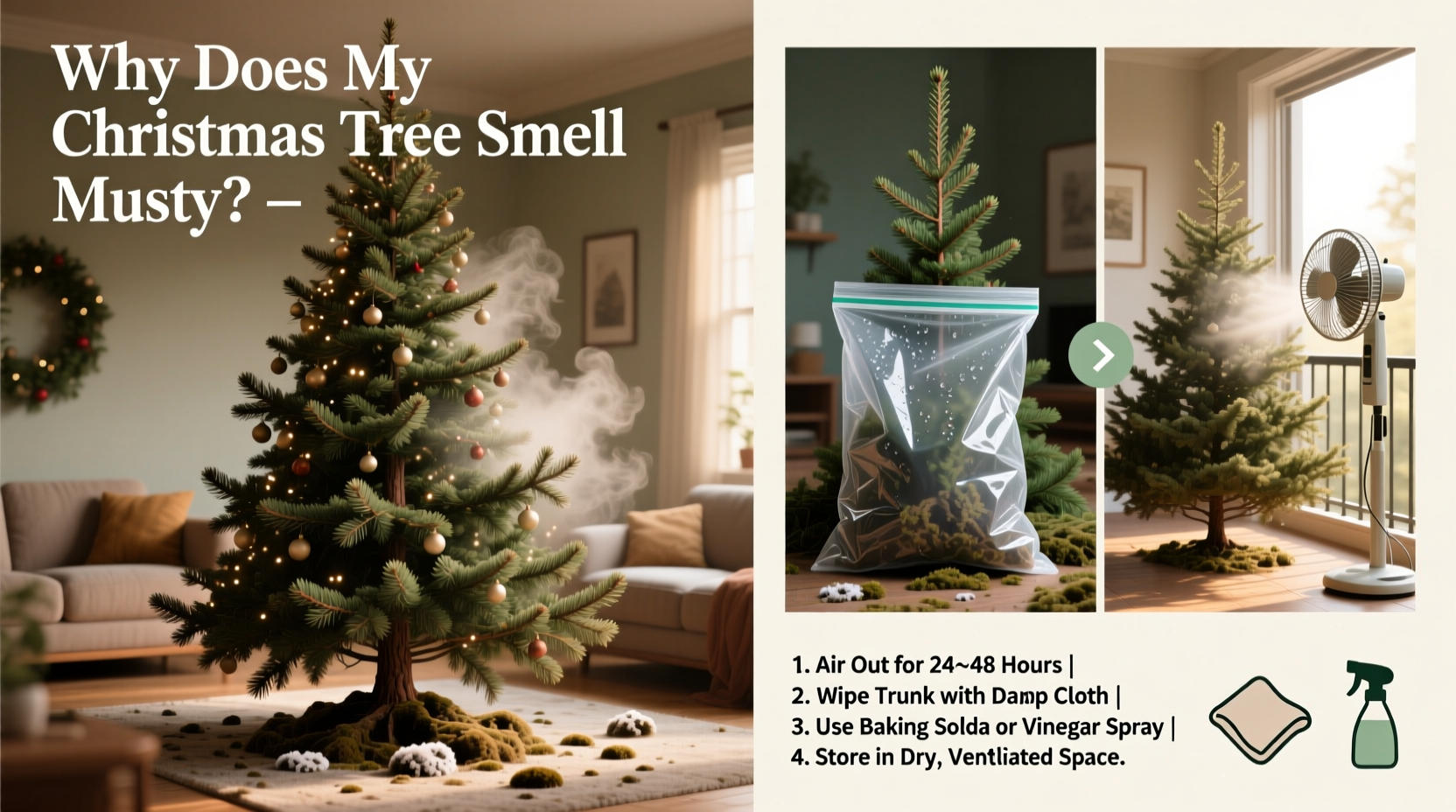
An artificial Christmas tree doesn’t rot like a real one, but it can still absorb and retain odors over time. The primary causes of musty smells stem from how and where the tree is stored during the off-season.
Most artificial trees are made from PVC (polyvinyl chloride) and polyester, materials that are porous at a microscopic level. When stored in damp or humid environments—such as basements, garages, or attics—these materials absorb moisture from the air. Even if the area feels dry, seasonal humidity spikes can lead to condensation inside storage boxes or bags.
Dust, pet dander, and airborne spores settle into the branches during storage. Over months, these organic particles combine with residual moisture to create an ideal breeding ground for mildew and mold spores. While visible mold may not always appear, the microbial activity produces volatile organic compounds (VOCs) responsible for that familiar \"damp basement\" scent.
“Even in the absence of visible mold, prolonged exposure to high humidity can cause polymer-based materials like PVC to emit musty odors due to surface degradation and microbial colonization.” — Dr. Lena Torres, Environmental Microbiologist
Additionally, cardboard boxes and non-breathable plastic bags—commonly used for storage—trap moisture and restrict airflow. Without ventilation, any small amount of dampness becomes concentrated, accelerating odor development. Poor labeling or forgotten storage locations can also mean trees sit untouched for years, compounding the problem.
Step-by-Step: How to Deodorize a Musty Christmas Tree
Removing the musty smell requires more than just masking it with air fresheners. Effective deodorization involves cleaning, drying, and neutralizing odor-causing agents. Follow this detailed process to restore freshness safely and thoroughly.
- Unpack Outdoors
Begin by taking the tree outside—preferably on a dry, breezy day. Set it up partially in a garage, driveway, or patio. This prevents spreading dust and spores indoors. - Shake and Vacuum
Vigorously shake each section to dislodge loose dust and debris. Then, use a vacuum with a soft brush attachment to clean between branches. Focus on dense areas near the trunk where dust accumulates. - Dry-Brush for Stubborn Residue
Use a clean, dry microfiber cloth or soft-bristle brush to gently wipe down individual branches. This removes biofilm—a thin layer of microbial residue—that contributes to lingering smells. - Air Out for 24–48 Hours
Leave the tree standing outdoors (if weather permits) or in a well-ventilated room. Airflow helps evaporate trapped moisture and dissipates VOCs naturally. - Apply a Natural Deodorizing Spray
Mix 1 cup of distilled water, 1 tablespoon of baking soda, and 10 drops of tea tree or eucalyptus essential oil in a spray bottle. Lightly mist the branches—avoid soaking them. These ingredients have antimicrobial properties and help neutralize odors without damaging PVC. - Baking Soda Dusting (Optional)
For stronger odors, lightly sprinkle food-grade baking soda over the tree, wait 30 minutes, then vacuum thoroughly. Baking soda absorbs both moisture and odor molecules. - Final Indoor Ventilation
After treatment, set up the tree in a room with open windows or near a fan for several hours before decorating. Monitor for any residual scent.
Storage Do’s and Don’ts: Prevent Future Odors
Prevention is far more effective than remediation. Proper storage protects your investment and ensures a pleasant unboxing experience next holiday season. The table below outlines best practices based on material type and environment.
| Practice | Do | Don't |
|---|---|---|
| Storage Container | Use rigid plastic bins with ventilation holes or breathable fabric tree bags | Store in sealed plastic bags or cardboard boxes without airflow |
| Location | Cool, dry, climate-controlled space (e.g., closet, spare room) | Basement, garage, attic, or outdoor shed exposed to humidity |
| Packing | Disassemble carefully; wrap sections loosely to avoid crushing | Force branches into containers, causing permanent bends or breakage |
| Moisture Control | Add silica gel packs or cedar blocks inside the container | Include newspaper, wool blankets, or other moisture-retaining materials |
| Cleaning Before Storage | Dust and deodorize the tree before packing it away | Store immediately after takedown without cleaning |
Consider labeling your storage container with the date and a note like “Cleaned & Dry” to track maintenance. If you live in a humid climate, invest in a small dehumidifier for your storage room or use moisture-absorbing products like DampRid.
Real Example: A Family’s Fix for a Persistent Smell
The Rivera family had reused their 7.5-foot pre-lit tree for eight years. Each November, they’d spend hours setting it up, only to open windows and run fans due to the strong musty odor. One year, their youngest child developed nighttime coughing, prompting concern about air quality.
They decided to investigate. Upon unpacking the tree in the garage, they noticed fine black specks near the base—early mold growth. They followed the deodorizing steps outlined above: shaking, vacuuming, applying a baking soda and tea tree oil spray, and airing it out for two full days. They also replaced their old cardboard storage box with a ventilated plastic bin and added four large silica gel packs.
The difference was immediate. That December, the tree emitted no odor. More importantly, the child’s respiratory symptoms improved. Since then, the Riveras clean and inspect their tree every January before storing it—an effort that takes less than 30 minutes but makes their holiday setup stress-free.
Expert-Approved Deodorizing Methods Compared
Not all odor removal methods are equally effective or safe. Below is a comparison of popular techniques, evaluated for safety, efficiency, and long-term impact on tree materials.
- Baking Soda Spray – Highly effective at neutralizing odors, non-toxic, and safe for PVC. Best for light to moderate smells.
- Vinegar Solution (Diluted) – Can kill mold spores but risks leaving its own sharp odor. Use sparingly and rinse with water afterward (not recommended for pre-lit trees).
- Sunlight Exposure – UV rays naturally kill microbes and evaporate moisture. Limit exposure to 2–3 hours to prevent PVC brittleness.
- Activated Charcoal Bags – Passive odor absorbers. Place inside storage container alongside the tree. Recharge monthly by placing in sunlight.
- Commercial Tree Cleaners – Some are formulated specifically for artificial trees. Choose alcohol-free, fragrance-free options to avoid chemical buildup.
Frequently Asked Questions
Can a musty-smelling tree make me sick?
Yes, in some cases. Musty odors often indicate mold or mildew, which release spores into the air. These can trigger allergic reactions, asthma symptoms, or respiratory irritation—especially in children and sensitive individuals. Eliminating the source of the smell reduces health risks.
Is it safe to use a hairdryer to dry my tree?
No. High heat can melt PVC needles, warp branches, and damage wiring on pre-lit trees. Instead, use fans or natural airflow for drying. Keep the tree away from radiators or space heaters.
How often should I replace my artificial tree?
With proper care, most artificial trees last 10–15 years. Signs it’s time to replace include brittle branches, exposed wires, persistent mold, or fading color. If deodorizing no longer works and the smell returns immediately, the material may be degraded beyond recovery.
Essential Checklist for Year-Round Tree Care
Follow this checklist each year to keep your Christmas tree fresh, clean, and ready for display:
- Unpack the tree in a well-ventilated area or outdoors
- Inspect for dust, debris, or signs of mold
- Vacuum thoroughly using a brush attachment
- Treat with a natural deodorizing spray (baking soda + essential oils)
- Allow to air out for at least 12–24 hours before decorating
- After the holidays, dismantle and dust each section
- Ensure the tree is completely dry before storage
- Pack in a breathable container with moisture absorbers
- Store in a climate-controlled, dry location
- Label the container with the storage date and cleaning status
Conclusion: Turn a Problem Into a Holiday Upgrade
A musty Christmas tree doesn’t mean it’s time to give up on your favorite holiday centerpiece. Understanding the root causes—moisture, poor ventilation, and microbial growth—empowers you to take control. With simple, safe cleaning methods and smarter storage habits, you can eliminate odors and enjoy a fresh, inviting tree every December.
This year, treat your tree care routine as part of the holiday tradition. Just as you pack away ornaments with care, extend the same attention to your tree. The result isn’t just a better smell—it’s healthier indoor air, longer-lasting decorations, and a more joyful setup experience.




 浙公网安备
33010002000092号
浙公网安备
33010002000092号 浙B2-20120091-4
Comments
No comments yet. Why don't you start the discussion?