
That first whiff of pine resin, crisp balsam, and woody sweetness is one of the most evocative sensory signatures of the holiday season. When your freshly cut Christmas tree instead greets you with a damp, earthy, or even sour odor—like wet cardboard, basement mildew, or forgotten gym socks—it’s more than disappointing. It’s a red flag. A musty smell isn’t just an olfactory nuisance; it signals biological activity beneath the surface: microbial growth, early decay, or compromised tree health. Unlike synthetic scents or air fresheners that mask problems, real solutions address root causes—how the tree was harvested, stored, transported, hydrated, and displayed. This article cuts through seasonal folklore and offers actionable, botanically grounded strategies to diagnose, neutralize, and prevent mustiness—so your tree doesn’t just look festive, but *smells* like one.
Why Your Tree Smells Musty: The Science Behind the Stink
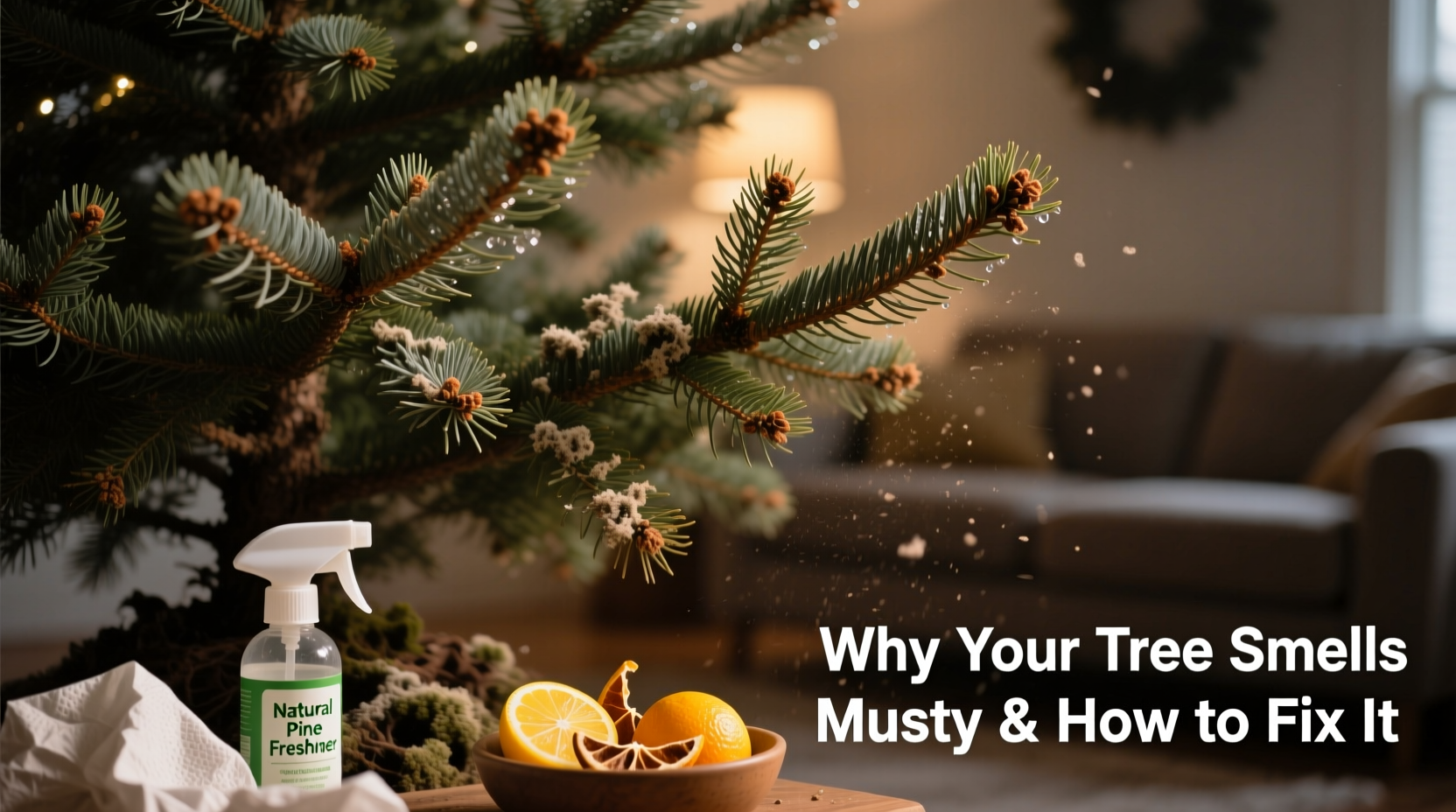
A musty odor from a Christmas tree almost always stems from microbial metabolism—not the tree itself. Conifers like Fraser firs, Balsam firs, and Douglas firs produce natural terpenes (pinene, limonene) that give them their signature clean, sharp aroma. But when moisture, warmth, and organic debris converge, bacteria and fungi—including Paenibacillus, Pseudomonas, and molds like Cladosporium—colonize the cut stump, needle bases, and interior branches. These microbes break down sugars, starches, and cellulose in the sapwood, releasing volatile organic compounds (VOCs) such as geosmin (the “wet soil” smell), 2-methylisoborneol (musty/corky), and short-chain fatty acids (rancid/sour notes).
Three conditions accelerate this process:
- Delayed hydration: If the tree sits uncut or without water for more than 4–6 hours after harvest, the cut end seals with oxidized sap (a “sap plug”), blocking water uptake. Dehydration stresses the tree, weakening its natural antimicrobial defenses and creating microenvironments ideal for microbial bloom.
- Warm, stagnant display conditions: Placing the tree near heat sources (fireplaces, radiators, HVAC vents) raises ambient temperature and dries needles rapidly—while simultaneously warming the water reservoir, turning it into a microbial incubator.
- Contaminated water: Tap water often contains chlorine, which initially suppresses microbes—but once depleted (within 24–48 hours), nutrients leached from the stump feed rapid bacterial regrowth. Adding sugar, soda, or commercial “tree preservatives” without proper pH control can worsen this by feeding bacteria more efficiently than the tree can absorb.
“Mustiness isn’t about ‘bad trees’—it’s about disrupted physiology. A healthy fir cut on-site and placed in clean, cool water within two hours rarely develops off-odors before day 10. The problem is almost always post-harvest handling.” — Dr. Sarah Lin, Postharvest Horticulturist, Cornell Cooperative Extension
Immediate Freshening Solutions (First 24–72 Hours)
Once mustiness appears, act swiftly—but avoid aggressive interventions that damage vascular tissue or accelerate needle drop. Prioritize hydration, sanitation, and airflow.
- Re-cut the base (minimum ¼ inch): Use a sharp hand saw—not pruning shears—to remove the sealed layer. Cut straight across (not angled) to maximize surface area for water absorption. Do this outdoors or over a tarp; sap is sticky and hard to clean.
- Flush the stand with cold, filtered water: Empty the old reservoir. Scrub the basin with white vinegar (1:1 with water) and a soft brush to dissolve biofilm. Rinse thoroughly. Fill with cold, filtered water—never warm or distilled (lacks minerals needed for osmotic balance).
- Elevate air circulation: Place a small, quiet fan on low setting 3–4 feet away, aimed at the *base* of the tree—not the branches. Gentle airflow disrupts stagnant microclimates around the stump and lowers relative humidity near the water line, inhibiting mold spore germination.
- Wipe accessible branch junctions: Dampen a microfiber cloth with diluted food-grade hydrogen peroxide (1 tablespoon 3% H₂O₂ per cup water). Gently wipe where major branches meet the trunk—common sites for moisture trapping and microbial buildup. Avoid soaking needles.
Preventive Hydration & Care Protocol (Days 1–14)
Sustained freshness depends on consistent, intelligent hydration—not volume alone. A 6-foot Fraser fir consumes 1–2 quarts of water daily in its first week. But absorption isn’t linear: peak uptake occurs between days 2–5, then declines as vascular function wanes. Monitor daily—and adjust.
| Day Range | Water Level Check Frequency | Key Action | Why It Matters |
|---|---|---|---|
| Days 1–3 | Twice daily (AM/PM) | Refill to top of stand; verify water covers entire cut surface | Prevents re-sealing of xylem; maintains capillary action |
| Days 4–7 | Once daily + visual inspection | Add 1 tsp white vinegar per gallon of fresh water | Vinegar lowers pH slightly (to ~5.5), inhibiting bacterial biofilm without harming tree tissue |
| Days 8–14 | Morning only | Switch to room-temp filtered water; discontinue additives | Prevents mineral buildup; avoids stressing aging xylem with acidity |
Crucially: Do not let the water level fall below the cut surface—even for two hours. Xylem vessels collapse and seal irreversibly when exposed to air, halting hydration permanently. If water drops too low, re-cut the base immediately and restart the flush-and-fill protocol.
Environmental Optimization: Temperature, Light & Placement
Your living room environment has as much impact on tree freshness as your watering habits. Conifers evolved in cool, humid mountain forests—not centrally heated homes averaging 72°F (22°C) with 25% relative humidity. That mismatch drives both needle desiccation and microbial proliferation.
- Temperature control: Keep room temperature between 60–65°F (15–18°C) when possible. Every 5°F above 65°F doubles the rate of moisture loss from needles and increases microbial metabolic activity by ~15%. If heating is unavoidable, run a cool-mist humidifier nearby (maintaining 40–50% RH).
- Strategic placement: Position the tree at least 3 feet from heat sources, direct sunlight, and HVAC vents. Avoid corners with poor air circulation—stagnant air traps moisture and VOCs. A central location with gentle cross-ventilation is ideal.
- Lighting considerations: Use LED lights exclusively. Incandescent bulbs emit significant radiant heat—up to 15°F warmer at the branch surface—drying needles and warming the water reservoir. Space lights evenly; avoid clustering near the base.
Real-World Case Study: The Portland Fir Fix
In December 2022, the Anderson family in Portland, Oregon, purchased a 7-foot Noble fir from a local lot. Within 36 hours, a distinct “damp basement” odor emerged near the trunk. They’d followed standard advice—re-cutting the base, using sugar water, and placing it near a bay window (unaware of afternoon sun exposure). By day 4, needles were dropping heavily, and the smell intensified.
They contacted Oregon State University’s Master Woodland Program for guidance. An extension agent visited and diagnosed three issues: (1) the tree had sat unhydrated for 18 hours post-cut due to lot logistics; (2) sugar water had fermented in the warm (74°F) living room, creating a bacterial broth; (3) afternoon sun raised the trunk temperature to 82°F, accelerating decay.
The fix took 48 hours: They re-cut ½ inch off the base, flushed the stand with vinegar solution, refilled with cold filtered water, moved the tree 6 feet away from the window, added a small fan on low, and installed a $25 hygrometer/thermometer. By day 6, the musty odor vanished. Needle drop slowed dramatically. The tree remained fragrant and full until January 5th—19 days total. Their key insight? “We treated the tree like a houseplant—watering it, yes, but also managing its climate. That changed everything.”
FAQ: Addressing Common Concerns
Can I use essential oils or sprays to mask the musty smell?
No. Essential oils (e.g., pine, eucalyptus) may temporarily overlay the odor but do nothing to stop microbial growth. Worse, many contain alcohols or solvents that dry out needles and accelerate brittleness. Sprays also increase surface moisture, feeding mold. Focus on eliminating the cause—not covering it.
Does spraying the tree with water help?
Light misting of the *interior* branches (not the base) with cool water once daily can reduce dust and static, but avoid oversaturating. Never spray the stump or reservoir area—this promotes fungal spread. A better alternative: place shallow trays of water with pebbles near the tree to boost ambient humidity safely.
Is a musty smell dangerous to pets or children?
Not directly toxic, but concerning. Musty odors often accompany visible mold (fuzzy white/grey patches on the stump or lower branches) or bacterial slime. These can trigger allergic reactions, asthma flares, or respiratory irritation—especially in infants, seniors, or immunocompromised individuals. If mold is visible or the smell persists beyond 72 hours despite corrective steps, remove the tree promptly.
Long-Term Mindset: Beyond This Season
Preventing mustiness starts long before you bring the tree home. Choose wisely: Visit choose-and-cut farms whenever possible—they cut trees to order, minimizing transport time and stress. If buying retail, inspect the lot: Healthy trees have flexible, springy branches (not brittle), glossy green needles that don’t pull off easily, and a fresh, resinous scent—not fermented or sour. Scratch a small branch bark; bright green cambium underneath indicates vitality.
For next year, consider these proactive upgrades:
- Invest in a reservoir stand with >1-gallon capacity (many hold only 0.5 gallons—insufficient for trees over 5 feet).
- Keep a dedicated tree thermometer/hygrometer to monitor microclimate conditions objectively.
- Record your care log: Note cut time, first water time, daily water intake, temperature, and odor observations. Patterns emerge fast—and inform smarter choices next season.
A musty Christmas tree isn’t a holiday curse. It’s feedback—a clear signal that hydration, temperature, and hygiene need recalibration. With precise intervention and consistent environmental awareness, you reclaim the authentic, uplifting scent of conifer resin—the very essence of winter celebration. Your tree deserves that care. Your home deserves that clarity. And your holidays deserve to smell, deeply and unmistakably, like joy.




 浙公网安备
33010002000092号
浙公网安备
33010002000092号 浙B2-20120091-4
Comments
No comments yet. Why don't you start the discussion?