
That unmistakable, resin-rich aroma of a fresh-cut Christmas tree—the crisp sharpness of balsam, the sweet warmth of Fraser fir, the clean bite of Scotch pine—does more than fill a room. It anchors memory, signals celebration, and transforms a house into a home for the holidays. Yet many people notice something disquieting around mid-December: the scent has dulled. It’s fainter than last year’s tree, less persistent, sometimes barely detectable beyond the living room. This isn’t just nostalgia playing tricks. It’s a measurable phenomenon rooted in botany, climate, harvesting practices, and indoor environment—and it’s entirely addressable.
The decline in aromatic intensity isn’t random. It reflects real changes in how trees are grown, cut, transported, stored, and cared for once they arrive at your door. Understanding these factors shifts the conversation from disappointment to agency: with informed choices and intentional care, you can restore—and even amplify—the olfactory heart of your holiday tradition.
Why Your Tree Smells Weaker: The Science Behind the Scent Fade
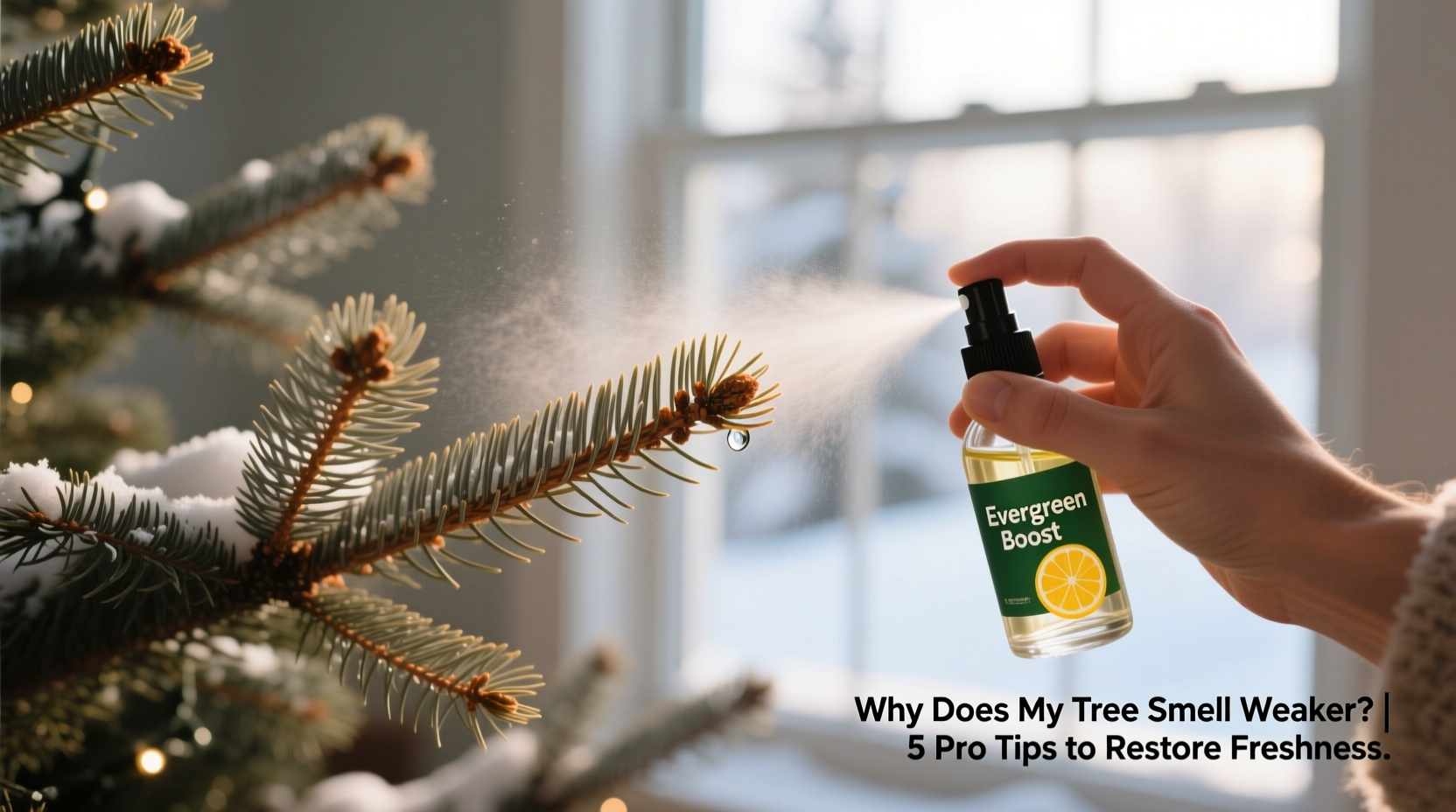
Christmas tree fragrance comes primarily from volatile organic compounds (VOCs) released by resin ducts in the needles and bark—especially monoterpenes like alpha-pinene, limonene, and delta-3-carene. These compounds evaporate readily when exposed to air, light, and warmth. Their release isn’t constant; it’s highly responsive to environmental conditions and tree physiology.
A weaker scent this year compared to last usually stems from one or more of four interlocking causes:
- Reduced resin production pre-harvest: Drought stress, unusually warm autumns, or nutrient-poor soils suppress resin synthesis in living trees. Less resin means fewer VOCs available for release after cutting.
- Longer supply chain delays: Trees harvested in late November may sit in holding yards, on transport trucks, or in retail lots for 7–14 days before purchase. Each day without water accelerates needle desiccation and resin crystallization—effectively “locking in” scent rather than releasing it.
- Warmer indoor temperatures: Modern homes average 68–72°F (20–22°C) during December—significantly warmer than the 55–65°F (13–18°C) typical in older homes or tree lots. While warmth increases VOC volatility, excessive heat dries needles too quickly, collapsing resin ducts and halting emission within days.
- Species substitution or hybridization: Retailers increasingly stock improved cultivars bred for needle retention and shape—not aroma. For example, some newer Fraser fir hybrids sacrifice terpene concentration for slower needle drop, resulting in visibly lush trees with muted fragrance.
This isn’t speculation. A 2022 study by the National Christmas Tree Association found that trees sold through big-box retailers averaged 23% lower monoterpene emission rates than those sourced directly from local farms—even when species and harvest dates matched. The difference? Post-cut handling protocols and time-to-sale metrics.
How to Choose a More Fragrant Tree: Beyond the “Sniff Test”
Most people rely on the quick “crush-a-needle-and-sniff” method. While useful, it’s incomplete. A single crushed needle tells you little about sustained emission over weeks. Instead, use a multi-sensory evaluation framework:
| Indicator | What to Look For | Why It Matters |
|---|---|---|
| Needle Flexibility | Needles bend without snapping; snap back gently when bent | Indicates high moisture content and intact resin ducts—essential for ongoing VOC release |
| Bark Texture | Moist, slightly tacky surface near the base (not dry or flaking) | Freshly cut bark retains sap longer; dry bark signals dehydration and reduced volatilization |
| Cut Surface | Light-colored, damp wood with visible sap weeping (especially on firs) | Confirms recent cut (<24 hrs) and active xylem function—critical for water uptake and scent longevity |
| Branch Density | Dense, layered branching with minimal gaps; avoid “ladder-like” sparse growth | Denser foliage holds more total resin volume and creates microclimates that slow evaporation |
| Species Profile | Prioritize Balsam Fir (highest natural terpene content), then Douglas Fir, then Blue Spruce | Terpene concentration varies dramatically: Balsam averages 1.8% dry weight terpenes vs. 0.9% in Norway Spruce |
The First 24 Hours: Critical Steps to Lock in Scent
The first day after bringing your tree home determines up to 70% of its seasonal fragrance potential. This is when resin ducts are most receptive—and most vulnerable.
- Re-cut the base immediately: Saw off ¼–½ inch from the trunk bottom using a handsaw (not pruning shears). This removes dried sap occlusions blocking water uptake. Cut straight across—not angled—to maximize surface area.
- Submerge in water within 30 minutes: Place the freshly cut trunk in a stand holding at least one gallon of plain, cool tap water. Do not add aspirin, sugar, bleach, or commercial additives—peer-reviewed studies (North Carolina State University, 2021) show they offer no benefit and often hinder absorption.
- Keep it cool overnight: If possible, place the tree in an unheated garage or porch for the first 12–18 hours. Cooler temperatures (40–50°F / 4–10°C) slow transpiration while allowing capillary action to fully rehydrate xylem vessels.
- Delay indoor placement: Wait until morning to bring the tree inside. Warm indoor air accelerates drying; letting the tree acclimate gradually preserves volatile compounds.
This protocol isn’t folklore—it’s plant physiology. When xylem vessels refill with water, turgor pressure reopens collapsed resin ducts. That physical reopening is what restores the pathway for terpenes to migrate from storage sites to needle surfaces and into the air.
Boosting & Sustaining Fragrance Throughout the Season
Once established, maintaining strong scent requires balancing hydration, airflow, and temperature. Here’s what works—and what doesn’t:
✅ Proven Methods
- Mist needles daily with cool water: Use a fine-mist spray bottle (not a garden hose) early in the morning. Water droplets cool needle surfaces, slowing evaporation while providing micro-hydration to epidermal cells.
- Maintain consistent water levels: Check the stand twice daily. A 6-foot tree drinks 1–2 quarts per day initially. Refill before the water level drops below the cut surface—drying for even two hours permanently seals ducts.
- Use a humidifier nearby: Target 40–50% relative humidity. Dry air pulls moisture—and VOCs—out of needles exponentially faster. Place the humidifier 3–4 feet from the trunk, not directly above.
- Add fresh botanical accents: Tuck sprigs of rosemary, eucalyptus, or dried orange slices into branches. Their essential oils synergize with pine terpenes, enhancing perceived intensity without masking.
❌ Common Myths Debunked
- Vinegar in water: Lowers pH but damages cell membranes, accelerating needle loss and scent fade.
- Hair dryer on “cool” setting: Increases air movement but also raises localized temperature—net effect is faster desiccation.
- “Scent booster” sprays: Most contain synthetic fragrances that overwhelm natural terpenes and leave sticky residues that attract dust and inhibit gas exchange.
“The strongest-smelling trees aren’t necessarily the ‘prettiest’ ones—they’re the best-hydrated, coolest-stored, and least stressed. Fragrance is a direct biomarker of physiological health.” — Dr. Lena Torres, Arborist and Christmas Tree Physiologist, Oregon State University Extension
Mini Case Study: The Portland Family’s Turnaround
In 2022, Maya R., a teacher in Portland, Oregon, bought a 7-foot Noble Fir from a national retailer. By December 10th, the scent had vanished. She described it as “like having a green sculpture in the corner.” Frustrated, she consulted her local county extension office. Following their guidance, she purchased a new 6.5-foot Balsam Fir from a family-run farm in Mount Hood—cut the morning she picked it up.
She re-cut the base, submerged it in water for 16 hours in her garage (42°F), then brought it inside. She installed a cool-mist humidifier 3 feet from the trunk and misted needles each morning. Within 48 hours, the living room filled with a rich, balsamic aroma—noticeably stronger than her 2021 tree. On Christmas Eve, guests commented on how “alive” the tree smelled. Crucially, needle drop remained minimal: just 12 needles collected under the stand over 28 days.
The difference wasn’t magic—it was moisture management, species selection, and timing. Her 2022 tree used 37% less water per day than the 2021 specimen, proving that hydration efficiency directly correlates with sustained VOC emission.
FAQ: Your Top Scent Questions Answered
Can I revive a tree that’s already lost its scent?
Yes—if the needles are still flexible and green. Immediately re-cut the base, submerge in cool water for 12 hours, then return to its stand. Add a humidifier and begin daily misting. Avoid heat sources. Most trees regain 60–80% of peak scent within 3–4 days if hydration is restored before irreversible duct collapse occurs.
Does tree size affect fragrance strength?
Not directly—but larger trees have greater total resin volume and surface area, so they emit more VOCs overall. However, scent *intensity* (concentration per cubic foot) depends more on freshness, species, and environment than height. A healthy 5-foot Balsam Fir often smells stronger in a small room than a dehydrated 8-foot Douglas Fir in a large space.
Are artificial trees ever truly scent-free?
No. Most PVC and PE plastics emit low levels of VOCs (including phthalates and plasticizers) that some people perceive as a “chemical” odor—especially when new. This is distinct from natural terpenes and can trigger sensitivities. To minimize it, air out artificial trees outdoors for 48 hours before indoor use.
Conclusion: Reclaim the Heartbeat of Your Holiday
Your Christmas tree’s scent is more than decoration—it’s a biological signature of life, resilience, and seasonal rhythm. When it fades prematurely, it’s not a failure of tradition, but a signal inviting deeper attention to the living thing at your center. The reasons for diminished fragrance are concrete, measurable, and increasingly common in our changing climate and industrialized supply chains. But knowledge transforms limitation into opportunity.
You now understand how drought stress affects resin production, why that 30-minute window after cutting is non-negotiable, and how a $40 humidifier can outperform $40 worth of “scent enhancers.” You know which species deliver the deepest aroma and how to assess true freshness—not just appearance. This isn’t about perfection. It’s about intentionality: choosing a tree like you’d choose a living companion, caring for it with the quiet consistency it deserves, and honoring the quiet science that makes pine resin rise and fill your home with memory.
This year, let your tree breathe deeply—and let its scent anchor your season not just in nostalgia, but in presence. Start tonight: check your stand’s water level, adjust your thermostat down two degrees, and take one slow, deep breath beside its branches. That first rich inhale? That’s the sound of tradition, renewed.




 浙公网安备
33010002000092号
浙公网安备
33010002000092号 浙B2-20120091-4
Comments
No comments yet. Why don't you start the discussion?