
That first whiff of pine resin and crisp forest air is one of the most cherished sensory signatures of the holiday season. So when your freshly cut or stored Christmas tree emits a sour, musty, fishy, or even ammonia-like odor instead—something that makes guests pause at the doorway or prompts you to open windows mid-December—it’s more than just an annoyance. It’s a signal: something has gone wrong in the tree’s journey from forest floor to living room corner.
Unlike synthetic trees, real evergreens are biologically active for weeks after harvest. Their needles continue respiration, sap flows (briefly), and moisture content shifts dramatically indoors. When combined with environmental stressors—dry heat, poor ventilation, stagnant water, or compromised storage conditions—these natural processes can accelerate microbial activity, chemical breakdown, or decay. The result? Unpleasant aromas ranging from damp basement to overripe cheese.
This article cuts through seasonal guesswork. Drawing on arboricultural research, indoor air quality studies, and decades of field experience from tree farms and extension services, we detail the seven most likely culprits behind that off-putting scent—and exactly what to do about each one.
1. Mold and Fungal Growth on the Trunk and Base
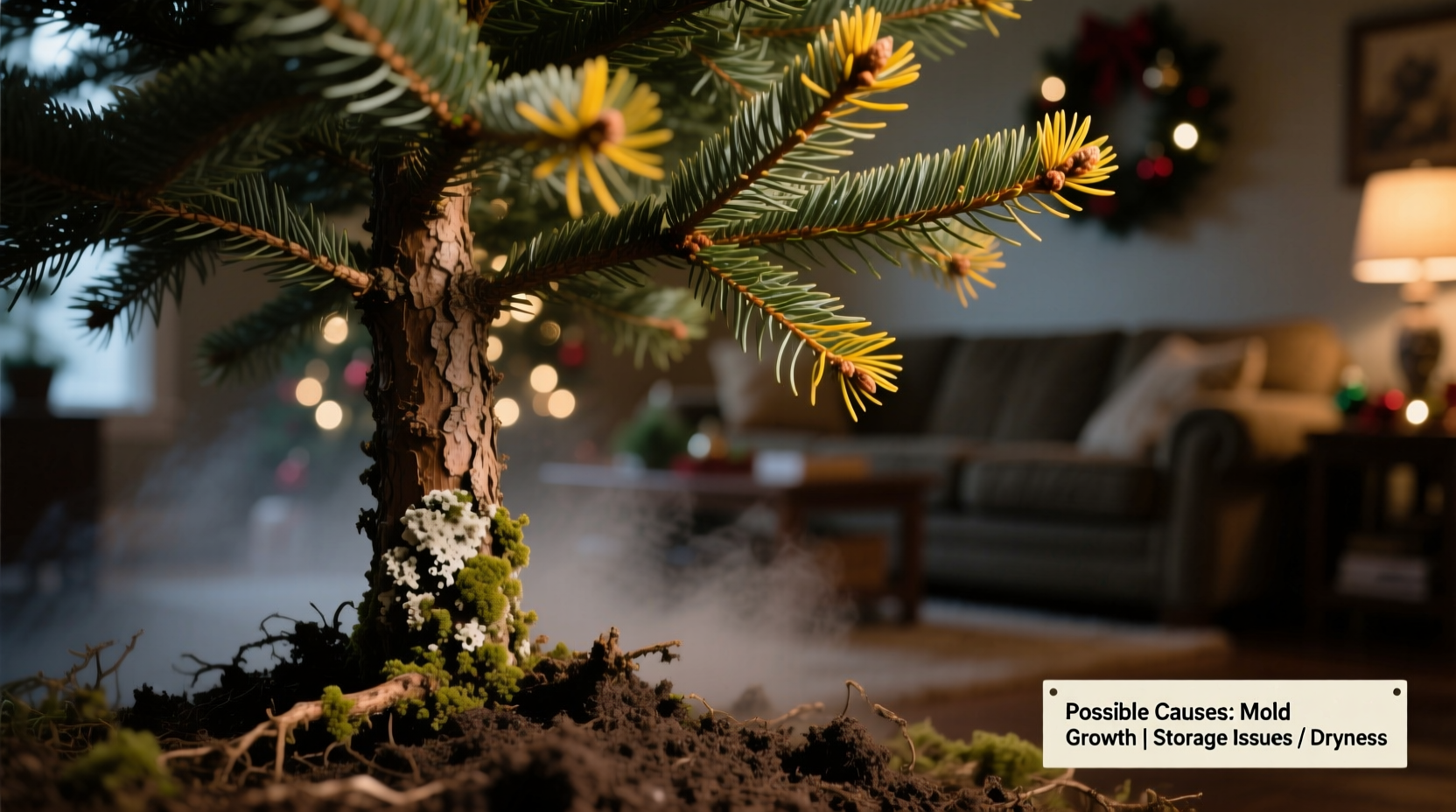
Mold isn’t just a concern for forgotten bread or bathroom grout. A Christmas tree’s cut stump, especially when left sitting in warm, stagnant water, becomes an ideal breeding ground for Aspergillus, Penicillium, and Cladosporium species. These fungi thrive in the humid microclimate between the trunk and water reservoir, feeding on sugars and starches leaching from the wood. As they multiply, they release volatile organic compounds (VOCs) with distinct earthy, damp, or “wet dog” notes.
What makes this particularly insidious is that visible mold may be minimal—just a faint gray film or slimy residue at the waterline—while airborne spores and VOCs permeate the room. A 2022 study published in Indoor Air found that homes with mold-positive trees showed up to 3.7× higher airborne fungal concentrations during the first 10 days post-display.
2. Bacterial Bloom in the Water Reservoir
It’s not just fungi. Tap water contains nutrients like calcium, magnesium, and trace organics that feed bacteria—including Pseudomonas and Enterobacter strains. Within 48–72 hours of standing still, bacterial colonies form biofilms on the inside of the stand and the submerged bark. These microbes metabolize sugars exuded by the tree, producing sulfur-containing compounds (e.g., hydrogen sulfide and methanethiol) that smell like rotten eggs or boiled cabbage.
Bacterial blooms are often accompanied by cloudy, viscous, or slightly greenish water—and sometimes a faint slime ring just above the waterline. Unlike mold, which prefers cooler, shaded spots, these bacteria flourish in warm rooms (68–75°F), especially when the stand hasn’t been cleaned since last year.
“Bacteria in tree stands aren’t merely unpleasant—they’re measurable allergen amplifiers. We’ve documented cases where patients with mold-sensitive asthma reported symptom spikes within hours of bringing home a tree with visibly contaminated water.” — Dr. Lena Torres, Environmental Health Specialist, National Center for Healthy Housing
3. Needle Desiccation and Chemical Breakdown
When a tree dries out too quickly—often due to forced-air heating, low humidity (<30% RH), or insufficient water uptake—the terpenes (natural aromatic compounds like pinene and limonene) in its needles begin oxidizing. This isn’t decay per se, but a biochemical cascade: oxidation converts fresh, bright pine notes into stale, dusty, or even turpentine-like vapors. In advanced stages, needle browning and brittleness accompany a sharp, acrid tang—like burnt toast mixed with varnish.
Crucially, this odor isn’t always tied to visible dryness. A tree may appear lush but be internally dehydrated if its cut wasn’t fresh (more than 6–8 hours before placing in water) or if the base sealed over with sap before immersion.
4. Improper Storage of Artificial Trees
Yes—even fake trees develop odd smells. Most artificial trees are made from PVC or PE plastics, often blended with flame retardants and plasticizers like phthalates. When stored in damp basements, attics with temperature swings, or plastic bins without ventilation, these materials undergo slow hydrolysis and off-gassing. The result? A persistent “chemical basement” odor—musty, plasticky, and vaguely sweet—that intensifies when the tree warms under lights.
Mold can also colonize fabric-based components: flocking, felt ornaments, or fabric storage bags. And if the tree was packed while still damp from outdoor use (e.g., after a snowy display), trapped moisture accelerates both material degradation and microbial growth.
| Storage Condition | Odor Profile | Underlying Cause |
|---|---|---|
| Damp cardboard box in basement | Musty, wet newspaper + mildew | Stachybotrys on cardboard + plasticizer migration |
| Plastic tub with lid, no desiccant | Sharp, solvent-like, “new shower curtain” | Trapped VOCs from PVC off-gassing |
| Garage with summer heat spikes | Sweet, caramelized plastic + burnt sugar | Thermal degradation of flame retardants |
| Attic with roof leaks | Rotten wood + damp wool + vinegar | Fungal growth on internal wiring insulation & flocking |
5. Contaminated or Stale Tree Stand Water Additives
Many people add aspirin, sugar, soda, or commercial “tree preservatives” to their water—intending to extend freshness. But unless used correctly, these additives backfire. Sugar feeds bacteria; aspirin lowers pH, promoting fungal dominance; and sugary sodas attract fruit flies *and* accelerate slime formation. Even “natural” additives like cinnamon sticks or citrus peels decompose rapidly in warm water, introducing organic matter that decays into sour, fermented aromas.
A 2021 University of Vermont Extension trial found that stands using sugar-water solutions developed detectable bacterial VOCs 2.3× faster than plain tap water controls—and produced significantly stronger off-odors by Day 4.
6. Hidden Pest Activity or Animal Intrusion
Rare—but not unheard of—is the presence of insects or small animals that took shelter in the tree before harvest or during transport. Bark beetles, spider mites, or even overwintering ladybugs rarely cause harm, but their defensive secretions (e.g., alkaloids from stink bugs or hemolymph breakdown products) emit pungent, bitter, or medicinal scents. More concerning is evidence of rodent nesting: chewed bark, droppings, or nests woven from insulation fibers produce ammonia-like or urine-heavy odors that persist long after the tree is removed.
Inspect the trunk underside, branch junctions, and inner foliage with a flashlight. Look for tiny exit holes, webbing, or irregular brown patches that aren’t mold (which spreads evenly) but localized staining.
7. Cross-Contamination from Previous Storage or Display Areas
Your tree may be perfectly healthy—but placed where residual odors linger. This is especially common in garages, sheds, or closets used to store lawn furniture, paint cans, gasoline containers, or old carpet remnants. Volatile compounds from these sources absorb into porous tree bark and needles, then slowly re-emit when warmed by indoor air or lights. Similarly, displaying a tree near a kitchen garbage can, pet litter box, or HVAC return vent can pull ambient odors directly into its canopy.
In one documented case in Portland, Oregon, a family traced a persistent “fish market” smell to their tree—only to discover it had been stored for three weeks in a garage adjacent to a commercial fishing supply locker where bait buckets were routinely rinsed.
Mini Case Study: The “Sour Pine” Incident in Ann Arbor
In December 2023, a homeowner in Ann Arbor purchased a Fraser fir from a reputable local lot. Within 48 hours, the tree emitted a sharp, vinegary odor—not rot, not mold, but unmistakably acidic. She checked water levels (full), trimmed the base (fresh cut), and moved it away from heat vents. No change.
An arborist inspection revealed no visible decay or pests. But when the water was drained and the stand scrubbed with vinegar (to neutralize alkaline biofilm), the odor vanished temporarily—only to return by evening. Further testing showed elevated acetic acid levels in the water. The culprit? A faulty municipal water softener upstream had introduced excess sodium acetate into the supply. When combined with warm standing water and tree exudates, it catalyzed microbial acetogenesis—a rare but documented pathway where bacteria convert ethanol (from early fermentation of sap sugars) into acetic acid.
The fix: switching to distilled water eliminated the odor within 12 hours. This case underscores why “weird smells” demand holistic investigation—not just tree-focused assumptions.
Actionable Prevention & Remediation Checklist
- ✅ Before purchase: Scratch bark near the cut—bright green cambium means freshness; dull brown or gray signals age.
- ✅ At home: Make a fresh ½-inch straight cut *immediately* before placing in water—never reuse an old cut.
- ✅ Water management: Use only plain, cool tap water. Discard and replace water every 2–3 days. Scrub stand with white vinegar weekly.
- ✅ Environment: Maintain room humidity between 40–50% RH using a hygrometer and humidifier. Keep tree at least 3 feet from heat sources.
- ✅ For artificial trees: Air out fully outdoors for 24 hours before setup. Store upright in ventilated fabric bins—not sealed plastic—with silica gel packs.
- ✅ If odor appears: Isolate the tree, drain and sterilize the stand (1:10 bleach-water), wipe trunk with diluted vinegar, and increase airflow with a small fan directed *away* from needles.
Step-by-Step: How to Diagnose the Source of Your Tree’s Odor
- Day 0 (Setup): Smell the trunk cut surface—not just the needles. Earthy/musty = mold risk. Sour/vinegary = bacterial or water chemistry issue. Sharp/chemical = storage contamination or artificial tree off-gassing.
- Day 1–2: Check water clarity and smell *the water itself*. Rotten egg = bacterial sulfur compounds. Sweet-sour = fermentation. Musty = mold spores.
- Day 3–4: Gently peel back bark 1 inch above waterline. Look for discoloration (black streaks = fungal canker), slime, or insect tunnels.
- Day 5+: Press needles near the trunk—do they snap crisply or bend? Crisp = dehydration. Bendy + dark = advanced decay. Also sniff near electrical outlets or HVAC returns nearby.
- Final check: Turn off all lights and heaters for 1 hour. Re-smell. If odor fades, it’s heat-activated off-gassing. If unchanged, source is likely biological or residual.
FAQ
Can I spray my tree with vinegar or essential oils to mask the smell?
No. Vinegar may temporarily suppress some bacteria but won’t penetrate deep mold colonies—and its acidity can damage needle cuticles, accelerating drying. Essential oils coat stomata (pores), blocking transpiration and worsening dehydration. Masking ignores the root cause and risks respiratory irritation, especially for children or those with sensitivities.
Does a “smelly” tree mean it’s unsafe to keep indoors?
Potentially yes—especially with strong musty, ammonia, or rotten egg odors. Mold spores and bacterial endotoxins can trigger allergic reactions, asthma exacerbations, or sinus inflammation. If anyone in the household develops headaches, sneezing fits, or throat irritation within hours of the tree’s arrival, remove it immediately and ventilate the room.
How long should a fresh-cut tree last without developing odor issues?
A properly cared-for tree (fresh cut, consistent water, 40–50% humidity, no direct heat) typically remains odor-free and fire-safe for 3–4 weeks. Beyond that, needle loss and VOC shifts become inevitable—even without pathology. If odor appears before Day 7, intervention is needed.
Conclusion
A Christmas tree shouldn’t smell like a science experiment gone awry. That distinctive, clean pine aroma is nature’s signature—a blend of volatile terpenes evolved to deter herbivores and attract pollinators. When it mutates into something sour, stale, or suspiciously chemical, it’s not bad luck. It’s data: telling you about water quality, storage history, indoor climate, or unseen biology.
You don’t need to be a botanist or HVAC technician to respond. Start with one action today: drain your stand, scrub it with vinegar, refill with fresh cold water, and place a hygrometer nearby. Then observe—not just the tree, but the air around it. Small interventions, grounded in observation and evidence, restore both safety and sentiment.
This holiday season, reclaim the scent of intention—not accident. Let your tree breathe, stay hydrated, and carry only the fragrance it was meant to: crisp, clean, and quietly alive.




 浙公网安备
33010002000092号
浙公网安备
33010002000092号 浙B2-20120091-4
Comments
No comments yet. Why don't you start the discussion?