
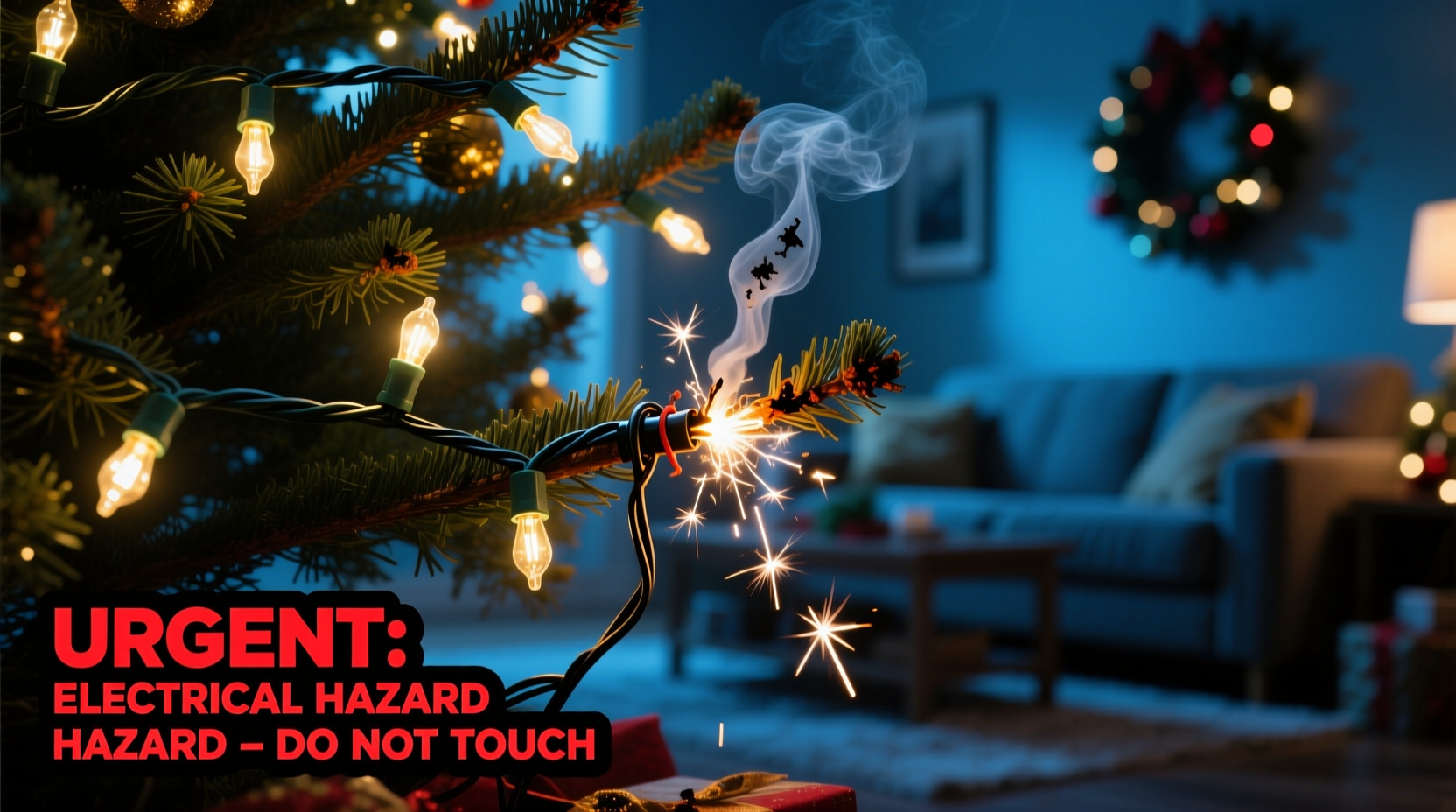
It starts with a flick of the switch—a moment meant for joy and festive glow—but instead of a gentle shimmer, you see sparks dancing between the branches. Your heart skips. The tree is sparking. What does it mean? Is it dangerous? Should you unplug everything immediately?
Sparks from a Christmas tree when turning on the lights are not normal and should never be ignored. While minor electrical arcing can occasionally happen in older light strings due to loose connections, visible or repeated sparking—especially accompanied by smoke, heat, or burning smells—is a serious red flag. These signs indicate potential fire hazards that could lead to property damage or even life-threatening situations.
Each year, U.S. fire departments respond to an estimated 200 home fires caused by decorative holiday lighting, according to the National Fire Protection Association (NFPA). Many of these incidents begin with faulty wiring, overloaded circuits, or deteriorated lights used on dry trees. A sparking Christmas tree may be the first visible clue that something has gone dangerously wrong behind the scenes.
This article breaks down why Christmas trees spark when lights are turned on, identifies urgent warning signs, and provides clear, actionable steps to protect your home and family during the holidays.
Understanding the Electrical System Behind Holiday Lights
Most indoor Christmas lights operate on low-voltage alternating current (AC), typically drawing between 40 and 100 watts depending on the string length and bulb type. Modern sets are designed with built-in fuses and insulated wires to prevent short circuits. However, wear and tear over time can compromise their safety.
When you plug in a light string, electricity flows through copper wires to each bulb. If there's a break in continuity—such as frayed insulation, corroded sockets, or bent prongs—the current may arc across the gap. This arcing produces visible sparks, often blue or white in color, and generates intense localized heat. In the presence of flammable materials like dried pine needles or paper decorations, this heat can ignite a fire within seconds.
Older incandescent bulbs generate more heat than LED alternatives, increasing risk if placed too close to foliage. Additionally, many people daisy-chain multiple light strings together, exceeding manufacturer limits and overloading circuits. This practice raises resistance in the system, which can cause overheating at connection points—another common source of sparking.
Urgent Warning Signs Your Tree Is a Fire Hazard
Not all sparks are equal. Some may result from harmless static discharge, especially in dry winter air. But certain behaviors demand immediate attention. Recognizing these warning signs early can prevent disaster.
- Visible sparks at plug, outlet, or along wire paths: Indicates exposed conductors or damaged insulation.
- Burning smell or discoloration near outlets or cords: Suggests overheating components.
- Frequent tripping of circuit breakers: Points to overload or short circuit.
- Warm or hot cords after being on for 15 minutes: Wires should remain cool to the touch.
- Flickering lights unrelated to power outages: Could signal loose connections or voltage fluctuations.
- Dry tree shedding needles rapidly: Increases flammability; a well-watered tree resists ignition far better.
“Any sparking from holiday lights should be treated as a potential fire starter until proven otherwise.” — David Hodges, Senior Electrical Safety Engineer, NFPA
A real-world example underscores the urgency: In December 2022, a family in Ohio noticed small sparks near the base of their tree when turning on the lights. They dismissed it as “just old wires,” but two hours later, smoldering insulation ignited nearby garland. By the time smoke alarms sounded, flames had spread to the ceiling. Fortunately, everyone escaped unharmed, but the living room was destroyed. Investigators traced the cause to a cracked socket on a 12-year-old light set—one that had been reused every season despite visible wear.
Immediate Steps to Take When Your Tree Sparks
If your Christmas tree sparks when you turn on the lights, act quickly and methodically. Do not assume it’s safe just because the lights stay on.
- Turn off and unplug immediately: Use the wall switch if available, then physically disconnect the power at the outlet. Avoid touching metal parts of the plug if you see smoke or melting.
- Inspect visually (only after unplugging): Look for blackened areas, melted plastic, exposed wires, or fraying. Pay special attention to connectors and where cords enter bulbs.
- Check the outlet and circuit breaker: Smell the outlet—if it smells burnt, stop using it and consult an electrician. Reset any tripped breakers only after removing suspect devices.
- Isolate the faulty component: If using multiple strands, test each one separately with a known-working outlet to identify which set is causing issues.
- Dispose of damaged lights properly: Wrap broken sections in tape and discard in outdoor trash. Do not attempt repairs unless qualified.
- Reassess tree placement: Ensure no lights are pinched under furniture or pressed against walls, which traps heat.
After eliminating the hazard, consider switching to LED lights. They consume up to 90% less energy, produce minimal heat, and are far less likely to cause thermal stress on wiring systems.
Prevention Checklist: Avoid Sparking Trees Next Year
Proactive maintenance is the best defense against electrical failures during the holidays. Use this checklist annually before decorating:
- ✅ Inspect all light strings for cracks, kinks, or corrosion before use
- ✅ Replace any set with missing bulbs, loose sockets, or exposed wires
- ✅ Test lights individually on a GFCI-protected outlet before installation
- ✅ Water natural trees daily—check reservoir every 24 hours
- ✅ Use UL-listed extension cords rated for indoor use only
- ✅ Limit daisy-chaining to manufacturer specifications
- ✅ Install surge protectors—not power strips—for high-load displays
- ✅ Turn off lights when leaving home or sleeping
- ✅ Keep decorations at least 3 feet away from heaters, vents, or candles
- ✅ Consider timers to automate shutdowns overnight
Do’s and Don’ts of Holiday Lighting Safety
| Do | Don't |
|---|---|
| Use lights certified by UL, ETL, or CSA | Use lights outdoors unless labeled for exterior use |
| Plug major displays directly into wall outlets | Overload outlets with multiple high-wattage strings |
| Check connections monthly during use | Leave lights on unattended or while sleeping |
| Use insulated clips instead of nails or staples | Run cords under rugs or across high-traffic areas |
| Replace fuses with correct amperage only | Attempt DIY repairs on molded connectors |
Frequently Asked Questions
Is a single spark when plugging in the lights normal?
A tiny blue flash upon initial connection can occur due to inrush current charging capacitors in LED drivers or filament heating in incandescents. This lasts less than a second and doesn’t repeat. If sparking persists, crackles, or happens elsewhere along the cord, treat it as hazardous.
Can artificial trees catch fire too?
Yes. While flame-resistant, most artificial trees are made from polyvinyl chloride (PVC) or other petroleum-based plastics that melt and burn when exposed to sufficient heat. A sparking wire pressed against synthetic branches can ignite them within minutes—especially near heat sources.
How long do Christmas lights last safely?
Incandescent strings typically last 3–5 seasons with careful handling. LEDs can last 10+ years. However, environmental exposure, storage conditions, and physical damage matter more than age alone. Always inspect before reuse.
Conclusion: Safety First, Always
Your Christmas tree should bring warmth and cheer—not fear. Seeing sparks when turning on holiday lights is not a minor quirk; it’s a warning sign that demands immediate action. Whether caused by worn-out wiring, overloaded circuits, or poor maintenance, the risks are real and cumulative.
Electrical fires don’t announce themselves with sirens. They start quietly, fueled by overlooked details: a frayed cord tucked behind the stand, a forgotten strand left on overnight, a tree gone dry from neglect. But they end loudly—with loss, trauma, and preventable tragedy.
This holiday season, commit to safety as part of your tradition. Inspect every wire, honor manufacturer guidelines, and never ignore the smallest spark. Upgrade to modern LED systems, install smart timers, and involve your household in nightly shutdown routines. Make fire prevention as much a part of your celebration as carols and cookies.




 浙公网安备
33010002000092号
浙公网安备
33010002000092号 浙B2-20120091-4
Comments
No comments yet. Why don't you start the discussion?