
A toppled Christmas tree is more than a holiday inconvenience—it’s a safety hazard, a mess-maker, and often a source of frustration during one of the most cherished times of the year. Whether you’ve invested in a real fir or a high-end artificial model, nothing ruins the festive mood faster than a leaning evergreen shedding needles across the living room floor. The good news: most tipping issues stem from predictable causes, and with the right techniques, they’re entirely preventable.
Understanding why your tree wobbles begins with examining its base, stand, placement, and environmental factors. From there, practical stabilization methods—ranging from simple DIY fixes to professional-grade solutions—can ensure your tree stays upright through caroling, gift exchanges, and even enthusiastic pet greetings.
Why Christmas Trees Tip Over: Common Causes
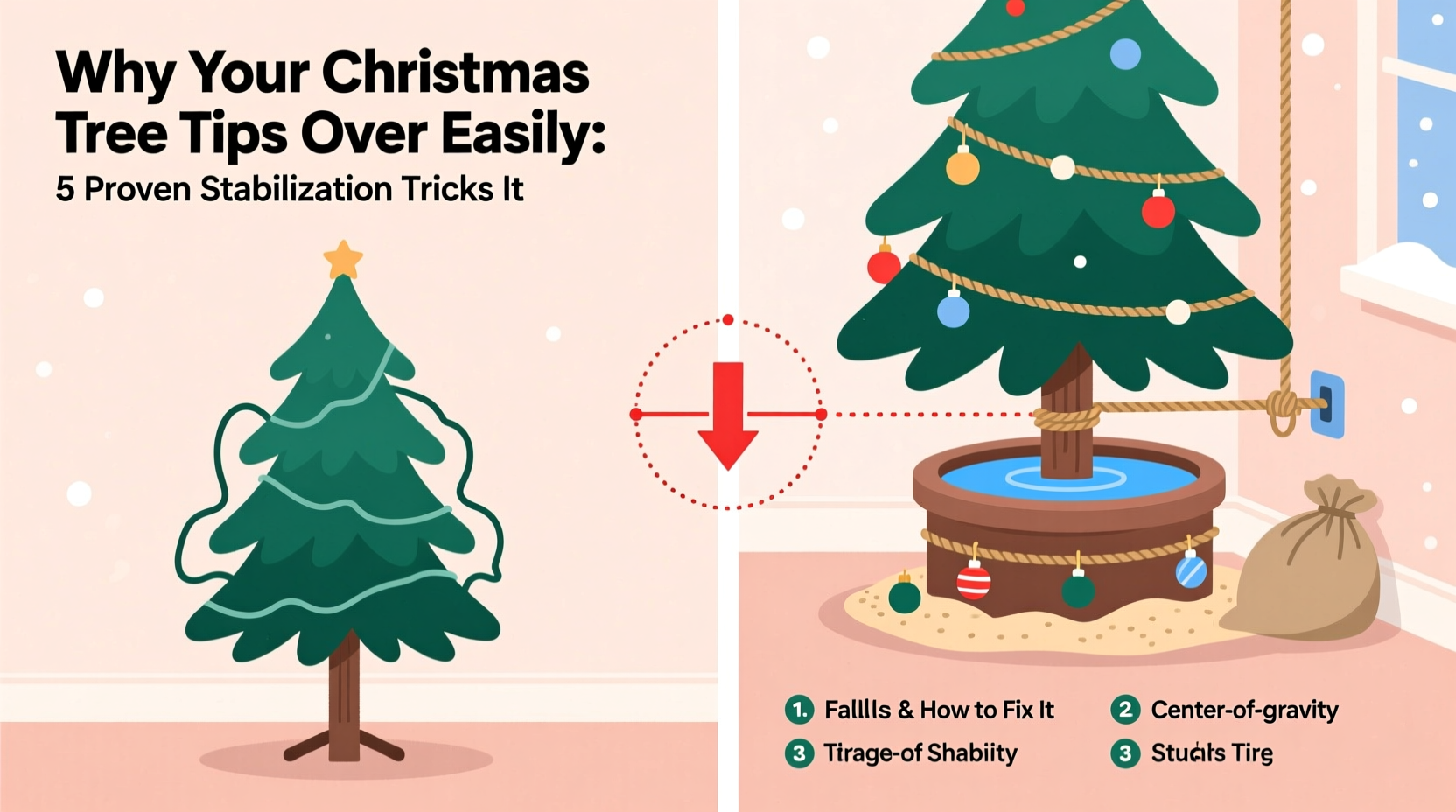
Before diving into solutions, it's essential to diagnose the root causes. A tree doesn’t fall without reason. Most instability issues arise from one or more of the following:
- Improperly sized stand: Too small or loose-fitting stands can't grip the trunk securely.
- Unbalanced tree shape: Lopsided branches create uneven weight distribution.
- Uneven flooring: Carpets, hardwood slopes, or tile transitions introduce subtle tilts.
- Poor trunk cut (for real trees): A jagged or angled cut reduces surface contact with the stand’s gripping mechanism.
- High-traffic areas: Foot traffic, pets, or children brushing against the tree add cumulative force.
- Overloading with ornaments: Heavy decorations on one side shift the center of gravity.
According to the National Fire Protection Association (NFPA), Christmas tree fires account for an average of 160 house fires annually in the U.S., many of which start when trees fall near heat sources or electrical cords. While not all tip-overs lead to fire, they do increase risk significantly.
“Tree stability isn’t just about appearance—it’s a critical component of holiday home safety.” — Dr. Linda Chen, Home Safety Researcher at Consumer Safety Institute
Selecting the Right Tree Stand: The Foundation of Stability
The stand is the single most important factor in preventing tree collapse. Yet, many households reuse old stands that no longer match their tree size or quality. Here’s how to choose—and use—the right one:
Key Features of a High-Stability Stand
- Water capacity: Minimum 1 gallon for trees over 7 feet tall.
- Adjustable screws: At least three metal bolts positioned 120 degrees apart for balanced pressure.
- Wide base diameter: Should extend beyond the tree’s widest branch footprint.
- Nonslip feet: Rubberized or textured bottom prevents sliding on smooth floors.
Do’s and Don’ts of Tree Stand Use
| Do | Don’t |
|---|---|
| Cut ½–1 inch off the bottom of a real tree before placing it in water | Use a stand designed for tabletop trees on full-sized models |
| Tighten screws gradually and evenly to avoid splitting the trunk | Force a thick trunk into a small clamp system |
| Check water levels daily; refill as needed | Allow the stand reservoir to run dry |
| Place a non-slip mat under the stand on slick surfaces | Set up the tree directly on polished marble or vinyl plank without grip aid |
For artificial trees, ensure the central pole is fully locked into the base and that all support legs are extended and secured. Many people skip tightening the final leg screws after assembly, leaving the structure inherently unstable.
Pro Stabilization Techniques for Wobbly Trees
Even with a proper stand, some trees still lean. That’s where advanced stabilization comes in. These methods go beyond basic setup and address real-world conditions like uneven rooms and active households.
Step-by-Step: Reinforce Your Tree in 5 Actions
- Assess Levelness: Place a small bubble level against the trunk. If it’s tilted, place thin shims (like folded cardboard or plastic wedges) under the low side of the stand.
- Rebalance Branches: Fluff boughs symmetrically. Move heavy garlands or large ornaments to stronger, central limbs.
- Anchor to Wall (Discreetly): Use clear fishing line or thin steel wire. Tie one end to an upper branch junction and the other to a wall hook placed out of sight. Keep tension moderate—just enough to prevent sway.
- Add Weight to Base: Fill empty spaces around the stand with wrapped gifts, decorative boxes, or sandbags hidden beneath a tree skirt.
- Test Stability: Gently push the midsection of the tree. If movement exceeds 2 inches, reinforce further.
Fishing line anchors are especially effective in homes with pets or toddlers. Choose 15–20 lb test line in clear monofilament—it’s strong enough to resist tugs but nearly invisible. Position two lines at opposing angles for maximum support.
Real Example: How One Family Prevented Repeated Tree Falls
The Reynolds family in Portland, Oregon, struggled for three consecutive years with their 8-foot noble fir toppling over—once onto a lit fireplace mantel. Their living room has slightly sloped hardwood floors, and their stand was undersized. After consulting a local tree safety expert, they implemented a four-part fix:
- Replaced their old stand with a commercial-grade model holding 1.3 gallons of water.
- Used wooden shims under the stand’s northwest leg to correct a 3-degree tilt.
- Rewired heavy vintage ornaments onto sturdier lower branches.
- Installed two clear anchor lines connected to picture hooks in adjacent walls.
Result: The tree remained perfectly upright throughout the season—even during a surprise visit from two exuberant golden retrievers. “We finally enjoy our tree instead of guarding it,” said Sarah Reynolds. “It feels like we got our holidays back.”
Advanced Solutions for Problem Areas
Not every home is built for perfect tree symmetry. Consider these specialized fixes if standard methods aren’t enough.
Floating Floors and Carpet Transitions
Modern homes often feature open layouts with mixed flooring—carpet meeting hardwood or tile. These transitions can destabilize a tree stand. Solution: Use a rigid plywood base (at least 24” x 24”) placed under the entire stand. This creates a flat, unified platform. Secure the stand to the plywood using L-brackets if necessary.
Artificial Trees with Weak Central Poles
Some budget-friendly artificial trees have flimsy connecting poles that flex under branch weight. Upgrade by inserting a ¾-inch wooden dowel or aluminum conduit inside the central shaft. Extend from the base to the top section and secure with epoxy at connection points.
High-Traffic Living Rooms
If your tree sits near a walkway or play area, install temporary barriers. A semicircle of velvet ropes on stakes, baby gates, or strategically placed furniture can deter accidental bumps while maintaining aesthetics.
“We stabilize trees for shopping malls and hotels using multi-point rigging systems. You don’t need that level of engineering, but the principle holds: distribute support forces wisely.” — Mark Tolbert, Commercial Display Technician
Stabilization Checklist: Ensure a Secure Setup
Follow this checklist before turning on the lights:
- ☐ Measure trunk diameter and confirm stand compatibility
- ☐ Make a fresh, straight cut on real tree trunks
- ☐ Fill stand with water immediately and check daily
- ☐ Tighten all stand screws evenly until snug (not overtightened)
- ☐ Test vertical alignment with a level tool
- ☐ Add shims if floor is uneven
- ☐ Distribute ornaments and lights evenly
- ☐ Install discreet anchor lines if needed
- ☐ Place non-slip mat under stand on smooth floors
- ☐ Keep tree away from vents, radiators, and foot traffic zones
Frequently Asked Questions
Can I use duct tape to stabilize my tree?
No. Duct tape may seem like a quick fix, but it damages bark and offers minimal structural support. It also creates a fire hazard when near electrical lights. Use mechanical supports like stands, anchors, or bases instead.
Is it safe to anchor a tree to the ceiling?
Only if done correctly. Ceiling anchors require secure joist attachment and proper tensioning. Incorrect installation can damage drywall or cause the tree to snap backward. Wall anchoring is safer and usually sufficient.
How tight should the stand screws be?
Screws should be firm enough to prevent trunk rotation but not so tight they crush softwood like pine or spruce. As a rule, once the screw makes solid contact with the trunk, give it one additional full turn. Check tightness every few days as wood fibers compress.
Conclusion: A Stable Tree Is a Safer, Happier Holiday
A Christmas tree that stands tall and steady enhances the joy of the season rather than interrupting it. By understanding the mechanics of imbalance and applying proven stabilization strategies, you protect your home, preserve your decor, and eliminate seasonal stress. Whether you're dealing with a lopsided Fraser fir or a creaky artificial model, the solution lies in thoughtful preparation and attention to detail.
Start today: inspect your current setup, upgrade where needed, and implement at least two stabilization methods from this guide. Your tree—and your peace of mind—will thank you.




 浙公网安备
33010002000092号
浙公网安备
33010002000092号 浙B2-20120091-4
Comments
No comments yet. Why don't you start the discussion?