
A freshly cut Christmas tree can drink an astonishing amount of water—sometimes more than a gallon in the first 24 hours. But when the reservoir seems to vanish overnight, even after daily refills, it’s natural to wonder: is this normal, or is there a leak? Rapid water loss isn’t always due to thirst. Hidden leaks in the tree stand, evaporation, or improper setup can all contribute. Understanding the real cause helps prevent fire hazards, floor damage, and a prematurely dried-out tree.
This guide breaks down the science behind water consumption, common misconceptions, and practical steps to diagnose and fix issues with your tree stand. Whether you’re using a basic bucket-style holder or a heavy-duty aluminum stand, knowing what to look for ensures your tree stays hydrated, safe, and beautiful through the holidays.
The Science Behind Tree Water Consumption
Freshly cut evergreens continue to transpire—losing moisture through their needles—even after being removed from the ground. To compensate, they draw water up through the trunk via capillary action. The rate depends on several factors:
- Tree freshness: A tree cut within 7 days retains better water uptake than one left too long.
- Cut surface quality: A clean, straight cut at the base maximizes water absorption. A ragged or sealed-over cut restricts flow.
- Temperature and humidity: Warm rooms, heating vents, and low humidity accelerate drying and increase demand.
- Needle type: Firs and spruces tend to drink more steadily than pines, which have thicker sap that can gum up the vascular system.
According to research from the National Christmas Tree Association, a healthy tree can consume up to one quart of water per inch of stem diameter daily. A 6-inch diameter tree could therefore use 1.5 gallons per day under ideal conditions. However, consistent drinking doesn’t mean constant depletion—if the water level plummets beyond expected rates, something else may be at play.
“Water loss beyond a quart per inch of trunk diameter per day should prompt inspection. It’s likely not the tree—it’s the system.” — Dr. Alan Reed, Horticultural Safety Consultant, University of Vermont Extension
Hidden Leaks: How They Happen and Why You Miss Them
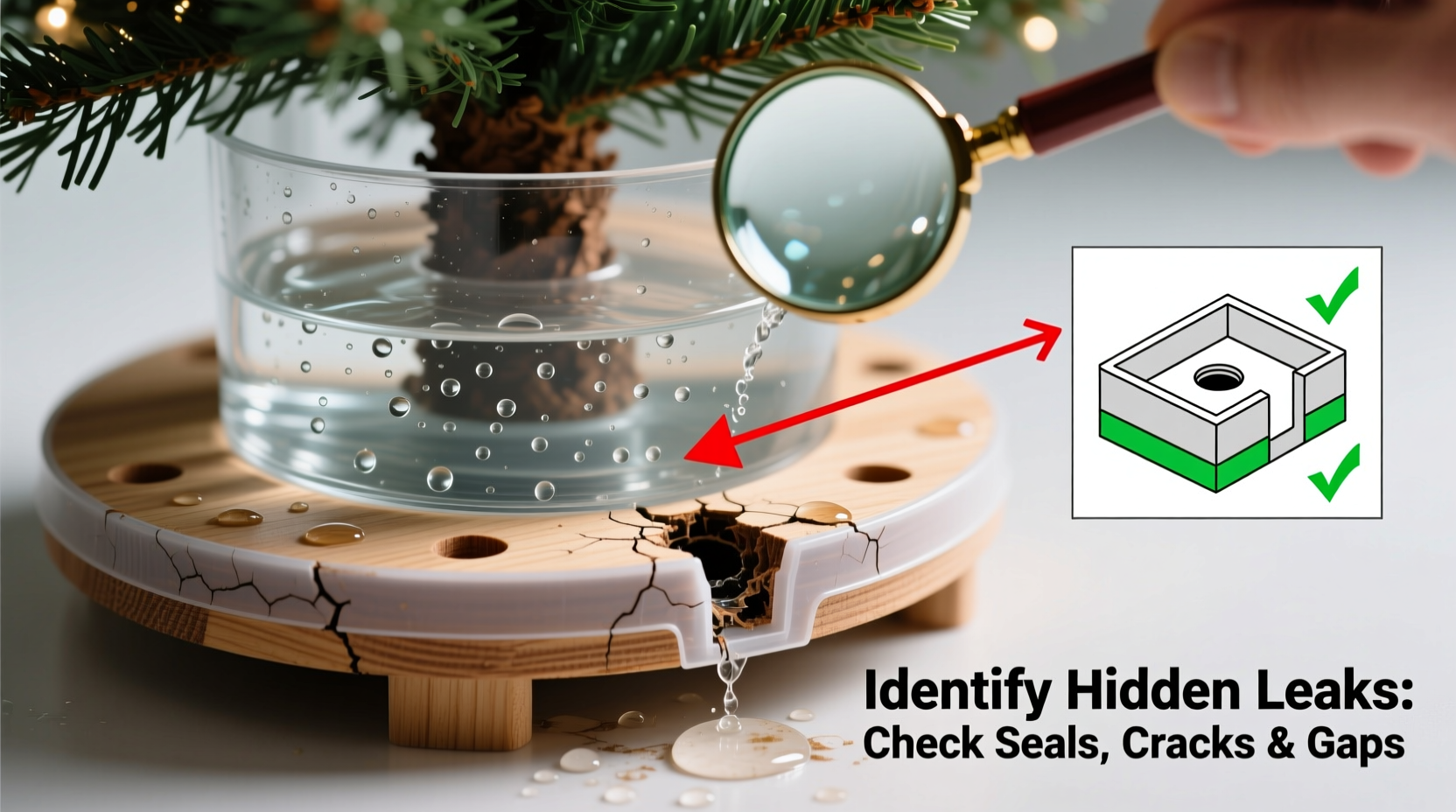
Many people assume rapid water loss means their tree is “thirsty,” but unseen leaks in the stand are a surprisingly common culprit. These occur in various ways:
- Cracked plastic reservoirs: Low-cost stands often develop microfractures over time, especially if stored improperly or exposed to temperature swings.
- Loose bolts or gaskets: Adjustable screw mechanisms can degrade, allowing slow seepage around the base or bolt joints.
- Warped metal bases: Older metal stands may warp slightly, creating gaps between the tray and upright supports.
- Improper sealant degradation: Some stands use rubber O-rings or silicone seals that dry out and crack after years of storage.
These leaks are often slow enough not to leave obvious puddles but fast enough to drain a full reservoir in hours. Because the water drips gradually into the tray beneath or onto carpet fibers, it evaporates quietly or gets absorbed before detection.
Step-by-Step: Diagnosing a Leak in Your Tree Stand
Follow this methodical process to determine whether your stand is leaking or your tree is simply drinking heavily.
- Empty and dry the stand completely. Remove the tree and drain all water. Wipe every surface, including bolts, seams, and the reservoir interior.
- Inspect for visible damage. Look for cracks, warping, cloudy discoloration (a sign of stress fractures), or degraded rubber seals.
- Conduct a dry test fill. Reassemble the stand without the tree. Fill it with water and place it in a dry area over a light-colored towel or cardboard. Wait 30–60 minutes.
- Check for seepage. Examine underneath and around connection points. Even a few drops indicate a problem.
- Mark and isolate the leak point. Use a marker to note where moisture appears. This helps determine if repair or replacement is needed.
- Re-test with pressure. If no leak appears, fill to capacity again and gently rock the stand side to side. Movement can expose weaknesses not visible at rest.
If a leak is confirmed, consider temporary fixes—but only as short-term solutions. For long-term safety, replace faulty stands.
Do’s and Don’ts of Tree Stand Maintenance
| Do’s | Don’ts |
|---|---|
| Inspect the stand annually for wear and cracks before use. | Reuse a stand with known hairline fractures, even if it “seemed okay last year.” |
| Tighten bolts gradually and evenly to avoid cracking plastic. | Over-tighten screws, which can distort the base and create new leaks. |
| Store the stand disassembled in a climate-controlled space. | Leave the stand assembled in a garage or attic where temperatures fluctuate. |
| Use food-grade sealant on reusable rubber gaskets if they feel brittle. | Apply household glue or non-flexible adhesives that harden and crack. |
| Place a waterproof tray under the entire setup for added protection. | Rely solely on rugs or mats that absorb water without signaling a leak. |
Real-World Example: The Case of the Vanishing Gallon
In December 2022, Sarah M., a homeowner in Columbus, Ohio, noticed her Fraser fir was dropping water levels faster than expected. She refilled the stand each morning with a full gallon, but by evening, it was bone dry. Assuming her 7-foot tree was exceptionally thirsty, she continued topping it off—until she discovered a damp patch under the rug near the base.
After removing the tree and conducting a dry test, she found a steady drip from the bolt hole on the right side of the stand. The plastic had cracked internally due to over-tightening the previous season. The leak wasn’t visible during normal use because water traveled along the bolt thread and dripped slowly into the padding below.
She replaced the stand and monitored water intake. The new usage settled at about half a gallon per day—well within normal range. Had she not investigated, the persistent moisture could have led to mold growth or wood subfloor damage.
When Is Fast Water Loss Normal?
Not all rapid water loss indicates a problem. Here are scenarios where high consumption is expected—and healthy:
- First 24–48 hours: Trees rehydrate aggressively after being cut. Losing a quart per inch of trunk diameter is typical.
- Warm indoor environments: Rooms above 72°F (22°C) increase transpiration. Each 10-degree rise can boost water needs by 20–30%.
- Proximity to heat sources: Vents, fireplaces, or electronics elevate ambient temperature, accelerating drying.
- Late-season trees: Trees displayed after mid-December may have been harvested earlier and need extra hydration to recover.
To distinguish normal thirst from abnormal loss, track daily intake. Mark the water level at the same time each day and note how much you add. If consumption drops after day three and stabilizes at 1–2 quarts per inch weekly, the tree is adjusting normally. If it continues to drain rapidly beyond day four, suspect a leak or environmental issue.
Preventive Checklist: Avoid Leaks Before They Start
Use this checklist each holiday season before installing your tree:
- ☐ Inspect the stand for cracks, warping, or degraded seals.
- ☐ Test-fill the stand in a sink or garage to check for leaks.
- ☐ Clean the reservoir with mild soap and water to remove residue.
- ☐ Replace worn rubber gaskets or O-rings with manufacturer-specified parts.
- ☐ Ensure all bolts turn smoothly and tighten evenly.
- ☐ Place a waterproof liner or tray under the stand.
- ☐ Make a fresh cut (¼ to ½ inch) on the tree trunk before loading it into the stand.
- ☐ Fill immediately with room-temperature water—never let the cut dry out.
One overlooked step: never transport a tree with water already in the stand. Shifting weight can stress weak points and worsen existing cracks. Always assemble and fill after final placement.
FAQ: Common Questions About Tree Water Loss
Can evaporation alone explain fast water loss?
Unlikely. While evaporation increases in warm, dry rooms, it rarely accounts for more than a few inches over several days. If the reservoir empties in less than 24 hours without visible tree uptake (e.g., no needle improvement), a leak is more probable.
Should I add anything to the water to reduce evaporation or improve uptake?
No commercial additives—including sugar, aspirin, or floral preservatives—have been proven to improve water retention in Christmas trees. Plain tap water works best. Additives can promote bacterial growth, clogging the trunk’s vascular system and reducing absorption.
How tight should the stand’s support bolts be?
Tighten until snug, then give each bolt a quarter-turn more. Over-tightening stresses plastic components and can lead to cracks. Check tension daily during the first week, as wood can shift slightly as it hydrates.
Final Thoughts: Safety, Longevity, and Peace of Mind
A Christmas tree losing water too quickly isn’t just a nuisance—it’s a potential hazard. Dry trees ignite faster and burn more intensely than most holiday decorations. According to the U.S. Fire Administration, nearly 200 home fires each year involve decorative lighting or trees, many due to inadequate watering.
By understanding the difference between healthy hydration and dangerous leaks, you protect your home, extend your tree’s life, and enjoy the holidays with greater peace of mind. Take ten minutes each season to inspect your stand. That small effort can prevent costly damage and ensure your tree remains lush, fragrant, and safe until New Year’s Day.




 浙公网安备
33010002000092号
浙公网安备
33010002000092号 浙B2-20120091-4
Comments
No comments yet. Why don't you start the discussion?