
Coffee should be rich, aromatic, and balanced—not harsh or acrid. Yet many home brewers struggle with a consistently bitter cup, often unaware that the issue lies not in the beans themselves, but in how they’re brewed. Bitterness in coffee is rarely inevitable; it’s usually a symptom of preventable mistakes. From incorrect grind size to over-extraction, small missteps can amplify undesirable compounds, turning what should be a pleasurable morning ritual into a daily grimace.
Understanding the science behind bitterness—and the role brewing plays in extracting flavor—can transform your coffee experience. This guide breaks down the most common causes of bitter coffee, explains the chemistry at play, and offers actionable fixes you can apply immediately. Whether you use a French press, drip machine, or pour-over, these insights will help you brew cleaner, sweeter, more nuanced cups every time.
The Science Behind Coffee Bitterness
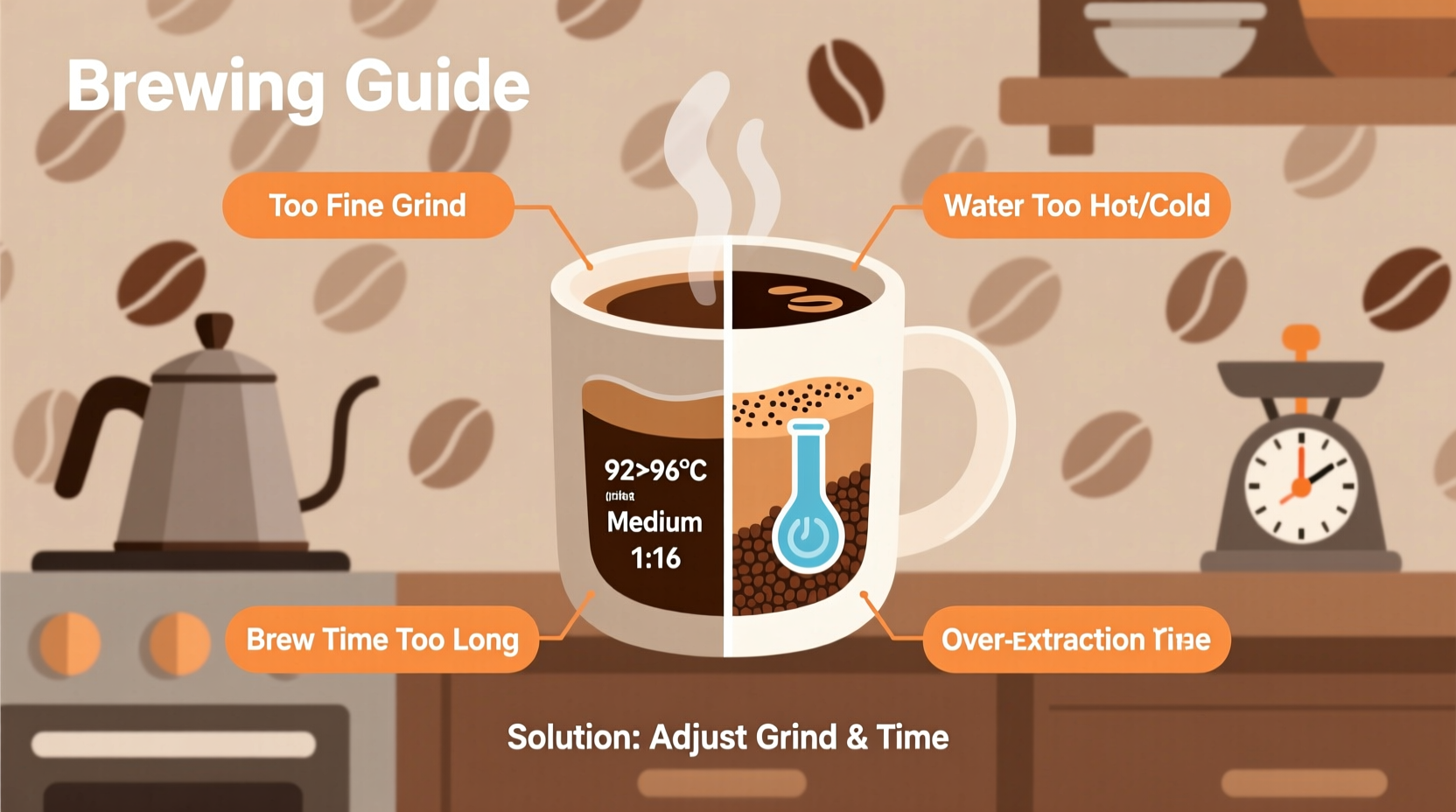
Bitterness is one of the five basic human tastes, alongside sweet, sour, salty, and umami. In coffee, bitterness primarily comes from two sources: chlorogenic acid lactones and phenylindanes—compounds formed during roasting. Lighter roasts retain more chlorogenic acids, which break down into mildly bitter lactones. Darker roasts produce more phenylindanes, which are intensely bitter and linger on the palate.
While some bitterness is natural and even desirable in moderation—adding depth and complexity—excessive bitterness usually signals over-extraction. Extraction refers to the process of dissolving soluble flavor compounds from ground coffee into water. The ideal extraction rate falls between 18% and 22%. Below that range, coffee tastes sour or underdeveloped; above it, bitterness dominates as undesirable compounds like tannins and harsh alkaloids dissolve into the brew.
As Dr. Christopher Hendon, computational chemist and author of *Water for Coffee*, explains:
“Extraction is a balancing act. Too little time or too coarse a grind leaves sugars and acids unextracted. Too much time or too fine a grind pulls out everything—including the bitter backbone of the bean.” — Dr. Christopher Hendon, Coffee Chemistry Researcher
Common Brewing Errors That Cause Bitterness
Brewing great coffee isn’t just about equipment—it’s about precision. Even minor deviations in variables like grind size, water temperature, or brew time can shift the balance toward bitterness. Here are the most frequent mistakes and how they affect your cup.
1. Over-Extraction Due to Incorrect Grind Size
Grind size is arguably the most critical variable in brewing. If your grounds are too fine, water moves too slowly through them, extracting excessive bitter compounds. This is especially common in espresso and pour-over methods, where contact time is already optimized for medium-fine to fine grinds.
For example, using an espresso grind setting for a French press dramatically increases surface area, leading to prolonged extraction and a muddy, bitter result. Conversely, a coarse grind may under-extract in a short-brew method like AeroPress, but in longer-steep systems like cold brew, it's appropriate.
2. Water Temperature Too High
Optimal brewing temperature ranges from 195°F to 205°F (90–96°C). Water that’s too hot—especially boiling at 212°F (100°C)—scalds the coffee, aggressively extracting bitter oils and degrading delicate aromatics. This is particularly problematic in automatic drip machines, many of which exceed recommended temperatures.
Boiling water also accelerates extraction kinetics, meaning more bitter compounds dissolve in less time. If your machine lacks temperature control, consider pouring hot water from a kettle held off the boil for 15–20 seconds before brewing.
3. Brew Time Exceeds Optimal Window
Each brewing method has a sweet spot for contact time. Exceeding it leads to over-extraction. For instance:
- Pour-over: Ideal brew time is 2:30–3:30 minutes. Beyond 4 minutes risks excessive bitterness.
- French press: 4 minutes is standard. Leaving coffee steeping for 8–10 minutes extracts deep bitterness and silt.
- Drip coffee: Should complete within 5–6 minutes. Slower machines may need maintenance or filter changes.
Timing matters because extraction isn’t linear—it accelerates over time. The last 30 seconds of a long brew can extract disproportionately more bitterness than the first minute.
4. Using Low-Quality or Over-Roasted Beans
Not all beans are created equal. Cheap, mass-market coffees often use low-grade Robusta beans, which contain nearly twice the caffeine and significantly more bitter compounds than Arabica. Additionally, overly dark roasts—common in “espresso blends” or supermarket brands—carbonize sugars and create charred, ashy flavors.
Freshness also plays a role. Beans more than 4–6 weeks post-roast lose volatile compounds and develop stale, woody bitterness. Always check roast dates and store beans in airtight containers away from light and moisture.
5. Dirty Equipment and Mineral Buildup
Limescale, old oil residue, and mold can all contribute to off-flavors, including sharp bitterness. Espresso machines, in particular, require regular descaling due to high heat and pressure. Even drip coffee makers accumulate mineral deposits that alter water flow and temperature consistency.
A French press left unwashed overnight develops rancid oils on the mesh filter, which transfer bitterness to the next brew. Clean all components thoroughly after each use.
Brewing Method Comparison: How to Avoid Bitterness
Different brewing methods demand different approaches to avoid over-extraction. The table below outlines optimal settings and common pitfalls by method.
| Brewing Method | Grind Size | Brew Time | Water Temp | Common Bitterness Triggers |
|---|---|---|---|---|
| Pour-Over (V60, Chemex) | Medium-fine (like table salt) | 2:30–3:30 min | 200–205°F | Too fine grind, uneven pouring, over-saturation |
| French Press | Coarse (like breadcrumbs) | 4 min + plunge | 195–200°F | Over-steeping, dirty filter, fine particles passing through |
| Espresso | Fine (powdery) | 25–30 sec | 195–205°F | Over-packing, channeling, worn grinder burrs |
| Drip Machine | Medium (like sand) | 5–6 min total | 195–205°F | Mineral buildup, clogged filter, poor water dispersion |
| AeroPress | Medium-fine to fine | 1–2 min + pressing | 175–205°F (adjustable) | Too long steep, excessive pressure, overheated water |
Step-by-Step Guide to Fixing Bitter Coffee
Follow this systematic approach to diagnose and correct bitterness in your brew. Apply one change at a time to isolate what works.
- Check your beans: Are they fresh (roasted within 3 weeks)? Are they high-quality Arabica? Switch to a lighter roast if currently using dark.
- Adjust grind size: Coarsen the grind incrementally. For pour-over or drip, aim for a texture between sand and sea salt.
- Control water temperature: Let boiled water sit 15–30 seconds before brewing. Use a thermometer if unsure.
- Shorten brew time: Reduce contact time by 15–30 seconds. For French press, don’t exceed 4 minutes.
- Clean your gear: Descale machines monthly. Wash filters and carafes with warm, soapy water after each use.
- Use clean, balanced water: Avoid distilled or heavily softened water. Ideal TDS (total dissolved solids) is 75–250 ppm.
- Taste and repeat: Brew a test cup. If still bitter, coarsen grind further. If sour, go slightly finer.
Real Example: Fixing a Bitter Morning Routine
Sarah, a remote worker in Portland, had been making her daily pour-over with a blade grinder and pre-ground beans from a big-box store. She consistently found her coffee harsh and astringent, often adding extra milk to mask the taste. After reading about extraction principles, she made three changes:
- Switched to freshly roasted whole beans from a local roaster (light-medium roast).
- Invested in a $70 burr grinder for consistent particle size.
- Adjusted her grind to medium-fine and reduced brew time from 4:15 to 3:00 minutes.
The difference was immediate. Her coffee became brighter, sweeter, and more floral. “I didn’t realize I’d been drinking over-extracted sludge,” she said. “Now I taste notes of citrus and honey I never noticed before.”
Quick Checklist to Prevent Bitter Coffee
- ✅ Use fresh, high-quality beans (Arabica, light to medium roast)
- ✅ Grind just before brewing with a burr grinder
- ✅ Match grind size to your brewing method
- ✅ Use water between 195°F and 205°F
- ✅ Stick to recommended brew times
- ✅ Clean equipment weekly (or after every few uses)
- ✅ Use filtered tap water with balanced mineral content
Frequently Asked Questions
Why does my espresso taste burnt?
Espresso bitterness often comes from over-roasted beans, excessively fine grind, or brew times exceeding 30 seconds. It can also result from channeling—when water finds paths through unevenly packed grounds, over-extracting some areas while under-extracting others. Try coarsening the grind, checking tamping pressure, and ensuring even distribution.
Can water quality affect bitterness?
Absolutely. Hard water (high in calcium and magnesium) can over-extract, amplifying bitterness. Soft or distilled water lacks minerals needed to carry flavor, resulting in flat, lifeless coffee that may seem harsh by contrast. Use filtered tap water with moderate mineral content for best results.
Is bitter coffee bad for me?
Bitterness itself isn’t harmful—many beneficial compounds in coffee are bitter. However, consistently drinking over-extracted or burnt-tasting coffee may mean you’re consuming higher levels of acrid, potentially irritating compounds. If bitterness causes stomach discomfort, adjusting your brew method may improve both taste and digestion.
Conclusion: Brew Better, Taste Brighter
Bitter coffee isn’t a given—it’s a fixable flaw. By understanding the interplay between grind, time, temperature, and freshness, you gain control over every sip. Small adjustments yield dramatic improvements, often transforming a cup you tolerate into one you savor.
Start today: clean your gear, check your grind, and brew with intention. Taste objectively. Adjust methodically. You don’t need expensive gear to make excellent coffee—just attention to detail and a willingness to experiment. Once you master the balance, bitterness becomes a rare visitor, not a daily companion.




 浙公网安备
33010002000092号
浙公网安备
33010002000092号 浙B2-20120091-4
Comments
No comments yet. Why don't you start the discussion?