
There’s nothing more frustrating than applying concealer with precision—only to see it settle into fine lines or crinkle within minutes. Creasing doesn’t just undermine your makeup look; it can make you appear tired or aged, no matter how fresh you feel. The good news: this common issue is almost always fixable. Understanding the root causes of concealer creasing—and knowing how to counteract them—is the key to achieving a flawless, smooth finish that lasts all day.
Creasing occurs when product sinks into fine lines, folds, or textured areas of the skin, typically under the eyes, around the nose, or at the corners of the mouth. While many assume the problem lies solely in the concealer formula, the truth is far more nuanced. It involves a combination of skin prep, application technique, product compatibility, and even environmental factors.
The Science Behind Concealer Creasing
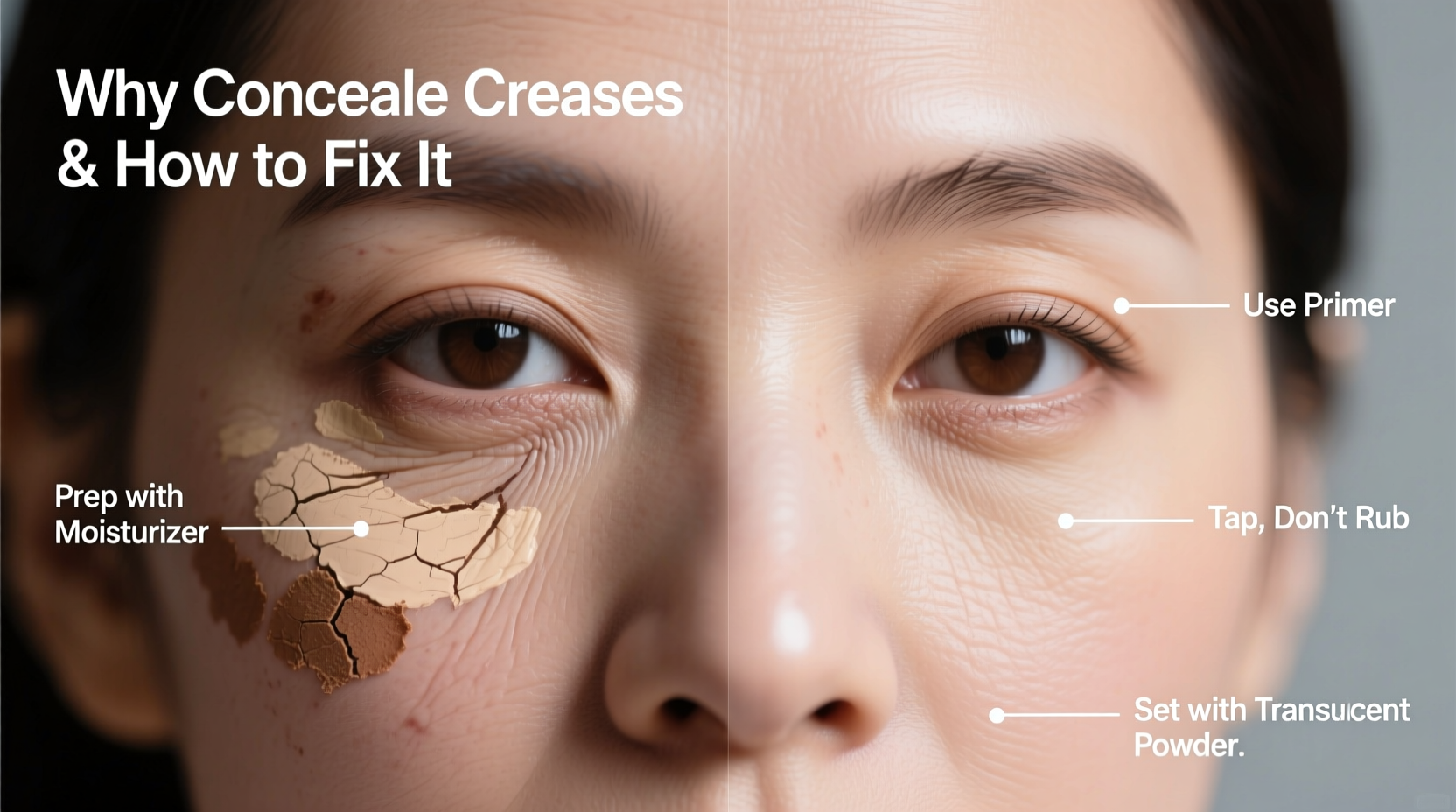
Concealer creasing is primarily a result of movement and moisture interaction. The delicate under-eye area is one of the thinnest on the face, making it prone to folding with facial expressions. When you smile, squint, or blink, the skin shifts. If your concealer isn’t properly adhered or if there's excess product sitting on top of the skin, it will naturally collect in these micro-folds.
Another major contributor is skin texture. As we age, collagen production slows, leading to increased fine lines and loss of elasticity. Even younger individuals with dry or dehydrated skin may experience early creasing due to flakiness and uneven surface texture. Additionally, oily skin can cause concealer to slide and break down over time, especially if the formula isn’t designed to resist sebum.
A 2023 study published in the *Journal of Cosmetic Dermatology* found that over 68% of participants experienced noticeable concealer migration within two hours—largely due to improper layering and mismatched product types. This highlights that while concealer quality matters, the real solution lies in preparation and method.
“Creasing isn’t a flaw in your makeup—it’s a signal from your skin. Listen to it by adjusting prep, not just swapping products.” — Dr. Lena Patel, Board-Certified Dermatologist and Cosmetic Formulation Advisor
Common Causes of Instant Concealer Creasing
- Dry or dehydrated skin: Lack of moisture creates a rough canvas, causing product to cling to flakes and settle into cracks.
- Over-application: Too much product increases the likelihood of pooling in natural facial folds.
- Incorrect formula choice: Thick, full-coverage concealers often crease faster on mature or dry skin.
- Poor blending technique: Harsh edges or dragging motions can disturb the skin barrier and encourage settling.
- Mismatched base layers: Using moisturizer, primer, or foundation that doesn’t align with your concealer type (e.g., silicone-based over water-based) leads to pilling and separation.
- Skipping setting powder: Without proper locking, even the best concealers shift throughout the day.
- Facial movement: Natural expressions like smiling or talking create dynamic folds where product accumulates.
Step-by-Step Guide to a Crease-Free Finish
Achieving a smooth, lasting result requires a deliberate sequence of steps—not just slapping on concealer and hoping for the best. Follow this tested routine for optimal results:
- Hydrate your skin: Begin with a gentle cleanser followed by a hydrating toner and a lightweight eye cream. Look for ingredients like hyaluronic acid, glycerin, or squalane to plump the skin and reduce the appearance of fine lines.
- Wait before proceeding: Allow your skincare to absorb fully—minimum 5 minutes. Rushing this step traps moisture under makeup, which can lead to sliding and creasing.
- Prime strategically: Use an illuminating or smoothing eye primer only where needed. Avoid heavy silicone-based primers if you have dry skin, as they can pill later. Apply a pea-sized amount and blend gently with your ring finger.
- Apply foundation first: This creates a uniform base and reduces the need for excessive concealer. Spot-correct discoloration rather than layering thickly over foundation.
- Choose the right concealer: Match the formula to your skin type:
- Oily skin: Matte, long-wear liquid concealers
- Dry skin: Hydrating, radiant formulas with serum-like textures
- Mature skin: Medium-coverage, luminous concealers that don’t settle into lines
- Use minimal product: Start with a tiny amount—less than a grain of rice per eye. Build coverage only where necessary using light tapping motions.
- Blend with care: Use a damp beauty sponge or clean fingertip to press (not drag) the product into place. Focus on the inner corners and under the orbital bone, avoiding the mobile eyelid area unless covering blemishes.
- Set immediately: After blending, lightly dust a translucent setting powder under the eyes using a small fluffy brush. Press, don’t swipe, to lock the product without disturbing placement.
- Lock it in (optional): For extra longevity, spritz a hydrating setting spray and let it dry naturally. This fuses layers together without disturbing the finish.
Do’s and Don’ts: Concealer Application Cheat Sheet
| Do’s | Don’ts |
|---|---|
| Do use a color-correcting shade (peach or orange) for dark circles before applying concealer | Don’t apply concealer directly after heavy moisturizer without waiting |
| Do tap product into skin instead of rubbing or dragging | Don’t use thick, full-coverage concealer all over the under-eye area |
| Do set with a finely milled, translucent powder | Don’t pile on layers to increase brightness—it increases creasing risk |
| Do choose a concealer no more than one shade lighter than your skin tone | Don’t apply concealer beyond the natural shadow zone under your eyes |
| Do rehydrate midday with a facial mist instead of adding more product | Don’t skip sunscreen—even under makeup—to avoid pigmentation that worsens darkness |
Real Example: Transforming a Daily Routine
Sophie, a 34-year-old teacher from Portland, struggled with her concealer creasing within 30 minutes of leaving home. She used a high-coverage matte concealer because she believed it would last longer. However, her under-eye area was dry, and she applied eye cream right before makeup without letting it sink in.
After consulting a makeup artist, Sophie revised her routine: she switched to a hydrating concealer, waited 7 minutes after skincare, used a luminous eye primer sparingly, and applied concealer only where shadows appeared—not across the entire under-eye. She set it with a light press of loose powder using a folded tissue.
The result? Her concealer stayed smooth for over eight hours, even during school hours filled with laughter, teaching, and outdoor recess duty. “I finally realized I wasn’t doing too little—I was doing too much,” she said. “Less product, better prep, and patience made all the difference.”
Expert Tips for Long-Lasting Results
Professional makeup artists and dermatologists agree: longevity starts before the first drop of concealer touches your skin. Here are their top recommendations:
- Exfoliate gently 2–3 times a week: Use a mild chemical exfoliant (like lactic acid) to remove dead skin cells without irritation.
- Use a cooling metal tool: A jade roller or chilled spoon pressed under the eyes before makeup helps tighten the skin and reduce puffiness that distorts concealer placement.
- Match your concealer’s finish to your foundation: Pair matte foundations with satin-finish concealers, and radiant bases with dewy concealers.
- Try the “baking” method selectively: Only bake (apply extra powder and let sit) if you have oily skin and need intense staying power. Over-baking dries out the under-eye area and accelerates creasing.
- Carry a hydrating mist: Rejuvenate your makeup midday with a spritz of thermal water or rosewater mist to reactivate the product and refresh the look.
Frequently Asked Questions
Why does my concealer crease even when I use primer?
Primer alone isn’t a magic fix. If your primer and concealer aren’t compatible—for example, a silicone-heavy primer under a water-based concealer—they may repel each other, causing pilling. Also, over-applying primer creates a slippery base that prevents adhesion. Use a thin layer of a primer specifically designed for the under-eye area.
Can I wear concealer every day without damaging my skin?
Yes, but only if you follow a proper skincare routine. Always remove makeup thoroughly with a gentle cleanser or micellar water. Incorporate weekly exfoliation and daily hydration to prevent clogged pores and texture buildup. Avoid heavy formulas if you’re prone to milia or congestion around the eyes.
Is there a way to fix creased concealer without starting over?
Absolutely. Dab a clean fingertip or small brush with a tiny bit of facial oil or moisturizer and gently press it into the creased area. This lifts the sunken pigment. Then, lightly re-blend with a sponge. Finish with a quick dusting of powder to reset the hold.
Final Checklist: Your Anti-Crease Routine
- Hydrate skin with eye cream 5–10 minutes before makeup
- Apply a targeted eye primer (if needed)
- Apply foundation first to minimize concealer use
- Select a concealer suited to your skin type and concern
- Use minimal product and build only where necessary
- Tap—don’t drag—product into place
- Set with a light press of translucent powder
- Finish with a setting spray for added durability
- Refresh midday with a hydrating mist, not additional layers
Conclusion: Smooth Starts with Smart Habits
Concealer creasing isn’t a makeup failure—it’s a mismatch between product, prep, and technique. By understanding your skin’s needs and refining your approach, you can transform a fleeting touch-up into a lasting, polished finish. The goal isn’t perfection through thickness, but enhancement through precision.
Start tonight: clean your brushes, assess your current concealer, and adjust your morning routine tomorrow. Small changes compound into dramatic results. Whether you're prepping for a presentation, a photo shoot, or just another busy day, you deserve makeup that stays as vibrant as your energy.




 浙公网安备
33010002000092号
浙公网安备
33010002000092号 浙B2-20120091-4
Comments
No comments yet. Why don't you start the discussion?