
If your dehumidifier is filling up every night, especially in a large room or open space, it can be both puzzling and inconvenient. You might find yourself emptying the tank each morning, wondering if something’s wrong with the unit or if the environment is unusually damp. The truth is, rapid water collection isn’t necessarily a malfunction—it often reflects high moisture levels combined with inadequate capacity or placement. Understanding why this happens and how to address it is essential for maintaining indoor air quality, preventing mold growth, and ensuring comfort in larger living spaces.
This guide breaks down the science behind fast tank filling, evaluates common contributing factors, and provides practical, scalable solutions tailored specifically for large rooms. Whether you're dealing with a basement, open-concept living area, or master bedroom, the strategies here will help you optimize performance and reduce maintenance frequency.
Why Dehumidifiers Fill Up Overnight: The Core Reasons
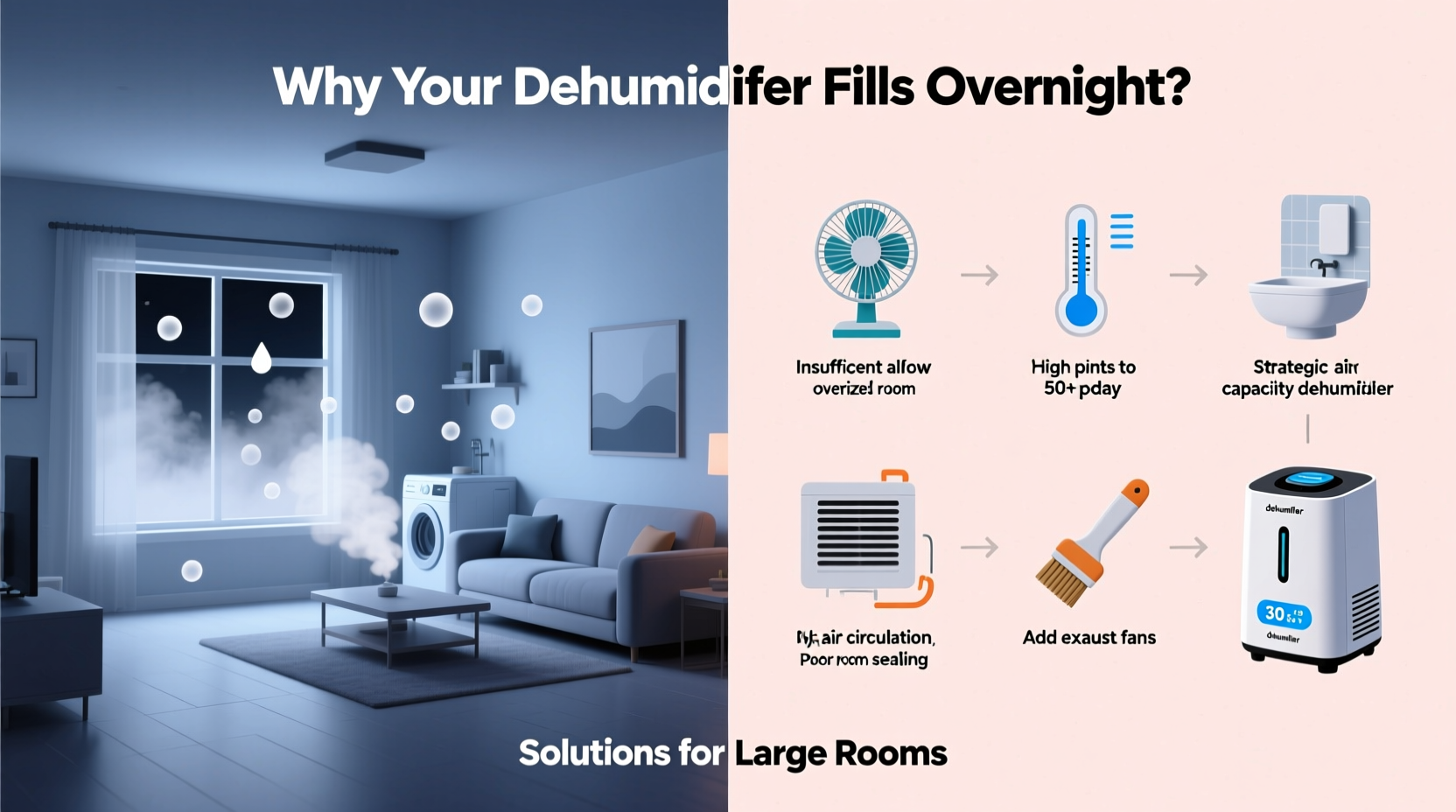
A dehumidifier pulling in significant moisture within hours indicates that the surrounding air contains more water vapor than normal. While some level of condensation is expected, consistently full tanks point to underlying environmental or operational issues. Here are the primary reasons:
- High ambient humidity: Relative humidity (RH) above 60% is considered excessive. In regions with high rainfall or poor ventilation, indoor RH can easily exceed 70–80%, especially near ground level or exterior walls.
- Large room size relative to unit capacity: A standard 30-pint dehumidifier may struggle in a 1,000 sq ft basement. Oversized spaces demand higher extraction rates to keep pace with moisture infiltration.
- Poor airflow or improper placement: Units tucked into corners, behind furniture, or near walls cannot draw in moist air effectively, forcing them to work harder while still collecting large volumes due to constant exposure.
- Continuous moisture sources: Leaky pipes, unsealed foundations, damp laundry drying indoors, or even cooking steam contribute steady humidity input that the dehumidifier must process around the clock.
- Running at maximum settings: Higher fan speeds and lower target humidity increase condensation efficiency—but also accelerate tank filling.
Solutions for Large Rooms: Matching Capacity to Space
One of the most frequent causes of overnight tank overflow is under-sizing the dehumidifier for the room. Large areas—especially basements, great rooms, or open-plan layouts—require units designed for heavy-duty operation. Simply placing a compact model in a vast space leads to overwork and inefficient cycling.
When selecting a dehumidifier for a large room, consider these key metrics:
| Room Size (sq ft) | Recommended Capacity | Typical Use Case |
|---|---|---|
| 300–500 | 20–30 pints/day | Bedrooms, small offices |
| 500–1,000 | 30–50 pints/day | Living rooms, dens |
| 1,000–1,500 | 50–70 pints/day | Basements, open-concept homes |
| 1,500+ | 70+ pints/day or dual units | Commercial spaces, large unfinished areas |
For example, a 70-pint dehumidifier can extract nearly two and a half times more moisture per day than a 30-pint model. This difference becomes critical when dealing with persistent dampness. Additionally, many high-capacity models come with continuous drainage options via hose attachment, eliminating the need for nightly emptying.
“Choosing a dehumidifier based solely on price or size without considering room volume leads to inefficiency and frustration. Match the unit’s output to the square footage and moisture load.” — Dr. Alan Reeves, Indoor Air Quality Specialist, ASHRAE Member
Optimizing Placement and Airflow
Even the most powerful dehumidifier will underperform if placed incorrectly. Proper positioning ensures maximum air intake and efficient moisture removal. Follow these guidelines for optimal results in large rooms:
- Center the unit when possible: Place the dehumidifier near the middle of the room to allow equal access to humid air from all directions.
- Elevate off the floor: Moisture tends to settle lower, but placing the unit on a stand or table improves airflow and reduces strain on internal components.
- Maintain clearance: Leave at least 12 inches of space around all sides, particularly the intake and exhaust vents, to prevent recirculation of dry air.
- Avoid enclosed spaces: Don’t tuck the unit into closets or behind curtains. These block airflow and trap humidity nearby.
- Target moisture sources: Position the dehumidifier closer to known problem areas like exterior walls, windows, or laundry zones—but not so close that it disrupts function.
In open-concept homes, central placement often works best. However, if one zone is consistently damper (e.g., near a bathroom door or kitchen), prioritize coverage there—even if it means slightly uneven distribution elsewhere.
Step-by-Step Guide: Reducing Tank Fill Frequency
Emptying a full tank every morning isn’t sustainable. Implement this step-by-step plan to minimize refill cycles and improve overall system efficiency:
- Assess room size and current unit specs: Confirm whether your dehumidifier matches the space. Refer to manufacturer charts or use online calculators to verify adequacy.
- Measure humidity levels: Use a calibrated hygrometer to monitor real-time RH. Take readings at different times of day to identify peak moisture periods.
- Inspect for hidden moisture sources: Look for condensation on windows, musty odors, or damp spots on walls. Address leaks, seal foundation cracks, and ensure gutters direct water away from the house.
- Install continuous drainage: Connect a drain hose to the unit’s outlet port and route it to a floor drain, sump pump, or utility sink. This allows 24/7 operation without manual intervention.
- Use a condensate pump (if needed): When gravity drainage isn’t possible (e.g., no nearby drain), install a small condensate pump to lift water vertically to an outlet.
- Adjust settings wisely: Set the desired humidity between 45–50%. Lower settings extract more water but increase energy use and tank fill speed. Use auto-shutoff features to avoid over-drying.
- Clean filters monthly: Dust and debris restrict airflow, making the unit work harder and collect less efficiently. Rinse reusable filters and let them dry completely before reinstalling.
Mini Case Study: Solving Basement Humidity in a 1,200 Sq Ft Home
Mark and Lisa moved into a 1970s ranch-style home with a finished basement used as a family room and guest bedroom. Within weeks, they noticed a musty smell and found their 30-pint dehumidifier filled by sunrise each night. Despite regular emptying, window condensation persisted.
After consulting a HVAC technician, they discovered several issues: outdated single-pane windows, lack of exterior grading, and no continuous drainage on the unit. They upgraded to a 70-pint Energy Star-rated dehumidifier with built-in pump and routed the hose to a nearby floor drain. They also sealed window gaps and installed a French drain outside the foundation wall.
Within three weeks, humidity dropped from 78% to 52%, the musty odor disappeared, and the tank no longer filled overnight. The new setup reduced maintenance from daily to weekly checks, proving that combining proper equipment with environmental fixes delivers lasting results.
Checklist: Prevent Overnight Tank Overflow
Use this actionable checklist to evaluate and improve your dehumidifier setup:
- ☐ Verify that the unit’s capacity matches the room size
- ☐ Install a drain hose for continuous operation
- ☐ Clean or replace the air filter every 30 days
- ☐ Position the unit centrally with adequate clearance
- ☐ Monitor humidity with a separate hygrometer
- ☐ Seal visible cracks or drafts in walls and windows
- ☐ Avoid drying wet clothes indoors without ventilation
- ☐ Consider using two smaller units instead of one oversized one for better air mixing
Frequently Asked Questions
Is it normal for a dehumidifier to fill up every night?
It depends on conditions. In very humid environments or large, poorly ventilated spaces, nightly filling can be normal—especially with undersized units. However, consistent overflow suggests either excessive moisture or inadequate capacity. Address root causes rather than accepting frequent emptying as inevitable.
Can I leave my dehumidifier running all night?
Yes, modern dehumidifiers are designed for safe, continuous operation. Models with auto-restart and auto-shutoff features protect against overheating and overfilling. For uninterrupted performance, connect to a drain line so the tank doesn’t limit runtime.
Should I get a bigger dehumidifier for a large room?
Generally, yes. A larger-capacity unit removes moisture faster and maintains target humidity more efficiently. A 50+ pint model is typically recommended for spaces over 1,000 sq ft, particularly if dampness is chronic. Oversizing slightly is better than undersizing, as long as humidity controls are adjustable.
Conclusion: Take Control of Humidity in Large Spaces
Waking up to a full dehumidifier tank shouldn’t be part of your nightly routine. By understanding the relationship between room size, moisture load, and equipment capability, you can transform a frustrating chore into seamless climate control. The solution lies not just in buying a bigger machine, but in integrating smart placement, continuous drainage, and proactive home maintenance.
Start by auditing your current setup: Is the unit properly sized? Is airflow unrestricted? Are unseen moisture sources feeding the cycle? With the right adjustments, you’ll reduce tank refills, enhance air quality, and create a healthier, more comfortable living environment—especially in expansive rooms where humidity tends to linger.




 浙公网安备
33010002000092号
浙公网安备
33010002000092号 浙B2-20120091-4
Comments
No comments yet. Why don't you start the discussion?