
Waking up to your dog barking at 3 a.m. can be more than just irritating—it disrupts sleep, strains relationships, and raises concerns about your pet’s well-being. While occasional barking is normal, a consistent pattern at the same time each night suggests an underlying issue. Dogs don’t bark without reason, especially not in the middle of the night. Understanding what triggers this behavior is the first step toward solving it.
Dogs are highly attuned to their environment. Their hearing is far more sensitive than humans’, and their instincts remain rooted in survival and protection. At 3 a.m., when the world is quiet, even subtle sounds—like distant traffic, rustling leaves, or creaking pipes—can trigger a reaction. But noise isn’t the only cause. Medical issues, anxiety, aging changes, or learned behaviors may also play a role.
The good news: most causes of 3 a.m. barking are manageable with the right approach. This guide explores the most common reasons dogs bark at this hour and provides practical, humane strategies to stop the cycle—for good.
Common Causes of 3 a.m. Barking
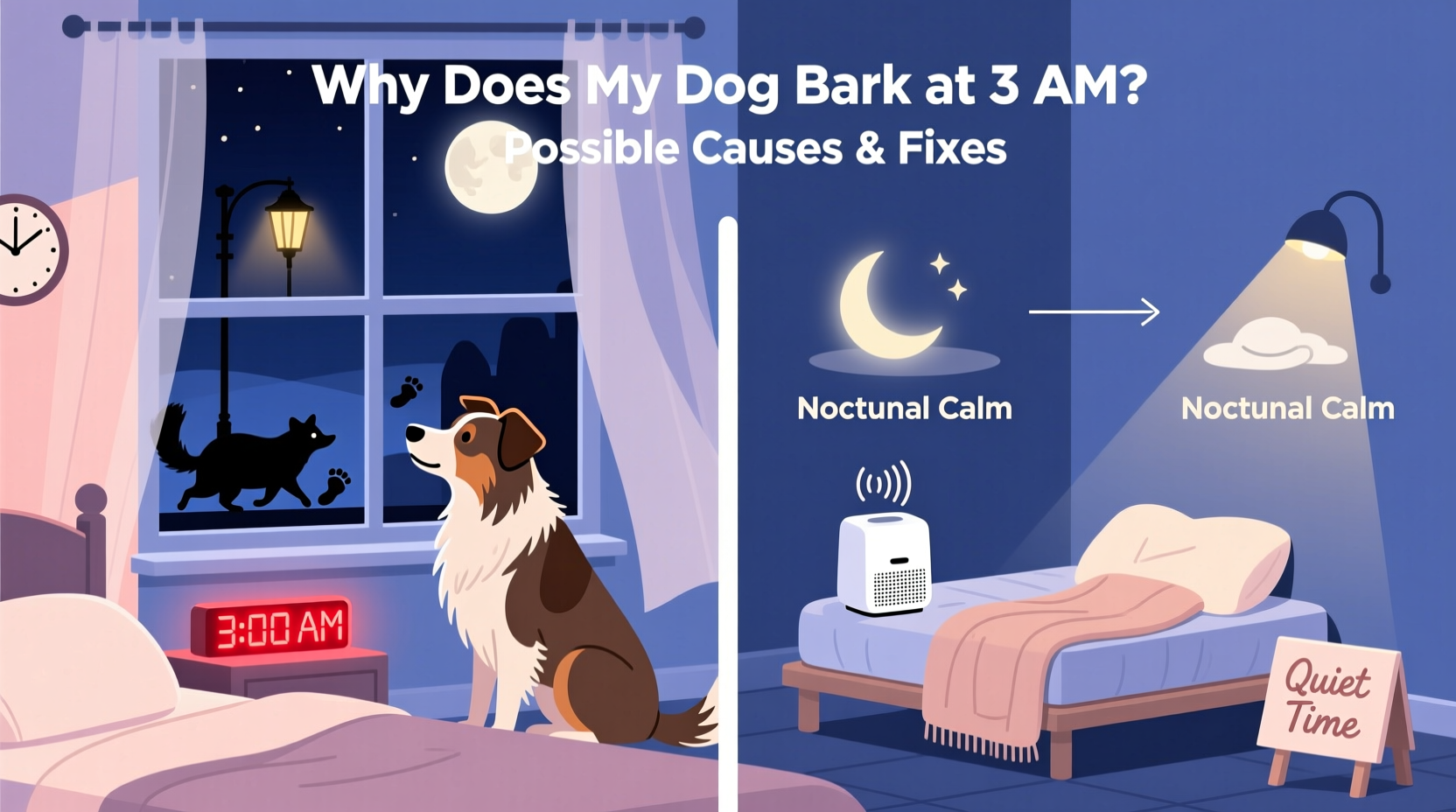
Dog barking at 3 a.m. isn't random. It's a response to stimuli or internal states that owners may not perceive. Identifying the root cause is essential before applying any solution.
Environmental Triggers
At 3 a.m., ambient noise levels drop significantly. Sounds that go unnoticed during the day become amplified. Your dog may hear:
- Wildlife (raccoons, squirrels, or birds)
- Distant sirens or vehicles
- Neighboring pets or people moving around
- House settling noises (pipes, floors, HVAC systems)
These sounds may seem harmless to you, but to a dog with sharp hearing and guarding instincts, they signal potential threats.
Separation Anxiety or Insecurity
If your dog sleeps alone in another room—or worse, outside—they may feel isolated. Dogs are social animals. Being separated from their pack (you) during vulnerable hours can trigger anxiety-based barking. This is especially common in rescue dogs or those with attachment issues.
Barking may start as a way to call for reassurance. If it results in attention—even if you yell “Quiet!”—the behavior is reinforced.
Sleep Disorders or Disrupted Sleep Cycles
Like humans, dogs can suffer from sleep disturbances. Senior dogs, in particular, may experience:
- Canine Cognitive Dysfunction (similar to dementia)
- Nighttime confusion or disorientation
- Restless sleep patterns
A dog who wakes confused may bark out of fear or attempt to locate familiar scents or people.
Medical Issues
Pain, discomfort, or illness can cause nighttime vocalization. Common culprits include:
- Arthritis or joint pain (common in older dogs)
- Urinary tract infections (leading to urgency)
- Hearing loss (causing misinterpretation of silence or sound)
- Dental pain or gastrointestinal discomfort
If your dog suddenly starts barking at night with no prior history, consult your veterinarian to rule out medical causes.
Learned Behavior
Dogs are intelligent and quickly learn what works. If barking at 3 a.m. has previously resulted in being let into bed, given treats, or even scolded (which still counts as attention), the dog learns that barking = interaction. Over time, this becomes a habit.
“Dogs don’t bark for no reason. Even if we can’t detect the trigger, the dog perceives a threat, need, or opportunity. The key is understanding their perspective.” — Dr. Karen Becker, DVM, Integrative Veterinary Care Specialist
Step-by-Step Guide to Stop 3 a.m. Barking
Resolving nighttime barking requires consistency, observation, and patience. Follow this timeline to identify and eliminate the cause.
- Observe and Document (Days 1–3): Keep a log. Note the exact time barking starts, duration, weather, and any environmental factors (e.g., wind, rain, garbage truck schedule). Record whether your dog seems alert, anxious, or confused.
- Rule Out Medical Issues (Day 4): Schedule a vet visit. Mention the barking pattern and any other symptoms like pacing, whining, or accidents.
- Adjust the Sleep Environment (Day 5): Move your dog’s bed closer to your room. Use blackout curtains, white noise machines, or calming music to mask outdoor sounds.
- Establish a Wind-Down Routine (Ongoing): Begin 30 minutes before bedtime. Include gentle brushing, light massage, and a small treat. Avoid stimulating play or feeding large meals late.
- Practice Quiet Commands During the Day (Days 6–10): Train “Quiet” using positive reinforcement. Say “Speak,” wait for one bark, then say “Quiet” and reward silence. Repeat daily.
- Respond Calmly at Night (Night 11+): When barking starts, do not yell or rush in. Wait until there’s a pause, then quietly say “Good quiet” and offer a treat if they stay silent. Never reward mid-bark.
- Evaluate Progress Weekly: Track reductions in frequency and duration. Adjust tactics if no improvement after two weeks.
Do’s and Don’ts: What to Avoid and What to Try
| Do’s | Don’ts |
|---|---|
| Use white noise or calming music at night | Yell “Shut up!” or punish your dog |
| Provide a comfortable, secure sleeping space | Ignore possible medical causes |
| Reinforce quiet behavior with treats or praise | Let barking lead to access to your bed |
| Exercise your dog thoroughly during the day | Leave your dog outside overnight |
| Consult a professional trainer or behaviorist if needed | Use shock collars or anti-bark devices |
Real-Life Example: Max the Beagle
Max, a 7-year-old beagle, began barking at 3:15 a.m. every night. His owner, Sarah, initially thought he needed to go outside. She started letting him into her bedroom, which stopped the barking—but soon, Max was waking her nightly, regardless of weather.
After tracking the behavior, Sarah noticed Max only barked on nights with strong winds. A recording revealed faint rustling near the back fence—likely neighborhood cats. She installed a white noise machine, moved Max’s bed into her room, and trained a “Quiet” command. Within ten days, the barking stopped entirely.
The turning point was realizing the trigger wasn’t physical needs, but environmental stress. By addressing the root cause calmly and consistently, Sarah restored everyone’s sleep.
Tips for Immediate Relief
When to Seek Professional Help
While many cases resolve with behavioral adjustments, some dogs require expert intervention. Consider consulting a certified dog behaviorist or veterinary behaviorist if:
- Barking persists despite consistent training
- Your dog shows signs of aggression or extreme fear
- They appear disoriented, pace excessively, or seem unaware of their surroundings at night
- There’s a sudden change in behavior with no clear trigger
Behaviorists use functional assessments to determine motivation—whether it’s fear, attention-seeking, or cognitive decline—and design tailored plans. They avoid punishment-based methods, focusing instead on environmental enrichment, desensitization, and positive reinforcement.
Frequently Asked Questions
Is it normal for dogs to bark at 3 a.m.?
Occasional barking may be normal, especially if triggered by a loud noise. However, consistent barking at the same time every night is not typical and usually indicates an underlying issue such as anxiety, medical discomfort, or environmental sensitivity.
Should I let my dog sleep in my bed to stop the barking?
While bringing your dog into your room may reduce separation-related barking, allowing them on the bed can reinforce attention-seeking behavior. Instead, place their bed beside yours. This maintains proximity without rewarding demand barking.
Can diet affect nighttime barking?
Indirectly, yes. Poor-quality food may lead to digestive discomfort or low energy regulation. Sudden food changes or feeding too close to bedtime can cause restlessness. Ensure your dog eats a balanced meal several hours before sleep.
Checklist: How to Stop 3 a.m. Barking
- ✅ Rule out medical issues with a vet visit
- ✅ Log barking episodes for 3–5 nights
- ✅ Identify potential environmental triggers
- ✅ Adjust sleeping arrangements (move closer, add comfort)
- ✅ Introduce white noise or calming music
- ✅ Establish a relaxing pre-sleep routine
- ✅ Train the “Quiet” command during daylight hours
- ✅ Respond calmly and consistently at night
- ✅ Avoid reinforcing barking with attention
- ✅ Consult a professional if progress stalls after two weeks
Conclusion: Peaceful Nights Are Possible
Waking up to your dog’s bark at 3 a.m. doesn’t have to become a permanent part of your life. With careful observation and compassionate correction, most causes of nighttime barking can be resolved. Remember, your dog isn’t trying to annoy you—they’re responding to something they perceive as important.
By addressing their needs, modifying the environment, and reinforcing calm behavior, you can restore quiet nights and strengthen your bond. Start tonight: listen closely, act wisely, and be patient. Both you and your dog deserve restful sleep.




 浙公网安备
33010002000092号
浙公网安备
33010002000092号 浙B2-20120091-4
Comments
No comments yet. Why don't you start the discussion?