
Christmas lights shimmer with festive cheer—for us. For many dogs, however, they flicker like alarm signals: unpredictable, intense, and utterly unfamiliar. A sudden burst of barking at a string of LEDs isn’t “naughty” behavior—it’s communication. Dogs don’t bark out of spite or stubbornness; they bark because something in their environment has triggered a physiological or emotional response rooted in perception, learning history, and neurobiology. Understanding *why* your dog reacts to holiday lighting isn’t about assigning blame—it’s about recognizing stress cues, honoring sensory reality, and responding with empathy backed by behavioral science.
The Science Behind the Spark: Why Lights Trigger Barking
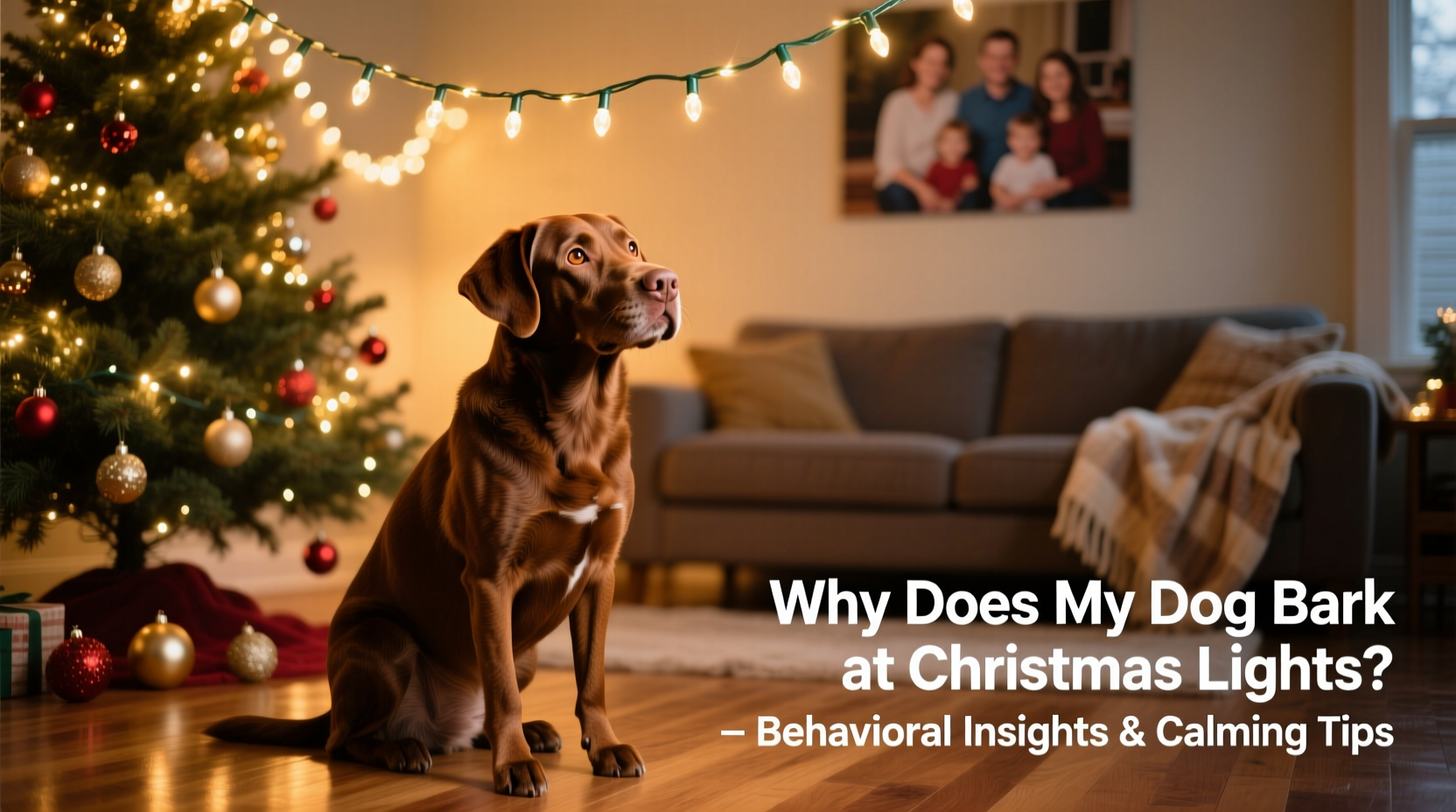
Dogs experience the world through senses far more acute—and sometimes overwhelming—than ours. Their visual system differs significantly: while they see fewer colors (dichromatic vision), they detect rapid movement and low-light contrast far better than humans. Christmas lights exploit several canine perceptual vulnerabilities:
- Flicker frequency: Many LED strings pulse at frequencies imperceptible to humans but clearly detectable by dogs’ faster retinal refresh rate (up to 70–80 Hz vs. our ~60 Hz). This creates a subtle, persistent strobing effect that can feel jarring or even threatening.
- Unpredictable motion: Wind-blown strands, reflections on glass, or lights embedded in moving ornaments generate erratic visual stimuli. To a dog wired for vigilance, this resembles potential prey—or danger—requiring alerting behavior.
- Novelty + lack of control: Unlike routine household objects, holiday lights appear suddenly, stay for weeks, and often emit faint electrical hums or heat signatures. Dogs thrive on predictability; novelty without opportunity to investigate safely fuels anxiety.
- Learned association: If barking once caused the lights to be turned off (even coincidentally), the behavior is reinforced. Or—if lights appeared alongside loud noises (carols, doorbells, guests), the dog may generalize fear across all light-related stimuli.
This isn’t “overreaction.” It’s neurologically grounded. Studies using fMRI show heightened amygdala activation in dogs exposed to novel, high-contrast visual stimuli—particularly when paired with uncertainty. Barking serves dual purposes: it’s an attempt to make the stimulus stop (negative reinforcement) and a signal to the pack (you) that something feels unsafe.
Behavioral Red Flags: Is It Anxiety or Just Curiosity?
Not all light-directed barking means distress—but misreading the signs delays effective intervention. Observe your dog’s full body language, not just vocalization:
| Behavior | Most Likely Meaning | Action Priority |
|---|---|---|
| Stiff posture, ears forward, tail high and rigid, focused staring + sharp, repetitive barks | Alert barking with rising arousal—potentially escalating to fear or reactivity | High: Begin desensitization immediately |
| Wagging tail, loose body, occasional glances away, soft “woof” sounds, sniffing nearby surfaces | Curiosity or mild interest—not distress | Low: Monitor only; no intervention needed |
| Pacing, panting, lip licking, whale eye (showing sclera), tucked tail, whining between barks, avoidance attempts | Clear anxiety or fear-based response | Critical: Stop exposure, consult behavior professional |
| Barking only when lights are first turned on or when entering a lit room—quiet otherwise | Startle response or sensitization to onset cue | Moderate: Focus on predictable transitions |
Crucially, chronic low-grade stress—even without dramatic barking—can suppress immune function and accelerate cognitive decline in older dogs. What looks like “just barking at lights” may be part of a broader stress load exacerbated by holiday chaos: visitors, altered schedules, new scents, and disrupted routines.
Proven Calming Strategies: From Immediate Relief to Long-Term Resilience
Effective intervention combines immediate environmental management with gradual neural rewiring. Avoid quick fixes like citronella collars or shouting “no”—these suppress symptoms without resolving underlying anxiety and risk worsening associations.
Step-by-Step Desensitization Protocol (Start Now—Even Before Holidays)
- Baseline Assessment: Note your dog’s current threshold—the distance at which they notice lights but don’t bark (e.g., 15 feet from the tree).
- Controlled Exposure: Set up one single, dimmable LED bulb (not a string) on a timer. Place it outside your dog’s usual space. Keep brightness at 10% and duration under 30 seconds, 2x daily.
- Pair with Positive Association: The moment the light turns on, offer a high-value treat (e.g., freeze-dried liver) *only* during illumination. Turn light off after treat is consumed.
- Gradual Progression: Over 7–10 days, increase brightness by 10% increments and duration by 10 seconds—*only* if your dog remains relaxed (no tension, no avoidance). Skip a step if stress appears.
- Introduce Complexity Slowly: Add gentle movement (sway bulb on string), then multiple bulbs, then color variation—each requiring its own desensitization cycle.
This protocol leverages classical conditioning: transforming the light from a neutral (or threatening) stimulus into a predictor of good things. Research from the University of Pennsylvania’s School of Veterinary Medicine shows dogs undergoing structured desensitization show 68% greater reduction in stress behaviors than those given only distraction techniques.
Environmental & Lifestyle Adjustments That Make a Difference
Behavior doesn’t happen in a vacuum. Your dog’s capacity to cope with lights depends heavily on foundational well-being. Address these pillars first:
- Sleep quality: Dogs need 12–14 hours of restful sleep daily. Holiday noise and light pollution disrupt circadian rhythms. Provide a dark, quiet crate or den away from decorated rooms—use blackout curtains if needed.
- Physical exertion: A tired dog is less reactive. Increase morning walks by 20 minutes before lights are typically turned on. Include scent work (hide treats in grass or snow) to engage the brain.
- Consistent routine: Feed, walk, and nap at the same times daily—even during holidays. Predictability lowers baseline stress hormones like cortisol.
- Safe retreat access: Designate a “light-free zone”: a quiet room with their bed, water, and chew toys. Never block access or use it as punishment.
“Barking at lights is rarely about the lights alone. It’s the final symptom of cumulative stress—lack of sleep, reduced exercise, or social overload. Fix the foundation, and the light-triggered barking often resolves spontaneously.” — Dr. Sarah Wooten, DVM, CVBT, Certified Veterinary Behaviorist
Real-World Example: How Maya’s Family Transformed Light Reactivity
Maya, a 4-year-old rescue terrier mix, began barking frantically at outdoor lights the first December after adoption. She’d freeze, hack-bark, then bolt to hide under the bed—refusing food or toys until lights were off. Her owners initially tried covering windows and turning off displays, but neighbors’ lights still triggered her.
Working with a certified behavior consultant, they implemented three key changes:
- They moved Maya’s sleeping area to a windowless bedroom and installed white-noise machines to mask distant light-related sounds.
- They started daily “light games”: turning on a single battery-operated tea light for 5 seconds while tossing treats—gradually increasing duration over 12 days.
- They introduced “look at that” training: calmly marking (“yes!”) and rewarding Maya for glancing at distant lights without barking—building impulse control.
By mid-December, Maya watched neighborhood lights from the porch without barking. By January, she’d lie calmly beside the tree while lights were on. Crucially, her overall anxiety decreased: she stopped startling at sudden noises and slept more soundly. Her story underscores that light reactivity is rarely isolated—it’s a barometer of broader stress resilience.
What NOT to Do (And Why)
Well-intentioned actions can unintentionally reinforce fear or erode trust. Avoid these common pitfalls:
Don’t: Carry or force your dog near lights to “show them it’s safe.” This removes their sense of control and confirms danger.
Don’t: Use flashing collars, ultrasonic devices, or scolding sprays. These add novel aversive stimuli, worsening confusion and fear.
Don’t: Assume “they’ll grow out of it.” Unaddressed anxiety often generalizes—to other lights, reflections, or even shiny floors.
FAQ: Quick Answers to Pressing Questions
Can I use calming supplements or CBD oil for light-related anxiety?
Some evidence supports specific, veterinarian-approved supplements (e.g., L-theanine, alpha-casozepine) for situational anxiety—but never as standalone solutions. CBD oil lacks FDA regulation for pets; studies show inconsistent purity and dosing. Always consult your vet first—and combine any supplement with behavioral strategies. Supplements manage symptoms; behavior work addresses causes.
My puppy doesn’t bark at lights yet—should I do anything preventatively?
Absolutely. Puppies are in a critical socialization window (3–14 weeks). Introduce lights gradually and positively *now*: start with a single warm-white bulb at low intensity during playtime, pairing with treats and praise. Prevention is vastly more effective—and humane—than remediation later.
Will turning off lights at night solve the problem?
It may reduce triggers short-term, but it doesn’t build coping skills. Worse, it can inadvertently reinforce barking—if your dog learns barking makes lights disappear, the behavior strengthens. Prioritize teaching calm alternatives over environmental avoidance.
Conclusion: Reframe the Lights, Rebuild the Trust
Your dog’s barking at Christmas lights isn’t a flaw in their character—it’s data. It tells you something feels uncertain, overwhelming, or threatening in their world. Responding with patience, scientific understanding, and consistent compassion doesn’t just quiet the barking; it deepens your bond, builds their confidence, and honors their unique sensory reality. You don’t need perfect silence to have a joyful holiday—you need mutual understanding. Start small: tonight, observe your dog’s reaction without judgment. Tomorrow, try one tip from the desensitization protocol or create that light-free retreat. Every calm glance, every relaxed sigh, every quiet moment beside the tree is a victory—not just for the season, but for the life you share.




 浙公网安备
33010002000092号
浙公网安备
33010002000092号 浙B2-20120091-4
Comments
No comments yet. Why don't you start the discussion?