
Christmas lights transform homes into festive spectacles—but for many dogs, they trigger confusion, anxiety, or defensive barking. Unlike humans, dogs don’t associate twinkling bulbs with holiday cheer. Instead, their highly sensitive visual and auditory systems interpret flickering, pulsing, and reflective light as unpredictable, potentially threatening stimuli. This isn’t “bad behavior”—it’s a biologically rooted response. Understanding *why* your dog barks at those cheerful strings of lights is the first step toward helping them feel safe—not suppressing the bark, but resolving its cause.
How Dogs Perceive Light Differently Than Humans
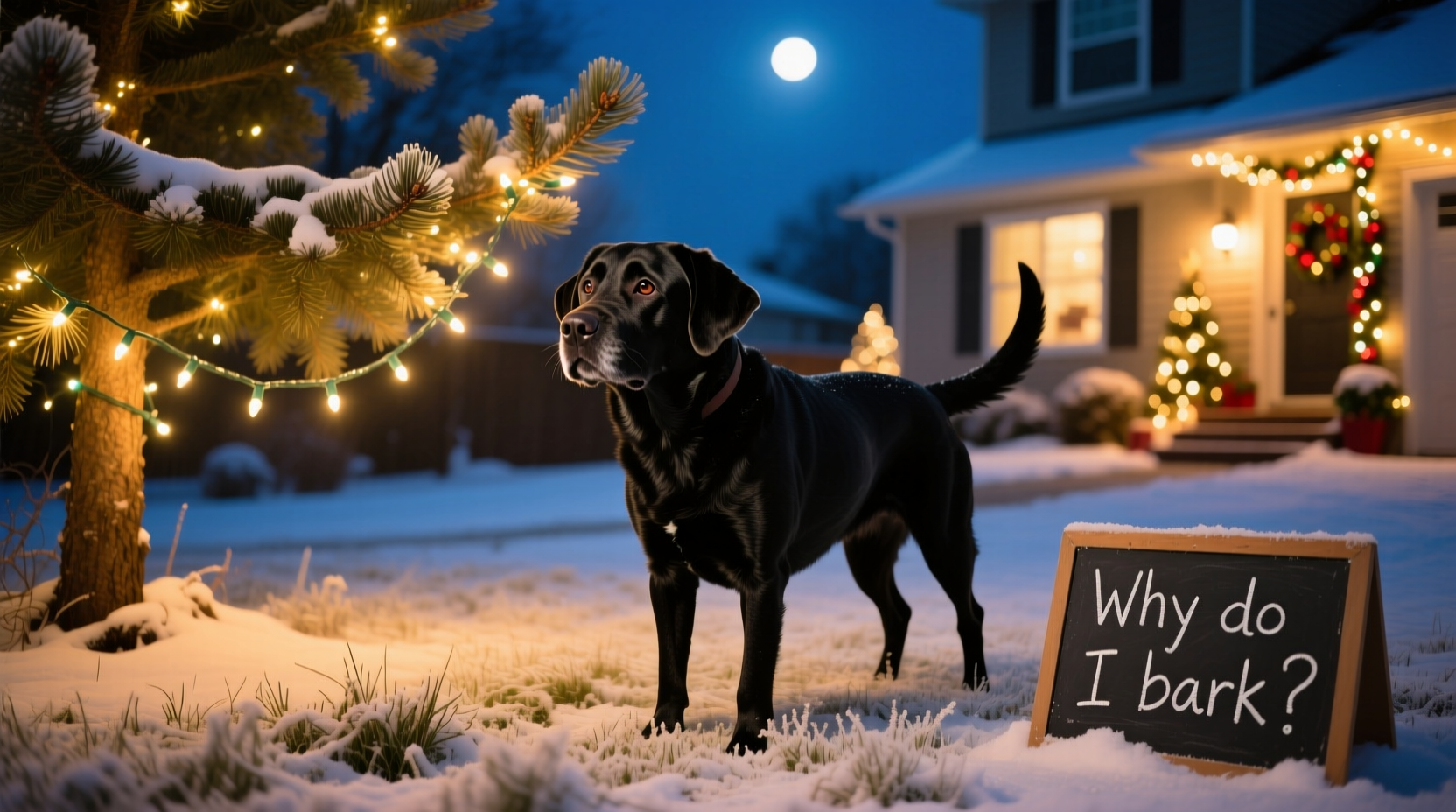
Dogs see the world through a lens shaped by evolution: they’re built for detecting motion in low light, not parsing fine detail or static color. Their retinas contain far more rod cells than humans (up to four times as many), making them exceptionally sensitive to movement and changes in brightness—even subtle ones. While humans have three types of cone photoreceptors (for red, green, and blue), dogs have only two (dichromatic vision), limiting their perception of reds and greens but heightening contrast sensitivity. Crucially, dogs also possess a tapetum lucidum—a reflective layer behind the retina that amplifies available light. This gives them superior night vision but also causes light sources to appear brighter, more intense, and sometimes “glare-heavy.” When Christmas lights pulse, strobe, or reflect off glass, metal, or snow, they create rapid luminance shifts that dogs register as startling or alarming—not decorative.
This biological reality explains why a dog may fixate on a single blinking bulb while ignoring a steady lamp nearby—or why they’ll bark at reflections in a window long after the outdoor lights are switched off. It’s not disobedience; it’s neurology.
Possible Triggers Behind the Barking
Barking at lights is rarely about the light alone. It’s usually a compound reaction involving visual input, sound, context, and prior experience. Below are the most common, evidence-informed triggers observed by veterinary behaviorists and certified canine behavior consultants:
- Flicker sensitivity: Many LED and incandescent strings emit imperceptible (to humans) flicker—often at 50–120 Hz. Dogs can detect flicker up to 75–80 Hz, meaning even “steady” lights may appear to strobe or vibrate to them.
- Movement illusions: Wind-blown lights, rotating projectors, or reflections dancing across walls simulate prey-like motion—activating a dog’s innate chase or alert response.
- Reflections and glare: Lights reflecting off ornaments, windows, or polished floors create unpredictable, shifting points of brightness that dogs can’t contextualize as harmless.
- Associated sounds: Transformers humming, timers clicking, or extension cords buzzing add low-frequency auditory cues that amplify perceived threat—especially when paired with sudden light changes.
- Contextual novelty + disruption: Holiday decorations alter familiar spaces dramatically. For dogs with lower stress thresholds—particularly seniors, rescue dogs with unknown histories, or puppies still learning environmental norms—the cumulative change (new smells, rearranged furniture, unfamiliar visitors) lowers their threshold for reactivity.
Evidence-Based Calming Methods (Not Just Distraction)
Effective intervention goes beyond covering the lights or shushing your dog. Lasting calm requires reducing physiological arousal, building positive associations, and respecting your dog’s sensory limits. Here’s what works—and why:
1. Reduce Visual Overload Strategically
Instead of eliminating lights entirely, modify how they interact with your dog’s environment. Use warm-white LEDs (2700K–3000K color temperature) instead of cool-blue or multicolor strings—they produce less harsh contrast and minimal flicker. Mount lights higher (e.g., along eaves rather than at nose level) and avoid placing them near reflective surfaces your dog frequents, like entryway mirrors or glass coffee tables.
2. Introduce Lights Gradually—With Choice and Control
Classical conditioning works best when the dog feels safe and empowered. Begin by turning on *one* non-blinking light indoors, far from your dog’s resting area. Pair it with high-value treats (e.g., boiled chicken or cheese) *only* when the light is on—and stop offering treats the moment it’s off. Keep sessions under 90 seconds and repeat 3–4 times daily for 3–5 days before adding a second light or moving closer. Never force proximity. If your dog looks away, sniffs the floor, or walks off—that’s okay. They’re self-regulating. Let them choose to approach.
3. Create a “Light-Safe Zone”
Designate one room or corner where no holiday lighting is present—no strings, no projectors, no reflective decor. Equip it with your dog’s favorite bed, familiar blankets, and calming aids like a pheromone diffuser (Adaptil) or white noise machine playing gentle rain or forest sounds. This space should be consistently accessible, not just used during parties. The goal isn’t to isolate your dog—it’s to give them autonomy and predictability amid seasonal chaos.
Step-by-Step Desensitization Timeline (4 Weeks)
Based on protocols validated by the American College of Veterinary Behaviorists, this gradual exposure plan respects canine neurobiology and avoids flooding:
- Week 1: Lights remain off. Place one unplugged string near your dog’s food bowl during meals—no interaction required. Let them investigate at their own pace.
- Week 2: Turn on *one* light (non-blinking, warm-white) for 15 seconds while offering treats. Repeat 3x/day. If your dog freezes or backs away, shorten duration to 5 seconds and increase distance.
- Week 3: Extend light-on time to 30 seconds. Add a second light—same specs—placed 6 feet away. Continue pairing with treats. Introduce a calming cue (“settle”) using a soft verbal marker and gentle chin rest—if your dog already knows this behavior.
- Week 4: Turn on both lights for 60 seconds, then introduce slow, predictable movement (e.g., gently swaying the string by hand). Always end sessions on a relaxed note—even if brief.
Consistency matters more than speed. If your dog shows hesitation at any stage, pause and repeat that step for 2–3 more days before progressing.
Real-World Example: Luna, a 4-Year-Old German Shepherd Mix
Luna began barking intensely at outdoor lights shortly after her family moved into a neighborhood known for extravagant holiday displays. Her reactivity escalated each December: she’d pace the living room, whine at windows, and bark at reflections in the sliding glass door—even when lights were off. Her owner assumed it was territorial behavior until consulting a veterinary behaviorist.
Assessment revealed Luna had mild noise sensitivity (she startled at distant fireworks) and lived in a home with large, uncurtained windows facing a street lined with synchronized light displays. The combination of rhythmic pulsing, reflected glare, and low-frequency transformer hum created a persistent stressor. The behaviorist recommended three changes: installing blackout shades on the main window, switching to non-synchronized, warm-white lights on their own home’s exterior, and creating a cozy, light-free den in the basement with ambient nature sounds.
Within 10 days, Luna stopped barking at the window. After three weeks of structured desensitization using a single indoor light and high-value treats, she began choosing to rest near the softly lit tree—tail relaxed, eyes half-closed. Her owner noted, “It wasn’t about stopping the bark. It was about giving her back her sense of safety.”
Do’s and Don’ts for Managing Light-Related Reactivity
| Do | Don’t |
|---|---|
| Use warm-white, non-blinking LED lights indoors | Use multicolor, flashing, or strobing lights near your dog’s resting areas |
| Offer high-value treats *only* during controlled light exposure | Give treats randomly or while your dog is actively barking (this can reinforce arousal) |
| Provide a designated quiet zone with zero holiday lighting | Confine your dog to a crate or small room *only* during light-heavy events |
| Observe body language before assuming “excitement” | Label the behavior as “naughty” or “attention-seeking” without assessing stress signals |
| Consult your veterinarian to rule out underlying pain or vision changes (e.g., early cataracts causing glare sensitivity) | Try punishment-based tools like bark collars, citronella sprays, or yelling—these escalate fear and damage trust |
“Dogs don’t bark at lights because they’re ‘spoiled’ or ‘untrained.’ They bark because something in that stimulus violates their sense of safety or predictability. Our job isn’t to silence them—it’s to help them reinterpret the world as less threatening.” — Dr. Sarah Wooten, DVM, CVBT, Board-Certified Veterinary Behaviorist
FAQ
Will my dog ever stop reacting to Christmas lights completely?
Many dogs do—especially with consistent, low-pressure desensitization started early. However, some dogs retain mild vigilance (e.g., briefly glancing at a new light), which is normal and healthy. The goal isn’t zero reaction, but reduced intensity and duration, plus the ability to self-soothe and return to relaxation within seconds. Dogs with diagnosed anxiety disorders or neurological sensitivities may always benefit from environmental management—but that’s not failure. It’s compassionate adaptation.
Can I use melatonin or CBD oil to calm my dog around lights?
Neither is FDA-approved for canine anxiety, and research on efficacy for light-specific reactivity is nonexistent. Melatonin has mild sedative effects in some dogs but carries risks for those with hormonal conditions or on certain medications. CBD products vary wildly in purity and dosing, and many contain trace THC, which is toxic to dogs. Always consult your veterinarian *before* administering any supplement. Safer, evidence-supported alternatives include Adaptil (dog-appeasing pheromone), Trazodone (prescribed for situational anxiety), or behavioral support from a certified professional.
My puppy doesn’t bark at lights yet—should I still take precautions?
Absolutely. Early exposure matters. Puppies between 3–14 weeks are in a critical socialization window. Introduce holiday lights gradually, calmly, and positively *before* they become associated with stress. Use the same desensitization steps above—but start with dimmer, slower, and farther away. Avoid overwhelming them with multiple decorations, loud music, and guests all at once. A calm, confident puppy is far more likely to grow into a resilient adult.
Conclusion
Your dog’s barking at Christmas lights isn’t a flaw in their character—it’s data. It tells you something about their sensory world, their emotional thresholds, and the way they experience your shared environment. By replacing assumptions with observation, punishment with patience, and suppression with support, you honor their biology while strengthening your bond. You don’t need to choose between festivity and your dog’s peace. With thoughtful lighting choices, a dedicated safe space, and a commitment to gradual, choice-based learning, your home can glow warmly for everyone—human and canine alike.




 浙公网安备
33010002000092号
浙公网安备
33010002000092号 浙B2-20120091-4
Comments
No comments yet. Why don't you start the discussion?