
Waking up to your dog barking in the middle of the night can be more than just an annoyance—it’s often a sign that something has changed, either in their environment, health, or emotional state. If your dog has never been vocal at night and suddenly starts barking, pacing, or reacting to unseen stimuli after dark, it’s natural to feel concerned. Unlike consistent habits, sudden behavioral shifts signal that a trigger is present, whether physical, psychological, or environmental.
Dogs are creatures of routine. When they deviate from their normal patterns—especially during typically quiet hours—owners should pay attention. The good news is that most causes of sudden nighttime barking are identifiable and treatable. Understanding the root cause allows you to respond appropriately, restore peace to your home, and ensure your dog’s well-being.
Common Triggers Behind Sudden Nighttime Barking
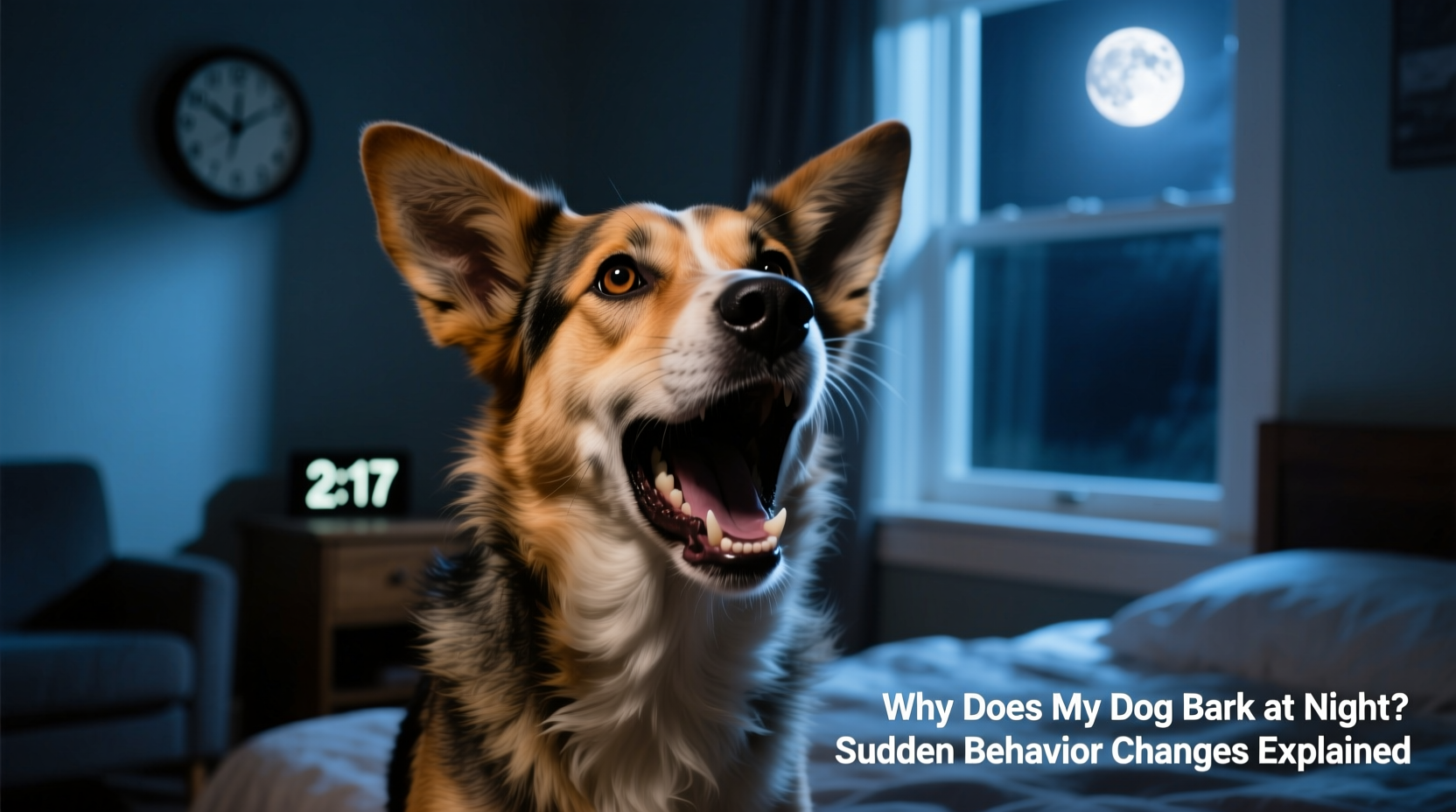
Sudden barking at night rarely happens without reason. While some dogs bark due to ingrained habits, a recent onset suggests an underlying shift. These changes may stem from sensory input, medical conditions, or emotional stressors.
Environmental stimuli are among the most frequent culprits. Even subtle changes outside your home—like new neighbors, nocturnal animals, construction noise, or unfamiliar scents—can alert your dog. Dogs have superior hearing and smell compared to humans, detecting sounds as high as 65,000 Hz (compared to our 20,000 Hz limit). A distant raccoon rustling in bushes or a neighbor’s late-night activity might go unnoticed by you but register clearly to your dog.
Separation anxiety can also manifest at night, especially if your dog sleeps apart from you. What was once a calm bedtime routine may become disrupted if your dog begins associating darkness with isolation. This is particularly common in rescue dogs or those with past trauma.
Cognitive dysfunction syndrome (CDS), similar to dementia in humans, affects older dogs and often worsens at night—a phenomenon known as “sundowning.” Affected dogs may appear confused, pace aimlessly, bark at walls, or seem disoriented despite being in familiar surroundings.
Additionally, physical discomfort or pain can lead to restlessness and vocalization. Arthritis, gastrointestinal issues, urinary tract infections, or dental pain may not be obvious during the day but become more pronounced when the house is quiet and your dog is trying to rest.
Medical Causes You Shouldn’t Ignore
Before assuming behavioral issues, rule out medical problems. A veterinary evaluation is essential when your dog exhibits sudden behavioral changes, especially involving sleep disruption.
Conditions such as hypothyroidism, hearing loss, or vision impairment can contribute to nighttime agitation. For instance, a dog losing sight may misinterpret shadows as threats. Hearing loss, paradoxically, can increase vocalization—dogs may bark louder because they can’t hear themselves.
Pain-related causes include joint inflammation, spinal issues, or internal discomfort. Older dogs may struggle to find a comfortable sleeping position, leading to frustration and barking. In one documented case, a 10-year-old Labrador began barking nightly; X-rays revealed advanced hip dysplasia previously undiagnosed. After starting anti-inflammatory treatment and receiving an orthopedic bed, the barking ceased within two weeks.
“Any abrupt change in a dog’s behavior, especially related to sleep or vocalization, warrants a vet visit. Pain and illness are often silent drivers.” — Dr. Lena Reyes, DVM, Canine Behavior Specialist
When to Seek Veterinary Help
- Barking started within the last few days or weeks
- Accompanied by other symptoms: lethargy, pacing, loss of appetite, or accidents indoors
- More frequent at dawn or dusk (common in cognitive decline)
- Appears distressed, trembling, or avoiding touch
Behavioral and Environmental Factors
If medical causes are ruled out, focus shifts to psychological and situational triggers. Dogs are highly perceptive. Changes in household routine, new family members, moving homes, or even seasonal light shifts can disrupt their sense of security.
For example, shorter winter days mean earlier darkness, which may alter your dog’s circadian rhythm. If outdoor walks or playtime decrease during colder months, pent-up energy can surface at night. Similarly, if your evening routine changed—such as feeding later or skipping a walk—your dog may express confusion through vocalization.
Noise sensitivity plays a major role too. Urban dogs may react to sirens, late-night deliveries, or HVAC systems kicking on. Rural dogs often respond to coyotes, owls, or livestock. Over time, these reactions can become conditioned—your dog learns that barking makes the “threat” go away (even if it doesn’t), reinforcing the behavior.
Mini Case Study: Luna, the Anxious Beagle
Luna, a 4-year-old beagle, lived in a quiet suburban neighborhood. She had always slept peacefully in her crate. But over three nights, her owners noticed her barking sharply around 2:00 a.m., staring out the window. No visible animals were present. After ruling out medical issues, they installed a motion-sensing camera. It captured a stray cat prowling the yard each night at the same time. Once the cat was relocated by animal control and Luna’s crate was moved away from the window, her nighttime barking stopped completely.
This case illustrates how subtle, unseen triggers can provoke sudden behavioral changes—and how observation tools can reveal hidden causes.
Step-by-Step Guide to Addressing Nighttime Barking
Resolving sudden nighttime barking requires a systematic approach. Jumping to conclusions or using punishment will likely worsen the issue. Follow these steps to identify and correct the root cause:
- Document the behavior: Note the time, duration, intensity, and any apparent triggers. Record video if possible.
- Schedule a vet checkup: Rule out pain, infection, hormonal imbalances, or neurological conditions.
- Assess environmental changes: Consider recent moves, new pets, renovations, or neighborhood activity.
- Adjust the sleep environment: Move the dog’s bed away from windows, use blackout curtains, or provide a quieter room.
- Establish a calming pre-bed routine: Include a final potty break, light massage, and low-stimulation activity like chewing a food-stuffed toy.
- Reinforce quiet behavior: Reward calmness at night with soft praise or treats—never reward barking.
- Consult a professional if needed: A certified dog trainer or veterinary behaviorist can help design a desensitization plan.
Consistency is key. Improvement may take days or weeks, depending on the cause. Avoid yelling or startling your dog to stop barking—it increases anxiety and undermines trust.
Do’s and Don’ts: Managing Nighttime Barking
| Do | Don’t |
|---|---|
| Check for medical issues promptly | Ignore sudden behavioral changes |
| Use white noise or calming music | Yell or punish your dog at night |
| Maintain a consistent bedtime routine | Allow excessive stimulation before bed |
| Reward quiet, relaxed behavior | Give attention during barking episodes |
| Consult a professional if unresolved | Assume it’s “just a phase” |
Frequently Asked Questions
Why did my dog suddenly start barking at night when he never did before?
Sudden nighttime barking is usually linked to a change—medical, environmental, or emotional. Common causes include pain, anxiety, sensory changes (like hearing or vision loss), or new external stimuli (noises, animals, people). Even subtle household changes, such as a new schedule or furniture layout, can unsettle sensitive dogs.
Can old age cause dogs to bark more at night?
Yes. Older dogs may develop canine cognitive dysfunction (CCD), which leads to confusion, disorientation, and increased vocalization, especially at night. They may forget where they are, fail to recognize family members, or react to non-existent threats. Sundowning behavior is common, similar to Alzheimer’s in humans.
Should I ignore my dog when he barks at night?
Not entirely. While you shouldn’t reinforce barking with attention, ignoring potential distress is unwise. First, determine the cause. If your dog is anxious or in pain, ignoring them may deepen insecurity. Instead, calmly assess the situation, eliminate triggers, and guide them back to calm behavior without excitement or scolding.
Action Plan Checklist
Use this checklist to systematically address your dog’s sudden nighttime barking:
- ☐ Observe and record barking episodes (time, duration, context)
- ☐ Schedule a veterinary examination to rule out illness or pain
- ☐ Inspect the sleeping area for noise, light, or visual triggers
- ☐ Review recent changes in routine, household, or environment
- ☐ Implement a calming pre-sleep routine (walk, potty break, quiet time)
- ☐ Reduce external stimuli (close blinds, use white noise, relocate bed)
- ☐ Reinforce quiet behavior with gentle rewards—never punish
- ☐ Consult a professional trainer or behaviorist if no improvement in 2–3 weeks
Conclusion: Respond with Care, Not Frustration
Your dog’s sudden nighttime barking isn’t defiance—it’s communication. Whether signaling pain, fear, or confusion, the behavior is a plea for understanding. Reacting with patience and investigation, rather than irritation, strengthens your bond and leads to lasting solutions.
Start today: observe quietly, consult your vet, and adjust the environment with empathy. Most cases improve with time and targeted intervention. Your efforts won’t just restore quiet nights—they’ll enhance your dog’s quality of life.




 浙公网安备
33010002000092号
浙公网安备
33010002000092号 浙B2-20120091-4
Comments
No comments yet. Why don't you start the discussion?