
Dogs bark for a variety of reasons—some obvious, others less so. If your dog frequently barks at what seems like “nothing,” you’re not alone. Many pet owners struggle with unexplained vocalizations that disrupt household peace and raise concerns about their dog’s well-being. While it may appear as though your dog is reacting to thin air, there’s almost always an underlying cause, often rooted in behavior, perception, or environment. Understanding these triggers is the first step toward effective intervention.
Dogs possess heightened senses, particularly hearing and smell, allowing them to detect stimuli far beyond human perception. What seems like empty space to you might be filled with distant sounds, scents, or subtle movements invisible to the naked eye. However, when barking becomes excessive or unwarranted, it often points to deeper behavioral issues such as anxiety, boredom, or learned habits. Addressing these root causes requires more than just silencing the noise—it demands empathy, consistency, and the right training approach.
Understanding Canine Perception: Why It’s Not Really “Nothing”
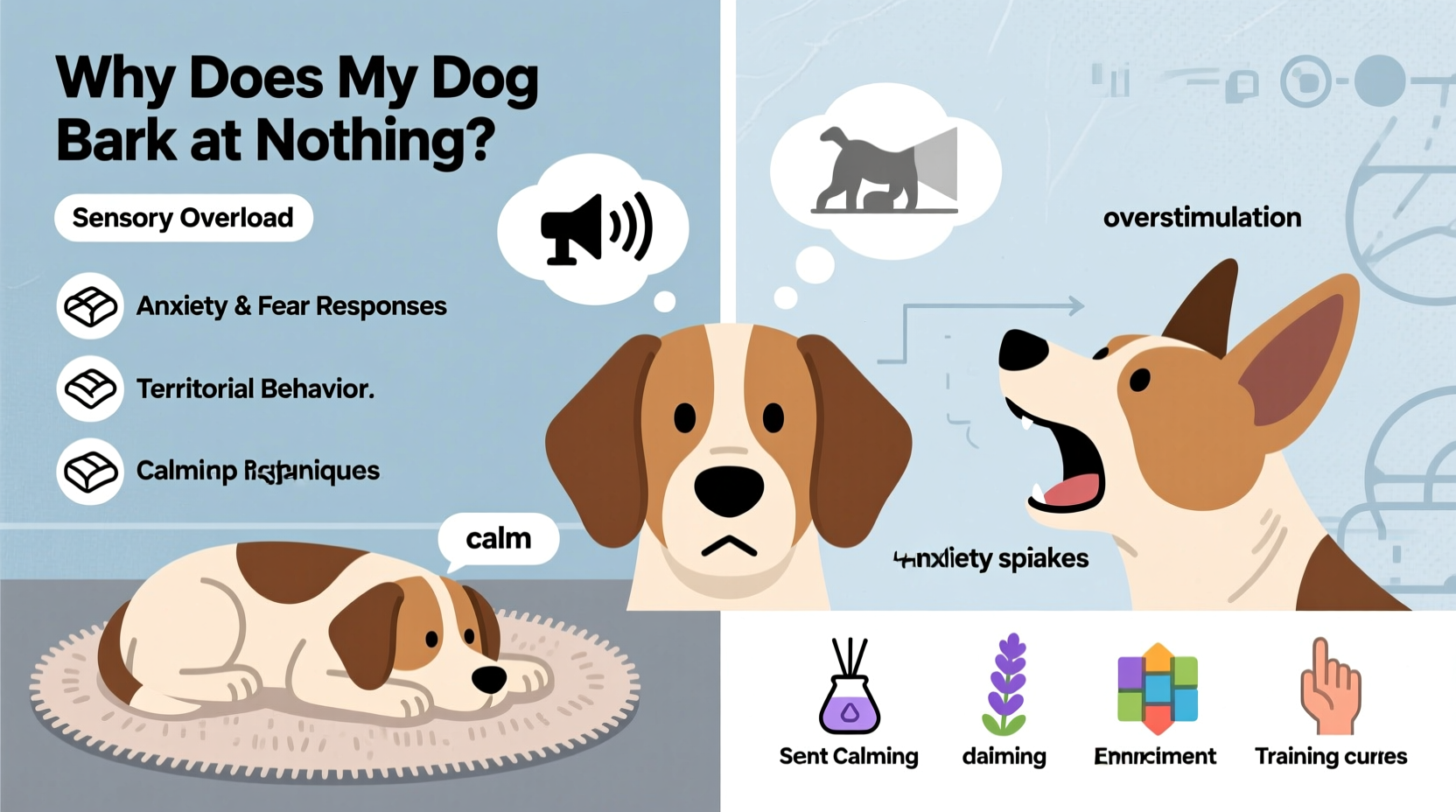
To humans, a quiet room may feel still and calm. To a dog, the same space can be rich with sensory input. Dogs can hear frequencies up to 65,000 Hz, compared to the human limit of around 20,000 Hz. This means they can detect high-pitched sounds from electronic devices, rodents inside walls, or even animals blocks away. Similarly, their sense of smell allows them to pick up on residual scents long after a person or animal has passed through.
When a dog suddenly barks at a corner of the room or stares intently at a window with no visible stimulus, they may be responding to something real in their world—even if it's imperceptible to us. This doesn’t mean the behavior should be ignored, but rather understood within the context of canine sensory experience.
Common Behavioral Causes of Apparent “Unprovoked” Barking
Beyond sensory detection, several behavioral and psychological factors contribute to seemingly baseless barking. Recognizing these patterns is essential for choosing the right response.
1. Anxiety and Fear
Separation anxiety, noise phobias, or generalized anxiety can manifest as sudden barking episodes. A dog may react to a sound they associate with danger—like thunder or fireworks—or become hyper-vigilant due to past trauma. These dogs often display additional signs such as pacing, panting, trembling, or hiding.
2. Boredom and Understimulation
Dogs are intelligent, active animals that require mental and physical engagement. When left alone for long periods without stimulation, they may bark out of frustration or to self-entertain. This type of barking tends to occur during predictable times, such as midday when the household is quiet.
3. Territorial Behavior
Even indoor dogs can develop territorial instincts. They may bark at passersby outside a window, delivery personnel, or unfamiliar noises near their perceived domain. Over time, this behavior can become habitual—even if no actual threat exists.
4. Learned Attention-Seeking
If a dog has been inadvertently rewarded for barking (e.g., receiving attention, treats, or being let outside), they will repeat the behavior. Even negative attention—such as yelling “Quiet!”—can reinforce the action, as any response validates the barking as an effective communication tool.
5. Cognitive Decline in Senior Dogs
Older dogs may begin barking at nothing due to canine cognitive dysfunction (CCD), similar to dementia in humans. Symptoms include confusion, disorientation, altered sleep cycles, and repetitive behaviors like barking into space. These dogs may not recognize familiar people or environments, leading to fear-based vocalizations.
“Dogs don’t bark without reason. What looks like ‘nothing’ to us is often a real sensory trigger or emotional state. The key is identifying the motivation behind the behavior.” — Dr. Karen Becker, DVM, Integrative Veterinary Medicine Specialist
Calming Techniques That Work: From Environment to Training
Effective solutions depend on accurate diagnosis of the cause. A multi-pronged approach combining environmental management, behavior modification, and sometimes medical support yields the best results.
Environmental Adjustments
Minimize exposure to known triggers. For example:
- Cover windows with frosted film or close blinds to block visual stimuli.
- Use white noise machines or calming music to mask external sounds.
- Create a safe den-like space (a crate or quiet room) where your dog can retreat when overwhelmed.
Mental and Physical Enrichment
A tired dog is a quiet dog. Ensure your pet receives adequate daily exercise tailored to breed and age. Combine physical activity with brain games:
- Use puzzle feeders instead of regular bowls.
- Teach new tricks weekly to keep the mind engaged.
- Rotate toys regularly to maintain novelty.
Desensitization and Counterconditioning
This two-step process helps reframe your dog’s emotional response to triggers:
- Desensitization: Gradually expose your dog to the stimulus at a low intensity (e.g., play a recording of doorbells at low volume).
- Counterconditioning: Pair the stimulus with something positive, like treats or affection, so the dog learns to associate it with good outcomes.
Progress slowly and only increase intensity when your dog remains calm.
Step-by-Step Guide to Reducing Unwanted Barking
Follow this structured plan over several weeks to address persistent barking:
- Observe and Log Triggers (Days 1–3): Keep a journal noting when, where, and how your dog barks. Include duration, body language, and possible antecedents (e.g., a car passing).
- Eliminate Reinforcements (Day 4 onward): Stop giving attention during barking episodes. Wait until your dog is quiet before offering interaction.
- Teach the “Quiet” Command (Days 5–10):
- Wait for your dog to bark.
- Say “Quiet” in a calm, firm tone.
- The moment they stop, mark with “Yes!” or a click and give a treat.
- Repeat consistently until the command is reliably associated with silence.
- Introduce Distractions (Weeks 2–3): Use commands like “Sit” or “Look at me” to redirect focus when barking begins.
- Gradual Exposure (Ongoing): Use recorded sounds or controlled scenarios to desensitize your dog to common triggers.
- Evaluate Progress (Every 2 Weeks): Review your log. Has frequency decreased by 50%? Adjust strategy if needed.
Do’s and Don’ts: Managing Barking Behavior
| Do’s | Don’ts |
|---|---|
| Stay calm and consistent in your responses. | Yell or use aversive tools like shock collars. |
| Provide daily physical and mental exercise. | Ignore signs of anxiety or stress. |
| Use positive reinforcement for quiet behavior. | Reward barking, even unintentionally. |
| Consult a veterinarian to rule out medical issues. | Assume the dog is “just being stubborn.” |
| Seek help from a certified dog behaviorist if needed. | Delay intervention for chronic or worsening cases. |
Mini Case Study: Luna, the Apartment-Dwelling Beagle
Luna, a three-year-old beagle living in a third-floor apartment, began barking at night toward the hallway ceiling. Her owner, Maria, initially thought she was reacting to neighbors, but after installing a camera, no activity was found. Concerned, Maria consulted a veterinary behaviorist.
Upon evaluation, it was discovered that Luna could hear high-frequency vibrations from the building’s HVAC system, which activated her prey drive. She had also developed a habit of barking to get Maria’s attention. The solution combined environmental changes (white noise machine at night), increased daytime walks, and training the “quiet” command. Within six weeks, Luna’s nighttime barking decreased by 90%, and she began using her chew toys instead of vocalizing when stimulated.
This case highlights how multiple factors—sensory sensitivity and learned behavior—can coexist and must be addressed together.
FAQ: Common Questions About Unexplained Dog Barking
Can dogs bark at ghosts or things I can’t see?
While some believe dogs sense supernatural phenomena, there’s no scientific evidence to support this. More likely, your dog is detecting subtle sounds, smells, or movements—such as insects, drafts, or electromagnetic fields—that escape human awareness.
Should I take my dog to the vet if they bark at nothing?
Yes. Sudden or intense barking without apparent cause can signal pain, neurological issues, or cognitive decline, especially in older dogs. A full veterinary exam helps rule out medical conditions like hearing loss, seizures, or hypothyroidism.
Are anti-barking collars effective?
Devices like citronella, ultrasonic, or shock collars are generally discouraged by animal behaviorists. They suppress symptoms without addressing root causes and can increase fear or aggression. Positive training methods are safer and more effective long-term.
Checklist: Action Plan for Calmer Dogs
Use this checklist to systematically address unexplained barking:
- ☐ Keep a 3-day barking log to identify patterns
- ☐ Schedule a vet check-up to rule out health issues
- ☐ Increase daily exercise and mental stimulation
- ☐ Remove or block access to known triggers (e.g., cover windows)
- ☐ Begin training the “quiet” command using treats
- ☐ Introduce background noise (music, fan, white noise)
- ☐ Avoid reinforcing barking with attention or treats
- ☐ Consult a certified professional if progress stalls after 4 weeks
Conclusion: Patience, Consistency, and Compassion
Dog barking at nothing is rarely about nothing at all. It’s a form of communication shaped by instinct, environment, and experience. By shifting perspective—from seeing barking as misbehavior to understanding it as a symptom—we open the door to meaningful solutions. There is no quick fix, but with patience, observation, and consistent training, most dogs can learn to respond more calmly to their surroundings.
Your dog isn’t trying to annoy you; they’re trying to tell you something. Whether it’s fear, boredom, or sensory overload, meeting them with empathy and structure builds trust and strengthens your bond. Start today—not by stopping the bark, but by listening to what lies beneath it.




 浙公网安备
33010002000092号
浙公网安备
33010002000092号 浙B2-20120091-4
Comments
No comments yet. Why don't you start the discussion?