
Dogs barking at the mail carrier is one of the most common household behaviors pet owners experience—often daily, sometimes multiple times a day. While it may seem like an overreaction or even comical, this behavior is deeply rooted in canine evolution and instinct. Understanding why your dog reacts so strongly to someone simply walking up to your door with letters can transform how you respond to it. This article explores the biological, psychological, and social factors behind this seemingly irrational act, offering insight into your dog’s mind and practical strategies for managing the behavior.
The Evolutionary Roots of Territorial Barking
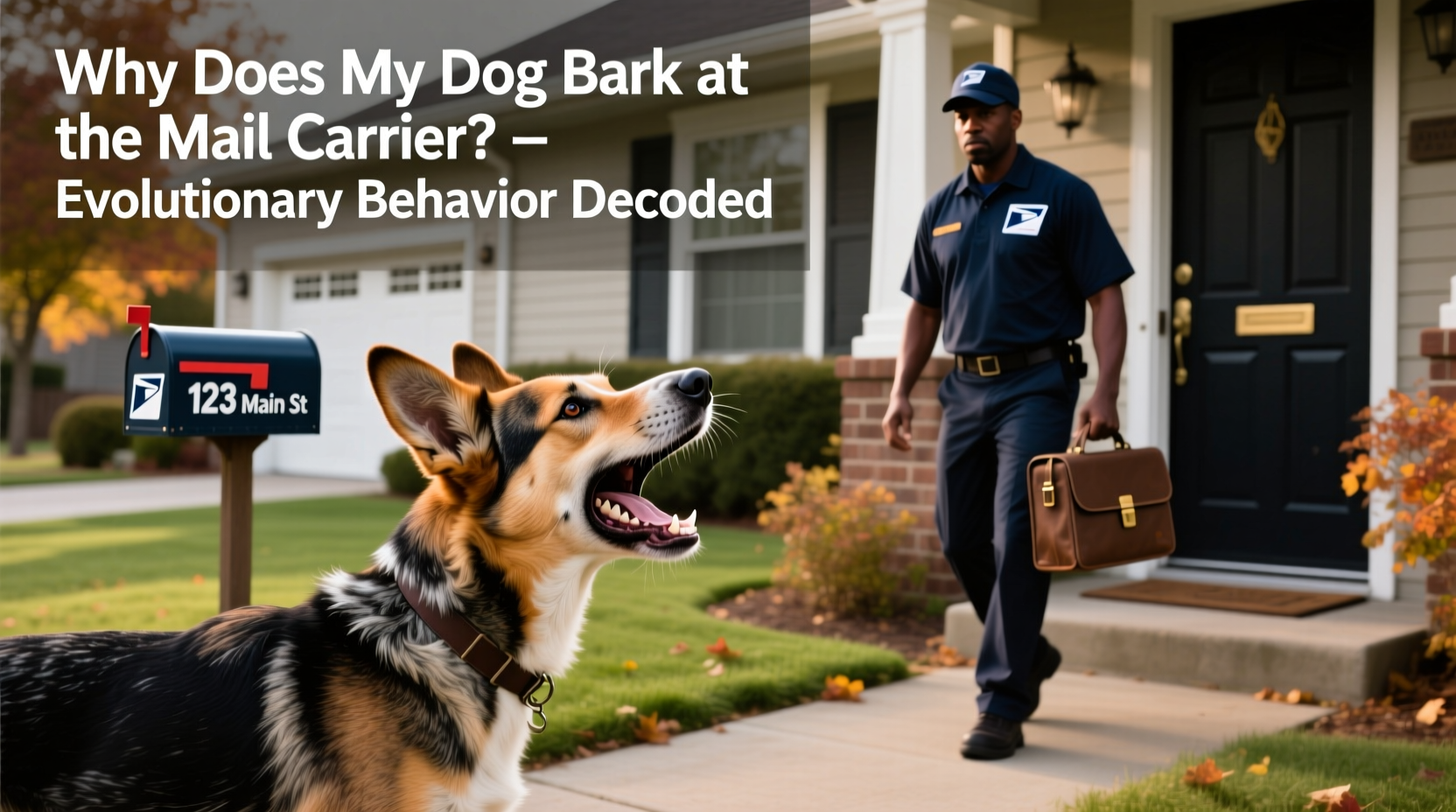
Dogs are descendants of wolves, pack animals that relied on strong territorial instincts for survival. In the wild, defending territory meant protecting resources—food, shelter, and offspring—from potential threats. Though domesticated, modern dogs still carry these ancestral impulses. When a stranger approaches what a dog perceives as its domain—the home—it triggers an automatic alert response.
The mail carrier, who appears predictably but remains unfamiliar, becomes a recurring \"intruder.\" From your dog’s perspective, each visit presents a potential threat to safety. The barking is not aggression for its own sake; it's a warning signal designed to drive the intruder away. In evolutionary terms, this behavior was advantageous: dogs that vocalized early and loudly were more likely to deter predators or rivals, increasing their chances of survival.
This instinct has been reinforced through selective breeding. Guarding and alerting roles were highly valued in working breeds such as German Shepherds, Rottweilers, and Belgian Malinois. Even companion breeds have retained elements of this trait because vigilance was beneficial in human settlements where early warnings could prevent theft or attack.
“Dogs don’t distinguish between a burglar and a postal worker—they see movement toward their territory and react accordingly. It’s not personal; it’s protective.” — Dr. Karen Becker, Veterinary Biologist and Canine Behavior Researcher
The Psychology Behind the Reaction: Fear, Alertness, and Reinforcement
Beyond evolutionary history, several psychological mechanisms explain why barking persists—and often intensifies—over time.
Fear-Based Reactivity
Many dogs don’t bark out of dominance but out of anxiety. The sudden appearance of a stranger near their safe space creates stress. Barking serves as both a defensive mechanism and a way to create distance. If the person leaves after the dog barks (as mail carriers do), the dog learns that barking “works”—this is called negative reinforcement.
Sensory Triggers
Dogs rely heavily on sound and scent. The crunch of gravel, the creak of a gate, or the rustle of a uniform can trigger arousal before the person is even visible. Once sighted, rapid movement, unusual clothing, or carrying packages may heighten suspicion. These stimuli activate the amygdala, the brain region responsible for emotional processing, leading to an immediate behavioral response.
Learned Behavior
If a dog barks and the visitor departs, the action is reinforced. Even if the owner yells “Quiet!” during the episode, the attention—positive or negative—can inadvertently reward the behavior. Over time, the dog associates the sequence: knock → stranger → barking → departure = success.
Breed Tendencies and Individual Differences
Not all dogs react the same way to mail carriers. Some remain calm, others growl, and many launch into full-throated alarm barks. These differences stem from breed predispositions and individual temperament.
| Breed Type | Tendency to Bark at Strangers | Why? |
|---|---|---|
| Herding Breeds (e.g., Border Collie, Australian Shepherd) | High | Naturally vigilant; bred to monitor movement and control space. |
| Guardian Breeds (e.g., Doberman, Akita) | Very High | Strong territorial instincts; bred to protect property. |
| Scent Hounds (e.g., Beagle, Basset Hound) | Moderate to High | Vocal by nature; use barking as communication. |
| Companion Breeds (e.g., Cavalier King Charles Spaniel, Pug) | Low to Moderate | Bred for affection, not protection; less territorial. |
| Basenji | Very Low | Known as the “barkless” dog; uses other vocalizations instead. |
However, environment plays a crucial role. A well-socialized dog from a guardian breed may be polite to visitors, while a poorly exposed companion dog might still bark excessively. Early experiences with people approaching the home shape long-term reactions.
A Real-Life Example: Max the Reactive Terrier
Max, a 3-year-old Jack Russell Terrier, lived in a quiet suburban neighborhood. Every morning at 9:15 a.m., the mail carrier arrived. Without fail, Max would sprint to the front window, bark relentlessly, and lunge at the door. His owner, frustrated, tried yelling and pulling him away, which only increased his agitation.
A certified dog behaviorist assessed Max and identified key factors: limited exposure to delivery personnel during puppyhood, high prey drive, and accidental reinforcement (he was given treats after calming down, which taught him that barking preceded rewards).
The solution involved structured desensitization: using recorded doorbell sounds and simulated approach scenarios. A family member mimicked the mail carrier’s walk while Max was distracted with a stuffed Kong. Over six weeks, Max began associating the approach with calmness and positive outcomes. Today, he still looks out the window—but quietly.
Step-by-Step Guide to Reducing Mail Carrier Reactivity
Changing this behavior requires patience and consistency. Here’s a proven five-step process to help your dog stay calm when the mail arrives.
- Control the Environment: Prevent rehearsal of the behavior. Use curtains, baby gates, or closed doors to block your dog’s view of the front yard during delivery hours.
- Desensitize to Sounds: Record the sound of footsteps, knocking, or the doorbell. Play it at low volume while giving treats. Gradually increase volume over days as your dog remains relaxed.
- Create Positive Associations: Whenever the mail carrier comes (or you simulate the event), feed high-value treats or offer a favorite toy. The goal is to teach: “Stranger approaching = good things happen.”
- Train an Incompatible Behavior: Teach your dog to go to a specific mat or room when the doorbell rings. Reward compliance. This replaces barking with a calm alternative.
- Practice Realistic Scenarios: With help from a friend, simulate deliveries at random times. Start at a distance and gradually decrease it as your dog stays relaxed. Always end on a positive note.
Progress may take weeks or months, especially for highly reactive dogs. Consistency across all household members is essential—mixed signals will slow progress.
Checklist: Managing Your Dog’s Reaction to the Mail Carrier
- ✅ Block visual access to the front door and sidewalk
- ✅ Identify your dog’s threshold (distance at which they react)
- ✅ Gather high-value treats (e.g., chicken, cheese, peanut butter)
- ✅ Train a “go to place” command using positive reinforcement
- ✅ Simulate delivery scenarios with a friend or recording
- ✅ Avoid scolding or yelling during episodes
- ✅ Consult a professional trainer if aggression is present
When Barking Crosses the Line: Aggression and Anxiety
While barking is normal, it can escalate into problematic behavior. Signs of true aggression include lunging, snarling, teeth-baring, or attempting to bite through windows or doors. These behaviors indicate heightened fear or poor impulse control.
Anxiety-related barking may also manifest in other contexts: excessive barking at passersby, cyclists, or delivery drivers. Dogs with generalized anxiety may show additional symptoms like pacing, drooling, or destructive behavior when left alone.
In such cases, behavioral modification should be paired with environmental management and, if necessary, veterinary consultation. In severe cases, anti-anxiety medication prescribed by a vet can support training efforts by lowering the dog’s baseline stress level.
“Medication isn’t a crutch—it’s a tool. Just like insulin for diabetes, some dogs need neurochemical support to benefit from behavior training.” — Dr. Nicholas Dodman, Former Professor of Animal Behavior, Tufts University
Frequently Asked Questions
Is it normal for my dog to bark at the mail carrier every single day?
Yes, it’s extremely common. Daily barking at predictable intruders is a learned, self-reinforcing behavior. As long as your dog isn’t showing signs of distress or aggression, it’s typically not a cause for concern—but it can be modified with training.
Can I train an older dog to stop barking at the mail carrier?
Absolutely. While puppies are easier to shape due to greater neuroplasticity, adult dogs can learn new associations at any age. Older dogs may take longer due to established habits, but consistent, reward-based training is effective regardless of age.
Should I let my dog see the mail carrier during training?
Only under controlled conditions. During desensitization, your dog must remain below their reaction threshold—calm and focused. Unsupervised exposure reinforces the old behavior. Use simulations first, then carefully managed real-life practice.
Conclusion: Turning Instinct into Calm
Your dog’s barking at the mail carrier isn’t misbehavior—it’s communication. It’s a survival instinct refined over thousands of years, now playing out in the context of modern life. By understanding the evolutionary and psychological forces behind it, you can respond with empathy and strategy rather than frustration.
With time, patience, and the right techniques, most dogs can learn to remain calm when the postal worker arrives. The goal isn’t to suppress natural behavior but to guide it toward coexistence. A quieter home doesn’t mean a less alert dog—it means a dog that feels secure enough not to sound the alarm.




 浙公网安备
33010002000092号
浙公网安备
33010002000092号 浙B2-20120091-4
Comments
No comments yet. Why don't you start the discussion?