
Dogs are highly attuned to their environments. While humans may find twinkling Christmas lights enchanting, many dogs perceive them as unpredictable, potentially threatening stimuli. If your dog barks, lunges, or whines at festive decorations, you're not alone—thousands of pet owners face similar challenges each holiday season. The behavior isn't mischievous; it's rooted in instinct, sensory perception, and learned responses. Understanding why dogs react this way is the first step toward creating a calmer, more inclusive holiday experience for both pets and people.
The Science Behind Canine Light Sensitivity
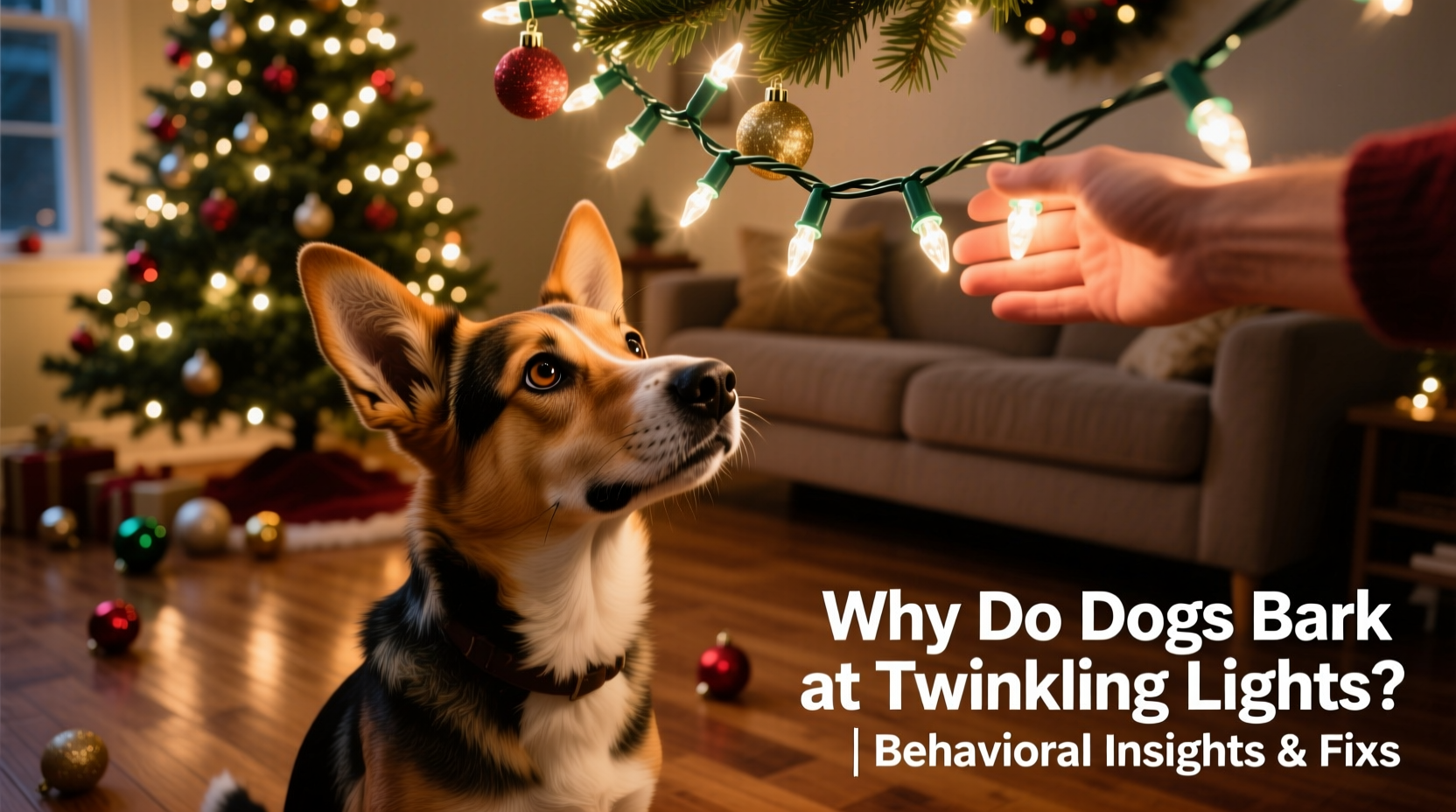
Dogs process visual information differently than humans. Their eyes have a higher concentration of rod cells, which enhances low-light vision but reduces color discrimination and fine detail recognition. This adaptation helps them detect movement in dim conditions—a survival trait inherited from their wild ancestors. However, it also means that flickering or rapidly changing lights appear more intense and erratic to them.
Twinkling Christmas lights often pulse, flash, or strobe. To a dog, these movements can resemble quick darting motions—similar to small prey or potential threats. Even subtle shifts in light patterns cast moving shadows across walls and floors, further amplifying perceived motion. In some cases, especially with LED lights, the rapid on-off cycle (flicker rate) may be imperceptible to humans but clearly visible to dogs due to their superior flicker fusion threshold—the speed at which blinking lights appear continuous.
Additionally, dogs rely heavily on consistency in their environment. Sudden changes, such as new furniture or seasonal decor, can trigger anxiety. When combined with auditory cues like holiday music or doorbells, flashing lights create a multisensory overload that heightens stress levels. This context explains why a dog might tolerate stationary lights but react strongly to animated displays.
Common Behavioral Triggers and What They Mean
Barking at lights isn’t just attention-seeking—it’s communication. Dogs use vocalizations to express discomfort, alertness, or fear. Identifying the underlying motivation behind the barking helps determine the most effective intervention strategy. Here are three primary behavioral drivers:
- Fear or Anxiety: The dog perceives the lights as dangerous. Signs include cowering, tail tucking, trembling, or attempting to flee.
- Overstimulation: The environment feels chaotic. The dog may pace, pant excessively, or bark persistently without direct eye contact.
- Alert Barking: The dog sees the lights as intruders or anomalies worth guarding against. This type often starts suddenly and diminishes once the dog habituates—or escalates if reinforced.
It's crucial not to punish reactive behavior. Doing so increases stress and may deepen the association between lights and negative experiences. Instead, focus on desensitization and positive reinforcement to reshape emotional responses.
“Dogs don’t bark at lights because they’re ‘bad’—they bark because they’re trying to make sense of something unfamiliar. Our job is to guide them through that confusion calmly.” — Dr. Lisa Marano, Veterinary Behaviorist
Step-by-Step Guide to Desensitize Your Dog to Twinkling Lights
Changing how your dog reacts to lights requires patience and consistency. The goal is gradual exposure paired with positive associations. Follow this structured approach over 2–4 weeks, adjusting pace based on your dog’s comfort level.
- Start with lights off. Place the strand near your dog’s usual resting area while powered down. Let them investigate freely. Reward calm sniffing or indifference with treats or praise.
- Introduce minimal illumination. Plug in the lights in a separate room, keeping the door open. Allow your dog to observe from a distance. Offer high-value treats (like boiled chicken or cheese) only during light exposure.
- Increase proximity slowly. Over several days, move the lit strand closer to shared spaces. Always monitor body language. If signs of stress appear (whale eye, lip licking, stiff posture), retreat to an earlier step.
- Add motion gradually. Begin with steady lighting before switching to a slow twinkle mode. Avoid strobe settings initially. Use background white noise or calming music to buffer any accompanying sounds.
- Pair lights with enjoyable activities. Feed meals, play tug, or practice favorite tricks near illuminated areas. This builds strong positive associations.
- Maintain consistency. Once your dog remains relaxed around indoor lights, repeat the process outdoors if needed. Never rush progression—long-term success depends on trust and safety.
This method draws from classical conditioning principles used in animal behavior therapy. By linking the stimulus (lights) with rewards (treats, play), the dog learns to anticipate good things when lights appear—replacing fear with anticipation.
Practical Fixes and Environmental Adjustments
Not all homes can delay decoration until training is complete. For families already immersed in holiday prep, immediate modifications can reduce distress while longer-term strategies take effect.
| Solution | How It Helps | Limitations |
|---|---|---|
| Use solid-color, non-flashing lights | Reduces erratic visual input; easier for dogs to process | Less festive appearance; may not satisfy aesthetic goals |
| Install lights outside only | Creates physical barrier; limits exposure duration | Doesn’t help if dog watches windows frequently |
| Close curtains during display hours | Blocks visual access to external light shows | May darken home excessively; not ideal in daytime |
| Provide a quiet retreat space | Allows dog to self-soothe away from stimuli | Requires discipline not to force interaction |
| Use pheromone diffusers (e.g., Adaptil) | Releases calming signals mimicking maternal hormones | Takes 24–48 hours to build effectiveness |
One often-overlooked factor is floor reflection. Shiny surfaces like hardwood or tile amplify light movement. Placing rugs or mats in key areas can minimize disorienting glare. Similarly, positioning beds or crates in interior rooms—away from decorated zones—gives anxious dogs control over their environment.
Mini Case Study: Max, the Reactive Border Collie
Max, a 3-year-old Border Collie, began barking intensely whenever his family turned on their outdoor Christmas display. His owners initially assumed he was excited, but soon noticed he refused to go into the backyard at night and would lunge at windows during evening walks.
A consultation with a certified canine behaviorist revealed Max’s sensitivity to rapid motion—a trait common in herding breeds. The therapist recommended starting with indoor exposure using a single string of warm-white LEDs set to steady mode. For two weeks, Max received frozen peanut butter Kongs while sitting near the lights. Progress was slow; the first few sessions lasted only 90 seconds before Max showed stress signals.
By week three, Max tolerated five minutes of steady lighting with treats. The family then introduced a slow-pulse setting, again pairing it with mealtime. Within five weeks, Max remained relaxed even when the full outdoor display activated. Today, he rests near the living room window during holiday gatherings—proof that consistent, empathetic training yields lasting results.
Checklist: How to Prepare Your Home and Dog for Holiday Lights
- ✅ Assess your dog’s baseline reaction to lights (observe body language)
- ✅ Choose less stimulating lighting options (steady, warm-toned)
- ✅ Create a safe zone free from decorations and noise
- ✅ Begin desensitization training at least 3 weeks before decorating
- ✅ Use high-value treats exclusively during light exposure
- ✅ Monitor for signs of stress: panting, yawning, avoidance
- ✅ Limit initial exposure time and increase gradually
- ✅ Involve all household members in consistent training routines
- ✅ Consider using calming aids (Adaptil, Thundershirt) as support tools
- ✅ Consult a veterinarian or behaviorist if aggression or panic occurs
Frequently Asked Questions
Can certain dog breeds be more sensitive to lights?
Yes. Herding breeds like Border Collies and Australian Shepherds are particularly sensitive to movement due to their genetic predisposition for tracking fast-moving livestock. Sight hounds and terriers may also react strongly. However, individual temperament plays a larger role than breed alone.
Is it okay to cover windows so my dog can’t see the lights?
In moderation, yes. Blocking views can reduce stress, especially during early training phases. However, long-term visual isolation isn’t ideal. Pair window coverage with active desensitization so your dog eventually tolerates what they see.
Will my dog ever stop reacting to lights completely?
Most dogs can learn to remain calm with proper training. Complete elimination of reactivity is possible, especially when intervention begins early. Older or previously traumatized dogs may always show mild interest but can still achieve functional calmness.
Conclusion: Building a Calmer, Happier Holiday for You and Your Dog
The joy of holiday lights shouldn’t come at the expense of your dog’s well-being. Barking is not defiance—it’s feedback. By understanding the sensory and emotional roots of this behavior, you gain the power to transform fear into familiarity. With thoughtful preparation, consistent training, and environmental adjustments, your dog can coexist peacefully with seasonal decor.
Start today. Unplug those flashy strands. Sit with your dog nearby. Reintroduce the lights—not as invaders, but as part of a routine filled with safety and reward. The holidays are meant for connection, and that includes every member of your family—even the four-legged ones.




 浙公网安备
33010002000092号
浙公网安备
33010002000092号 浙B2-20120091-4
Comments
No comments yet. Why don't you start the discussion?