
As the holiday season approaches, homes come alive with festive decorations—none more iconic than the twinkling lights on a Christmas tree. While these sparkling displays bring joy to people, they can trigger confusion, fear, or overexcitement in dogs. If your dog barks persistently at twinkling tree lights, you're not alone. Many pet owners face this challenge every year. The good news is that understanding the root cause and applying targeted calming techniques can significantly reduce your dog’s reactivity.
Dogs experience the world through heightened senses, particularly sight and hearing. What appears as a gentle shimmer to us may register as erratic movement or flashing stimuli to a dog. When combined with unfamiliar scents, new objects, and seasonal disruptions to routine, even well-adjusted dogs can become anxious. This article explores the science behind canine reactions to light patterns, offers practical solutions, and provides a step-by-step plan to help your dog stay calm during the holidays.
Why Dogs React to Twinkling Lights
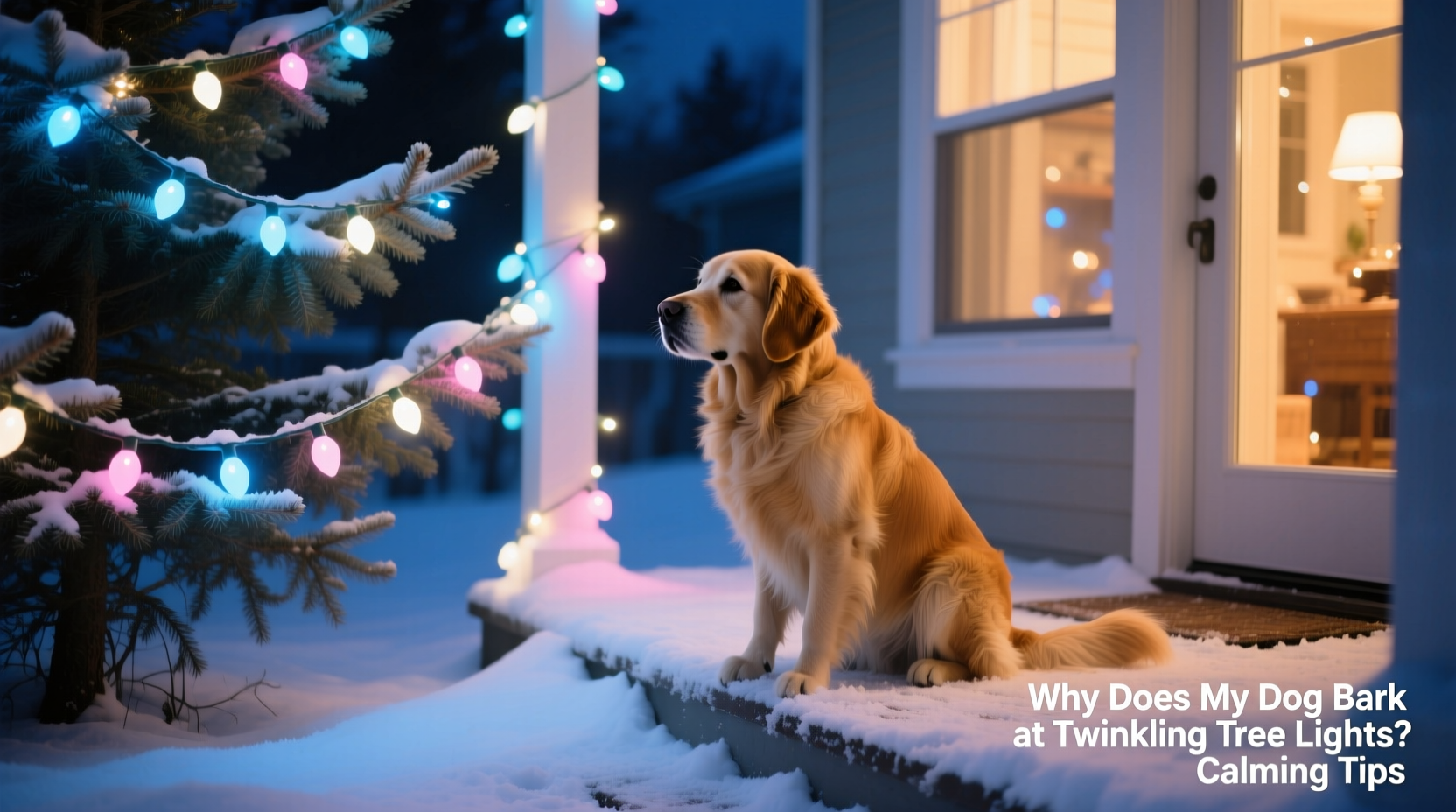
Dogs perceive light differently than humans. Their vision is optimized for detecting motion in low-light conditions, making them highly sensitive to rapid changes in brightness or flickering patterns. Twinkling Christmas lights, especially older incandescent sets that blink erratically, mimic unpredictable movement—something that evolutionary instincts interpret as potentially threatening.
Dr. Karen Overall, a renowned veterinary behaviorist, explains: “Dogs are hardwired to respond to sudden visual stimuli. A blinking light can resemble the eyes of a predator or prey darting through shadows. Even if the dog isn’t consciously afraid, the brain registers arousal.”
Beyond instinct, several factors contribute to barking at lights:
- Motion sensitivity: Rapidly changing light patterns simulate movement, triggering alertness or chase responses.
- Lack of exposure: Puppies or dogs without prior holiday decoration experiences may find lights novel and alarming.
- Environmental overload: Combined with music, guests, and scent diffusers, lights add sensory stress.
- Past negative associations: A dog startled by lights once may generalize fear to all similar stimuli.
“Sensory novelty is one of the most common causes of behavioral shifts in pets during holidays. Proactive desensitization makes all the difference.” — Dr. Sophia Yin, Applied Animal Behaviorist
Calming Strategies to Reduce Light-Induced Barking
Managing your dog’s reaction to twinkling lights requires more than just turning them off. The goal is to change your dog’s emotional response—from alarm to neutrality or even relaxation. Below are proven, humane methods backed by animal behavior research.
1. Choose the Right Type of Lights
Not all lights affect dogs equally. LED strings with steady illumination are less likely to provoke a reaction than those that flash, strobe, or alternate rapidly. Opt for warm white LEDs instead of multicolored or blinking sets.
2. Gradual Exposure (Desensitization)
Introduce lights slowly. Start with the tree unlit for several days so your dog becomes accustomed to its presence. Then, turn on the lights for short periods—at first just five minutes—with your dog in a separate but visible area. Reward calm behavior with treats or quiet praise.
Gradually increase exposure time over 7–10 days. If your dog barks or shows signs of stress (panting, pacing, ears back), reduce the duration and brightness. Consider using a dimmer switch or covering part of the tree initially.
3. Create a Safe Retreat Zone
Ensure your dog has a quiet space away from the tree where they can relax. This area should include their bed, water, favorite toys, and perhaps a piece of clothing with your scent. Use baby gates or closed doors to allow choice-based access.
White noise machines or calming music designed for dogs (like Through a Dog’s Ear) can mask ambient sounds and reduce overall stimulation.
Step-by-Step Plan to Calm Your Dog Around Holiday Lights
Follow this 10-day timeline to help your dog adjust safely and comfortably:
- Day 1–2: Set up the tree without lights. Let your dog investigate freely. Reward curiosity with treats.
- Day 3: Introduce a single strand of steady-warm-white LED lights. Turn on for 5 minutes while offering chew toys or puzzle feeders.
- Day 4–5: Increase lighting duration to 15 minutes twice daily. Monitor closely for signs of stress.
- Day 6: Add soft background music or white noise near the tree to associate lights with calm soundscapes.
- Day 7: Allow supervised access to the room with lights on. Redirect attention if barking occurs—use commands like “look” or “touch” to shift focus.
- Day 8–9: Extend lighting sessions to 1 hour. Practice settling exercises (e.g., “down-stay”) nearby with high-value rewards.
- Day 10: Full integration. Keep lights on during normal hours, maintaining routines around feeding, walks, and rest.
Consistency is key. Avoid leaving lights on overnight unless necessary, as constant exposure can heighten vigilance.
Do’s and Don’ts When Managing Light Sensitivity
| Do’s | Don’ts |
|---|---|
| Use steady, non-blinking LED lights | Use strobing, flashing, or disco-style lights |
| Introduce lights gradually over days | Suddenly turn on full display with loud music |
| Provide a quiet retreat space | Force your dog to sit near the tree |
| Pair lights with positive experiences (treats, play) | Punish barking or fear-based reactions |
| Maintain regular daily routines | Disrupt feeding or walking schedules due to guests |
Real-Life Example: Helping Max Adjust to Holiday Decor
Max, a 3-year-old Border Collie mix adopted from a shelter, had never experienced Christmas decorations. When his owners put up their usual twinkling tree, Max began barking intensely, pacing, and refusing to settle within 20 feet of the living room. Concerned, they consulted a certified dog trainer.
The trainer recommended starting over: removing the lights temporarily, letting Max acclimate to the undecorated tree for three days, then reintroducing a single strand of steady LED lights for five minutes at a time. During each session, Max received frozen peanut butter Kongs and soft verbal praise when he remained calm.
By day seven, Max would lie on his bed across the room while the full tree was lit. His owners also installed a white noise machine and kept a consistent evening walk schedule despite holiday gatherings. Within two weeks, Max showed no interest in barking—sometimes even falling asleep near the softly glowing tree.
This case illustrates how patience and structured exposure can transform fear into indifference—or even comfort.
When to Consider Professional Help
Occasional barking at new stimuli is normal. However, persistent anxiety—including trembling, hiding, refusal to eat, or destructive behavior—may indicate deeper issues such as noise phobia or generalized anxiety disorder.
In such cases, consult a veterinarian or veterinary behaviorist. They may recommend:
- Behavior modification programs
- Anti-anxiety supplements (e.g., L-theanine, melatonin)
- Prescription medication for severe cases (e.g., fluoxetine)
- Calming aids like Thundershirts or Adaptil diffusers
Never medicate without professional guidance. Behavioral support works best when combined with environmental management and training.
Frequently Asked Questions
Can twinkling lights hurt my dog’s eyes?
No, standard holiday lights do not emit harmful radiation or intensity levels that damage canine vision. However, prolonged exposure to bright or flashing lights may cause eye strain or discomfort in sensitive dogs, similar to humans.
Should I leave the tree lights on at night?
It’s generally not recommended. Keeping lights on overnight disrupts circadian rhythms and increases hypervigilance. Dogs need predictable downtime. If you must keep them on, use a timer to limit operation to 4–6 evening hours.
Will my dog ever stop barking at the lights?
Most dogs can learn to tolerate or ignore twinkling lights with proper desensitization. Younger dogs and those with positive early experiences adapt faster. Older or trauma-affected dogs may take longer but can still improve significantly with consistency.
Final Checklist: Preparing Your Dog for Holiday Lights
- Choose steady, warm-white LED lights (avoid blinking or colorful sets).
- Set up the tree without lights for 2–3 days to allow exploration.
- Begin short, controlled light exposures (5–10 minutes).
- Pair light sessions with treats, chews, or calming activities. <5>Create a quiet retreat zone with familiar items.
- Use white noise or calming music to reduce sensory load.
- Gradually extend exposure over 7–10 days.
- Maintain regular feeding, walking, and sleeping routines.
- Monitor body language for signs of stress (panting, yawning, avoiding).
- Consult a professional if anxiety persists or worsens.
Conclusion: Peaceful Holidays Start with Preparation
Your dog doesn’t understand the symbolism of holiday lights—but they feel their impact deeply. By recognizing their sensory reality and responding with empathy and structure, you can turn a potentially stressful season into one of calm connection. The twinkling tree doesn’t have to mean barking fits and tension. With thoughtful preparation, it can become part of a peaceful, joyful home environment—for both you and your dog.




 浙公网安备
33010002000092号
浙公网安备
33010002000092号 浙B2-20120091-4
Comments
No comments yet. Why don't you start the discussion?