
Dogs don’t celebrate holidays — they experience them. For a human, a glowing lawn display or a jingling Santa statue is festive. To a dog, it might be a confusing, startling, or even threatening intrusion into their territory. If your dog barks ferociously at an animated nutcracker but stands calmly as a singing Santa sings “Jingle Bells” nearby, you’re not alone. This behavior isn’t random. It’s rooted in how dogs perceive movement, sound, novelty, and threat. Understanding why certain decorations trigger alarm while others don’t can help reduce stress for both pet and owner during the holiday season.
The Science Behind Canine Sensory Perception
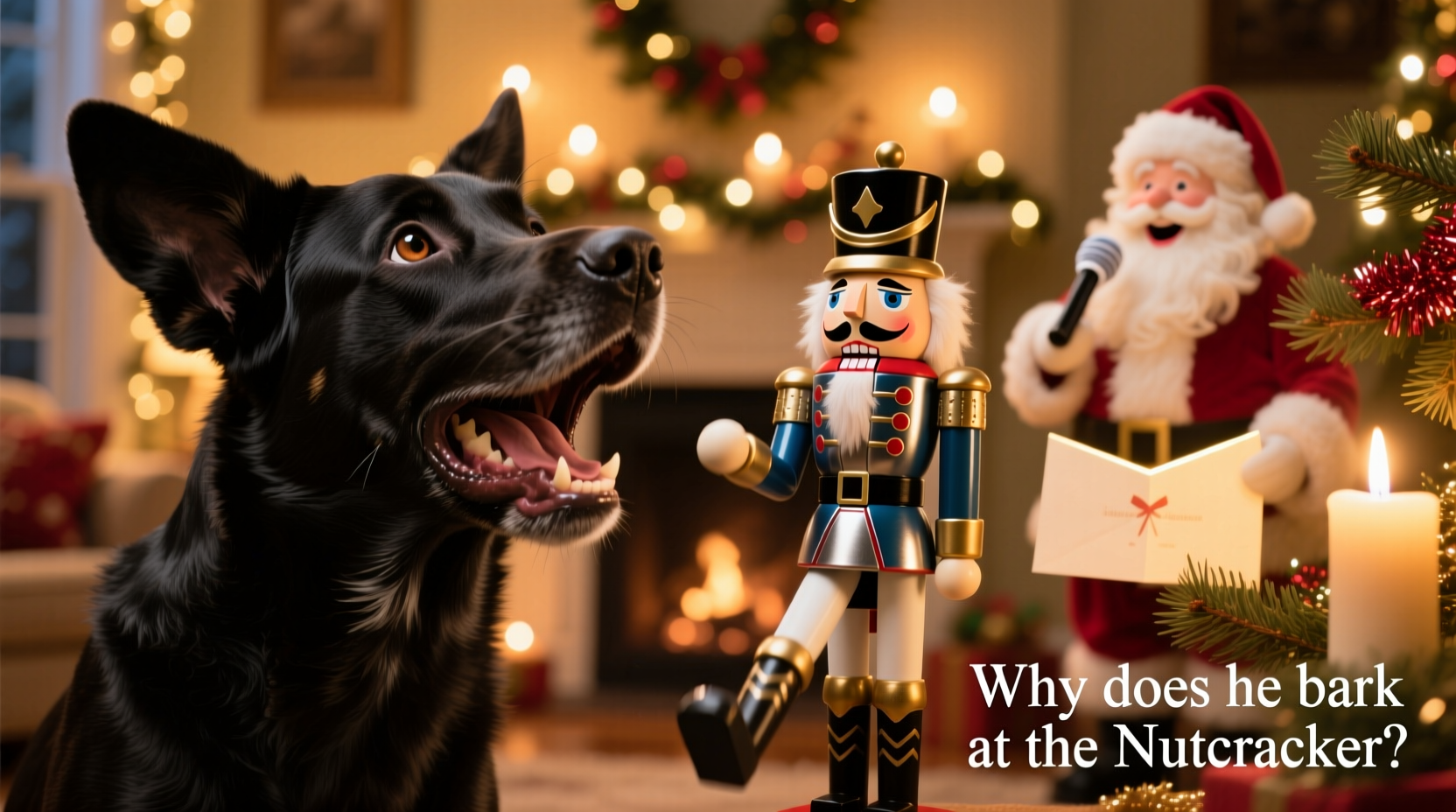
Dogs process sensory input differently than humans. Their world is shaped by acute hearing, motion detection, and scent — not visual aesthetics. What looks charming to us may register as erratic or predatory behavior in a dog’s mind.
Dogs have a wider range of hearing than humans, detecting frequencies from 40 Hz to 60,000 Hz (compared to our 20 Hz to 20,000 Hz). While this allows them to hear high-pitched sounds we can't, it also means they're more sensitive to sudden noises or mechanical whirring — common in motorized yard displays.
Motion detection is another key factor. Dogs evolved as predators and sentinels, meaning sudden lateral movements — like a nutcracker's jerky arm swing — are far more likely to trigger a response than slow or predictable motion. The nutcracker’s abrupt, repetitive gestures mimic prey-like or aggressive behavior, setting off alert systems in the dog’s brain.
In contrast, a singing Santa may produce continuous sound but lacks erratic physical movement. Its presence is static, its actions predictable. Even if loud, it doesn’t simulate a threat in the same way. This distinction explains why many dogs tolerate musical inflatables but react strongly to figures that move unpredictably.
“Dogs assess risk based on movement patterns and sound frequency. A figure that moves in sharp, angular bursts triggers vigilance more than one that sings steadily, even at high volume.” — Dr. Laura Simmons, Veterinary Ethologist
Decoding the Animated Nutcracker: Why It Triggers Alarm
The animated nutcracker is a perfect storm of canine stressors:
- Erratic Movement: Most nutcrackers feature exaggerated head turns, arm raises, or marching motions that occur in quick, non-natural sequences. These movements resemble those of an agitated animal or intruder.
- Unpredictable Timing: Unlike a song that plays start-to-finish, many nutcrackers activate intermittently via motion sensors or timers, making their behavior seem spontaneous and untrustworthy to a dog.
- Human-Like Form with Exaggerated Features: The tall, stiff posture and oversized face can appear humanoid yet unnatural — a phenomenon similar to the “uncanny valley” effect in robotics.
- Sudden Activation Sounds: Gears engaging, motors starting, or chimes playing can create micro-startles that accumulate over time, increasing baseline anxiety.
Even if the nutcracker is placed outside and behind glass, dogs often detect these cues through windows. Glass doesn’t muffle sound completely, and movement is still visible. Over successive exposures, some dogs habituate; others escalate their response, especially if they feel unable to control the stimulus.
Why the Singing Santa Goes Unnoticed
Despite being brightly lit and noisy, singing Santas rarely provoke the same level of reaction. Here’s why:
- Predictable Motion: Many singing Santas rock gently or wave slowly on a fixed axis. This rhythmic, pendulum-like motion is less threatening than sharp lateral shifts.
- Consistent Audio Pattern: Holiday songs follow familiar melodies. Repetition helps dogs anticipate sound patterns, reducing uncertainty — a major contributor to fear-based barking.
- Familiar Silhouette: Santa’s rounded shape, red coat, and beard are visually stable. Even if animated, the overall form remains consistent and non-threatening.
- Contextual Exposure: Many dogs encounter Santa figures in stores, parades, or homes during December. Prior exposure increases familiarity, speeding up habituation.
It’s not that dogs aren’t bothered by noise — some are highly noise-sensitive. But when sound comes paired with stable visuals and no sudden movements, the brain categorizes it as background rather than threat.
Behavioral Responses: From Alert to Anxiety
Barking at a decoration isn’t just annoyance — it’s communication. Your dog may be trying to:
- Alert you to a perceived danger (“There’s something moving out there!”)
- Attempt to repel the stimulus (“If I bark loud enough, it’ll go away”)
- Express discomfort or confusion (“I don’t understand what that thing is”)
Repeated barking without resolution can lead to learned helplessness or chronic stress, especially in anxious or reactive dogs. Signs include pacing, panting, refusal to settle near windows, or increased reactivity toward other stimuli.
A critical distinction exists between alert barking and compulsive barking. Alert barking stops when the stimulus is gone or acknowledged. Compulsive barking persists even after the trigger is removed and may generalize to similar objects.
Mini Case Study: Max, the Reactive Border Collie
Max, a 4-year-old Border Collie in suburban Chicago, began barking intensely at a neighbor’s new life-sized animated nutcracker. His owners noticed he’d lunge at the living room window each time it activated, even growling once. However, Max ignored a singing reindeer display three houses down and barely glanced at a glowing nativity scene across the street.
A certified dog behavior consultant assessed the situation and identified two key factors: the nutcracker’s sudden head turn mimicked predator eye movement, and its activation was tied to a motion sensor, making timing unpredictable. The consultant recommended blocking Max’s view of the nutcracker with a sheer curtain and using white noise to dampen startup sounds. Within five days, Max’s barking decreased by 80%. After two weeks, he no longer reacted unless the curtain was open.
This case illustrates how specific sensory features — not general “noisiness” — drive targeted reactions.
Practical Strategies to Reduce Holiday Decoration Stress
You don’t need to dismantle your display to keep your dog calm. With thoughtful adjustments, you can preserve the festive spirit while supporting your pet’s well-being.
Step-by-Step Guide: Desensitizing Your Dog to Animated Decorations
- Control Exposure: Start by blocking your dog’s line of sight to the triggering object using blinds, curtains, or temporary barriers.
- Simulate the Stimulus: Record the sound and movement pattern of the decoration. Play it at a very low volume while offering treats or play.
- Gradually Increase Intensity: Over several days, slowly raise the volume or allow brief glimpses of the object while maintaining positive associations.
- Use Distance: Allow viewing from farther away first (e.g., another room), then gradually decrease distance as tolerance builds.
- Reinforce Calm Behavior: Reward quiet observation with praise or treats. Never punish barking — it increases anxiety.
Checklist: Dog-Friendly Holiday Display Prep
- ✅ Survey all outdoor decorations from your dog’s eye level
- ✅ Identify which ones involve sudden movement or high-pitched sounds
- ✅ Position reactive displays outside your dog’s primary view zones (windows, doors)
- ✅ Test sound levels indoors — can you hear motors or chimes clearly?
- ✅ Install sheer coverings or decals on large windows to reduce visual access
- ✅ Use white noise machines or fans near observation areas to mask intermittent sounds
- ✅ Monitor your dog’s body language daily during peak display hours
Do’s and Don’ts: Managing Decor-Related Reactions
| Do | Don’t |
|---|---|
| Introduce new decorations gradually when possible | Turn on all lights and animations at once without acclimation |
| Use positive reinforcement when your dog stays calm | Yell at or punish your dog for barking |
| Adjust placement to minimize line of sight | Assume silence means acceptance — some dogs suppress vocalizations but remain stressed |
| Monitor for subtle signs of stress (licking lips, yawning, avoiding the area) | Force your dog to “get used to it” by holding them near the stimulus |
| Consult a professional trainer if barking becomes compulsive | Ignore persistent anxiety — it can worsen over time |
FAQ: Common Questions About Dogs and Holiday Decorations
Can dogs tell the difference between real people and animated figures?
Partially. Dogs recognize biological motion — the fluid, coordinated movement of living beings. Animated figures often lack this smoothness, appearing jerky or disjointed. While dogs may not think a nutcracker is a person, they interpret its movement as potentially alive and therefore unpredictable.
Will my dog eventually get used to the nutcracker?
Some dogs do habituate over time, especially if the stimulus is consistent and non-threatening. However, others become more sensitized, particularly if they feel powerless to stop it. Proactive management increases the chances of successful adaptation.
Are certain breeds more reactive to animated decorations?
Yes. Herding and guarding breeds (e.g., German Shepherds, Border Collies, Shetland Sheepdogs) are more likely to respond to movement due to their genetic predisposition to monitor their environment. Smaller breeds with high alertness, like Terriers, may also react more strongly.
Conclusion: Respecting Your Dog’s Reality
Your dog isn’t being dramatic — they’re responding to a world they didn’t design. The animated nutcracker isn’t “just a toy” to them. It’s a moving, noisy entity invading their space, and their barking is a legitimate attempt to cope. By understanding the sensory logic behind their behavior, you can make informed choices that honor both your holiday traditions and your dog’s emotional needs.
Start small: adjust a curtain, mute a sound, observe without judgment. These acts of empathy cost little but yield significant peace — for your home, your holidays, and your dog. The goal isn’t to eliminate joy, but to share it across species.




 浙公网安备
33010002000092号
浙公网安备
33010002000092号 浙B2-20120091-4
Comments
No comments yet. Why don't you start the discussion?