
Dog owners across the country brace themselves each holiday season for a familiar sound: relentless barking at nothing—except, of course, that one blinking reindeer in the yard. While your dog may stroll past a snowman, Santa statue, or even a full nativity scene without so much as a sniff, the moment the animated reindeer flickers to life, it’s as if an intruder has breached the perimeter. This selective reactivity isn’t random—it’s rooted in canine perception, instinct, and environmental sensitivity. Understanding why dogs react so strongly to moving lights while ignoring static decor can help pet owners reduce stress for both themselves and their animals during festive months.
The Science Behind Canine Vision and Motion Detection
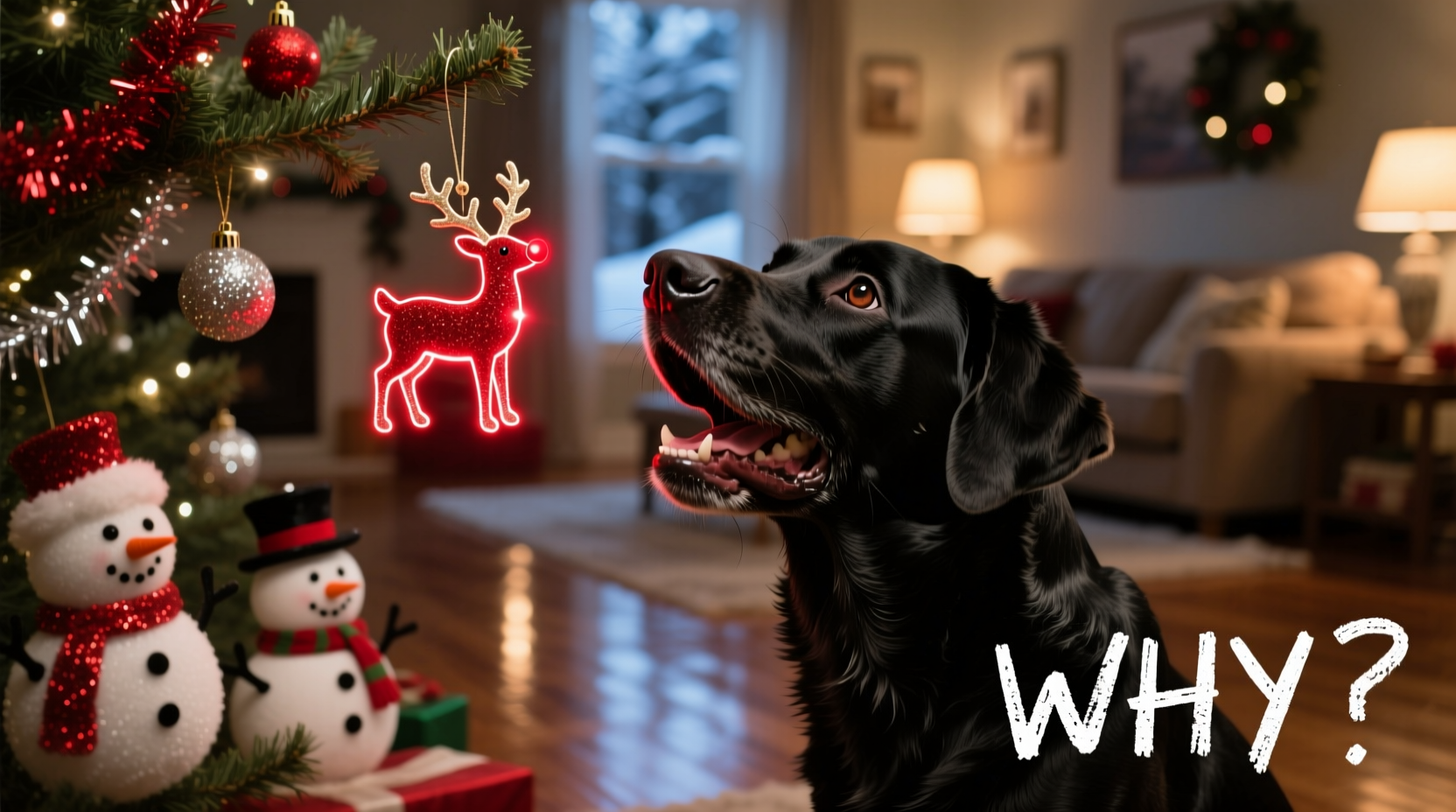
Dogs perceive the world differently than humans do, especially when it comes to light, movement, and contrast. Their visual system is optimized not for color or fine detail, but for detecting motion—particularly in low-light conditions. This evolutionary trait helped wild canids spot prey at dawn and dusk, and today’s domesticated dogs still retain these reflexes.
Unlike humans, who have three types of cone cells (for red, green, and blue), dogs only have two, making them less sensitive to red and green hues. However, they possess a higher density of rod cells, which are responsible for night vision and motion detection. This means that while your dog might not “see” the reindeer as you do—a jolly decoration with antlers and a red nose—they’re highly attuned to the sudden flashes of light and rhythmic movement created by blinking LEDs.
Additionally, dogs process flickering light differently. The critical flicker fusion threshold (CFF) measures how fast a flashing light must blink before it appears continuous. Humans typically stop perceiving flicker around 50–60 Hz, but dogs can detect flicker up to 75–80 Hz. This means that many LED lights, even those appearing steady to us, may look like rapid strobes or pulsing movements to a dog. A blinking reindeer doesn’t just move; to a dog, it might appear to vibrate, jump, or twitch unpredictably—triggering alertness or alarm.
Instinctual Responses: Why Movement Triggers Barking
Barking at moving objects isn’t misbehavior—it’s communication shaped by evolution. In the wild, sudden motion often signals danger, prey, or territorial intrusion. A fluttering leaf, a scurrying squirrel, or a bouncing ball all provoke attention. When applied to holiday decor, blinking lights mimic erratic movement patterns similar to small animals or predators’ eyes reflecting light at night.
The blinking reindeer, with its jerky on-off cycle, creates a “startle-and-reset” effect. Each flash resets the dog’s attention, causing them to refocus and react anew. Because the stimulus disappears and reappears, the brain interprets it as unpredictable—an unknown entity that hasn’t been assessed for threat level. This uncertainty fuels vigilance and repeated barking.
In contrast, static ornaments pose no such challenge. A plastic snowman or wreath remains constant, allowing the dog to habituate quickly. Once the brain registers an object as non-moving and non-threatening, it stops allocating attention to it. This is why your dog might investigate a new lawn ornament once, then ignore it for the rest of the season—unless it starts moving.
“Dogs don’t bark at what they understand. They bark at what they can’t predict. Blinking lights fall into the category of unpredictable stimuli, which naturally elicit a defensive response.” — Dr. Karen Bennett, Veterinary Ethologist
Environmental Overload: Holiday Stress and Sensory Input
The holiday season introduces more than just blinking reindeer into a dog’s environment. Homes fill with unfamiliar guests, loud music, strange smells from cooking, and altered routines. All of this contributes to sensory overload, lowering a dog’s threshold for reacting to stimuli.
A dog already stressed by changes in household dynamics may be hyper-vigilant, making them more likely to respond aggressively or anxiously to novel visual triggers. The blinking reindeer becomes not just a light show, but a symbol of disruption in their otherwise predictable world. Even normally calm dogs may begin barking at things they previously ignored when under cumulative stress.
This phenomenon is known as “cumulative stress loading.” Small stressors—like vacuuming, thunder, or children running—may not cause issues alone, but when layered together, they push a dog past their coping threshold. Add blinking lights into the mix, and the result is often persistent barking, pacing, or avoidance behaviors.
Signs Your Dog Is Stressed by Holiday Decor
- Excessive barking at specific lights or movements
- Pacing or restlessness near windows facing decorations
- Refusing to go outside when lights are on
- Dilated pupils or whale-eye (showing whites of eyes)
- Increased panting or lip-licking when near blinking items
Step-by-Step Guide: Reducing Your Dog’s Reaction to Blinking Lights
Managing your dog’s reaction doesn’t require removing all holiday cheer. With gradual adjustment and smart modifications, you can maintain festive spirit while supporting your pet’s well-being. Follow this timeline to desensitize your dog and minimize disruptive barking.
- Week 1: Observe and Isolate
Turn off all blinking decorations. Note when and where your dog barks. Identify whether the reaction occurs indoors, outdoors, or through windows. - Week 2: Introduce Lights Gradually
Reintroduce the blinking reindeer at a distance. For example, place it far from usual dog areas or view points. Turn it on for 5 minutes, then off for 30. Repeat daily, increasing exposure slowly. - Week 3: Pair with Positive Reinforcement
During short light sessions, offer treats, toys, or calming activities (like chew bones). This builds positive associations with the stimulus. - Week 4: Modify the Light Pattern
Switch blinking modes (e.g., slow pulse instead of rapid flash) or replace with steady-glow alternatives. Monitor behavioral changes. - Ongoing: Create Safe Zones
Ensure your dog has access to quiet rooms away from visual stimuli. Use blackout curtains on windows facing light displays.
Real Example: Max, the Reactive Border Collie
Max, a 4-year-old Border Collie in suburban Chicago, began barking uncontrollably every evening when his neighbors turned on their elaborate light display—centered around a large, blinking reindeer with rotating antlers. His owner, Sarah, noticed Max would sprint to the living room window, bark intensely for 10–15 minutes, then remain agitated for hours.
After consulting a certified dog behaviorist, Sarah implemented a structured plan. She covered the window with a translucent film to diffuse the lights, played classical music during display hours, and trained Max to go to a “settle mat” in a back bedroom when the lights came on. She also replaced her own yard’s blinking deer with a steady-lit version.
Within three weeks, Max’s barking decreased by over 80%. By the end of the season, he no longer reacted unless the neighbor’s display changed patterns—proving that consistency and environmental control were key.
Do’s and Don’ts: Managing Holiday Decor and Dog Behavior
| Do | Don’t |
|---|---|
| Use steady-glow or warm-white LED lights | Install rapid-blinking or strobe-style decorations near dog zones |
| Gradually introduce new lights over several days | Turn on full displays suddenly at dusk |
| Provide a quiet, dark retreat space | Force your dog to stay near flashing lights |
| Reward calm behavior around lights | Yell at or punish your dog for barking |
| Monitor body language for signs of stress | Assume indifference means comfort |
Frequently Asked Questions
Can blinking lights hurt my dog’s eyes?
No evidence suggests that standard holiday LED lights cause physical eye damage in dogs. However, prolonged exposure to flickering lights can lead to visual fatigue, anxiety, or headaches in sensitive animals, much like in humans with light sensitivity.
Will my dog eventually get used to the blinking reindeer?
Some dogs habituate over time, especially if the light pattern remains consistent and no negative events occur. Others never adjust due to heightened sensitivity. Proactive management—such as modifying the light or creating barriers—is often more effective than waiting for habituation.
Are certain breeds more reactive to blinking lights?
Yes. Herding breeds (e.g., Border Collies, Australian Shepherds) and high-drive working dogs are more prone to reacting to motion-based stimuli due to their genetic predisposition to monitor movement. However, any dog can develop sensitivities based on past experiences or temperament.
Expert Insight: What Veterinarians Recommend
Dr. Lena Patel, a veterinary behavior specialist at the Midwest Animal Wellness Center, emphasizes early intervention. “We see a spike in anxiety-related cases every December. Many owners dismiss barking at lights as ‘just being silly,’ but it’s often the first sign of underlying stress. Addressing it early prevents long-term fear conditioning.”
She recommends combining environmental adjustments with behavioral training. “It’s not about eliminating joy—it’s about coexisting peacefully. If your dog feels safe, the holidays become enjoyable for everyone.”
Conclusion: Peaceful Holidays for You and Your Dog
The blinking reindeer isn’t magic to your dog—it’s a mystery. And mysteries, especially those that flicker unpredictably, demand investigation. By understanding the interplay between canine vision, instinct, and seasonal stress, you can transform a source of tension into a manageable part of the holiday landscape.
Simple changes—like switching to steady lights, creating visual barriers, and reinforcing calm behavior—can make a dramatic difference. Your dog doesn’t need a silent season; they need a predictable one. With thoughtful planning, you can enjoy festive traditions without sacrificing your pet’s peace of mind.




 浙公网安备
33010002000092号
浙公网安备
33010002000092号 浙B2-20120091-4
Comments
No comments yet. Why don't you start the discussion?